Bonkers world,
Still mind.
Is it just me or has the world gone mad?
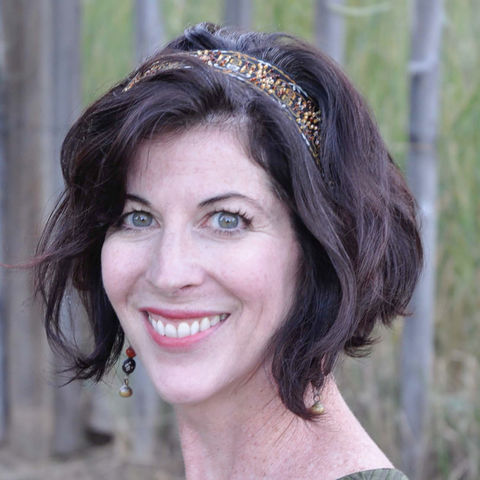
My name is Jane Cunningham and I'm here to talk to you about how we can regulate our nervous system during a period of massive trauma and tumultuous change.
I've been working as a psychotherapist for the last 38 years and I've never seen any time like this.
There's more anxiety,
Depression,
And outright fear going on than I've ever seen.
And let's face it,
It's not easy to be in this world right now.
With all its violence,
Political polarization,
The pandemic,
It hasn't been easy.
So first of all,
We're going to look at how all of this affects our nervous system and the social nervous system that we're all part of.
The social nervous system is an energetic field that we all live in.
It's like living in a soup,
And in this case,
A soup of fear and anger.
And then there's our personal nervous systems and we all get affected in various ways.
Like I've noticed and heard that many people are drinking more or smoke and pot more or just involving themselves in any form of addiction that takes them away.
And it's understandable.
It isn't easy to be present right now.
So what do I mean by the nervous system?
The nervous system is everything involved with the brain and all the nerves in the body,
Which basically affects every single organ of the body.
And right now we're living in a trauma minefield,
By trauma I mean a sense of overwhelm where the nervous system is having a difficult time regulating.
Normally a nervous system is like a gentle wave.
With a dysregulated nervous system,
The nervous system gets spiky.
There can be periods of mania or anxiety and then a drop to a depression.
So there's an inherent instability that goes on.
The first part of recognizing your nervous system is to look at the two different or actually three ways our nervous system responds.
Fight,
Flight,
Or freeze.
We're going to start with freeze because it's a little less understood.
And another thing I might add is your nervous system acts automatically.
It's part of the autonomic nervous system,
So it's beyond your control.
It affects your breathing,
Your heart rate,
All those sorts of things that you're not thinking about,
But happen in the background and affect you hugely.
So let's start with the freeze response.
I refer to this as acting in.
With the freeze response,
We can go into a sense of collapse.
We can feel out of connection with ourselves and others.
We can dissociate,
Which is when your mind goes out of your body.
You can feel paralyzed,
Helpless,
Sometimes hopeless.
And it can be hard to express ourselves.
It can be hard to know what to do or what we need.
It can make us feel like,
Oh,
I just want to hide under the covers,
Disappear.
The purpose of the fight,
Flight,
Or freeze response,
In this case freeze,
Is to protect us.
It's like playing possum when we're under threat.
But what happens is our nervous system can't differentiate.
So say someone is just critical of you.
You might go into a freeze shame response.
So in reality,
Your well-being or life itself is not threatened.
But your nervous system can nonetheless go into response.
It can go completely frozen.
So it's hard to express yourself.
You can't move.
You can't say anything.
You go into a survival mode.
And that can happen when you simply read something in the newspaper that triggers a nervous system reaction.
The other response we're going to talk about is fight or flight.
And fight or flight expresses itself in anxiety,
Anger,
Worry,
Irritability,
Reactivity.
I call those acting out behaviors.
So an example would be,
Say you decide,
Oh,
I can't handle this.
I'm just going to drink some beer.
Or say you get triggered and you get violent.
Or you project onto someone else that they're the enemy.
Shame and blame,
That's fight or flight.
People don't often think of that,
But that is a way that we move away from our experience and project it outward.
Another way is to want to run away.
Whether it's to dissociate or to literally leave your situation,
That can be a flight response.
Another way is hypervigilance.
Say that you're just really anxious all the time.
So you're trying to control your environment,
Your hypervigilant of any sort of change,
Anything that feels threatening,
When in reality,
It isn't.
It's just that you got triggered.
Now the good news is that our nervous system can be regulated.
And sometimes it's really not that hard to do.
It's just knowing that you're triggered and bringing it back into balance.
And creating a nervous system that's resilient instead of reactive.
Where you can go back into this essential okayness.
Maybe things aren't perfect or maybe they're even not great,
But you have a critical mass,
Over 50% of you,
That is grounded.
That is calm.
And that knows how to regulate the nervous system when you need to.
There's something called the vagus nerve,
Which is called the compassion nerve.
And when you can get your vagus nerve,
Which is in the back of your head near your occipital ridge,
You can get back into your true nature.
And I believe that our true nature is naturally compassionate and wise.
And yes,
You can still waver into fight or flight or freeze,
But you can come back and you keep coming back.
So you develop a more resilient nervous system and each time it's easier to come back to balance and to connect to yourself and feel restored.
When you are in a balanced place and your nervous system is in that gentle wave,
You can access your deeper wisdom and you can act.
You're not frozen.
So how can you regulate your nervous system?
There are many ways you can do it.
I'm going to start with actions on the external side,
And then we're going to go into the internal.
So starting with external actions,
Go out into nature.
Go for a walk.
When we're in nature,
It connects us to our own true nature.
Pet your cat.
Sit with your cat.
That's really a form of meditation.
Play music.
Watch a sunset.
Or get involved in any sort of movement,
Dance,
Yoga,
Qigong,
Tai chi.
And when you find a calm moment,
Press the pause button and marinate in that moment.
Let that memory shift from short term into long term memory and become part of your permanent repertoire.
And then there's the internal ways that we can regulate our nervous system.
The most fundamental and direct is changing your breathing.
The average person uses about a fifth of their lung capacity.
So there's a lot to be said about learning how to breathe three dimensionally and from your diaphragm.
Second,
Meditation.
Meditation is like calm in the bank.
And if you can breathe,
You can meditate.
I know people make it kind of an esoteric practice where you have to sit really straight and cross legged and all that.
You don't.
All you have to do is bring your attention inward,
Focus on your breath,
And let nature take its course.
It's much easier than you think it might be.
So today I'm going to lead you in a practice of both diaphragmatic breathing and meditation.
So if you would get comfortable and in a place where you won't be disturbed,
Shutting your phone off and getting your back so it's comfortable,
Not ramrod straight,
But supported.
Bringing your attention inward and just noticing what it feels like inside your body today.
Looking out of the realm of thinking and into your senses,
Your felt sense.
Notice the sound of your breath.
Feel the air at your nostrils.
Giving yourself this time to simply be,
Nothing to do,
Nowhere to go,
Just being.
Feeling the ground beneath you,
Supporting you,
Inviting your body to let go of any tension.
Feel your scalp just hang on your skull.
Feel your face melt,
Your gums and teeth melt.
And release the hinge of your jaw so that your molars don't touch.
And imagine you could breathe through your internal organs as if they were transparent,
Like a cloud,
Letting go of any muscular tension,
Any tightness,
Anything that obstructs the flow of breath in your body.
The key is to get out of the way of your breath.
Let it breathe you.
Feel your belly soften and place one hand on your belly.
Feel the warmth and the weight of your hand relaxing and comforting your belly.
The belly is often called the second brain.
Your nervous system is very impactful and very condensed here.
So take your time and let your belly melt and open,
Layer by layer,
Breathing,
Melting and opening.
And feeling another wave of relaxation washing down the back of your body from the base of your skull all the way down your back and your arms,
Warming the muscles,
Letting go of any tension,
Melting and opening.
All the way down to your pelvis.
And feel your pelvis relax and your pelvic bowl very still.
And feel a wave of relaxation washing down your legs all the way down into your feet.
And imagine you have roots extending to the soles of your feet and you could release any tension out those roots into the earth.
Let the earth recycle that energy and feel the pushback of the earth.
They're meeting you,
Supporting you unconditionally.
Earth doesn't say,
I'm going to take a day off.
No,
It's always here supporting us.
Feel that support and release any remaining tension in your body.
Notice your breathing.
If you're feeling tense still,
You might want to exhale through your mouth.
Otherwise breathe through your nose,
Inhaling and exhaling through your nose or moving toward that as you relax more.
Breathing through your nose brings you into more of an internal place,
A place of deep relaxation.
When we're relaxed,
Everything goes better.
We can think better.
We perform better.
And I don't mean relaxed as in sleepy.
I mean relaxed as in not being tense or tight or anxious.
Being present,
Being clear and awake,
Alert even.
So this deep breathing that we're doing brings more oxygen into your brain.
So with each breath,
You have an opportunity to transform your state just in one breath.
Imagine you're breathing in fresh revitalizing energy.
You can visualize that as white light or a color or trees.
As you exhale,
Feel yourself releasing whatever you'd like to let go of.
Could be a mood or it could be some obsession that you have going in your mind.
Imagine that your mind,
Your brain is a muscle and you can just relax it and feel it shift to the back of your head.
Feel its weight in the back of your head.
And breathe into the side of your rib cage so that it expands out.
Now breathe into your back so that your back puffs out against the couch or chair as you inhale.
And breathing forward and putting it all together so that you're breathing three dimensionally.
And now we're going to bring that breath from your belly all the way up.
So first you're going to breathe in your lower belly,
Inhaling and then into your middle belly by your diaphragm and then all the way up to your collarbones.
And then when you exhale,
You exhale from your upper collarbones to the middle diaphragm to the lower belly.
So it's very natural like filling up a glass of water.
It fills up first from the lower,
Then the middle,
Then the upper and it empties out from the upper to the middle to the lower.
So just breathe in those three parts and extend your exhale so that it's longer than your inhale.
That calms your nervous system.
When we breathe in our lower belly and that's the foundation of your breathing practice,
We switch on the parasympathetic nervous system which calms us.
When we extend the exhale,
That slows down your breath and also creates more relaxation in your nervous system.
And rather than taking my word for it,
Check in.
Feel your body.
Notice if there's any difference from how you feel now than how you felt when we first started.
Let the breath be a soothing tonic for your mind-body.
Then you can place one hand on your heart.
Feel the warmth and the weight of your hand on your heart and feel your heart begin to melt layer by layer.
See if you can feel or hear your heart beating.
Feel your interconnection to nature,
To others,
To the entire universe.
Feel the heartbeat of the world in your own heart.
Meditation is about being peaceful,
Simplicity.
You don't have to make it complicated.
Just slow down,
Bring your attention inward and breathe.
Breathing in all directions,
Back,
Side,
Forward.
Feeling up your entire torso with fresh air and feeling that extend up into your head all the way into your hands and feet.
Notice if your hands or feet are clenched at all and invite them to let go.
Let yourself rest.
The calming part of the nervous system,
The parasympathetic,
Brings us into rest and digest so that you can digest all that's happening in this peaceful place.
You can transform it from frenetic energy into this calm wave.
Meditation gives us an opportunity to come back to our wholeness,
To our innate wisdom and compassion.
That's who we are.
And we can all know that we have everything we need inside us.
Breathing in empty,
Open space like the blue sky,
Filling up your mind and body with spacious awareness.
So this space is empty of content,
Nothing sticks to it.
It's like a screen that's transparent and everything just moves through.
So you can continually be open and present to the moment,
Not caught up in what just happened or in your mind trying to analyze something.
When the mind calms down,
We can see clearly.
We can see things as they are rather than projecting our commentary onto everything.
Our essential nature of our mind is empty,
Open and clear,
Unconditioned,
Fresh.
We get to rest in this wide open space and just be.
And this beingness is what we can trust completely.
It's unchanging.
It's unflappable.
It's our essence of being.
It's pure.
From this place of the wide mind,
We can observe what's going on without getting drawn into it,
Without getting consumed by it and maintain this sense of peace.
Even if we can maintain 51% of this internal calm,
That will be helpful.
And as you practice,
It gets easier.
You have more calm in the bank to draw upon.
When you're in the midst of chaos or listening to the news,
You can step into the wide view and just observe and feel that calm,
Grounded foundation holding you.
Our mind is empty and our essence is pure.
If we can remember that and come home to that,
We can weather anything.
The Buddha said,
Our body is like a cup.
Our mind is like the water.
When the cup is still,
The water is still.
This stillness can be your constant companion,
Your ally in the midst of this bonkers world.
Now gradually begin to bring yourself back,
Wiggling your fingers and your toes and very slowly opening your eyes.
Thank you for joining me today.
It's been my pleasure.
Namaste.