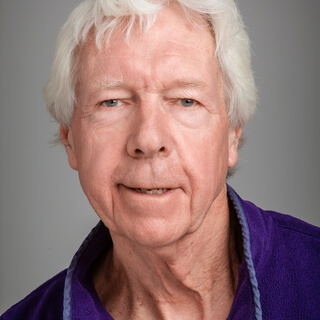
This is our seventh class,
Living Our Essence,
And we'll begin with a meditation.
I watch myself breathing in and out.
Now I watch the one who watches.
The concept of the victim triangle is central to learn how to live our essence.
Early in our lives,
In an attempt to escape pain,
We play one or more of the three roles described by the victim triangle model.
Picture an upside-down triangle.
The victim role is at the bottom,
And the rescuer-caretaker is at the upper right,
And the perpetrator-judge role is at the upper left.
We subvert our true self to gain approval from our family.
We create a false self.
We pretend to be someone we aren't.
It is a crucial part of our healing to identify these victim triangle roles.
The spiritual journey leads through the discovery of our natural emotions,
Their acknowledgement and expression,
And thus out of the role-playing described by the victim triangle.
As we walk this path,
Suffering burns away the ego to illuminate the authentic self,
Our essence.
The model of the victim triangle describes in diagram form the roles we may adopt to try to avoid pain as we relate to each other.
It is a model of ill-health,
A diagram of a human being attempting to get his or her needs met by choosing a coping role,
A role they no doubt have seen demonstrated in their family of origin.
To play a role,
While it seems easier in the moment,
Prevents heart-centered authentic speech and action,
And distracts us from living an authentic life.
This role-playing is unconscious,
Unaware behavior.
In the stress of the moment,
We try to survive to avoid suffering.
We forego our natural feelings,
Subvert or ignore our essential being,
Our authentic self,
And adopt a role that we believe will get us through the crisis unscathed.
In addition,
In a continuous attempt to avoid suffering,
We assign a corresponding role to other people,
So we play a game of living out roles for each other,
Reverting to unconscious behavior,
All in the name of survival.
The problem is that we continue to play this role long after the early need for it has lapsed.
We trap ourselves in the role,
We get stuck in pretense and even in performance.
It worked once or for years,
Why can't it work again?
But no relationship can be healthy when both individuals pretend to be someone they aren't and play a role instead of being authentic.
We develop the ability to leave the victim triangle only when we accept that we did experience suffering and thus become aware of the natural emotions of our experiences and express those feelings.
We know we are caught in the victim triangle when we don't know what we're feeling.
We know what we're feeling but can't or won't express it.
We feel stuck and not seen as our self.
The words we speak don't feel or sound like ours.
It feels like both people are losing.
It's a lose-lose interaction.
We play any of the three roles of the victim triangle,
And sometimes all of them,
To attempt to escape pain.
The roles we adopt,
Victim,
The judge,
Perpetrator,
And the caretaker,
Rescuer.
Let's look at the victim role first.
As newborn children,
We are helpless and dependent on others for our life and our care,
And in that sense we begin life as victims.
This is the first role we adopt.
Then,
When we first have the experience of not getting our needs met,
We blame our parents.
But that is not safe because they are the ones who gave us life,
And they probably are meeting at least some of our needs.
So we blame ourselves.
This is the beginning of living in the victim triangle as a victim with low self-esteem and shame.
If playing the victim doesn't work,
We find another role that does.
A victim tries to get his or her survival needs met by attracting protection and care,
And then blaming others for being a victim when that desired protection and care are not forthcoming.
Ironically and paradoxically,
A person playing a victim often wields a lot of power.
But it is power over,
Not healthy empowerment.
We know we're relating to a victim when we feel helpless,
Blamed,
And powerless.
Let's look at the perpetrator-judge role next.
The perpetrator-judge tries to get his or her needs met by criticizing and judging others.
We find fault with their actions.
To play this role is to avoid responsibility.
We try to avoid criticism by criticizing others.
Instead of accepting the consequences of our actions,
We righteously inform people of what they are doing wrong.
A person in the perpetrator-judge role creates suffering in other people in order to avoid their own suffering.
They give people opinions and information instead of listening to their natural emotions.
They collect reasons and resources to prove that their judgments are correct.
We know we're relating to a perpetrator-judge when we feel attacked or unjustly criticized.
I want to share a personal story I call Sailors at the Door.
During the Second World War,
When I was two years old,
My father was serving in the United States Navy aboard escort ships protecting convoys of tankers and freighters sailing to England.
In our New York City apartment,
My mother and I lived with the fear of Dad's ship being torpedoed and sunk,
And of him never coming home again.
One evening the doorbell rang,
And when Mom,
With me by her side,
Opened the door,
We saw two uniformed sailors standing in the hall.
My mother,
Thinking they had come to deliver bad news,
Fainted briefly.
I got down on the floor and hugged her and tried to comfort her.
Right then I assumed the role of caretaker.
The sailors quickly assured us that they were there only as a courtesy to say hello and see if we needed anything.
Still,
We were relieved when they left.
As a scared little boy,
I had found a role to avoid my own feelings of fear of my Dad's death by taking care of my mother's fear.
I learned that when I took care of another person's fear by becoming a caretaker,
I could avoid my fear,
At least for the moment.
To leave the victim triangle means to learn how to acknowledge and express natural emotions and,
Therefore,
To live authentically.
First,
We must accept that we did experience suffering.
Then,
We allow ourselves to become aware of the emotions produced naturally by our experiences of suffering and express these feelings.
The way out of the victim triangle is awareness,
Which was highlighted in the previous class.
When we can witness our responses,
Observe how we speak and interact,
We can choose to move beyond the roles of victim,
Perpetrator,
Judge,
And caretaker rescuer.
The path out of the victim triangle is to change the transactions between the roles in the corners of the triangle model.
We will not have success if we try to exit the triangle through the corners,
The strongest and sharpest places where our family and friends are probably entrenched as they play out their roles.
They likely will not respond well to our attempts to confront and change them.
In fact,
They are likely to get quite defensive.
They like their roles and are not about to give them up without a fight.
We do not have control over what another person says or does,
But do have control over how we respond and what we say.
We can change the way we relate to other people by choosing different words and actions,
Expressing our true natural emotions,
And speaking as and for our authentic self.
Find the natural child's needs and feelings and express them.
Say no.
If you're polite,
It's no thank you.
Say or do it without excuses or without having to have a reason.
Remember that the path out of the victim triangle is not a four-lane,
One-way interstate highway with illuminated road signs and convenient fuel and rest stops leading straight to the promised land of authenticity and freedom.
No.
At first,
It is a mere track in the woods,
The road not taken,
Overgrown with prickly vines and seductive with false turns.
But precisely because it is hard to find,
We know it is not someone else's path but our own.
It may feel like we are lost on a brand new planet,
And we are not even sure the air is safe to breathe.
We do not have a compass or a map to show the way.
We can feel alien in this new territory.
But then,
When we summon the courage to take a breath,
Stay a while in this new place,
Feel the firm ground underneath our feet,
Keep our eyes open,
Take another breath of fresh air,
And inhabit our new space,
A miracle happens.
We look around and see another person who is nearby.
He or she is speaking and acting from his or her own truth.
They want us to be authentic too.
And then another person shows up,
And another.
We are not alone.
We have people around us,
People who are making their own journey out of their personal triangle.
I'll share another story,
Called Down from the Pine Trees.
When I was married with a family,
My wife and I packed up the kids and drove down to visit my parents for the Thanksgiving holidays.
After the three hour drive,
We finally turned into their driveway.
Amid all the kids' excitement,
Suddenly from the pine trees above,
The victim triangle pounced down on me.
The old script was dog-eared,
But I knew it well.
I went into my parents' house with a script in mind,
Walked over to my mother,
And said,
How are you feeling,
Mom?
Are you okay?
The caretaker watched from a corner,
Smiling approval.
But with my newfound awareness of the victim triangle and of the hazards of my habitual role as caretaker,
I listened briefly to my mother,
Felt honest compassion,
And then stepped back.
Then I recovered my authentic self and shared news about me and my kids,
My truth,
And what was going on in my life,
Especially how I was feeling about it.
I had moved from a caretaker to a caregiver.
The foundation for living an authentic life,
Of being who we are,
Without apology or explanation,
Is to speak and act our truth in the present moment.
Here,
Outside the victim triangle where we are truly ourselves,
We can be authentic.
Here,
We are at peace with the present situation,
Because we are at peace with who we are.
Then,
We seek others who live authentically,
Who are not afraid to show and live their essence.
This is the foundation for healthy,
Effective,
And lasting relationships,
Relationships of essence to essence.
We close our lesson with a spiritual practice called,
I Am.
Reflect for a minute which victim triangle role is most familiar to you.
See yourself caught in that role and offer yourself appreciation that you had the creativity to find a role that allowed you to survive in your family.
Offer yourself compassion for being a survivor.
Now,
Recognize the passage of time and your current age and awareness.
Know that you can be free of an old role that no longer serves you and that now you can express and live your truth.
You can express your true spirit,
Who you really are.
And you can do this without the need for justification,
Excuse,
Or rationalization.
You are who you are.
Say the words,
I am,
Several times.
I am.
I am.
Thank you.
I'll meet you next time for Lesson 8,
Developing Some Essence Spiritual Practices.