Okay,
Well,
Welcome.
Whoever may be listening right now and Saket,
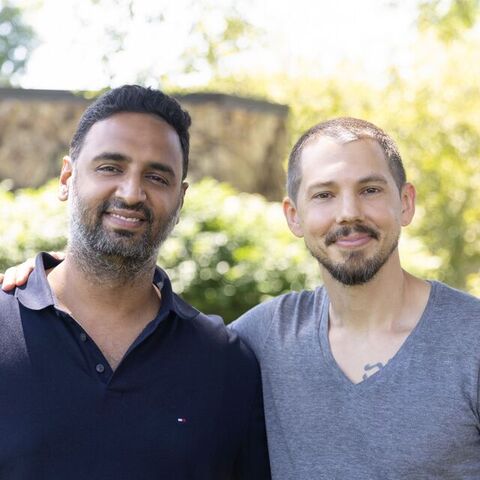
It's always really nice to be here with you just for a little bit of context for anyone that may be listening in Saket and I are publishers,
Teachers on the Insight Timer meditation app.
And we met through experiencing each other's work and feeling kind of a connection to each other and reached out and we've been talking recently just having some time every week or so to discuss whatever comes up.
And each time that we've met,
Or actually,
This has been a recent occurrence,
We decided to maybe begin with a period of just sitting in silence together,
Then just kind of seeing what manifests and unfolds after that.
So we're going to start with that today.
And we might continue doing that each time that we meet.
And we would ask if you're willing and interested to spend a minute in silence with us,
Whatever it is that you're doing right now,
Just see if you might be able to pause and come back to really just what's happening in this moment with no other instruction than to just be aware of this present moment experience.
Anything to add to that Saket before we Hi,
Hi,
And hi to all the listeners.
And it has been wonderful to have these discussions with you Charles.
And I think it was a great idea to share these discussions and these meditations with with the listeners.
So I'm really excited to what comes through.
So let's begin.
Yeah,
Sounds good.
Okay,
You'll hear a bell to start and end the one minute.
Okay.
Okay.
Anything you notice in your present moment experience?
Yes,
I think I noticed some sound in my background.
And however,
It is like the monkey mind which wants to focus on so many things in the environment.
But I gradually managed to get my awareness back to the breath.
And from there onwards,
It was just the breath and just keeping my awareness on the breath.
I was just thinking about how that mind you're describing could attach to particular sense perceptions in different ways,
Like for you,
Because I also had an experience of hearing the sound in your background.
And for me,
It was kind of it was in a very present way.
I wonder,
I guess my projection onto you is that that could be some thought about that sound happening and being some sort of distraction that is impeding on this experience.
And then for me,
It was kind of an object of,
Oh,
Like,
That's an interesting kind of sound.
And that's like a little anchor for my,
My present awareness.
That's something that I noticed in my experience.
Yeah,
I think that's wonderful.
Because we I think a lot of us have this habit of labeling things and being judgmental about things.
So we would listen to a noise sound and we would label it as cacophony or you know,
A disturbing noise.
However,
Then again,
The realization that it's not,
It's important to not judge and it's important to just acknowledge the fact that,
Okay,
Yes,
There is a sound,
But it's now my choice to either place my awareness on that sound without having that judgment,
Or maybe just bring diverting my attention from there and bring it bringing it to my breath,
Or to something else.
So yeah,
I think I noticed a kind of a judgment there,
Which still have to work on.
Yeah,
It's made me think of how you described in meditation,
Like,
The last time we met about how we,
We maybe start out with our,
I'm looking at my hands tied together now of like,
Our,
Maybe our mind or our experience in our thinking.
And then gradually,
Like they can become separated,
Where your awareness can step back from thinking.
And in that situation,
It's like the sound of the,
Of whatever it is,
Could still be very attached to thinking in that moment,
Because you have some automatic judgment,
Or it can be a possible,
Like a facilitator of,
Of shifting that awareness away from thinking.
Yeah,
Exactly.
I think I,
The last time when we meditated,
It was initially as soon as we got into the meditation,
Because the environment was comfortable.
The environment was serene,
There was no sound.
So the awareness,
My awareness was able to separate itself from the thoughts.
But this time,
Maybe I'm so still attached to the environment around me,
That I was not able to do that as quickly as I was able to do it previously.
So still my awareness and my thoughts were like one,
I was not able to have that separation from my thoughts and make the thoughts my object and me becoming the observer of my thoughts.
And this also reminds me of a book that we were reading,
I think we were reading it together,
The autobiography of a yogi.
And in that book,
There is a wonderful story and Paramahansa Yogananda always wanted to go to the Himalayas for meditating.
And he always dreamt of eternal snow and you know that he's meditating in the Himalayas.
But his master and his guru didn't let him go.
And he said,
That is because you are too attached to the idea of the Himalayas to the idea of having a wonderful environment for yourself to have peace all around you.
But he said that it is not about peace around you,
It is about peace within yourself.
And he said that even if you can find a room in the city,
And just in that room,
Sit and meditate.
I think that is that is the exact surrounding that you need.
You should have that capacity of even meditating in the crowd where there is a lot of noise,
Where the environment is not as you want it to be.
So I think that's beautiful story.
And it absolutely fits into our situation today.
Yeah,
I remember that.
It was a question of like,
Do you have a room where you can close the door?
Yeah,
That is your Himalayas.
There is no difference.
Ultimately,
It's just a state of mind.
Yeah.
Exactly.
Have you ever done that?
Have you ever meditated in public or in a place where there's a lot of commotion?
Yes,
Yes,
Actually.
And even I have a talk here on Insight Timer.
It's called meditating in the crowd.
So this happened when I was listening to Osho.
And he was talking about people who meditate in the mountains.
And it's in India,
It's really common to meditate in the mountains.
So there are monks,
There are yogis.
And,
But as soon as these people who meditate in the mountains,
When they come into the city,
They are like very disturbed.
So Osho was like questioning and asking this question that,
What is the use of your meditation if you are so disturbed when you come to the city?
So rather,
It's better to meditate in the city and then go to the mountains because then you will have practiced with something which is more challenging.
And so yes,
I did.
I went to this place in India,
Which is called Old Delhi in the capital of the city,
In the capital of India.
And Old Delhi is like really crowded.
You know,
In India,
However,
The population is so high and in Delhi,
In Old Delhi,
Like the population is very dense.
So I went there and there was a lot of traffic.
And just I sat in the corner and I tried to meditate.
And I realized that my,
When I was able to let go of that,
My attachment to the environment,
My meditation was beautiful,
Even in that crowd.
Yeah,
That was my experience.
What about you?
It's a pretty amazing thing.
I've done it a few times.
And the,
I guess there's a really fascinating element to me to investigate if I'm engaging in meditation.
And then I noticed that there's people around me,
Because it's like my thinking mind goes into high alert.
And then that becomes a really interesting object of awareness.
Like what is it really that is happening here?
Likely I'm in some way afraid of that person's judgment of me.
Like what are they going to think about me?
I'm sitting here.
I look weird.
And that becomes then such a valuable thing to experience in the moment in the meditation practice versus that maybe being something that you might hope to be like an outgrowth or a manifestation of your practice where you no longer become so enwrapped in your concern about what someone else is thinking about me.
There you're like in the practice itself and feeling and experiencing it.
And like what really is the issue?
This is likely someone that I'll never see again in my life.
And even if I did,
Why would I be concerned?
Because this is something that actually is really important to me to meditate.
And it is important to the world now,
You know,
To meditate,
It is so beautiful.
And so initially,
I would have that,
You know,
The same feeling as yours that,
That maybe the person who is looking at me is judging me.
But I think now after the world,
You know,
After this pandemic,
And now that the world values meditation much more than before,
I think I kind of have come have that opposite effect in which there is an ego that I'm meditating.
Yeah.
So I'm kind of,
There is a kind of a little bit of show off,
Maybe what you can say that,
Okay,
I'm meditating,
Maybe someone will see me meditating,
And will also start meditating with that intention.
But then I realized that that is also a part of the ego.
And that is also I have to let go of.
Interesting.
Yeah.
So it's sort of like a flip side.
Yeah,
The fear of judgment of actually the so and that being one form of like attachment to something.
And then this other possible attachment to an idea of like myself as a as a cool meditator,
And that I'm going to someone else is going to see me do this,
And it's going to impact their life.
Yeah.
Yeah,
I think we,
It is interesting to see these flip sides,
Depending on what is going on in your mind.
That's an interesting concept at large,
Like the,
The identity of a meditator,
Because like,
It seems to me like you likely run the same risk of any other attachment identity.
And yeah,
And there becomes this whole like world of maybe the same insidious things that played out in other ways,
Just finding like co-opting the identity of a meditator to like do the same thing.
Exactly.
And this reminds me of,
You know,
A term that I came across and it was spiritual ego.
And the it,
I wrote an article on it.
And I think there's also a talk on insight timer on this spiritual,
The spiritual ego trap.
And I realized that we have different kinds of spiritual egos.
And I think one of them was today what I described about me meditating in front of someone and maybe having that thinking that this person will get that and this person will also start meditating.
So I realized that there were mainly three kinds of spiritual egos that we might have one is spiritual ego of the novice,
In which someone who is coming,
Who is just new to this idea of meditation,
Spirituality,
And they want everybody the entire world to meditate,
You know,
The entire world becomes like really excited about it.
Yeah,
Yeah,
Really excited about it.
And they might also be a certain level of ego in terms of trying to show that,
Okay,
I'm doing something great here.
And that is something I realized.
And that is something I even I had in the beginning when I,
You know,
Got into meditation into spirituality,
And I would talk to my friends who are like,
Who were who were practicing religion,
I talked to my friends,
And I wanted to tell them that spirituality is much better than religion.
And you know,
I would have those heated discussions with them.
And but eventually,
I realized that this is just,
Again,
An ego and again,
Attachment to this idea of spirituality,
Again,
A label,
Again,
A judgment of others.
Then I realized that the other kind of ego we have is the spiritual ego of the member,
In which a person is a part of an organization of a community.
And you know that,
You know,
There are communities in the world who even have uniforms now,
And who even like are closed communities and they would practice spirituality together,
But then there is a certain level of judgment of others.
So that is also something we can be,
You know,
Very cautious of,
Of developing that attachment to the community that we are belonging to and judging others.
And then the third ego that I realized was the spiritual ego of the guru,
In which a person who is,
Maybe has reached to a certain level of,
You know,
Understanding,
Knowledge,
Wisdom,
Meditation,
And then they have this idea that they have this responsibility of uplifting the world and they have to do it for everybody.
And there is a followership and there is a pride of that followership.
And I realized a guru might be a person who might not be,
You know,
An influencer who has a lot of followers,
That person might be a good marketer,
Not a good guru,
But a guru might be someone who is just having a very down to earth and humble life,
Maybe in the mountains who nobody,
You know,
Nobody identifies that person,
But they are still a guru and they can teach you a lot.
So I think these were the kinds of spiritual egos that I realized.
And so the novice,
The member and the guru.
That's really interesting.
Like to be a member,
The first thing I think of is that like you're inherently creating something or some others that are not you.
Yeah.
Creating this sort of,
There is some like implicit adversarial nature to that.
Like we are this and that implies that there is the other that are not like us.
Yeah.
Yeah,
Exactly.
What do you make of the,
I guess the first thing when you're talking about the notion of the guru,
I wonder if,
Do you think gurus consider themselves gurus?
I think it depends on person to person.
And I think now,
Especially now after this boom of the spiritual industry,
And you know,
The meditation industry,
There are a lot of people who have gained a lot of followership and who are quite big influencers.
I think it depends from person to person.
I have seen many people who I believe,
And this is again not a judgment,
But I believe that there is a followership and there is a sense of kind of responsibility of transforming everybody and having that notion that,
You know,
Maybe,
And I might be wrong about this,
That maybe I am somewhat greater than my student or my follower.
Yeah,
That's interesting.
Because that almost makes me think of member,
But in a different way,
Like in order to be a guru,
Then I am some,
In some way,
Like elevated above those that are not a guru.
Yeah,
Yeah,
Exactly.
And but I have seen a lot of people who are also very,
Very humble,
Very grounded.
And I was listening to Jack Confield one day and he said something about his teacher who was I think Ajahn Chah and he,
Jack Confield was told to like,
Give teachings to 300 people and this was his first time.
And he asked his teacher Ajahn Chah that I have never spoken to such a big crowd and you know what,
What is the advice that you would want to give to me?
And he said that just keep in mind that it is not about the messenger,
It is about the message.
And that was a wonderful statement because it makes me realize that even when I am speaking to an audience,
It is not about me.
And it is not about,
You know,
What I think what I believe it is just about the message that I'm giving.
I'm just like a hollow bamboo,
Which is channeling the message of the universe to the audience.
So it is not about me,
It is about the message and whoever gives that message,
It doesn't matter.
But somehow,
Because I think because of the pop culture and you know,
The society,
The way the society has been,
We also have this habit of idolizing someone as a guru.
And then it becomes about the messenger and not the message.
Right.
Yeah,
I think that was a powerful statement.
What are your thoughts on that?
Very,
Yeah,
Really powerful and like relieving of your of maybe pressure that you might place on yourself to deliver something that could also just be another manifestation of like attachment to my identity,
Versus the possibility of,
You know,
I have some relative access to this universal message.
And as much as I can just get out of my own identified way,
That you have the message will just come pouring out in the in the unique way that will be expressed through me and my like conditioned self.
Yeah,
I really like that notion.
I can also see there.
There being something appealing about like,
Having it be a particular person.
Because I think this,
This,
This underlying message thing is it's much less tangible.
It's much less,
You can't package it,
You can't say like,
This is what it is.
And put it into our like typical instrumental framework that we generally live in.
And so to point to a person and say that is that's it.
Like I can understand that appeal.
Yeah,
Because then it's like moving you away from what maybe a genuine guru might do,
Which is like noticing their desire to attach something to you and then like,
You know,
Easily kind of shifting it back on to you.
Yeah.
Well,
Actually,
You know,
What is the like,
Helping you to find out the answer for yourself?
I'm the only thing you could Yeah,
Absolutely.
I think that's a wonderful thing that you said.
And it is so important that the guru actually helping the student to find the answers for themselves,
You know,
Rather than telling their ideas about spirituality,
About meditation or whatever.
Because I realized that everybody have their own truth.
So what is true for you is not true for me.
And,
You know,
And I think that is what maybe is a distinction between religion and spirituality in which in religion,
You are actually listening to someone else's message.
But in spirituality,
I think what spirituality is about is to listen to your own message,
And to go within yourself to find the answers.
So yes,
I think that is a wonderful trait of a guru to let the student find the answers from themselves,
Maybe just guide them to their own inner self,
And let them have the answers for themselves.
Which is like that notion of pointing like my,
You know,
My teaching is a finger pointing at the moon,
But don't mistake my finger for the moon itself.
It's like,
That's a just that's a helpful way to think about spirituality versus religion in a way that I haven't really before,
Which is like,
Religion could be,
You know,
Creating a really fleshed out finger,
And get potentially attached to the finger.
That's also not to disparage religion.
But how spirituality might just be kind of like this constant,
You know,
Guide guidance and pointers,
But saying like,
Don't don't mistake this for the like,
The basic,
Deepest message of what we're after here,
Which is something that I can't give to you,
Or say or express,
But all of these things that we do can can point us in the direction of,
Of feeling something.
Yeah,
Yeah,
Because I,
I think you also mentioned that and that we all have filters.
So if there is a how I can see that is that if there is a universal message coming,
And you know,
Maybe it can come to us in the form of an intuition,
Or whatever,
But then there is a filter of my own rationality of my own conditioning.
And the message that is going out to you is going through that filter and you know,
It is adding,
Then there is the limitation of language as well,
In which maybe I'm not able to explain the exact message that I'm receiving from the universe.
And maybe there is some preconceived notions that I have,
There are some beliefs that I have,
Which are adding to that message.
And then that message that is going to the other person is kind of a distorted message,
Which is not the exact,
You know,
Message of the universe,
Maybe.
Which is quite kind of a beautiful notion,
I guess.
What I'm thinking,
As you're describing that is like,
Any human interaction,
You can be a really spiritual practice,
Where we're both kind of receiving this,
Maybe this constant rush of,
Of the universe,
Or whatever it is that you want to call it,
That like source thing.
And we may be more or less open to that source.
And then we have all of our filters that we can then attempt to like,
Share that thing with another person that we're talking to,
And then use each other sort of as a spiritual practice,
And maybe notice how much we're like actually pushing that thing away and are identified with our ego in some way.
And then how much we can come back to sharing something that's really,
Like universally true through,
Of course,
These symbolic tools that we have to,
To exchange words.
Yeah,
I was thinking that like,
How that's happening right now.
Yeah,
With with you and me,
In this moment.
Exactly,
I can see that happening totally.
Because,
You know,
Even like,
Let's say,
My using these terms,
Like the universe.
So this is this,
This term,
The universe is not the exact representation of maybe what there is,
You know,
It is,
It is just my idea of,
Of how that message is coming through from where it is coming,
My idea of something which is beyond the physical.
Now,
These are all words.
And these all limit the experience of,
Let's say the universe.
A lot of people also call this experience as God.
So it all comes from how we are conditioned in the past,
You know,
How we are,
What have been we,
What have we learned about spirituality?
What have we learned from our religion from our parents?
And that is what totally brings into our message.
And that is how the filter acts,
You know?
Yeah,
Yeah,
I'm just I'm just sitting with that.
Which is,
It's cool to think about whatever brought us together to start talking.
And if you might call it the universe,
Or God,
Or whatever it might be.
And then to use these opportunities to really maybe like,
Kind of relish in whatever that is,
And share with each other in whatever that is,
You know,
I guess a really cool opportunity.
Yeah.
Whoever's listening to this,
Like,
I hope that they might also feel whatever that thing is in themselves,
And whatever maybe name that thing is and get a sense of you and me feeling it together in this moment.
And that they can also tap into like exactly what that thing is,
Because I think that thing exists outside of time,
It doesn't matter that we recorded this at a different time than when they're hearing it,
Like they're,
They can also connect into exactly what it is that you and I are feeling right now on that basic wordless level.
Yeah,
Exactly.
And this reminds me of a story and I think it's a popular story.
It was again,
I was listening to Osho and he was telling this story.
And I do not remember the story exactly.
But I think there was a student and there was a master,
The master wanted the student or the student had this desire of reaching enlightenment.
And so this master,
They were sitting near a lake,
And a frog jumped into the lake.
And the master asked the student that what happened.
So the students started telling that,
Okay,
There was a frog,
The frog jumped.
And,
You know,
There was a sound generated,
Then the master asked again,
Okay,
Now tell me what happened.
So then the student,
I think,
Kind of improved on that and said,
Okay,
There was a frog,
The frog jumped and the sound was like,
Plop,
Plop.
Then again,
The master asked,
So at the end,
He reached by keep,
He was trying to not use words and maybe just tell the experience.
So at the end of it,
He was just making that sound plop,
Plop,
You know,
So the master said,
Okay,
Now you are close to having experience enlightenment having that experience.
Because now you are not limiting that experience with words,
You are maybe just telling but even that is not close because the experience was totally something different.
You are still describing it with a word with this word plop.
Yeah,
Yeah.
Yeah,
Because the words are several layers,
Conceptually removed from that basic experience of the frog jumping into the water and then plop is something that maybe is a little bit closer,
But it's still is like way removed from the actual experience of it.
Yeah,
I don't exactly remember what happened in the end.
But I think this was something close to it towards the end,
In which the student was just describing the experience rather than telling that,
Okay,
There was a frog,
The frog was sitting,
And then the frog jumped into the,
You know,
Into the lake.
Yeah.
Yeah.
That is how we,
I think that day,
We will be we're also discussing about how our language limits our experience.
And when two people are sitting in front of each other and having that conversation,
They are,
I think more focused on what words,
You know,
The other person is using.
And sometimes we would get offended by those words.
Sometimes we wouldn't get,
You know,
Attracted by those words.
But what we are missing out is the experience that we are having,
Maybe we are also missing out on the emotions that the other person is feeling right now.
Or you know,
We are also missing out on the energy between those two people.
Which makes me think of like using each other for an experience,
Spiritual experience.
Yeah,
That you can have in any interpersonal situation.
But I wonder if that might take a certain level of vulnerability that maybe not everyone is always open to experiencing or being willing to be in a place of,
I don't know what's going to happen here,
Where as like words provide so much structure and control,
But they also might keep us really kind of distant on this underlying more quote unquote,
Spiritual level.
Yeah.
But if you're feeling disconnected from other people,
It might be interesting to notice how much your interactions are based on that much more conceptual wavelength.
And if it is something that you actually do want to be more connected of seeing what it might be like to move beyond those concepts and like open up to what is actually really unfolding,
Like right now in this moment with this other person,
Like what am I feeling and experiencing?
What are they really experiencing right now outside of my idea about them and my idea about myself?
Or what I think they think about me?
So much of that mental noise and interference gets in the way I think of this sharing in what's actually unfolding right now,
Which is so immense.
What's like really here in this moment?
Yeah,
And you talked about vulnerability,
I think it is,
It is funny that how we use we have masks,
You know,
And we use language as a mask.
So someone who is maybe experiencing deep fear,
Because they want to present themselves as powerful,
So they would have a mask in which maybe they the,
They are using a strong voice,
And they are,
You know,
Presenting a certain personality.
But I think the,
Once we let go of these masks,
We are truly vulnerable at that time.
But it is,
As you said,
It is not,
You know,
An easy thing to do,
To be vulnerable.
That requires a lot of inner strength,
Inner power,
To just let the other person into yourself and see that what you are from the core,
Rather than presenting that mask of language and strong personality and ego.
Right.
Yeah,
Especially if we've had those experiences growing up that have,
Like taught us to not be vulnerable,
If we've like been vulnerable and open to that,
And had some sort of negative interaction or trauma experience that might make it really hard to open back up to this thing.
But then that leads to potentially this vicious circle of not being vulnerable,
And then not getting that connection that we so desperately want that we've been wanting ever since maybe those experiences growing up that caused us to shut off to it.
Yeah,
I think just staying in your shell,
Not coming out of your shell,
Because of that fear of getting hurt and getting maybe manipulated by someone else.
I think it's a wonderful topic and we can have an entire session on this on vulnerability someday.
Yeah,
Sounds good.
Well,
I know you talked about the idea of finishing our meetings by leading a meditation kind of based on what it was that we've been discussing.
What do you think about that?
Yeah,
I think it's a good idea.
And today we talked about attachment.
And there is something that we can do on attachment,
A meditation that is coming to my mind,
And maybe I'll just let it come out when we are in that state of meditation.
So we can begin now.
It sounds good.
So now I would request you to gradually just get into your comfortable posture and make sure that your back is straight,
But it's relaxed at the same time.
And you can gradually close your eyes.
And as you close your eyes,
You can bring your awareness to your body,
The presence of your body in your surroundings.
You can feel the weight of your body on the couch or on the chair.
You can gradually move your awareness to your breath.
As you breathe in and out,
You can place your awareness on your nostrils.
And just notice the inflow and outflow of the breath.
.
.
.
And let's now just be aware of our own masks and our attachment to those masks.
There is a personality that we present to the world.
There is a way that we in which we speak.
There are certain expressions that we have in front of others.
Maybe even the smile on our face when we meet others.
And for today's meditation,
Let's just be aware of these masks.
If there are any.
There is a pure awareness which is beyond these masks.
Your true self.
Just be aware of this awareness and at the same time be aware of the masks.
Without any judgment,
Just acknowledge if there are any masks.
We all have masks.
Now you can gradually bring your awareness back to your body,
To your surroundings.
You can wiggle your toes and move your fingers.
And in your own time you can gradually come out of the meditation.
I feel really honored to be a part of that experience.
My pleasure.
How was the experience for you?
Really beautiful.
I felt like a shell on my outside.
But mostly on the front.
And then something really expansive beyond that.
It was just kind of a sensation that I kept coming back to.
Something interesting for me as well that relates back to what we talked about at the very beginning was hearing sounds in my own background.
Which was my dog barking.
I don't know whether or not you could hear that.
No,
I couldn't.
Which is so interesting because I have my own version of the experience you were describing at the beginning.
Which was the attached hoping that that isn't taking away from this experience.
When ultimately it's really A,
You don't know if anyone is even hearing it.
But B,
It's very much so just a part of this unfolding experience and is no different from it at all.
So that was kind of a valuable experience for me to notice and then come back to.
That's just a part of all of this unfolding.
Yeah,
And I'm glad we talked about it in the beginning of the meditation so you could actually experience it towards the end of the session today.
What was it like for you guiding it?
It was great.
Sometimes I have this challenge of guiding and doing the same thing myself.
Doing this guided meditation,
But now there is,
I have to do two things at a time in which I'm speaking and I'm in which I'm also meditating.
So initially that was really challenging for me.
But now gradually I'm kind of,
As I start meditating with the listeners,
I am able to just let go of that speaking for a while when I'm meditating and then come back to speaking and then let go of it and then come back.
Yeah,
Which still makes me think of the messenger and the message like getting in the meditative state and noticing your attachment or identity with the messenger and then continually letting go and then the message just like probably,
I'm guessing,
Naturally just flows with no effort whatsoever and it just comes out like in the way that it should.
Yeah,
I think that messenger comes in as soon as you have to speak because it's really difficult at that time to separate the messenger from that speaking.
Maybe a great state to be in when you are not having that ego of a messenger and still you are speaking.
Maybe that speaking is coming from something beyond and there is no ego and that idea of being a messenger.
Yeah,
Which I think is like an awesome way for us to wrap up this meeting because it feels to me like that's really what we're both kind of after,
Which is getting us close to just like having an experience of communion of the message without getting attached in the messenger and how it's,
As you said,
It's like implicit with talking and like I'm thinking of things and then I'm having to put them into words and there's so much like identity and attachment that is caught up in me as Charles the messenger and then we're kind of using this as a place to experiment and explore with noticing that,
Letting go of it and just coming back to like sharing in the message outside of Charles and Saqib.
Yeah,
Exactly,
Exactly.
I think that is what I totally,
This is something we can also work on in our upcoming sessions and that just being the messenger and maybe just leaving that identity out and kind of becoming a channel,
A hollow bamboo through which that message flows to the audience.
Yeah,
What a valuable practice for us to both have and continue to work with.
Yeah,
It's beautiful that we can talk about these things and at the same time work on ourselves during these podcasts.
Beautiful,
Yeah.
I'm really excited and looking forward to it.
Me too.
Well,
Sounds good.
I'll see you here next time.
Yeah,
See you soon.