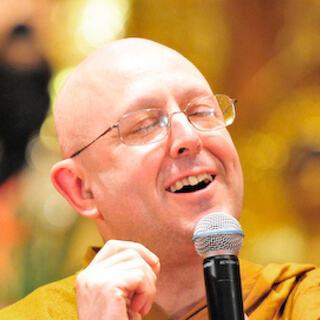
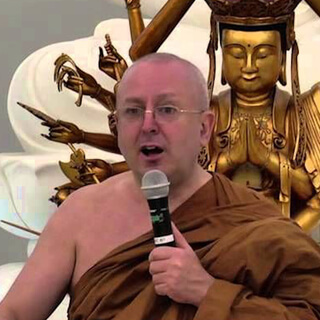
So now is the opportunity for a Dhamma talk and even though I'm supposed to not be doing very much,
I'm giving lots of Dhamma talks and even somebody asked,
Can we give a talk on how to keep our mind focused on what's really important,
How to prioritize and not get sidetracked on stuff or things which would say,
Why did I waste my time on that?
Please can I give a talk on prioritizing and what to give more importance to than others.
You know,
First of all that sometimes that people feel that they cannot prioritize and so there's a story which is a classic story.
I think I've wrote about this in one of my books and I will begin with this even though many have heard it before,
It gets me sort of talking again and that's a story of the philosopher who came to his lecture university with a jar,
An empty jar,
Glass jar,
Without even greeting his students,
He brought out a bag from his briefcase,
The bag had some stones in it and he put as many of those stones into the jar as he could fit in.
When he could fit no more stones in the jar,
He asked the class,
Is the jar full?
Not knowing what he was trying to prove,
They said yes.
He smiled and put his hand in a briefcase and brought out another bag of smaller stones,
Like gravel and he managed to fit many of those smaller stones in the space between the big stones.
When he could get no more gravel in the jar,
He asked the class again,
Is the jar full?
And the class were intelligent or nodded their heads,
Said no.
And he smiled again and reached into his bag for a third little,
A briefcase for a third bag.
This was of fine sand,
He poured the fine sand into that jar,
Shook the jar and much of the grains of the fine sand managed to find the space between the rocks,
The big rocks and the small rocks.
Is the jar full yet now?
No,
They said in unison.
When he smiled even broader and the water which he had for drinking,
He poured into that jar and of course the water found spaces between the sand,
The small rocks and the big rocks.
When I was told this little story,
This anecdote,
Because of modern times,
I laughed when the teacher,
The professor asked his class,
What is this proving to you?
What am I trying to demonstrate?
And one of the students put up their hand and said,
Sir,
It proves that no matter how busy our schedule is,
We can always fit something more in.
And of course that's the sort of answer we would get from our modern life,
Always squeezing something more in.
But that wasn't the thing which the professor was trying to demonstrate.
The professor said,
What it proves,
If you want to get the big rocks into the jar,
You have to put them in first,
Otherwise you'll never get them in.
It was an anecdote,
A little experiment which proved what we talk about priorities.
You have to schedule them in first,
Make them the most important,
Put them in your jar,
First of all,
And then all the other things which you think are important in life,
You can always fit them in somehow later on.
You can always find space for them.
But the important ones,
The big rocks have to go in first of all.
And so much of our life is like that,
Which sometimes we don't feel we have not time to fit in the important things of life.
But that also means that we have to know what are the important things of life.
And sometimes we are almost convinced by the people we meet,
By the books we read,
By the shows you watch on TV,
Almost by going to work,
People try and convince you what's really,
Really important in life is to doing your job to be successful,
To get the contract signed.
And it reminds me of one of these little anecdotes I got from a HR manager who's working for the Department of Fisheries,
I was actually the head of the human resources.
It's not a nice name human resources,
But nevertheless that's what it's called.
The Department of Water,
Fisheries and Mines or something in the UK government.
And she was telling her minister that you have the priorities wrong.
The priority is not getting the contract signed in Brussels with the European Union.
Is the main sort of priority is getting people to work as a team,
Getting people to become more effective in whatever they're doing,
To be able to be more happy,
More energetic,
Whatever it is,
To make this people-centered rather than results-centered,
To make it so that the people enjoy working here.
She noticed that many people would leave that department because they were stressed out.
She noticed that many people were just very,
Very efficient good workers.
But because they did not get the contract signed,
Even though they did so much good work on it,
That they were not praised,
They were not promoted,
They were moved aside.
You are praising,
You're rewarding the wrong things.
She told her boss who was,
He was a person called David Miliband.
And it later became even bigger responsibilities in the UK.
All because he realized what to prioritize in his management.
I took a lot of encouragement from that because as a monk,
As a senior monk,
You may be a good meditator but you also have to lead as well.
And it's leading by praising the right things in the monks who you teach.
It's encouraging our supporters and all the people who work in our Buddhist society to praise them for the right things.
And then,
And then we have this beautiful growth and success.
So it's understanding what to prioritize.
And you can see straight away,
It's not prioritizing the results,
But prioritizing the process and a good process,
A kind process.
I know that once people said,
Oh well,
If you are in any form of management or any form of personal authority,
Now should you shout at people,
Should you discipline people,
Should you get angry at people who don't do the right amount of work?
And of course that was never part of my even more,
I'd say even genetic makeup to be a disciplinarian.
But instead,
You find out just why are people not working hard?
Why are they not putting some energy?
I was going to say effort but not energy,
Some even like joy into what they're doing.
When people have a motivation of joy,
It's worth doing and let's do it.
There's a purpose behind this.
It's not just for money,
It's not because I'm afraid of what the boss might say.
You really want to do it.
Then you get so much more happiness and much better work out of the people who you're leading.
It's one of the reasons why that as we began this evening with some announcements and Dennis was saying about please if you possibly can just help out at Dhammasara nuns monastery on the weekend.
They've got some work.
We're having a range retreat in about four or five weeks time,
Five weeks time or six weeks time or something.
But they need to get everything ready for that.
And it's the same with the monks down at Stocker Road in Rolestown.
It's right on the edge of Kelp Scott on the Canning River.
So all of these,
If ever you try,
If ever you've managed to find the time to volunteer for any of these chores,
You work much harder and get so much more energy out of it.
It was a strange phenomena.
If you do it for money because it's your job,
You find,
Yeah,
You do it but if there's something else motivating you,
You see the purpose,
The goodness behind it,
You can work so much better,
So much more joyful.
Which is one of the reasons why what's really important as you're working,
Again,
Is the people you're working with,
Their happiness,
The sense of working as a team and enjoying what you're doing rather than just winning at all costs.
I told him,
My Margaret was talking about all sorts of things at monastery the other day,
And told him the last game of sport I played for the college in Cambridge where I was at,
Was a game of soccer and at half time,
Soccer,
You know,
45 minutes,
Either side,
Have half time in between.
After 45 minutes,
My side was about winning by six or seven,
There was so one-sided.
And the reason was because only nine of their team had turned up,
Eleven of our team had turned up.
I'm not sure why those two hadn't turned up from the opposite team.
So it was so one-sided,
Eleven against nine.
And I went up to my captain at half time and said,
Would you mind,
Is it okay if I play for the other side for the second half to make it,
You know,
Ten apiece and make it a good game to enjoy it?
And my captain just swore at me,
You can't do that,
This is our team,
We've got to win.
And that was the last game of soccer I ever played.
I was just so disappointed,
I'm not playing soccer to win,
I'm playing soccer to enjoy the game.
The enjoyment of the game was more important than the result.
And it's the same as whenever I meditate,
The enjoyment of the meditation is more important than just where it leads to.
I am a sort of present moment sort of monk.
So it's not just the buildings we put up,
It's just how they're put up,
Is more important to me.
So little by little,
You learn just what's important.
And I think I've been a pretty successful monk over 45 years,
I've been on this business,
Is it a business?
It's a love.
And anyway,
As one learns that type of priority,
Is actually to enjoy what you're doing,
Give it energy,
To be able to work with other people.
Sometimes it brings me on to,
You know,
How we prioritize stuff when we're doing things like some counseling,
Or especially,
As Dennis was mentioning,
The care group which we've just started.
What do you do?
You may know that I was never trained in counseling.
I've got no sort of formal training in that profession,
Especially no training at all in marriage counseling.
But there's so many people just ask me all these questions about these sorts of issues and they value my advice.
I can't understand that.
At least I couldn't understand it for many years.
How come that when you haven't had the training,
That you are wiser?
And it's the training is something else which I received,
Which I wanted to share now with those who are ever in a position of counseling or caring,
Talking to someone.
Because you're not talking to someone.
It's that little insight which,
To actually to go back to where it started from,
A story you've heard many times before about the marriage,
About the husband and the wife,
Or rather the bride and the groom.
And with Dennis,
Dennis is the,
Who just was talking in the beginning,
He is our president.
He's also a religious marriage celebrant.
Very often when we have a Buddhist who wants to do a Buddhist marriage ceremony,
He does the secular side of things and I do the religious blessings.
And part of the repertoire,
Which I nearly always do,
Because I thought it was important,
And other people,
The people I married,
Say it's important is to look in the eye of the bride.
And this is saying,
Now you're a married woman,
You must not think of yourself.
Straight away,
No she always nods and says yes,
Straight away look at the groom,
Now you're a married man,
You must not think of yourself.
He nods eventually.
And then also the groom,
I say,
Now you're a married man,
You must not think of your wife.
And straight to the wife,
Now you're a married woman,
You must not think of your husband from this moment on.
It's a lovely moment because they always get confused.
We always think that we're supposed to think of our partner.
Those of you who are counseling think that you must think of the person on the end of the line you're listening to.
They're the most important.
I don't agree with that.
The answer to that little riddle is that the husband and the wife should never think of themselves,
They should never think of their partner.
They should only ever think of us.
It's like when you're speaking and counseling,
You're in it together.
It's a joining of minds of hearts or whatever.
And even knowing maybe on a telephone or an internet or something,
You're in it together.
So it's us,
It's the important part of things.
And then when it's all about us,
Not about him,
Not about her,
Not about me,
It's amazing the sorts of things which can come up into your mind.
Insights,
Ways of speaking,
Ways of joining in this meeting of someone who may be troubled and you who just allows yourself to be troubled with them.
Similarly I gave is if someone is really in a lot of trouble and they're suffering and they're in pain,
Emotional,
Physical,
And sometimes it's like they're in a pit,
They fell in a deep hole and if you try and connect with them when you're standing on the top of the hole and they're down the bottom,
It just doesn't work.
You don't relate.
But if you can somehow metaphorically,
Not physically,
Metaphorically get into that hole with them.
So be where they are,
Feel where they are,
Connect with them.
That's what I mean about us.
And then when you can connect with them,
Then it's like you can hold their hand.
Again,
Just metaphorically,
Not literally.
But whenever you do go in those holes,
Always remember to take a ladder so you can get out and bring them along as well.
There's little metaphors like that which I make up myself,
Just help to learn how to connect with someone in a problem which is totally foreign to me,
Like marriage problems or financial problems or I try and disappear as a monk and just be a friend,
To be them,
To join in the sense of it's not about me,
It's not about you,
It's about us.
And it's very often,
Not only when we part and the telephone call is finished,
So often they say thank you and I say thank you too.
I've grown and learned from that conversation,
Little time we spent together.
Now I go off and be a monk and sometimes share some of those insights later on.
So what is really important about all of that is our disappearing and uniting,
Just about us.
And the other thing which I have learned to do is always to let go of all of the learning which I have,
All of the advice which I have got from really good people.
So let that all go and actually feel the problems.
Sometimes all the,
And of course I was quite smart and went to Cambridge University to learn theoretical physics.
It wasn't a waste of time,
But it was just sometimes I think maybe I should have done something more powerful.
And of course later on I did,
By becoming a monk with a great teacher like an Ajahn Chah.
But what I learned from Ajahn Chah who was,
He only went to four grades of school,
Year four,
And that's when there was no more school for him in the poor parts of Northeast Ireland at the time.
He was,
I'll probably say this,
He probably was the most intelligent person I've ever met.
And sometimes I wondered why.
And sometimes it's because he never allowed his learning to stand in the way of truth.
It's like truth is right in front of you.
And sometimes you feel that can't be right because that's not what I've been told.
It goes against what's said in the books.
Simple things like even when I meditated just a few moments ago,
The posture,
Where I should put my hands,
How should I have my back,
What I should do,
I'll make it up as I go along,
Literally every time,
Simply because I'm aware of what's happening and respond accordingly.
No two meditations from me are ever the same.
We cannot just rely on what we're taught.
Instead we rely on something much more powerful,
These attitudes of mind,
Of like joining with a person.
It's about us,
Of being kind,
Making that the most important.
And being kind is just that caring.
It's again emphasized in that little story I said,
Because again this was,
I said somebody's name wrong this morning at lunchtime.
And Ajahn Brahmāti said,
Are you talking about that name?
I said,
Oh no,
I got confused because this was the name of the doctor here.
It's an old story,
Who wanted to resign because he had a tragedy in his work.
One of his patients died and that was where I asked him to please from now on,
Never make curing the most important thing in the world in your job.
But make caring the most important.
Now in English it's the change of one letter from a U to an A,
To care.
That is you're a carer,
So make that the most important thing in the whole of your medical practice.
And he was very intelligent,
He understood straight away,
He'd never been taught that before.
And it was not something of how to treat this disease or how to treat that illness.
It was just how to be with the patient and connect with them.
And when you care for somebody,
You have caring the most important.
Sometimes ideas of treatment come up,
Which are just,
Where did that one come from?
It works.
What you're doing,
If you're innovating,
You're feeling,
You are coming across the place where wisdom came from in the first place,
Which is a human being connecting with another,
Pushing aside everything you've been learned,
Everything you've learnt and feeling the solution.
And I always put that down to why now I have whatever counseling which I have done,
Whatever advice which I have done,
How it works.
What comes to my mind now is because there was just,
Please I know that sometimes people think I'm just praising myself.
I only tell the inspiring stories simply because they're inspiring and it's something which works,
Which I want to share with others.
And that was that time when I used to go to prisons to teach and some of those prisoners had done some terrible,
Terrible acts in their life.
But this time that they received a telephone call and the person wanted to speak to me,
Would not want to speak to any other monk,
He was one of the prison officers at one of the high security jails here in Perth.
And he said that he was about to retire soon.
He'd been in the prison service the whole of his life.
That was his career,
The only thing he really ever done.
And he said he wanted me to go back to teach in prison.
And when I said how many other things I do in my life and it's very busy and I said,
I will send another monk,
That's when he replied,
No,
We want you.
I said,
Why me?
And that's when he gave me this praise which again I do cherish.
And it's good to cherish praise.
I mean a lot of people remember all the times they were told off or all the times they were excommunicated from the monastery where they grew up or other silly stuff.
But it's nice sometimes to remember praise,
Because it encourages you and inspires you and gives you more energy and just wants to keep on doing something because you realise that it made a difference.
And that was when he said to me,
He said that strange thing,
Unique,
I've never seen this before.
In all the years I've been serving as a prison officer,
He said all the people who came to your class,
All of them,
When they were released,
They never came back to jail again.
There was recidivism of zero.
I don't know how you did that,
But we want you back.
I thought,
Wow,
That was really amazing.
Why?
I don't know,
But there was probably because,
You know,
Just a simple kindness and caring.
Never try to cure a person,
Say you did this wrong,
So don't do it again.
This is the therapy you should use.
I just was a friend to people.
Being the friend,
The kindness,
The carer,
Really caring,
Not trying to cure.
And just learning how to,
When I was talking to someone,
Was to totally be with them.
To actually to,
About us,
This is us time,
And to be a friend.
And with those qualities,
I had trust in human beings that they would.
By being respected,
By feeling the care,
By not being judged.
That I would say something or we'd have a conversation,
And that would be how they learnt,
How they grew.
They certainly were never judged by me.
They shouldn't be judged as somebody else's job,
But not the job of someone who cares.
So that became really important for me.
That became the priority,
Is just almost to go into a meeting not knowing,
Not being afraid not to know,
And trusting in the caring and the mindfulness.
That when a good word needed to come up,
It would come.
It's just,
Even the way I teach here,
Every time I come here,
Even teach the monks.
Oh,
It's sometimes I get,
Again please excuse me,
I get inspired by what comes out of my mouth.
Because I never,
I never thought about it,
I never planned it,
I never wrote it down,
I must say this,
I must say that.
It just comes and some of the stuff is just wow,
That was amazing.
Where did that come from?
Simply because you can relax and trust.
And it also means that how what you make important is,
Actually I did plan this one,
When I thought about importance,
What should I really say?
It's one of those other little great anecdotes,
Emperor's three questions,
Leo Tolstoy,
What are the most three important things in the world?
What's the most important time?
Who's the most important person?
What's the most important thing to do?
What he mentioned about the most important thing to do is to care.
The most important person,
I thought this is brilliant answer,
The one right in front of you.
So when you are talking to someone in trouble,
They're important.
And then really the most important,
Because that,
Your conversation is happening right now.
When you're with a prisoner in jail,
They're the most important person in the world.
Listen to them,
With them,
You know that's what they feel.
That's one of the reasons I reckon I got that wonderful comment from the police officer,
Or the prison officer,
Because when you're in a jail,
You feel like you're just the lowest of the low.
That you know,
You don't count,
You feel diminished,
Stigmatized.
There's so much more in a human being than the crime which they did.
So anyway,
When they were feeling respected and cared for,
Because I gave them a feeling of importance,
That mattered.
It's the same whenever you see someone who's doing a building job for you at monastery,
Or they,
A person just walks in.
You know,
It happened even recently,
A long time ago.
I remember these visitors came into Bodhinyana monastery,
And I went up to them because I was caring,
And I asked them,
Said,
Can I help you,
What can I do for you?
He said,
Oh no,
We haven't come to see the monks,
We've come to see your kangaroos,
Because they brought some friends,
Some relations from Italy,
And they wanted to see kangaroos.
And Bodhinyana monastery is one of the easiest place to see the wild kangaroos who don't run away.
And that happened again recently,
About two or three months ago.
As I'm walking,
I was supposed to be going over to the Jhana Grove monastery from Bodhinyana monastery,
And these,
Saw these people come and said,
Oh,
Can I help you?
I said,
No,
Where are the kangaroos?
We've come to see your kangaroos.
Not interested in Buddhism,
Not interested in meditation,
Not interested in monks,
Not interested in anything.
But,
So,
The first time that happened,
I suggested we change the name of Bodhinyana monastery to Bodhinyana Zoo,
Or something like that.
But anyway,
So when,
Sort of,
You can connect with a person,
Be kind,
And the one in front of you is the most important person in the whole world.
And the most important thing,
Their most important time is right now.
And that answers for me anyway,
The questions of priorities.
Even when I meditate,
It's not about getting into deep meditation,
Or getting great insights,
Or getting enlightened,
Or anything like that.
That's not why I meditate,
Because that's in the future.
Instead,
You meditate right now.
This moment is the most important in the whole universe.
And it's right in front of me.
And I care for it.
That's all.
And when you're talking with a builder,
You're building an office,
New office for the monks over at Bodhinyana monastery now.
When we're building a person right in front of us,
It's the most important thing in the whole world.
If I'm doing any of the building work,
Like we're making the gutters,
Right now,
That is the most important thing in the whole world.
I'm not a teacher,
I'm not a meditator,
I'm the roof worker,
When I just put up the gutters.
So you put all your attention into what you're doing right now,
It's the most important thing in the whole world.
Which is as simple as the Empress requires.
And that makes your life mindful,
Caring and successful.
Which means that when you give a talk,
This moment is the most important thing in the whole world.
This talk is the most important for me.
And I do care.
Even though sometimes I think,
Oh,
Coming out to being 69 soon,
I should be retired.
What am I doing this for?
I've worked hard enough.
I could find a nice quiet deep cave somewhere and just let all the other monks give the talks.
Then we've got some really good monks now giving talks.
You can hear them on YouTube.
And it's wonderful to see people praising these monks.
And there's good teachers,
Even very young monks.
Sometimes I say,
Where on earth did they learn that from?
It's the same question I asked myself,
Where did I learn it from?
From being in this moment by being kind,
By being caring.
That's where the great wisdom comes from.
They answered the question,
Where did Ajahn Chah get his wisdom from?
He was,
Oh,
Deep meditation.
Just,
Yeah,
What do you mean deep meditation?
Deep meditation gets silence.
You get bliss,
You get energy.
Where did the wisdom come from?
And some of the things Ajahn Chah did,
Oh,
Okay,
I'm going to indulge myself.
When,
Oh,
The time when Ajahn Chah did his exorcism.
You know exorcism?
When someone gets possessed.
And Ajahn Chah was there,
You know,
At his hut.
When one morning the villagers came.
And the villagers said that,
What are the women in our village who have been possessed by a demon,
By a monster?
And she was crazy.
We're trying to sort of help her all night,
But you know she's screaming,
She's crying,
She's mad.
And at that point you could actually hear her,
Because they were pulling her into the monastery.
And literally dragging her.
Three or four tough northeast farmers had to just drag her.
And when Ajahn Chah went,
What could you do?
They said,
Go and just call a doctor,
Get some medication,
Do this.
And that's not Ajahn Chah's method.
He just shouted at one of the novices,
Dig a hole,
I need a hole,
Really deep hole,
Dig it now,
You as well.
So we got two or three novices digging like mad,
Trying to sort of dig a hole.
They didn't know why.
And another couple of novices,
Build a fire,
We need some boiling water,
Lots of boiling water.
And that was the amazing thing about seeing wisdom in action.
You just didn't know where this was going to,
Where it's going to lead,
But you knew it'd be something fantastic afterwards,
Which you would never forget.
And so as they dragged this woman into Ajahn Chah's place where we received guests,
You could see her eyes were bulging.
And she was,
No,
She was actually foaming at the mouth.
And it took these villagers,
Had enormous strength,
This Thai village woman.
And worst of all,
She was swearing.
There's words which I never knew existed.
They're in Northeast Thai language,
East Sarn.
Very bad words apparently,
I was told afterwards,
At one of the holiest monks in the area.
And they would never ever do that in their right mind.
They convinced her that she really was possessed or crazy or one.
So what did Ajahn Chah do?
Deep a hole,
More hot water.
Because this is a very bad demon spirit who's possessed this woman.
She's so dangerous.
The only thing we can do is to throw her in the hole and pour the boiling water over her and then bury her.
That's the only thing we can do.
I need more boiling water.
Deep a hole.
I don't know if that is acceptable medical practice here in Western Australia.
I don't know if that is allowed by the care group,
If you ever get someone like that.
But I don't think it would fit the protocols and the procedures.
But Ajahn Chah could do that.
And the woman,
And even I thought he might actually do that.
Because Ajahn Chah,
If he did,
He had enough respect in the whole community that people would probably let him off.
But anyway,
The most important thing,
This old woman thought he would do that.
The one who was possessed.
She thought she was going to be thrown in a hole,
Poured boiling water all over her and then buried.
Now I ask you,
What would you do if you thought that was going to happen to you?
So it's amazing to see that the language got less.
She started to calm down.
She stopped trying to escape.
And there's only five minutes,
Very fast therapy.
Five minutes she was sitting there in front of Ajahn Chah with her hands up,
Just exhausted.
And Ajahn Chah was giving her the five precepts.
And the villagers took her home,
Exhausted,
Tired.
And to have a good sleep,
I would imagine.
But the problem was solved.
Absolute brilliance.
And to see that with someone,
Where did he learn that?
Just the inspiration of having a mind which could trust its innovative processes.
Always coming from kindness and care.
And doing things which I don't think any top psychiatrist would ever try that.
Wonderful examples of what is really important in life.
And you know that's one of the reasons why,
Even for those of people who are very well versed and knowledgeable about how the Buddha taught,
I've often mentioned this and I remember this when I was meditating.
Beginning of this session.
That there is a time,
Just this is basic Anapanasati sutta.
That when you start meditating,
When you start meditating,
They say is to establish mindfulness.
Before you even start watching the breath.
I have this Pali word called Pari Mukang.
Many people say,
Are your nose in front of you or whatever.
All of those things never made any sense to me.
Just in Pali,
In that old language.
And of course the insight came.
It doesn't mean in front of your nose or in front of you.
Remember in front means you make it the most important.
You give it priority.
It's the first thing you do.
Even before you even think about the breath.
You make mindfulness the priority.
Establish mindfulness as the priority first.
And of course that,
We realized I was doing that anyway.
But it changed the way I described and led guided meditations.
Forget about the breath.
Just make mindfulness the most important thing in the whole world for you.
What is mindfulness?
Present moment awareness.
Whatever is in front of you is the most important thing in the world.
Then you're mindful.
You're aware.
And how do you maintain that awareness?
Now is the only time you have this moment that's most important.
Care for it.
Curing it.
Destroys mindfulness.
You lose the present moment.
And you're thinking about some place in the future.
So that's one of the reasons why this focusing in this moment.
Making the person or the job or whatever it is in front of you the most important thing in the whole world.
Joining.
It's not about the job or the client.
It's about us.
You know because it's about us.
If I'm tired I take a break.
Because I count too.
It's not about giving to somebody else.
It's about giving to us.
So I need a break.
If ever I need to go to the toilet I'll get up and go.
If I need some quietness in my mind I'll go to my cave and sit down.
Or go in the room here.
And I've often said for those people at work the most important thing is us.
You and your work.
Not just your work.
You and your family.
Us.
You and life.
You and your client.
Which means that you do count.
You are important.
And it's just such an obvious thing.
That when a person is tired that they can take a break.
Because they can just close their eyes and do even a minutes of meditation.
Being here right now.
Centering themselves.
Being here.
Being kind to themselves.
You recharge.
Recharge not just your mental energy.
But your insight.
Your kindness.
So that then you can serve.
You're far more efficient.
Far more productive.
Far healthier and happier.
It's a wonderful thing.
Which you can learn to do so much more in this world.
When you only have this moment.
And you're kind in this moment.
To whatever you're facing.
Now's the most important time.
One in front of you the most important person in the whole world.
Or the thing in front of you the most important person.
And you're kind.
Or as it says in the second factor of the Noble Eight-Five Path.
To make peace.
It's important to make peace.
Be kind.
And be gentle.
The three right motivations.
Get the motivation right where you're coming from.
How that develops.
How that unfolds.
How that evolves.
Would always be wonderful.
Surprising.
Not what you expected.
Innovative.
Insightful.
It'll be wonderful.
It will inspire you and inspire others.
Make peace.
Be kind.
And be gentle.
Thank you for listening.
Sadhu.
Sadhu.
Sadhu.
Very good.
Okay so now we have the opportunity for questions.
From many many different places in the world.
So see where we have the questions today.
The staff who just look after the internet.
Make sure it's all connected up.
And everything works fine.
Does a wonderful job.
So thank you so much.
Now we have some questions here.
Four questions from Oregon.
From the Czech Republic.
From USA.
And from one from here.
I often find it hard to motivate myself.
Even for my daily task.
Is there any advice or stories you know how to help motivate me?
Is to put joy into what you're doing.
So even if it's like washing dishes.
Don't just wash the dishes.
Wash the dishes with a song.
I like washing dishes.
Make up a silly song.
I don't know what we do in Bodhinyana monastery.
But sometimes some of the monks are just crazy I think.
But they're not really crazy.
They're just whatever they do.
They do it with a bit of fun and joy.
If it's fun.
You don't know that's a motivation.
It's a joyful thing to do.
Even when I was a school teacher.
I tried as much as possible to make things fun.
So for myself and for my children.
I was teaching.
So that they could really focus in the class.
They did very well.
Because it's the joy.
That is what sort of let them listen.
If you want sort of the practical nowadays.
How to motivate people to come and listen to my talks.
Every now and again I tell a joke.
Why do I tell a joke?
Because when lots of people are here.
I look at them and they're starting.
The heads going down.
They're falling asleep.
So it's time for a joke.
And then they wake up.
And then I can actually teach them some Dhamma.
That's this wonderful.
Actually I don't know actually who it was.
But it's supposed to be a Tibetan monk.
A long time ago said.
That when they're laughing.
That's the only time people have their mouths open.
And that's when I can put in the pill of Dhamma.
When their mouths are open.
So that's how you motivate people.
Why do people come to this center?
Why are you tuning in to watch this evening on the internet?
Why?
What motivates you to listen to this?
Because it's joyful.
It's not the joy of hahaha.
The joy of hearing something insightful,
Meaningful.
Which sometimes changes your life.
That type of joy.
That motivates you.
You want to come.
You want to listen.
You want to hear some of the other talks.
So motivating whatever work you're doing.
Doing your daily tasks.
Put some fun into it.
Whatever you're doing.
And that means do it with others.
Joy.
It's not getting the job done.
It's doing the job.
Don't look at finishing it.
I told this story today to somebody.
Just at lunch time again.
That was a story where I told about Ajahn Buddha Dasa.
Very inspiring monk.
He was building his hall in Thailand.
And it was the close to the start of the rains retreat.
And so when the rains retreat started,
He sent all the workers home.
And the builder too.
Go home.
Don't want any noise during our rains retreat.
Three months we're going to be quiet.
Okay,
Very good.
So they all went home.
A couple days later a visitor came and said,
Oh,
When is your hall going to be finished?
And without so many pause Ajahn Buddha Dasa replied,
Oh,
The hall is finished.
What?
There's no glass in the windows.
There's no tiles on the roof.
There's rubbish all over the floor.
You're going to leave it like this?
What do you mean it's finished?
And Ajahn Buddha Dasa replied,
Sir,
What's done is finished.
And he went off to meditate.
That's very brilliant.
Because is anything in your life ever finished?
Is a treasury ever finished?
Is doing all the problems for the Buddhist Society of Western Australia ever finished?
Is whatever else you do in your life,
Is it ever finished?
No,
There's always some more.
For those of you still at school,
There's always another exam coming next.
You never finish your exams.
I shouldn't tell you this,
But consider the young visitor today and the only time you finish your exams is when you fail one.
If you pass it,
There's another one afterwards.
It's true,
Isn't it?
Think of it,
It's logical.
Anyway,
Shouldn't have said that.
So how to motivate yourself,
Just enjoy the moment.
Don't enjoy the results.
Just doing it,
Having fun doing it.
From the Czech Republic,
How to prioritize skillful thoughts when desire is too strong,
As if it is independently coming from the body.
If desire is strong,
Desire for what?
This was one of the things which as a monk,
We spend a lot of time meditating and sometimes the thoughts would come up in the mind when you were trying to meditate.
And some of those thoughts were fantasies.
Oh,
I'm still young.
Maybe that my old girlfriend is still available.
Maybe that I can make a fortune.
Maybe I can do this.
So you have all these fantasies and sometimes if you have a fantasy,
You're always the winner.
So it's not reality.
But to stop those fantasies,
I always used to ask,
Then what,
Then what,
Then what,
Then what,
Then what?
And try to fast forward the results of that.
And then desire was just meaningless.
So even recently,
I was actually,
Where did I say this?
It was actually,
I was reading from my little diary and I got some quotes there.
One of the quotes is from Oscar Wilde.
There are only two tragedies in life,
He said.
Only two tragedies in life.
The first tragedy is not getting what you want.
The second tragedy is getting what you want.
When I first heard that,
Wow,
That's great.
Getting what you want is disappointing because you find out that it's not exactly what you expected.
It's different than what it promised.
It's unfaithful to all its pledges,
Wanting.
Wanting,
When you actually get it,
Hmm,
Now what?
So be careful of wanting.
When you don't get what you want,
Yeah,
We all know that.
When you get what you want,
It's not what you expected.
So that's one of the reasons why,
As monks,
We let go of wanting.
It's other freedom,
The freedom from desire,
Not the freedom of desire.
Freedom of desire is you can get whatever you want,
Whenever you want.
The ability to chase your dreams.
Trouble is,
When you chase your dreams,
You find when you get your dream,
It's not what you expected.
So after a while,
You stop chasing.
You stand still.
This moment is the only time you have.
What's right in front of you is the most important thing in the whole world.
You care for this.
You find,
Ah,
That's happiness.
Freedom from desire.
It's independently coming from the body.
It's not independently coming from the body,
It's just nature.
It's not nature,
Sorry,
It's just habit.
So skillful thoughts when desire is too strong.
So when you,
I don't know what you mean there,
Maybe you got some sexual attraction to another person in the office,
Then you say,
Well,
Then what?
I get into trouble and there's all sorts of problems afterwards.
When I want this and I want that,
They want something else.
And then,
Oh,
It just gets really complicated.
So the best thing to do is just imagine what it's like to have no wants in the whole world,
To be totally content,
So peaceful.
You don't need anything.
And then that is a good way of overcoming.
It's a good way of overcoming the lust in the mind.
And from the USA,
Many times after sitting,
I notice a lot of tension and irritability pop up.
Even when the meditation is quite good,
What might be the cause of this?
If you said that in front of me,
I'd ask you what type of meditation you do.
Tension and irritability usually come up because you're trying too hard,
Instead of just learning to meditate to literally relax to the max.
So when I meditate,
As Ajahn Chah used to say,
You meditate to let go of things,
Not to attain things.
So the body to relax,
So it just vanishes.
And the mind becomes so still that that's vanishing too.
You're letting go of things.
When you're letting go of things,
You realize the less you have,
The more peaceful you are,
The freer you are.
And you realize that comes about through letting go of desire,
Not making more desire.
And I've done that before when I was a very young monk,
Just really desire,
Right,
This is it.
Oh,
Here we go,
Some more old stories.
The time when I was,
Went to my one of my first Waisak ceremonies.
This was,
I was a student at Cambridge.
Very first time I went to Waisak.
And I heard there about the Buddha's resolution,
That he would sit down in his seat and he wouldn't move until he became fully enlightened.
And he made a rest,
Even if my blood dries up and my bones turn to dust,
I will not move from this seat until I got full enlightenment.
And I was only 18 at the time.
And,
But I thought,
Well,
I'm smart,
You know,
I'm going to Cambridge.
You know,
The Buddha went to Cambridge,
If he can do it,
I can do it.
So I decided to get enlightenment over and done with pretty quickly.
So I went back to my room and I made a resolution as well.
Seriously,
I'm not going to get up from my meditation seat,
Even if my blood turns to dust,
Blood dries up and my bones turn to dust,
I'm not going to move until I'm fully enlightened.
That's what I said.
And I could usually do 20 minutes meditation,
That was max for me.
And then about 30 minutes,
I was in agony.
I opened my eyes,
I wasn't enlightened and my bones hadn't turned to dust,
My blood hadn't dried up yet,
So I closed my eyes again.
Another 10 minutes,
It was agony.
I wasn't enlightened after that,
40 minutes I did.
That's my record,
My PB at the time,
Personal best,
With total stupidity,
Because I was trying,
Instead of learning how to relax.
You relax your body,
There's no tension at all.
You relax your mind,
There's no tension,
No irritability.
So a mosquito can land on you,
Or like many times,
Hundreds of mosquitoes,
Or fly goes up your nose,
As they do here in Australia.
All these things,
You don't want anything in the whole world,
They all pass.
You're kind to that little fly.
The fly doesn't mean any harm,
Just wants to get some liquid or something.
So after a while,
The tension and irritability disappear,
When you stop trying to attain things.
When you meditate,
Now is the only time you have.
How you're feeling right now is the object of your meditation,
It's the most important meditation object in the whole world,
And you're just kind to it.
But there's so much kindness,
So much peace,
So much being in this moment,
That's what continues after you meditate.
So it's usually,
I'm not sure if this is the case from the USA,
It's usually from striving and forcing,
And that is what carries on after you meditate.
Of course,
If you strive,
You'll always get frustrated after a while.
And lastly from Perth,
I find it hard to concentrate at work even after I meditate.
It's like my mind fighting with my brain who's asking me to start working.
What can I do to concentrate at work?
I don't get,
I don't like the word concentrate,
I mean to focus at work.
And that is one of the reasons why that Ajahn Chah used to say that,
If you are meditating,
Give it 100%,
If you are sleeping,
Give sleep 100%.
You don't think about meditating when you're laying in your bed.
When you are,
What is the other thing,
When you're working,
Give 100%.
When you are just having fun with your friends,
Give that 100%.
In other words,
You are right here in this moment with what you're doing.
If you're at work,
You're working.
If you are,
It's the most important thing in the world,
Because it's right in front of you.
If you are resting,
You don't think of work,
You rest.
It's amazing just how much you get done.
Sometimes people are working and they're thinking of their family.
Sometimes they're with their family and they're thinking of a football match.
Sometimes at the football match and they're thinking,
You should just have a football match.
I must admit when I went to the football,
That's what I think about.
But a lot of the times that we need to focus on this moment,
Present moment awareness.
Maybe that's one of the problems when people work at home.
It doesn't feel like they're supposed to be working because it's home.
But anyway,
After you meditate,
When you come out of meditation,
Smile,
Have joy and now we have to work,
I have to work.
Even,
It's a hard thing for me,
I told the monks this,
That sometimes when I meditate here,
We start the,
Before I start the talk from 7.
30 to 8 o'clock,
Do some meditation.
Sometimes even like this evening,
I could have happily just kept my eyes closed and carried on for another hour or two.
But you stop there out of care for other people.
It's not just about you when you meditate,
It's always about us.
So you know,
If you have to work,
It's about us.
It's my duties,
My roles,
My jobs in life to share.
So person in Perth,
Maybe don't be so about me.
It's always about us and show the people at your work when you meditate,
Just how that improves your work standards,
How you can achieve more with best stress,
Much better work that might encourage them to also do some more meditation.
Maybe that might help.
Anyway,
There we go.
Is there any more questions for the night?
Yeah.
I can always ask some questions tomorrow.
Okay.
Very good.
Okay.
Now we can probably finish off now.
So thank you all for listening.
And as it got my habit over the last few weeks during the COVID time,
Because people,
Some people are sick,
Some people are hungry,
Some people are afraid,
I got into the habit of giving a blessing for everybody,
A blessing of well-wishing for happiness and strength and for good health.
So just give the blessing before we finish.