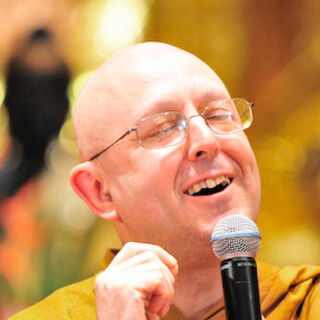
Rodney,
Who want to go to the introduction to meditation class that is in the room to my right.
Those who are here for the ongoing class,
Please sit where you are and enjoy a nice 40 minutes of quiet and calm meditation.
I have to say that because I know when I first started meditating just 10 minutes was all I could do.
And that was a bit of a push.
So people who come just off the street first time,
To come here where we do about 40 minutes,
Sometimes 45 minutes is a bit of a big ask.
So we invite people actually to do the meditation in the beginners group first of all until your mind and your body gets used to sitting still for such a long time.
And it's.
.
.
Now we have chairs,
It's easy for your body to be reasonably comfortable,
But even so there's always aches and pains somewhere in the body.
And that's just part of getting old,
Getting old,
Being young you have aches and pains too.
So the first thing we always like to do in meditation is to relax the body.
For the last couple of years,
People have been talking a lot about the mindfulness programs and you can go to these courses on mindfulness which cost a lot of money and you can come here and get even better for cheaper.
You can't get any cheaper than here.
And I remember just a couple of years ago being in Kuala Lumpur and this really wealthy young man came in,
His father owned some,
Not one businesses,
But many businesses and he had some problems with his life.
So he went to this United States,
The Maya clinic,
Or something,
Where all these great film stars,
Incredibly rich people,
Politicians,
They go for rehab.
So he went there and he came and told me,
You know all those people who teach there,
They're all Buddhist.
And he said,
They teach exactly the same as you do here in Kuala Lumpur and you teach it for free.
I said I didn't need to go all that way and spend all that money.
I said yeah exactly.
You can come and get it from the source and it's the best and the cheapest.
So you're all very lucky here to get the best meditation teachings and even more importantly,
The cheapest.
Actually it's not the cheapest because we never say it's cheap here,
We call it priceless,
Which is much better than cheap because this lady once called me and she said,
How much do you charge for your meditation?
I said nothing lady.
She said well you can't be any good then,
And hung up.
And that's not right,
Just because you don't charge doesn't mean you're no good,
It means actually you're probably even the best.
So this is top range meditation teachings with mindfulness.
Now it's great to understand what this really is.
Mindfulness isn't awareness,
You know what's going on,
But everyone is aware,
Is mindful.
But it's putting mindfulness in the correct areas,
It's where you place your mindfulness makes all the difference in this meditation technique.
So where I encourage you to place your mindfulness,
What to be aware of,
Is first of all just relaxing your body.
Because if you put your mindfulness on a place which is not interesting for you and it doesn't really develop some benefits,
Soon your mind gets bored and you go thinking or dreaming of anything else,
Something else.
So the mindfulness has to be focused on a place which is you understand what you're doing and it gives you some quick,
Very clear results.
So mindfulness of the body first of all.
And the mindfulness of the body is just simply being aware of how relaxed you are,
How comfortable you are,
How at ease is your body.
So you start off,
Obvious stuff,
How are you sitting?
Is your body comfortable?
Have you got your legs in a position which they're going to cause you pain later on?
Is your bottom properly adjusted on the chair?
Is your back just nice,
Doesn't need to be straight,
You feel,
That's what mindfulness is,
You feel the position which is the best for you.
And sometimes you have to experiment.
If your back is too tight,
It feels,
Yeah it's okay,
But loosen it a bit,
That feels better.
You say it feels better,
What has happened there?
You are mindful of your back and you are mindful enough to see what I call feedback.
You see the feeling in your back change,
When I let go of it,
It feels more comfortable,
You've got feedback which shows you that you have relaxed the body.
And that whole idea of feedback,
You know,
You relax this,
It feels better.
You move this,
It feels more comfortable.
Sometimes you move and it's less comfortable,
You've gone in the wrong direction.
But it's the awareness of the state of your body gives you enough feedback to get into a very comfortable position.
But we don't stop there,
Because that's just ordinary stuff.
Then you use that same mindfulness,
Not just to the general position of the body,
But even of parts of your body inside.
You may feel a little bit hot,
You may feel a bit ache and irritation,
You may have hay fever and have an irritation in your throat or in your nose.
You may have an ache in your tummy because of what you ate today.
Or just because you've got long-standing irritations in the bowel.
Whatever it is,
That feeling,
You become mindful of it,
You're aware of it as much as you possibly can.
And then you see just what makes it worse,
What makes it better.
The mindfulness gives you feedback,
Sometimes just the attitude you have to it,
Oh,
I don't like this,
You can feel it actually get worse.
Oh,
Just leave it alone,
Let it go.
This can sometimes get better.
You get the mindfulness of the attitudes of your mind and how that affects your body and how it eases some of the tightnesses and tensions in the body.
And of course,
Like anything else,
It takes practice,
But after a while,
The mindfulness feedback will teach you how to relax your body very,
Very deeply.
And how deep do I mean?
When your body does get fully relaxed or pretty deeply relaxed,
It feels pleasant.
You can't look at any places,
Any tightness anywhere,
Nothing being stretched,
Nothing being squashed,
No pressure on parts of the body,
Everything feels very loose,
Relaxed.
And the similes which I can give for this is,
For me anyway,
Sometimes you wake up in the morning,
You've had a really good night's sleep and you feel really cozy under the sheets or the blanket.
And you all know that feeling,
You just don't want to get up,
You feel really nice.
It's the pleasure of a relaxed body.
Some people,
They have to wait till they go on holidays,
Sitting on the beach,
Just lazing on the beach,
Everything nice and relaxed,
No pressure and the body feels good.
Or you go to a spa somewhere which costs a lot of money,
And there you sort of have massages or hotels,
That also relaxes the body.
And you can feel it relaxed,
It feels good,
It is a certain pleasure called the pleasure of a relaxed body.
And it's quite important for you to be mindful of the delight of a relaxed body because that keeps you more aware of it,
You're having fun,
It feels good.
And one of the important insights in meditation is once you can perceive and be mindful of the pleasure of relaxation,
Just how delightful your body feels when it's relaxed,
The relaxation goes even deeper.
Not because you decide to relax,
But the delight,
That is the vehicle which takes you deeper into relaxation.
So you've actually really relaxed your body.
Now that mindfulness which you've just been doing to relax your body,
Together with the letting go,
It's an important word,
This letting go,
Which was actually the cause of that relaxation,
Because you've done that on your body,
Aware,
Letting go,
That's relaxed the body,
You do exactly the same,
Continue on with your emotional world.
Now of course,
First of all,
As everybody should know these days,
That if you do have any emotional problems,
Any fears,
Anxieties,
Traumas,
Whatever it is,
A lot of that is actually stored in the body,
In the tension,
The tightness,
We just had a very difficult day.
And just by relaxing the body and getting the body really at ease and peace,
A lot of the emotional problems,
Not all of it,
But a significant amount,
Is actually released just in physical relaxation.
You do feel more at ease inside your own head when the body is relaxed,
Because a lot of the physical,
Emotional tension stored in the body is released.
So you're already sort of starting to relax your emotional world.
Now you go really deeper in relaxing your emotional world by just doing exactly the same,
You can feel the tightness,
The agitation,
The pressure,
The lack of relaxation of your mind.
You're mindful of that and you see how to relax your own mind.
Now of course,
Most people will say when they do meditation,
I can't stop thinking,
Thinking,
Thinking,
Thinking,
Thinking.
Yeah,
That is a problem,
But what is the solution?
The solution to understanding,
Those thoughts aren't really the problem,
It's the underlying sort of agitation,
The thing which causes the thoughts in the first place.
That is the problem.
And this particular method of being mindful of the general relaxed state of your mind,
Or the lack of relaxed state in the mind,
The agitation,
Be aware of that.
Forget about the thoughts,
I don't mean just ignore them,
Don't think they're a problem at all,
Just leave them alone,
But just be aware of the general state of relaxation,
Agitation,
Stress or peace of your mind.
Put your awareness there.
And when you're mindful of the general state of relaxation or agitation of the mind,
You will soon be able to do that same letting go,
The same relaxing,
Which relaxes the body,
Do that to your emotional world,
And you will witness for yourself that your mind starts to get softer,
More at ease,
The thoughts get less intense,
Less of a problem,
You're actually softening them down.
Or,
Because most of the thoughts are about the past and the future,
I sometimes call this like softening the past or softening the future.
What do I mean by that?
Relaxing the past,
Relaxing the future,
You just feel all this stuff of the past,
You feel its tightness,
Its tension,
Its heaviness,
You're mindful of that,
And then you're also mindful just how that heaviness of the past,
How its demand you pay attention,
Lessens,
Gets softer,
Doesn't sort of call you so loudly,
It becomes weaker,
And your mindfulness can pick that up.
The past is not as big a problem as it was a minute ago,
Which means it's working.
You're aware,
You're softening,
You're just letting it go,
Letting it go,
Letting it go,
You can feel that happening.
Many people,
They just want,
As they always say,
The silver bullet,
Let go so it just disappears straight away.
Of course,
There is no silver bullets like that.
You let go sort of slowly,
You soften it,
Relax it in the same way you relax the aches and pains in your body.
And then soon your mind becomes all relaxed,
At ease,
It becomes at peace.
Past has been softened and it doesn't bother you anymore.
In the same way,
The irritation in your throat has been eased,
So it doesn't bother you anymore,
It just falls off the radar.
And the same with the future,
All these things you're worried about,
You soften them first of all,
To see how they're not so demanding,
How they can be relaxed,
Until they don't bother you and they disappear as well.
And then just most of your thoughts,
They just vanish.
You didn't get rid of them,
You didn't chase them away,
You chase anything away,
It will come back again pretty quickly.
But you just relaxed everything,
You let go,
You just softened your mind,
It becomes really peaceful.
That is what this meditation is,
Mindfulness,
Relaxation,
Until your body and mind feel so relaxed and peaceful.
And then what happens next is that because,
And this is just one thing I always wondered about when I was a young monk,
Why do most of these meditation teachers talk about watching your breath go in,
Watching your breath go out?
And the reason is,
Is because if you follow this particular way of meditation,
Just relaxing the body,
Relaxing the mind,
After a while that's what you're aware of,
Because nothing else is moving,
Nothing else to be aware of,
Just breathing in,
Breathing out.
And because of that,
You're just aware of the breath,
And just to make it a little bit more interesting,
Because if it's not interesting,
If it doesn't catch your attention,
The mind will wander off.
Somehow you just got to add some sugar in the tea,
Put some jam on the bread,
Put some soy sauce on the rice to make it tasty.
And so to make the breath tasty,
You just add a little mantra.
And the one which I found to be most useful over the years is breathing in peace,
Breathe out,
Let go.
Because this is important for you,
To be in peace into your emotional inner world,
And to let go whatever you need to let go of.
If you've got sickness or any other big problems,
You can actually imagine just like health coming in.
And use your imagination,
You can draw a picture,
I don't know how you visualize something called health,
How you can paint a picture of peace.
But actually don't just say the word peace,
Really flesh it out until it's something which has got a strong meaning for you.
Bring that meaning of peace or health,
Whatever you wish to call it,
Into your body and mind every time you breathe in.
And as you breathe out,
You may have a cancer,
You may have gut disease,
You may have bacteria somewhere or other,
Breathe that out when you are breathing out.
Breathing in health,
Breathing out tumour,
Breathing in peace,
Breathing out bacteria,
Whatever it is.
For me just generally just breathe in peace.
And I imagine peace,
Almost like you can feel it.
You've known that word before,
But what does it actually mean for you?
And imagine that just coming into your body as you're breathing in peace.
Breathe out,
Let go,
All this work and busyness you have to do in life,
Breathe that out until you're empty of all that busyness,
Until you're full of peace.
I know you're really getting into some nice meditation,
And I think that's enough for now.
So having given you state of the art meditation instructions,
Now is the time for you to rearrange your posture just in case.
So if you'd like to get yourself nice and comfortable,
Healthy,
As best you can in this whole body.
And we'll be about 45 minutes meditation,
44.
This is all thereabouts.
And close your eyes.
The reason why in this tradition we close our eyes is because it gives more space in our brain,
Literally,
For us to be aware of the body.
If part of our mind is looking at stuff,
And another part is feeling the body,
It's not as efficient.
So,
Close your eyes,
And start to get in contact with your bodily feelings.
And don't assume that this is easy.
There are some parts of your body you're well used to,
There's other parts you hardly pay any attention to at all.
So start off with just being aware of your body and its posture.
And now ask,
What can I do to make my body more comfortable sitting here?
If you want to fit at your bottom,
Please do so.
This is not a military boot camp,
You can move.
If you want to cough,
Please cough,
This is not the Perth Concert Hall.
If you want to sneeze,
Sneeze,
Scratch,
Scratch.
Thank you so much.
If you've got a tight piece of clothing like I've got right now,
Loosen it.
I usually spend at least 3 or 4 minutes with my body,
Sometimes longer.
Just getting it comfortable.
And it's not just pampering the body,
It's just a whole attitude of softness and kindness,
Which we're starting from the very beginning.
Once you understand that you can't make your body more comfortable through movement or scratching,
Then don't give up on your body yet.
Now find the most irritating part of your body.
And that irritating part of your body,
Be mindful of it.
Pay attention,
Get to know it,
And see what lessens that irritation and what makes it worse.
Especially experiment with attitudes like letting it be,
Opening the door of your heart to it,
Kindness,
Softness,
Peace.
And see what happens when you add things like fear or control or ill will.
Being aware of that irritation allows you to have feedback.
And the feedback teaches you how to relax that irritation.
Keep on that one area of your body until it is significantly more at ease.
Then there may be another area of your body you need to relax.
Even if you're old,
You have arthritis or joint pains.
Be aware of that pain,
See what makes it worse,
What makes it better.
The attitude of the mind,
Because moving just doesn't help at all.
But just letting it be,
You'll find it just relaxes a tiny bit.
That is enough encouragement to keep relaxing,
Letting it be.
It's like part of your body is being pulled at both ends,
Stretched and tense and painful.
You can imagine these two invisible little monsters pulling at you.
And you tell them to let go and they do.
The ache in your gut gets a little bit less.
While something is being squashed,
You imagine it expanding like a sponge which has been squashed and now expanded its light and at ease.
So you're not stretching anything or pulling or squashing,
You're not resisting anything.
You're letting your body be.
Aware of your body or parts of your body and experiencing a deep relaxation start to occur.
If you do need to move the body at any time,
Please do so.
Scratches,
Coughs,
Sneezes,
All allowed.
Deeply relaxed,
You can feel it,
So comfortable and cosy and at ease.
If there is still some tightness somewhere,
Deal with that first before you go deeper.
You feel results that encourages you.
And it's delightful.
And you know with a relaxed body,
Your health is going to improve.
Feels that way and it's true.
If you've got to that stage where the body is really nice and you want to go further and just let the body fade away and focus on your mental world,
The world of emotions inside and be mindful of how tense or how relaxed that world is,
How energized or how tired you are inside.
And how to relax that tension,
Don't worry about the thoughts,
Worry about what's underneath them,
The agitation,
The lack of peace,
The lack of inner relaxation.
Find out what makes you more at ease inside in this moment.
We react to things and that reaction stops our mind becoming at peace.
Letting go,
Letting be,
Stops the reaction which causes the tension,
Which causes all these thoughts.
If there's some problem with the future which is concerning you,
Which you're thinking about,
Just see the general tightness and tension those thoughts create.
Be mindful of that and see how you can relax your future.
To soften it,
Not to see the particulars of the thoughts but the general tightness and weariness of thinking.
Relax that.
Or if it's some memory of the past which is obsessing,
See if you can soften that past.
Again by not being too concerned about the particularities or the generalities instead,
It's a whole feeling of the weight of carrying the past and how to lessen that burden.
Your mindfulness sees the burden becoming less heavy,
It feels it.
You're going the right direction,
Carry on and the past will just fall off the radar.
Continue being mindful,
Being aware of how peaceful or how stressed is your mind.
How wonderful to have an interlude.
Now go back to relaxing your mind.
Hopefully you were mindful of how you reacted and how you can let go of that reaction.
As soon as the sound stops,
Your mind stops.
It does not linger.
And if you are pretty relaxed,
You might try being aware of your breathing,
Breathing in peace.
Breathe out,
Let go,
But really imagine that peace,
Make a picture,
Make an emotion of it.
Being in all the peace you can imagine into your body with every in-breath.
As you breathe out all the negativity,
The sigma,
The stress,
The pressure,
All the things which you love to get rid of,
Let that go out with your out-breath.
Breathing in peace,
Breathe out,
Let go.
Breathing in peace,
Breathe out,
Let go.
Breathing in peace,
Breathe out.
Breathing in peace,
Breathe out.
Breathing in peace,
Breathe out.
Breathing in peace,
Breathe out.
Breathing in peace,
Breathe out.
Breathing in peace,
Breathe out.
Breathing in peace,
Breathe out.
Breathing in peace,
Breathe out.
Breathing in peace,
Breathe out,
Let go.
Continue to be mindful of how still you are,
How peaceful.
Anything which makes you more agitated is going in the wrong direction.
Breathing in peace,
Breathe out.
Breathing in peace,
Breathe out.
Breathing in peace,
Breathe out.
Breathing in peace,
Breathe out.
Breathing in peace,
Breathe out.
Breathing in peace,
Breathe out.
Breathing in peace,
Breathe out.
Breathing in peace,
Breathe out.
Breathing in peace,
Breathe out.
Breathing in peace,
Breathe out.
Breathing in peace,
Breathe out.
Breathing in peace,
Breathe out.
Breathing in peace,
Breathe out.
Breathing in peace,
Breathe out.
Breathing in peace,
Breathe out.
Breathing in peace,
Breathe out.
Breathing in peace,
Breathe out.
Breathing in peace,
Breathe out.
Breathing in peace,
Breathe out.
Breathing in peace,
Breathe out.
Breathing in peace,
Breathe out.
Mind is really at peace,
It's delightful.
There's a certain word called sukha,
The happiness of a quiet mind.
If you can notice that happiness,
Please focus on it,
Enjoy it,
And your mind will become more relaxed.
It is the joy of meditation.
It is the joy of meditation.
It is the joy of meditation.
It is the joy of meditation.
It is the joy of meditation.
It is the joy of meditation.
It is the joy of meditation.
It is the joy of meditation.
It is the joy of meditation.
It is the joy of meditation.
It is the joy of meditation.
It is the joy of meditation.
It is the joy of meditation.
It is the joy of meditation.
It is the joy of meditation.
It's getting close to the end of the meditation now.
Please know how you feel.
And also just reflect why you feel this way,
What worked and what didn't work.
So we learn every time how to meditate with more skill and more peace.
I'm now going to ring the gong.
Please listen to every sound from the gong,
The three ringings.
When the last ringing of the gong starts to vanish,
Then open your eyes to end the meditation.
GONG Very good.
Okay,
So as this class is streamed live,
Got some questions?
Usually get some questions from overseas,
But are there any questions from here first of all?
Okay,
Maybe if you think of a question,
Please ask in a few moments.
So today we have the three questions from Sri Lanka,
Hawaii and Chile.
How can OCD,
Obsessive compulsive disorder meditator,
Meditate when he is obsessed with so much fear and anxiety in his dangerous situation?
He cannot do any normal action with his disease.
Sometimes people ask me similar questions when people have sickness,
Whatever.
And I always say you can always make peace with whatever situation you have.
Make peace doesn't mean getting rid of the anxiety,
It doesn't mean trying to chase it away.
It's just making peace.
In this moment you have anxiety,
That's the state of affairs.
Open the door of your heart to that,
Be kind to that and be gentle,
Especially the kindness there.
So if you can,
Open the door of your heart to your obsession.
Don't try and get rid of it,
Leave it alone.
You find that that's incredibly powerful,
What it does,
It does tend to take away the root of that obsession,
It gets a bit less.
And if you find that it's working,
You can carry on and do deeper because your mindfulness is now going through this general,
The amount of OCD,
The intensity of it,
Just how great it is in you at this moment and what makes it less,
What makes it more.
So you're not really trying to find again a silver bullet so you can just watch the breath instead of watching the OCD.
Watch the OCD,
Be mindful of that,
Be aware of it and just make peace,
Be kind,
Be gentle.
You find this intensity starts to lessen.
The anxiety,
Instead of looking at the anxiety,
The underlying cause of it,
The tightness of stress in the mind,
The fear,
Whatever it is,
And see if that will make it more intense.
And little by little,
There's a good chance you will be able to lessen that.
And that is meditation.
Meditation is not just being really peaceful and incredibly still,
Sitting for hours with beautiful lights in the mind,
Blissing out,
That's the result of meditation.
But it's actually what you're actually doing.
It's wonderful making peace,
Being kind,
Being gentle,
Being aware and relaxing.
That is the work of meditation.
So please never confuse the work of meditation with the results of meditation.
The work of making peace,
Being kind,
Being gentle,
Being aware,
And relaxing,
Letting be,
That's the work.
And if you can do that work of meditation,
Eventually you do get to those wonderful states.
And from Hawaii,
Can you tell me how to let go of anger through meditation?
Most times people get angry because they've lost their resilience.
They're so stressed out,
So worn down,
That even small things make them angry.
And even from people they really love and care for make them angry.
And quite frankly,
One of the great ways of overcoming anger is to sleep more,
Rest more,
Have more naps,
Because people are very,
Very tired.
And because of tiredness,
They've got a lack of physical resilience for diseases,
Lack of emotional resilience when things don't go their way,
And you find that that's one of the biggest causes of anger.
So sleep more from Hawaii,
And rest more,
And learn how to do nothing more,
Because even when people are sleeping,
They feel that,
Oh,
They've got time off,
They always fill it up with things to do,
Learn how to do nothing.
Hawaii's got,
Must have some beautiful beaches,
I've never been there,
But people say it's the most,
One of the most idyllic places.
Go and find a nice beach,
And sit there and just do absolutely nothing.
Doing nothing is another word for meditating.
And that way,
The mind becomes more soft,
It rests more,
Gets more resilient,
And you will find the sort of things which made you angry before don't make you angry anymore.
Anger is like you have a very hard mind.
It's brittle,
So a tiny thing,
Just throw it against it,
And it cracks like the glass outside.
But,
You know,
Some things are just so soft,
Like a sack of potatoes,
Mashed potatoes,
Or like my favourite mushy peas.
You throw something at a bunch of mushy peas,
It doesn't crack,
It doesn't break or shatter,
It hasn't got that tightness there,
The pain of glass,
So it just actually doesn't break.
Or like one of those little videos somebody showed me,
Apparently happened in Perth,
About this thief,
Who late at night tried to throw a brick through a plate glass window,
Of a jeweller,
But apparently the window wasn't made of glass,
It was made of some toughened perspex.
So he threw the brick out of the plate glass window,
The brick just bounced back and hit him on the head,
And that's when the police found him,
All on CCTV camera.
Oh,
Some thieves.
So,
You know,
Have a mind like that perspex window,
You throw a brick at it and it just doesn't break,
It doesn't crack,
It's got resilience,
It's softened up.
I'll ask you from Chile,
Can you explain the relation of Samkhara's and the impurities of the mind?
How can meditation help with these?
Okay,
Now this is a technical question,
I think in the tradition he is referring to,
As we pass in the tradition,
Samkhara is anything which is actually created,
Born of causes,
Things which arise,
And the impurities of the mind,
It's not to do with the Samkhara's from Chile,
It's your reaction to them,
What you do with them,
That's where the impurities of the mind arise.
So if one can,
Just instead of reacting with the old greed,
Hatred,
Delusion,
With I don't want this,
Or I want something else,
To learn how to flow with things more,
To let them be,
To be kind to things,
Rather than being angry at them,
Little by little,
Then whatever you face in life,
You can bear without too much problems.
The impurity of the mind is where we react to the world.
And in brief,
It is,
It's asking,
Impurity of the mind is asking from the world,
Including yourself or your mind,
Asking from all these things,
Something it can never give you,
That's called impurity.
Wisdom is never expected from this world,
Something which you will never be able to give.
You're at peace with this world,
You know exactly the rules of the game,
And you live within those rules,
And that means you know more impurities.
So that's what suffering is,
Asking from this world,
Something it can never give you.
Okay,
So any questions from the people here now?
Somebody once told me the question which everybody would like to ask at this stage of the meditation on a Saturday afternoon,
The question which is in your mind but which hardly anybody wants to actually put into words is,
Can we go now?
And the answer is yes.
So let's go.