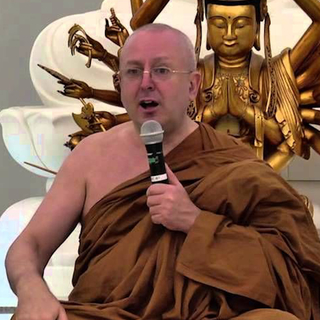
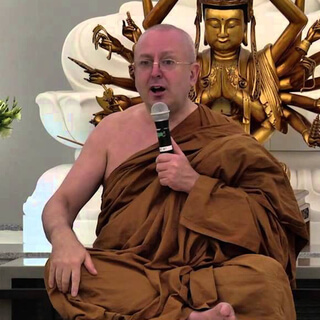
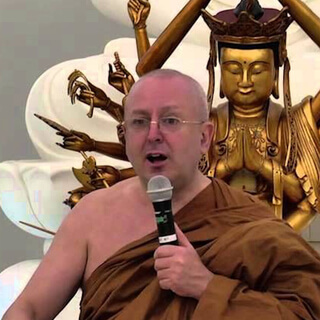
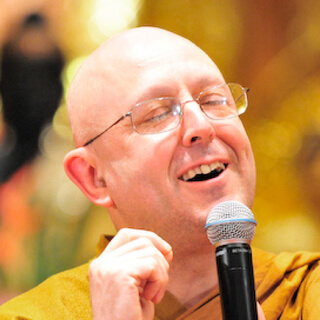
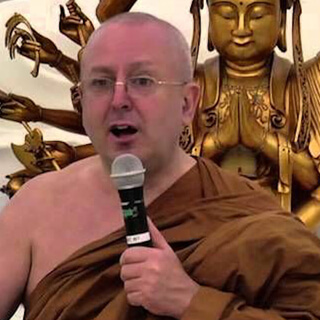
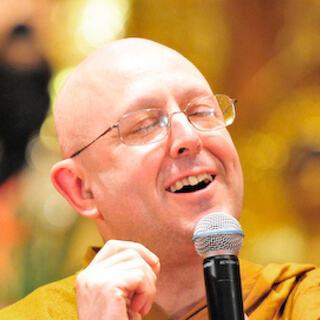
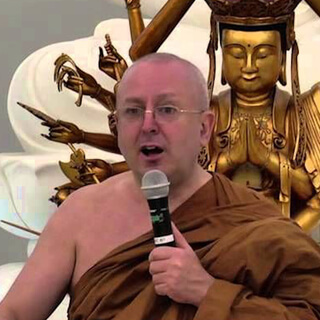
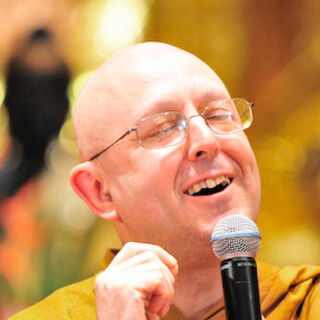
So welcome again to another meditation session here at Dhammaloka in the Buddhist Centre in Alhamara.
And I have to say for you time that those people are coming for the Introduction to Meditation class.
That is being held in the room to my right.
This class is for those who have meditated before,
Who are able to sit for about 40-45 minutes and who have some experience so that when I give the first little introduction for 15 minutes,
I'm just not giving an overview of meditation but just focusing on a few techniques which can be useful for people who have meditated before to enhance their ability to meditate.
And one of the little skillful means which I'm going to talk about today is actually learn how to be not so judgmental during one's meditation.
We all know that being judgmental and critical is something which most authentic spiritual traditions shy away from and we're more tolerant,
Open and generous with the way we look at things.
But that is also a way we should approach our meditation as well.
Because when we're not so judgmental through our meditation,
It means we're more peaceful with our meditation.
Even though this is a Theravada Buddhism,
There's no reason why we can't use other traditions.
There's a very,
Very famous Chinese Zen little story which says that the path is easy for one who has no preferences.
It's actually the verses of the third Zen patriarch,
The opening lines.
And when you look at that,
What it really means is that when you don't have any judgments,
Any preferences,
Any wanting which comes from those preferences,
It means the mind becomes very still,
It hasn't got anything to do,
Hasn't got anything to want.
And I used the something which I learned from science to which you also arrive at the same conclusion.
And that particular piece of science was from one of the famous 19th century British scientists,
Lord Kelvin,
Who once said the only way that we can control nature is to learn how to measure it accurately,
First of all.
And that opened up all of the search for accurate ways of measuring whether it was length or mass or temperature to be able to have what we call now technology,
The controlling of nature.
But I also used that saying and turned it on itself by saying if we don't measure things,
We just can't control anything.
And that opened up a beautiful way of meditating because when we don't measure our mind,
When we don't measure life,
When we don't measure ourselves,
It means we can't control.
When we can't control,
We let go,
We don't do anything,
We just watch without trying to make things happen,
Without this idea of this is good,
This is bad,
This could be better.
That all comes from measuring and from measuring comes controlling.
And from controlling we get the problems,
The agitation of the mind.
So a wonderful way of letting go,
Of leaving things alone,
Of not controlling,
Just peacefully being in life,
Is not measuring life.
And how that works out in practice is that when you are meditating,
You know what it is sometimes,
My meditation is good today,
My meditation is bad today,
Just don't do that.
The meditation just is like this.
I remember my first meditation teacher,
He gave much advice and one of the pieces of advice I always remember was there is no such thing as a bad meditation.
He said there's no such thing as a bad meditation.
Of course,
What do you mean by that?
Sometimes when I was a young meditator I'd fall asleep or my mom would think about all sorts of unwholesome things.
That was a bad meditation,
I thought,
No,
No,
It wasn't.
Just the very fact that I was meditating,
Trying,
Or at least sitting down was better than other things which I got up to when I was a student.
But what he really meant is as soon as you have a bad meditation or have the idea,
It gives you some business to do.
You've judged,
You get negativity,
You get upset,
You're judging yourself and it also gives you the business to be done.
You lose your peace,
You lose your contentment,
You've judged,
You've criticised,
It means all the stillness has disappeared.
But if you don't judge at all,
You don't even measure good meditation or bad meditation,
It means there's nothing to be done.
All you can say is it's good enough,
Whatever that means.
It means there's no business on your desk to be attended to.
There's nothing to fix up,
There's nothing to change.
And if there's nothing to fix up,
Nothing to change,
Nothing to do,
Nothing to become,
Nothing to be,
It means that there's nothing you can do.
Which means you become still,
You stop this terrible force inside the mind which agitates and gets things moving because you have to fix something up.
And when you're not moving,
Of course,
Everything starts to become still.
And you realise just the way of meditation is the way of letting things be,
Letting things go,
No controlling,
No trying to get somewhere,
No trying to be somebody,
And all that which usually runs a person's life outside of meditation,
You abandon and renounce.
And there's so little to do that you may be in the middle of a busy city and you're sitting there like a monk,
Like a hermit,
With no business at all,
Totally left the world,
On the top of a mountain with no worries or concerns.
Why?
Because just like that hermit,
You've got nothing to do and no business because you've abandoned for the period of meditation all this judging,
All this measuring from which the work of life originates from.
So in order to get to that stage,
We recall that this is what we're supposed to do,
No measuring.
And when you don't measure,
It's just this is good enough.
So whatever you are experiencing,
You're just grateful just to be there experiencing it.
When we started building our monastery over in Serpentine,
Just one of the monks who had some experience as a builder was teaching me the basics.
Whenever I make a mistake,
He would come up and say,
Well never mind Ajahn Brahm,
A blind man will be glad to see it.
And I think,
What a wonderful attitude there.
There was a big mess which I'd made,
But he never said,
A blind man will be glad to see it.
It's a wonderful act of gratitude.
That degree of gratitude,
Like you're sitting here,
You're being here,
This is good enough,
Just being able to meditate,
Sitting in a quiet place,
What more do you want?
And if you believe this is good enough,
You start measuring.
You become still and peaceful very,
Very quickly.
Because remember the cause of stillness,
The cause of peace,
The cause which creates the goal of meditation,
Is just leaving things alone and letting the mind and the body settle down all by itself.
And whenever you measure anything,
You will always start to interfere.
Just one of the classic stories,
Once when I went to visit my mother in England,
I was picked up at the airport by some supporters and they took me over to a place just beyond Croydon,
It was a long distance,
Maybe an hour from Heathrow airport.
And her son was driving and she was in the back seat.
Oh my goodness,
I've never seen such a back seat driver,
Telling her son,
Don't drive so fast,
Telling her to drive faster,
Telling him to go this way,
Telling him to go that way.
Gee,
If it wasn't his mother,
He would have probably thrown her out.
If his wife,
He would have got divorced,
But you can't get divorced from your mother.
So he just had to take it there,
But she was giving advice all along.
And I thought,
Wow,
What a great simile that is for you when you meditate.
The back seat driver,
Come on,
Watch the breath,
No,
Don't watch the breath this way,
Come and do metta,
No,
You did metta last time,
Come on,
Get your back straight,
No,
Relax.
Come and go this way,
Come and go that way,
Don't do it so fast,
You've got to let go,
No,
You're not supposed to let go,
Be in the moment,
Shut up.
And you're just such a back seat driver.
And why is that?
Because the mother was always measuring her son's driving skill and his knowledge of the route.
As for me,
I didn't know the route,
Don't know where the hell they were going,
So I couldn't measure them,
I didn't know.
So for me it was nice and quiet and peaceful,
I could enjoy the scenery.
Because I had no means of measuring that driver or the route.
Now I think you can understand that simile.
When you are meditating,
Don't measure yourself,
Don't think,
Oh,
I'm not getting anywhere,
Oh,
This is really good today.
When you do those two extremes,
Praise and blame,
It always will agitate and disturb your progress,
You lose your stillness and peace.
So you're sitting there and let the mind do the driving.
Don't be a back seat driver,
This is good enough for me,
See what's happening,
Not really wanting to go anywhere,
This is good enough.
And you'll be surprised.
You think that to get deep meditation you have to do something and make it happen.
No,
The only thing you make is making trouble.
Meditation is a path of letting go.
To let go we have to somehow abandon all this controlling inside.
And to be able to abandon all this controlling,
Try not to do any judging.
Sometimes I call it the fault-finding mind.
It's judging.
You know that that fault-finding mind,
When we do judge,
We usually judge in the negative.
Too hot,
Too cold,
Not sort of soft enough,
Not quick enough,
Not enough advice,
Too much advice.
All of that too long or too short,
It's very fault-finding.
And that's the judging mind.
You know what that's like inside.
That just takes away any peace or any happiness.
So no judging at all,
No fault-finding,
No measuring.
And you'll find it's weird at first not to measure.
It's like you have got no way of knowing where you are.
And when you don't know where you are,
You can't go anywhere.
You are fit.
You don't need to go anywhere.
Just be where you are.
Meditation is not about going anywhere.
It's being where you are and noticing as the mind stays where it is,
It goes deeper and deeper and deeper into where you already are.
And that is a part of meditation.
Never going on to something new but going in to where you already are.
The best way of doing that,
No judging.
After meditation,
Yeah,
You can judge.
You can judge that tea is too cold or too hot,
Too strong,
Too sweet,
Whatever.
Judge outside.
But when you are in meditation,
Don't judge at all.
The path is easy for those without preferences.
So give it a go.
So any questions about that?
Okay,
Let's give it a try.
And of course I don't guarantee this is going to work today.
Who cares anyway?
Don't measure.
Anyone who says,
Ah,
That was very good instructions.
Wrong.
Don't measure.
So I just got out of any responsibility for what I just said.
Okay,
So sitting down,
Close your eyes.
And bring all of your attention onto your body first of all.
We're settling the body now.
Be kind to this body.
And try not to measure your body.
Good,
Bad,
Warm,
Cold.
As soon as you measure,
It always be unpleasant.
Just a feeling,
That's all.
Just be with your mind in this moment.
Is this a good experience now or a bad experience?
What a stupid question.
It's just this.
So see if you can stay without measuring,
Without preference.
You'll find all the stages of meditation,
Like present moment,
Silence,
Even the breath,
It's come to you,
You won't need to go and seek it.
You'll be just a passenger,
Not the back seat driver.
See what happens.
Just noticing the mind become peaceful when it's got nowhere to go,
Just to stay right here.
Not measuring thoughts as interesting or important,
Means that nothing to keep them going.
Just happy to be in the moment.
It's coming close to the end of the meditation.
Don't judge how you feel,
Just know how you feel.
And just look back upon what happened.
So you can connect the dots and find out why you feel the way you do.
Because you draining the mind even if they don't have the mostCause when you are in the moment you feel the way you do,
Then you seem to be square.
Not the reader either though.
I'm now going to ring the gong three times.
As usual,
Listen to every sound from the gong.
And when the third ringing of the gong starts to fade away,
Take that as a signal to come out from your meditation.
GONG GONG There we go.
So that's another little trick in meditation.
Sometimes these things work for people,
Sometimes they don't.
Sometimes you try them at different stages of the meditation,
Just one block.
And it's one of my favourite ones.
Especially if you're meditating,
You're tired or you're restless.
A great way of just,
This is good enough,
Just letting it be.
And usually the mind sort of gets into some nice peaceful states.
And anyone who thinks about,
What about all these stages of meditation,
Being in the present moment,
Silence?
Yeah,
But what's the cause of being in the present moment?
What's the cause of silence?
What's the cause of being aware of the breath?
And then deep in meditation,
What's the cause of these beautiful lights like nimitta coming up?
And the cause is always like stillness.
Because you're still,
You stay in this moment.
There's no other place to go.
Because you're still,
There's nothing to say,
No commentary necessary.
Because what takes up most of your awareness,
You close your eyes and the thinking and planning and memories all fade away.
Usually the only thing left,
The only thing which is moving is usually your breath,
Forcing your abdomen up and down.
Just become aware of that because it's the only thing which is moving.
And when that settles down,
That disappears.
Because you're not doing anything,
When that becomes still,
The only thing left is your mind.
And that's where you see these beautiful nimittas.
And if that's moving,
Because it usually does at first,
But when that becomes still,
That too disappears.
All because you don't judge.
By not judging,
By not measuring,
You just can't do anything.
All you need to do is to be patient.
And after a while,
Patient,
Just being still,
Building up that stillness,
Building up the power of stillness,
Getting that stillness to be a moment of stillness upon a moment of stillness like putting pennies in the bank until you've got this huge amount of money.
You've got this great bank account of hundreds,
Thousands,
Hundreds of thousands of still moments.
And that's what deep meditation is like.
Deep stillness made up of many,
Many,
Many,
Many moments of stillness,
One after the other.
That's what happens,
You just go in and get power.
So those of you who want a powerful mind,
That's where you get it from.
Developing stillness.
And how do you become still?
By letting go.
And how do you let go?
A great way is by not measuring.
Not measuring life.
Good to bad,
Sadness and joy,
Being abused,
Criticised or being praised.
Just don't measure anything.
It's incredible how free you can feel.
Okay,
Has anyone got any comments or questions about what I've just been saying?
I don't know if it worked or not,
But hopefully you never measured anyway so you don't know.
Just feel good.
I mean this is not a philosophical statement,
But don't think saying,
Oh there is no good or bad outside of meditation.
So you can get up into all sorts of mischief,
Especially over Christmas and New Year.
So that jump bomb told me not to measure,
Not to measure,
Not to measure,
Not to judge.
So I started doing all sorts of silly things.
This only applies in meditation.
You know,
I got into trouble once because I was telling this other very wonderful story about how to find time to meditate.
You know you're so busy,
You've got to get so many things done.
And you know what it's like at home,
Even though it's holiday time,
You've got all these jobs and business to be done.
So what should you do to find time to meditate at home,
Especially in the holiday season?
Don't try and get everything out of the way,
First of all,
And then meditate.
Those who try and get everything out of the way,
They'll find,
They'll be in karakata before they can find time to meditate because there's just too many things to do.
So the only way is to say,
Doesn't matter,
Now's the time to meditate,
Even though there's so many things to be done.
Because there was this great monk,
Buddha Dasabhikkhu,
His name was,
And he was building a hall in his monastery.
When it came to the retreat time,
He sent all the builders home.
And when someone came to visit the next couple of days,
And they saw his hall,
And they said,
When's your hall going to be finished?
And this great monk said,
The hall is finished.
What do you mean it's finished?
Said the guy.
There's cement bags on the floor,
There's no glass in the windows,
There's not a roof on.
Are you going to leave it like that?
And this great monk said,
Sir,
What's done is finished.
And he went off to meditate.
Isn't that a wonderful attitude?
So when you go home,
Even though there's lots of work to be done,
Doesn't matter,
What's done is finished.
So take a break.
Because otherwise,
Nothing will ever be finished.
So I remember telling that one Friday night,
On Sunday morning,
The Sri Lankan mum and dad came to complain.
I said,
What was wrong with that talk?
He said,
Do you remember that story he said about what's done is finished?
Our son,
He went out on Saturday night to some night club.
And we told him,
You can't go until you've finished your homework.
Have you done,
Finished your homework,
Son?
And the son said,
Ajahn Brahm said on Friday night,
What's done is finished.
See you tomorrow morning,
Dad.
So all these advice,
They work for meditation.
So don't do that to your boss at work.
Have you finished those accounts yet?
Yes,
Boss,
What's done is finished.
You'll get the sack.
So this is a meditation to this,
No judging.
If you are in some sort of court of law and you hear this,
And you sit there and after the trial is over,
Ajahn Brahm said no judging.
You've got to do your job out there in the world.
This applies to meditation,
Which is a separate area of your life.
So in meditation,
Yeah,
No judging.
The rest of the world,
Judge,
Yes.
So it's like,
You're not getting into conversations,
You're programming your mind,
You just get into that framework,
That sort of mode of not judging.
More like appreciating,
More like gratitude,
Happy to be here,
This is good enough,
Wow,
Just to be here is good enough for me.
Everything else is just gravy.
People actually don't have gravy these days,
Do they?
But anyway,
You know what I mean,
Everything else is just like the cherry on top of the cake.
So this is good enough.
And that type of non-judging means you get a lot of contentment very easily.
A lot of peace,
A lot of freedom,
A lot of stillness,
And all the things which meditation is supposed to get you.
In particular,
Just no stress.
All the stress in life comes from judging.
How many of you are good enough?
I don't know.
How many of you sort of are wise enough,
Are healthy,
Strong?
All these sort of judgments which we make,
They give us so much stress,
Especially are you good enough?
What do other people think of me?
So it's great you don't judge at all.
And then it's amazing just how free you feel.
Yes?
So this non-judging is also a big award outside.
Well I think we judge too much,
Yeah.
But don't go too judging.
So when you're driving the car,
Saying,
What do you mean speed limit?
I don't judge,
60,
70,
80 kilometres an hour,
What are you giving me a speed ticket for?
You're talking about behaviour that you can get upset by.
Ah,
That's right,
Yeah.
And you can leave and you can notice it.
You don't get to know what's going on.
Excellent.
So you don't judge,
Ah they're a terrible person,
What do they do that for?
You don't know why they did that.
They may have some terrible,
Terrible disease or something.
So it's great when you don't sort of judge.
So,
But this is especially,
That would be another area to talk about judging,
This is especially for meditation.
And for those of you who know about deep meditation and deep Dhamma,
When the language of Buddhism is this dialect of Sanskrit called Pali,
And when you learn Pali and you see all these words and you try and you do actually connect the dots,
Now the words for mind and the words for judging or measuring are connected.
The word for mind is mana in Pali and the word to measure is maneti.
It literally means to measure is what the mind does.
When you stop measuring,
Your mind settles down and disappears.
It's got nothing to do.
So by not measuring,
The world disappears.
Which is a wonderful thing what happens in meditation.
You sit there on your cushion and by not measuring,
You're not feeding the mind and the ego.
It's a great measurer.
Things stop.
It's wonderful to have things stopped.
All the business of life,
The meaning of life,
The doing of life is all taken away.
So you've left the world,
The world of measuring.
Cool,
Eh?
Any other questions,
Anyone has that?
Yeah.
Questioner 1.
When you're not adding this good or bad,
This is what's supposed to be,
This is not what's supposed to be.
It's like when you meditate,
I'm not supposed to be thinking too much.
I'm not supposed to be sleepy.
I'm not supposed to be like this or supposed to be like that.
What does that do?
Give you stress.
So the whole goal of meditation,
Peace and relaxation is gone.
That's why I know that some people when they try meditating,
They say,
I can't meditate.
And they end up more stressed out than when they first came in and gee,
I came here to lower my blood pressure and it's now increased.
Why?
Because I've got to have a straight back,
I've got to have my eyes closed,
I've got to watch my breath,
Breathing and all else.
Of course that stresses you out.
So imagine when there's nothing to do,
Nowhere to go,
Nothing to become,
No judging.
Wow,
No stress.
But like most things,
Easy to say but hard to do.
Why?
Because you are addicted to measuring and judging.
You just learnt that all your life,
You just can't stop.
Except every now and again.
And you sort of,
A light bulb goes on,
Yeah,
Give it a try.
And it works really nicely.
Little by little you measure less,
You judge less.
Okay,
So all the measuring can must now start again.
Because now we're finishing off our afternoon's meditation.
So please judge and when you drive home,
Look at your speedometer,
Please judge and make sure that you just put enough tea in the cup and not too much,
Not too little.
And please judge.
Whatever else you do.
The judging starts here.
So we can now pay respects to the Buddha,
The Buddha,
The Sangha if you wish to.
If you judge,
It's appropriate.