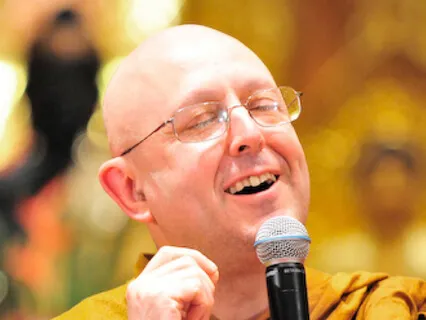
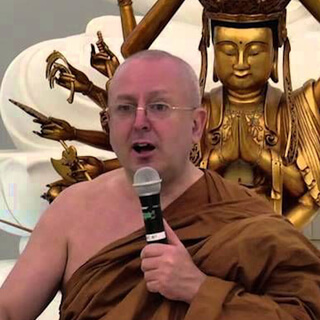
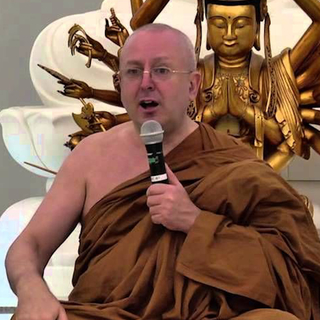
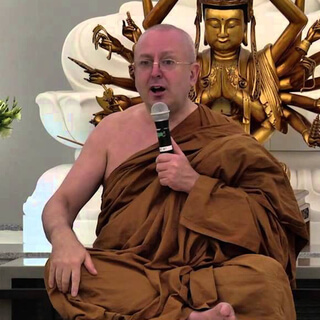
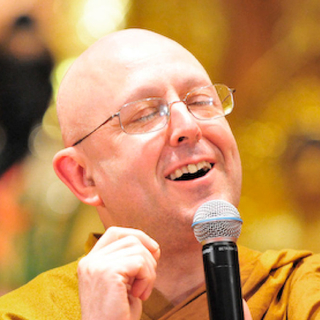
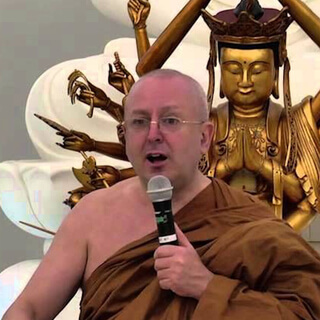
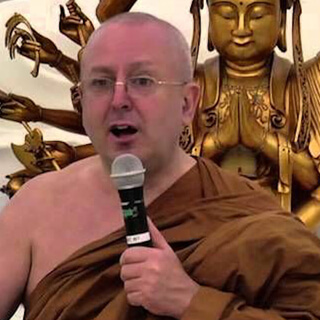
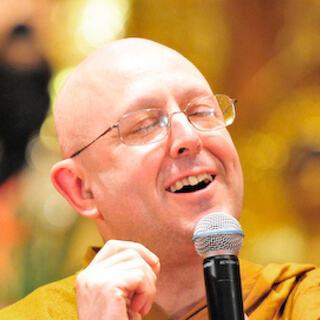
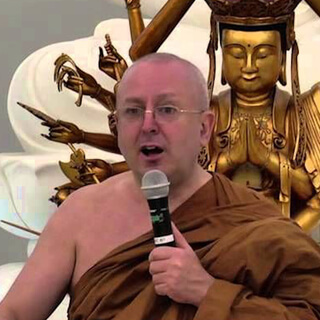
So this is the ongoing meditation class for the experts.
And it's also the place for those who are not experts who are deaf.
So let's just stay here anyway.
Anyway,
With meditation we usually give some instructions in meditation.
And one part of meditation which is very crucial is something we call mindfulness awareness.
It's not the only part of meditation but it's one of the important factors in meditation.
What it is,
Is you might call it like the supervisor.
There's someone who's always overlooking what you're doing to keep you on task.
So you don't just wander off or waste time doing something else.
The problem with that mindfulness is at the very beginning naturally it's always going to be weak.
Later on in the meditation it gets much stronger,
It can do its job more precisely.
At the very beginning it's very,
Very hard to actually get this supervisor in which keeps you on the meditation practice or process for the whole say 40,
45 minutes.
That's why many times people wander off and they wander off,
They don't know they're wandering off because the supervisor is half asleep.
It's like this person,
They ask to supervise something at work and instead of actually looking over the workers,
He just goes into his heart,
Have a cup of tea and just goes to sleep.
You see then the workers don't do the job properly.
So we have this thing of mindfulness and one of the great things to be able to do is to establish that mindfulness at the very beginning.
And the way we can establish that mindfulness at the very beginning is doing what I call like programming our mindfulness,
To setting it up at the very beginning to tell yourself,
This is my meditation time.
This is not the time I'm going to spend planning what I'm going to do this afternoon or this evening.
This is not the time to figure out all the problems which I faced so far today or earlier in my life.
It's not the time for philosophizing and discovering the meaning of life through thinking.
This is a time for stillness,
For peace,
For mental rest and tranquility.
And just even telling yourself that at the very beginning of the meditation sets up your mindfulness so you don't wander off the track at the very beginning.
One of the reasons that many people actually come to this class,
Not just week after week but year after year,
Is not that they want to hear more instructions but because the monk or the nun in charge here gives a little bit of instructions at the very beginning,
The monk does the job of establishing your mindfulness,
Setting the scene so that after 15 minutes of preliminary talk,
When you start meditating,
Your mindfulness is expecting to meditate.
It knows what to do and it will take you into a deeper meditation than if you just did it at home.
But of course you can't always spend the time here meditating,
You meditate also at home.
So when you begin your meditation at home,
You sit down in nice comfortable seats,
You set up that mindfulness,
A little bit of determination and resolution for the next half an hour or however long you sit in meditation to tell yourself,
I'm putting this time aside for my meditation practice and everything else,
Thinks,
Thoughts about the future,
The past,
Philosophizing,
Working out the problems of my life,
Not now.
I'll do that later.
And by setting up the mindfulness,
Giving the instructions,
You find your mind has a much easier chance of actually staying with the meditation because something inside,
Whenever you start to think about what you're going to eat for dinner tonight,
That mindfulness kicks in and says,
No,
This is not the right time for that,
Stop it.
You might go wandering about with a phone call you had earlier today and the mindfulness says,
No,
No,
Not now,
Don't do that.
So part of the function of mindfulness is once it's been instructed,
It will remind you during the period of meditation,
No,
You've lost track,
You're off the path,
Stay in the present moment,
Stay in silence.
It does that almost automatically.
But it won't do that if you don't give it instructions.
That's why sometimes I call that mindfulness like a taxi driver.
So all you need to do,
Say you're going to the airport this afternoon,
You sort of tell the taxi driver,
Please take me to the airport.
That's all you need to do.
You give her that instruction and the taxi driver will take you to that airport.
As long as you know you're going to that airport,
Maybe you might interrupt a few times when you find he's going to Cottesloe Beach instead.
Then you say,
That's not the way to the airport and you actually can make sure that the taxi driver goes in the correct direction.
But you give instructions and then only very rarely does mindfulness need to interrupt to keep you on track,
Keep you on path.
So if you want to establish that mindfulness at the very beginning,
Give it some instructions,
Give it a bit of a direction.
This is what my meditation is about,
It's about silence,
About peace,
Not sort of working too hard,
Not trying to achieve too much,
Just being peaceful,
Resting,
Being still and keeping in the present moment.
And then it will do it for you.
And it's only if you start wandering off,
Just remind yourself,
Look,
This is not what I'm supposed to be spending my time on.
I'm supposed to be spending my time on peace and stillness.
So as you develop,
As you progress through the meditation,
You'll notice your mindfulness gets stronger and more aware,
More alert.
And this is simply the fact that real mindfulness,
The more strong natural form of mindfulness,
Not the one which you produce at the very beginning of the meditation,
The one which comes naturally,
Is always dependent upon its brother called stillness.
So mindfulness and mindfulness like brother and sister,
Inseparable,
Always go together.
And the more that you let go,
The more still you are,
The stronger that mindfulness becomes.
It's as if your poor brain has so many things to attend to,
But you can't just attend to one thing when you've got the past,
The future,
The sound,
The feelings in the body and all sorts of thoughts going through your head.
Your brain is very divided.
And if you can keep it a little bit still,
Keeping your eyes sitting still,
Not really being concerned about sounds outside,
Staying in the present moment,
Basically your brain has got not much to do.
So it can focus on one thing and give all that energy and power which is usually spread out over many things onto one thing.
It's very similar to taking a magnifying glass,
Putting it out in front of the sun and focusing on the rays of the sun,
It gives it more power.
So your brain power instead of being scattered is focused just maybe on this present moment,
On silence.
There's no brain being part of your brain being wasted on other things.
It's because of that you find that you can become more aware.
The awareness becomes more powerful and it can actually see more things.
And once that mindfulness becomes stronger and sees more things,
It also generates more joy,
More happiness.
The story which many of you have heard but many of you may not have heard which illustrates this was the simile of the monastery where I live in Serpentine.
It's 2.
2 kilometers up a hill.
And for the first time I walked up that hill,
For about 7 years I've been going up and down that hill in a car.
When I walked up that hill for the first time I just couldn't believe it that I did not recognize my surroundings at all.
What I saw around me was unrecognizable compared to what I'd seen through the window of a car.
I stood still and the hillside changed again.
I saw so much more detail and what I saw became more beautiful.
And I couldn't understand what was going on.
And I contemplated afterwards.
I realized this is just a physiological event.
When you look through the window of a speeding car,
The image which forms on the back of your eye does not have time to properly form before another image dislodges it and you have to attend to something else.
The image is coming quick succession when you're looking through the window of a speeding car which means that not even the colors fully form,
Not even along the shapes,
What you see is pastel without much detail.
When you walk slowly,
The images have more time to form,
More detail and the colors are richer.
But nothing compares to standing still and allowing that image to fully form on your retina,
The back of your eye.
So all detail can be discerned and the colors are now full,
Rich,
Very beautiful.
So same experience that many of you may have had if you're looking at nature and you've never seen leaves so green before.
Just even the blue of the sky is so deep.
It's always been that way.
But you've been moving so fast that colors have never fully formed.
The shapes haven't had time to establish themselves.
And this is what happens when you're still,
The mindfulness gets incredibly strong.
So you can actually see detail and what you see becomes very beautiful and delightful.
So this mindfulness,
It starts with something which you have to manufacture,
It's almost telling yourself what you're supposed to do.
Then it becomes natural and then it becomes powerful.
I might even make all those the three stages of mindfulness.
And obviously the best of all is when you're sitting there and you focus so much in the present moment,
You see so much of what's happening just right now.
It is like you've woken up.
The experiences are rich,
The colors are deep,
The feelings are full.
It is like you've woken up because your mindfulness is now strong,
It has been developed.
So those are three stages of mindfulness in a meditation.
So it gives you a bit of instruction there about what mindfulness is and what develops.
But of course you cannot beat experience.
So now we can meditate for about 40-45 minutes.
And once again,
If you come here for the first time,
The first time and you're looking for the introduction to meditation,
A series of four classes to get the basics of meditation,
That's in the room to my right.
This is the ongoing class and we've been sitting for 40-45 minutes.
So please,
If you know what you're doing,
You can sit still,
Then off we go.
So if you'd like to get yourselves comfortable in your meditation position,
I'll be just guiding the meditation at the beginning just to make sure your mindfulness is established and then after about 10 or 15 minutes I'll leave you alone as we develop meditation peacefully together.
So sitting here,
Closing your eyes,
Being your mindfulness to your body,
Just so that you can ensure that you are comfortable.
When you become aware of your body,
You may ask it,
Body is there anything I can do to make you more comfortable?
Just asking a question like that brings up mindfulness,
Awareness of the body.
Is there anything I can do for your body to make you more comfortable?
If you find something to adjust,
To scratch,
Do it.
This is not just being mindful,
It's adding the important ingredient of this compassion.
So so so It's a time for philosophising or fantasising.
It's a time for inner silence,
For stillness.
This is my purpose,
My goal for the next 40 minutes.
And setting up your mindfulness in that way,
Your mind will bring results later.
And then you attend to the first thing,
Being in this moment,
Letting go of all your past and all your future.
When you're not thinking of what's coming next,
You're not lingering on what's already past.
That which is left,
Which remains,
Is called now.
You recognise the present moment,
You're kind to it,
Then it stays.
Whatever sound,
Whatever feeling,
Whatever thought is happening right now,
Some as it's now,
You're in the moment.
So don't choose the content of the present moment,
Just renounce the past and the future.
So so so so so so so so so so so so so so so so so so so so so so So then we go deeper into the silence.
This is the present moment without a commentary.
I may be watching the tv with no sound,
Just being without giving things a name.
So so Knowing the world within a silence,
And then to focus your mindfulness even further,
Invite awareness of the breath.
So you know the breath,
Whether it's coming in or going out.
Being a friend to your breathing,
As if your mind and the breath walk hand in hand.
Knowing the world within a silence,
And then to focus your mindfulness even further,
Invite awareness of the breath,
As if your mind and the breath walk hand in hand.
.
.
.
.
.
.
.
.
.
.
.
.
.
.
.
.
.
.
.
.
.
.
.
.
.
.
.
.
.
.
.
.
.
.
.
.
.
.
.
.
Getting close to the end of the meditation period,
It is a time when you reflect on how you feel,
On the state of mind resulting from your meditation.
How much freedom do you feel?
Peace.
Where did this come from?
Now is the time to look back on what you've been doing and what you haven't been doing so you can discover the path,
The cause and effect relationship that produces states of peace,
Freedom and inner fulfilment.
.
.
.
.
I will now ring the gong three times to end the meditation.
Listen to every sound of the gong and let the third ringing of the gong bring you out for meditation.
.
.
.
So in that meditation,
Following the instructions I gave earlier,
I was just focusing on what mindfulness means and how to arouse it,
How to use it,
To recognise it as it grows in the meditation.
It's also nice to understand mindfulness at the end of the meditation,
The very fact that because you've been slowing down,
When you open your eyes you can actually see much more and see deeper.
Notice that when the mind is distracted because it's been doing so many things,
It can't settle on something.
It can't settle on something long enough to really drink everything in.
I'd like to encourage people who are young,
Your children to do this meditation simply because Attention Deficit Disorder in all of its ranges,
I mean sometimes it gets clinical and people can't pay attention at all.
But most people have some degree,
But when you practice meditation you overcome that disorder.
You find quite naturally without effort the mind can linger on something,
Stay with it,
To penetrate it and see it.
It does really enhance the ability to learn,
To see,
To understand,
Which is one of the reasons why meditation is often used to gain wisdom in all aspects of your life.
Just the ability to see deeper than just the superficial,
To be able to stay with something long enough for it to teach you the lessons you can imagine and when we rush from one thing to another so fast we don't understand because we don't stay long enough to allow understanding to develop.
So learning how to slow down to be peaceful gives rise to huge amounts of wisdom and also the immediate effect that feels so good.
It's like having a good rest,
It's like going on a holiday,
It's like having a spa or whatever else it is you use to relax the body.
Relaxing the mind is even more important.
When the body relaxes the mind can still be very active,
Like when you're in bed at night.
When the mind relaxes then the body automatically relaxes with it.
If you can just learn how to relax this mind,
Just let it be still,
Let it be peaceful by developing this mindfulness,
Developing this present moment awareness and silence and just being with the breath until the mindfulness is so strong that you can actually see things,
You can be with things and the delight appears in the same way that the colours on the trees,
They become vibrant,
They become alive because you can stay with them,
You can be with them rather than blocking them out with the static of your thinking.
Remember those old radios you used to have and sometimes there was such a big electrical interference you couldn't hardly hear the message on the radio.
But now when the static disappears you can hear everything clearly,
Just like mindfulness,
Everything becomes just high definition,
Clear,
Precise and beautiful as well.
It only gives you wisdom,
It gives you this wonderful sense of delight in things,
The happiness which comes just from the still mind,
From mindfulness which is getting strong.
So that's why developing and noticing what the mindfulness means in the meditation and noticing how it starts and how it develops and what it's like when it grows strong gives you a great understanding of the path of meditation and its benefits in your daily life.
So any questions or comments about the meditation which you've just been doing?
Or is that stillness of dullness and stupidity?
Or is that the stillness of deep satisfaction?
Okay,
Well maybe I've given you enough to sort of understand.
Oh,
It's just five minutes early so if there's no comments or questions we can just finish that five minutes early.
So please enjoy meditation when you're at home and every Saturday when you come here,
Whoever is teaching this class,
I always emphasise one more aspect of meditation,
One piece in the jigsaw,
So that every time you get a little bit more information from seeing meditation this way,
A little bit more from seeing it another way.
So hopefully it will combine to give you a great skill base and understanding of this beautiful path of meditation.
So thank you for listening.
Now those who are Buddhist,
If you'd like to bounce three times to the Buddha,
Dharma,
Sangha,
We can finish off this session.