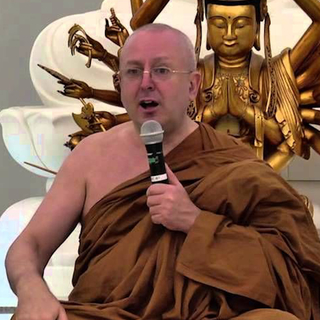
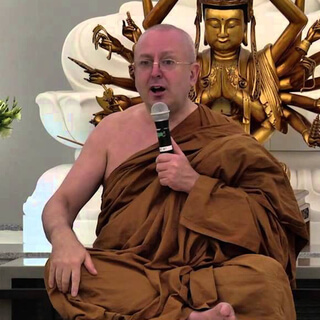
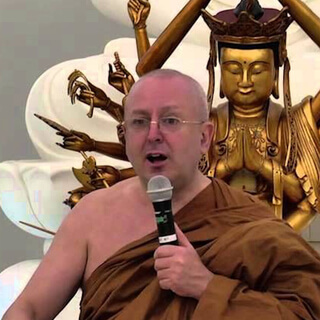
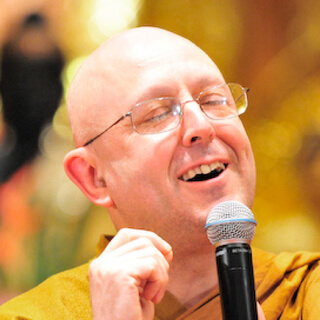
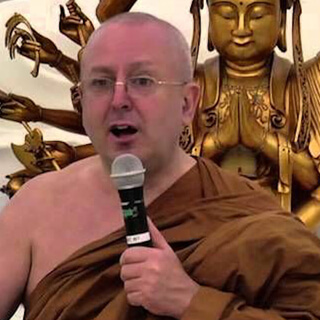
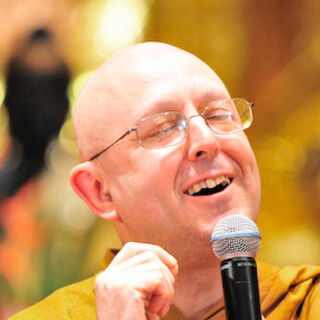
So I welcome everybody to this afternoon's meditation class at our Buddhist Society of Western Australia Centre in Olamara and the usual schedule for the meditation class is a 15 minutes,
Maybe 20 minutes to see how it goes of our basic introduction to some parts of meditation followed by about a 40-45 minute meditation,
Half guided,
The latter half I'm quiet and let you carry on and some questions and answers afterwards and still in COVID lockdown so there's only just a few of the workers here who are in the main hall here.
So I believe that last week I was talking about some of the deeper parts of meditation especially when one can experience these things called nimittas and I have to be very careful how I talk because I was about to say how you can achieve or attain nimittas and straight away that's a red flag for me because if I ever try to attain or achieve anything I put a big obstacle in front of me it's called wanting.
From what we want then we control,
We make business,
We disturb the peace of meditation.
So these very wonderful states of mind they do occur when one stops wanting things.
One of the problems is though that when people meditate they realize oh they can't want peace,
They can't want stillness,
They can't want this,
They can't want all these wonderful things so they end up wanting all the negative things instead and they end up just falling sleepy or restless and working out and figuring out all their problems in life.
At least they think they're going to figure them out but you find they never get figured out that way,
Just make more problems but instead we have like a method.
I call it a method like a skillful means,
A process,
Just the stages of letting go just to make sure that you are on the right track.
Same way if you are going from say Perth to Sydney,
We can't do that at the moment,
Well we can but it's very difficult.
That there are stages on the journey so you can tell whether you're getting in the right direction or not.
In the same way there are stages on the journey to stillness.
These are landmarks on that route which you can look at,
Experience and you know this is going in the correct direction.
You may not all be at the end of the journey yet,
Not even halfway but the closer you get to the goal of this journey,
For want of a better word,
Peace,
Stillness,
Letting go,
Freedom,
The more you know that this is on the right path.
It feels right.
It has mindfulness,
Very strong clear mindfulness.
It has contentment which brings up a lot of stillness,
A lot of joy,
A lot of peace and the deeper one goes in these meditations,
The more it's not like the world in which we normally live.
It's something more pure,
Profound and fulfilling.
The reason or rather because it is fulfilling,
It satisfies the mind.
That's one of the reasons why it's easy to be more still.
If ever in your meditation you feel there's something lacking,
Not really fulfilled,
You're just holding yourself there out of force or out of some belief,
You'll find you won't be able to maintain that for that long.
But if it's naturally fulfilling,
Satisfying,
It's like the mind realizes this is wonderful,
This is good,
This is where it wants to be,
Then the mind is satisfied,
Has joy and doesn't want to go anywhere.
The wanting is vanishing.
Because the wanting is vanishing,
The mind doesn't move,
Stays there,
Stays there and where it is,
Gets more and more beautiful.
Which is what happens when we have nimitta experiences.
Very beautiful,
Very peaceful,
Very interesting,
Not of this world but something quite strange.
And one of the reasons I talk about it a lot is because I describe these things,
Maybe they're not as strange as you thought,
Maybe because they are described by someone I hope you trust,
Because it is explained,
Described,
You find out,
Ah yes I know what these are and so you can let them be as a natural part of life,
A natural part of meditation.
It's just what happens when the mind becomes really still.
But how it happens,
Just like all these meditations,
They're sitting here and the skillful means is trying to find how to lessen and weaken this idea of wanting things and trying to achieve things.
Which is very much of the world.
In meditation we go in a totally different direction,
Being satisfied and content.
It's one of the reasons why loving kindness,
Compassion is such an important part of the meditation.
It's easy to be compassionate towards things one likes and have loving kindness,
All the beautiful things in the world.
That's not really much of a challenge to your loving kindness.
It's when you see things you don't like,
When you see even disgusting things or repellent things or situations to have loving kindness to that,
That's a challenge.
As I say in that little simile is to be able to open the door of your heart to whatever you're experiencing,
No matter what.
Really mean no matter what.
If you can open that door of the heart without any resistance,
Allowing things to be with kindness and embracing them,
It's a way of not wanting.
And even the negative parts of your journey in meditation.
So often,
Even myself after meditating all these years,
Sometimes when you sit down to meditate,
Maybe you're tired,
You're restless,
You just,
The oomph is not there if you like.
Then I know what to do,
Which is nothing.
Just allow that uuuh feeling,
The yucky feeling,
The tired feeling,
Whatever feeling it is,
Realize that that's part of life and that needs to be respected just like everything else and does not need to be chased away,
But needs just to be cared for,
Not cured,
Cared for.
And as I get my act together,
For want of a better word,
So actually to care for this moment,
Whatever it is,
Even the negative parts of it,
Soon what once was an enemy and was dangerous and bullying me,
Becomes one of my best friends.
The tiredness is my friend.
The restlessness is,
You call it a friend,
But it's so friendly it's not restless anymore.
It doesn't try and run away because it likes me.
In other words,
That which would normally create a movement of the mind and take me away into all sorts of different dreams,
Fantasies,
Plans,
Memories,
That stays.
It doesn't take me anywhere because we're friends,
We've reconciled,
The business is over.
And even though it was an unpleasant feeling to begin with,
Because you've reconciled,
There's a sense of peace,
A peace and happiness.
And that peace and happiness which started with something which was not pleasant,
That peace and happiness which grows from the unpleasant,
How is such inspiring that it takes you into deep peace.
And as you get into the deep peaceful states,
You don't want anything,
You just reconcile with this moment.
You're at peace with it,
You accept it,
It's part of life.
And then when you learn to be,
Even with unpleasant things,
Then you find it's just so easy to turn the unpleasant into beautiful.
Remember just searching,
Searching,
Searching for similes and just had a little simile of a person on a journey,
Okay journey that's pretty overused,
But it's the best I can come up with.
On a journey,
Getting very tired and the only place it can find to sit and take a rest is on a very old,
Uneven,
Cold stone bench.
And it is so cold to sit on,
It's not upholstered and it's bumpy and it's,
You wonder just how long can sit on such a thing.
But then the longer you sit on that cold stone hard bench,
The warmer it becomes,
The smoother it becomes.
Or is it just the muscles in one's butt are just accommodating to the bumps and don't feel it anymore.
And the softer it becomes it seems.
What started off as an uncomfortable,
Unpleasant place to sit,
Becomes something very pleasant and comfortable and you're just very happy sitting there for long periods.
And that's a metaphor of what happens in meditation.
It may be unpleasant,
It may not be nice when you begin.
You stay with this,
You don't go anywhere,
Don't move on to something better.
All you have already is more than good enough to take you into the deepest of meditations.
You just stay,
Make peace,
Be kind,
Be gentle.
As I often say,
Make peace,
Be kind,
Be gentle.
I have to remind myself and others that that is the second factor of the Eightfold Path,
It's important.
The seventh factor is mindfulness,
The eighth factor is ajanas.
So these are important factors of the Eightfold Path,
Of the Eightfold Path.
So make peace,
Be kind,
Be gentle with what you're experiencing.
When I do that with even unpleasant stuff,
The unpleasant becomes soft and comfortable and I can stay there.
And you go deep,
Not because you want to,
Because this is what happens when you make peace with things,
When you're kind,
You open the door of your heart,
So whatever's happening right now rather than rejecting stuff.
And you're very gentle and patient.
And then soon the body relaxes,
It's so peaceful,
It just,
It actually does disappear.
But it does disappear for many people in our lives,
Sitting down watching an orchestra play,
You're sitting down on the beach just watching the waves come in and go out again.
And if you really notice that you couldn't feel your body for a long time,
You're just observing the waves come and go.
So much of our life and when we see something very present,
The body just disappears.
And so as the body disappears more and more,
And we can relax so well,
What if I notice when I interfere with my body,
To check you're okay over there,
And I do this at the beginning but during the middle of the meditation you don't look at your body at all,
What's my body okay?
No,
Leave it alone and look after itself.
And all I do is just to go inside,
Inside to the mind.
And that mind,
Peaceful,
Agitated,
Just let it be.
It's the letting be which causes the mind to become peaceful,
Not trying to make it peaceful,
But just leaving it alone and it settles down by itself.
I just have to sometimes bring up these memories from my teacher Ajahn Chah.
You've probably heard this many times but it fits in here so well.
He did not have any visual aids,
He would just sometimes just lift up his hand and start waving it.
And this was his simile of a leaf on a tree or on a bush.
Now saying this because as I look out of the window in this meditation hall,
There's a bit of a wind and all the leaves on the trees are waving in the wind.
But he says,
Ajahn Chah,
That once the wind stops,
The leaf keeps moving,
But less and less and less.
It takes time,
That patience,
That gentleness and then it soon becomes perfectly still because that's a natural state of the leaf when there's no wind,
It's default state.
And if we can only learn that our mind is the same,
That the wind which keeps our mind moving is wanting something,
Even good things.
And if you can just stop wanting,
Just make peace,
Be kind,
Be gentle to this moment.
Let this moment be.
Open the door of your heart to this moment.
Then you'll find your mind moves less and less and less.
It comes to closer and closer to stillness and real stillness of the mind,
Whoa,
That's some of the deepest of meditations,
Real stillness.
And that stillness,
Okay I'll put my hand up here and just say,
I reckon real stillness only comes in the second jhana.
That's when the mind doesn't move because that's where the,
The will has stopped.
The wanting is just really out of reach.
Third and fourth jhana is a refinement of that state.
The absence of that which makes the mind move.
So little by little we become more still,
More at ease,
More peaceful.
Those become beautiful states of mind.
And sometimes we think,
Oh I jump on,
Here he goes again,
Talking about these deep states of meditation when I find it so difficult even just to let go of worrying about what's on the TV tonight.
No,
This is not something which you need great strength of will to achieve.
It's not something you have to try for.
This is something which only happens when you let go,
When you stop wanting.
That's why I say that anyone can do this.
It's hard to be a strong willed person.
But isn't it easy?
You think anyway,
To learn the art of letting go,
Letting go of will and control and judging,
Letting go of doing things and just being,
Without wanting anything in the whole world.
Perfectly content and at ease,
Just being here.
As if you finished all of your work,
Nothing else to do,
Nothing to plan,
Nowhere to go.
Ahh,
I can just be here.
And if you can,
Just be here for long enough.
That cold stone bench soon becomes so soft,
So warm,
So incredibly comfortable,
You want to sit on it for hours,
Totally at ease.
This is called the deep meditations,
All born from not wanting anything.
Sometimes I say not doing anything but that's what happens when you want something,
You do something to try and get in or get rid of something.
When you don't want anything in the whole world,
You really contend.
Then you find all the doing stops.
Not only that,
For those of you who want to know where the insight arises from this,
The more you let go of wanting,
The more your sense of self,
Ego,
The thing which you identify as your permanent essence,
The more that that gets weak and disappears.
Should be scary but the fact is that when one rests and relaxes,
It's so joyful,
So delightful,
You don't mind letting go of your ego,
Your sense of self.
So much fun,
Why not?
So let's give it a go.
So sitting down or laying down if you need to lay down,
Often make sure that you have that opportunity to lay down meditating because in our lives,
People get sick,
They have diseases,
They get old and many times people in the later years of their life have to lay down a lot.
So it's wonderful to learn how to meditate,
Laying down as well as sitting.
Standing,
Walking,
The four postures but the sitting meditation is the most common and this is why here we do sitting meditation but it can be on a chair or on the ground,
On cushions,
On stools.
But that's another sort of lecturer,
You've seen and heard about that before,
All the different meditation,
Stools,
Chairs,
Whatever which people have designed over the years.
So you find one which suits you.
You close your eyes to make yourself more sensitive.
With eyes open,
You get distracted.
With the eyes closed,
It's one of those sense doors which you don't have to bother with.
And straight away,
Your brain has all that power,
That energy which was used in seeing,
Now that can all be used to feel,
To feel your body.
And especially to feel how you are sitting.
To get to know your body again instead of being distracted by seeing,
To get to know your bodily posture by feeling it with a sense of touch.
I don't mean with your fingers touching your body but just knowing how you feel.
This is a good posture for you.
Straight away I notice the belt around my waist is a bit in the wrong position,
I just adjust it.
I never noticed that before sitting here for 15-20 minutes.
Now as soon as I feel it,
You know it.
Our brain gets so busy it can't know everything at the same time.
So now we just use the brain to actually know the feelings in our body.
So that our body will be able to sit comfortably for the period of meditation till 4pm.
So I arouse mindfulness with my legs.
Do you know how I do that?
Just ask the question.
As if I ask someone who is visiting,
How are you today?
They always give me an answer.
My legs give me the answer,
How are you?
Right big toe is not really in a good position so I move.
Check my knees,
My calves,
My thighs.
Check as long as you need.
Sometimes you're taking that little bit of extra time,
Caring for that part of your body.
As if that part of the body knows it's cared for and relaxes.
I don't leave that part of my body until I know it's at ease and comfortable.
Just like if you have a child or you used to have a child,
You tuck it in at night,
Maybe read a bedtime story,
Stroke its hair or whatever,
Only when it's rested and at ease.
You know it's going to fall asleep.
Only then can you walk out of the bedroom.
And once my legs are happy,
I can leave them alone without them causing any trouble.
Now I can look at my butt,
Making sure that that is comfortable.
And then up to my back.
It always works for me just to give it a stretch at the beginning.
It feels good.
And then to let go.
And let the back go into a natural position.
When nothing is held tight,
Nothing is squashed.
Just my awareness just feels all the different parts of my back.
Just checking,
Making sure it's comfortable.
I don't know if you heard it online but just when I relaxed my back,
A little burp came out.
It was something which was stuck there and now it's released.
And then I go to my shoulders and ease them.
When things are pulled apart,
It's called strain,
Otherwise known as stress.
When it's squashed,
It goes out of its natural position.
So I visualize the muscles of my shoulders.
I didn't get into a natural state of ease.
Nothing is pushing down on them.
Nothing is stretching them.
Oh now,
I can feel them.
They're loose.
No tension in them.
It's how you get to know your body and relaxing it.
It's not an act of will,
It's an act of letting go and mindfulness,
Otherwise known as kindfulness.
And down my arms,
Past my elbows,
To my hands.
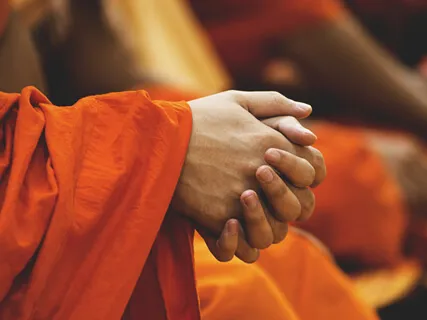
I adjust my hands.
They're one of the most comfortable positions for me because I've done it for so many years.
Right hand over the left hand.
So I'm slightly touching.
They're comfortable like that.
And when it's with the time,
And my arms and hands are at ease,
I go back up to my,
Top of my shoulders,
To my neck.
Just moving my head around,
Just to exercise those muscles.
And then coming to the best optimum position of my head on top of the neck.
And my throat,
Do have hay fever sometimes,
Or allergies or something,
I'm not sure.
But I just look at my throat,
Give it kindness,
Respect.
Until the throat feels at ease.
And then I move up to my face.
My facial muscles relaxing around the eyes and the mouth.
Sometimes the top of the eye is the forehead.
When you practice awareness,
Mindfulness of the muscles in your body,
Or other things in your body,
You soon get to know them very well.
They're like your old friends.
So you know when they are tight,
Ill-at-ease,
Sick,
You know how to relax them.
It's the same way that an electrician knows when there's a fault,
And exactly where to go.
The IT experts can have a look and say,
Ah yeah,
This is what needs to be fixed up.
Because they spend so much time on those machines.
I spend my time mostly on my body.
You know how it feels.
You know how to give peace and care,
Relaxation,
Healing to your own body.
So I give it to my face.
When the face is nicely relaxed,
At ease.
And I just join all those parts together of my body.
And experiencing is just one thing.
This vehicle in which I live.
All relaxed,
At peace with itself.
Is happily just sitting here.
The stone bench has become soft and comfortable.
And delightful.
I often emphasize that point of being aware of the delight of a relaxed body.
It feels good,
It feels pleasurable.
For too many years as a monk,
I reckon I was afraid of pleasure.
Monks aren't supposed to enjoy themselves or something like that.
But of course,
The more you learn about meditation,
The more you understood Pali and read the Buddha's own teachings in the original,
You realize that this was part of the path.
The delight of relaxation.
And then it's like my mind says,
Okay,
Now I need to be,
To receive some kindfulness too.
So I let my body go.
I look at my peace-o-meter,
How peaceful am I?
Just looking at that peace-o-meter is all I really need.
And I notice how my mind becomes more peaceful.
Being in the moment,
Now is where my future is made.
The best I can ever do for that future is be kind for as much as possible in this moment.
I know I've lived many years and I learn much more from the present than I ever do from the past.
When I focus on the past,
It usually gets me to trouble.
Focus on the present and it's free.
It's peaceful,
It's joyful.
It's a way of meditation.
And I notice that preconditioned,
Trained to think,
To give comments inside,
To live in the world of internal conversations.
And you learn that that too is unreliable and disturbing.
So instead I recognize silence,
Inner silence,
Where you know without giving anything a name,
Without starting up a conversation inside.
Using the silent witness.
Listening to nature,
To Dhamma,
Teaching you instead of talking inside.
That's the way I become aware of my breathing.
Happens naturally,
Never choose it.
It's what the mind's aware of,
Never forced the breath.
Watch it silently with kindfulness,
With gratitude.
I often look at my breath and realize just how reliable it is.
It's always kept my body alive for over 68 years.
Thank you.
My breath becomes pleasant,
Just like the relaxed body was delightful.
The relaxed breath is also very delightful.
Don't go looking for nimittas,
Don't want anything in the whole world.
This is more than enough.
Beautiful contentment,
Just being here.
Not wanting anything,
Not having to achieve anything,
Just being.
It's like I now have everything I ever need.
This is safe,
This is beautiful.
I just stay here.
The nimittas will come to you,
The jhanas will come to you.
Please don't go seeking them.
I'm not going to be quiet.
When I start speaking again I'll be close to the end of the meditation.
Intelligent aspect with the excess wrapping.
Please enjoy.
Switch in view.
.
.
.
.
.
.
.
.
.
.
.
.
.
.
.
.
.
.
.
.
.
.
.
.
.
.
.
.
.
.
.
.
.
.
.
.
.
.
.
.
.
.
.
.
.
.
.
It's getting close to the end of this meditation period.
How still are you?
How much has the inner world carved down?
And how delightful is it?
And how profound and pure is the peaceful mind?
And then come back to the body.
Relax at ease.
Just sitting here.
This is how we meditate.
It's a very joyful,
Beautiful thing to do.
So I'm now going to ring the gong three times.
Please listen to every sound from the gong when the third ringing ends.
That's the time to open your eyes.
Oh.
Excellent.
Excellent.
So now I have the chance for some questions and answers,
Hopefully.
Let's see what we have today.
What do we have today?
USA,
Italy,
Switzerland and Russia.
From USA,
My mind escapes to fantasies through my meditation and I do not notice.
Does this happen to you and are there any tips for preventing this?
Ah yeah,
Because used to,
But then the fantasies were nowhere near as good as the stillness.
So compare them.
What's it like when you go and dream and plan and whatever and fantasize?
It escapes but it's not really an escape.
It's just more of the same.
Only somebody pointed out to me and I thought it was a very good point.
In fantasies,
You are always a hero.
You always win.
You always kick the winning goal in a football match or whatever it is.
And another tip which I think I got this from Ajahn Theit,
Great time,
A long time ago.
He said if you want to have a fantasy,
Just speed it up.
In other words,
Say then what?
Then what?
Then what?
Then what?
And as soon as once you get everything you want,
Then what?
And you find the fantasies,
They just all fall apart.
Then what?
So I don't know what your fantasy is but baby,
You want to marry the wealthiest,
Most amazing person in the whole of the United States and no more financial problems and you have so much power and so much skill,
Then what?
What do you do with that?
So after a while,
All the fantasies are seen as just,
Ahh,
Just they don't,
They don't deliver.
They're unfaithful to what they promised at the beginning.
They promise them happiness and fulfillment but they don't deliver.
So after a while you lose your confidence in fantasies and you come to reality which is much purer,
More peaceful,
More delightful.
Why do you want a fantasy when you can just sit here just blissing out in this moment?
So give up the fantasies.
And of course the place where you give those up,
Two places,
The present moment awareness and also the silence of the mind.
In the silence of the mind,
You can't fantasize.
You need that inner speech to think and to dream and fantasize.
In this moment,
In the silence,
It's just this.
You just be with it and of course fantasies just when you achieve one thing,
You want something more and the wanting just continues in the fantasy.
It never stops.
In the peace and the silence,
In the present moment,
There you have an opportunity to end the wanting.
And as often mentioned,
It's a very good little,
Ahh,
Couple of words,
A little proverb if you like,
Are the two types of freedom which a human being can experience.
First freedom is called freedom of desire,
Freedom of wanting.
So you can want something and you get it.
Usually takes a long time,
Sometimes a short time.
You ever notice that freedom,
Freedom of desire,
You're not sort of in some totalitarian regime where you can't do this and you can't do that.
You're told what to want and what to do.
But you have the freedom of desire.
That's our Western world.
It gets us into a big mess.
For the better freedom,
It's the freedom from desire.
For the desire is just not there.
You don't want anything.
You don't need anything.
It's not there anymore.
It's like an end of a journey,
Not the middle.
There's not more places to go to.
You know where those places are but you don't need to go there anymore.
There's so many places.
I had the opportunity in the United States to go to Niagara Falls,
Nah.
Go to see the Grand Canyon,
Nah.
And that was just very close by.
People would drive me there.
No cost,
No discomfort.
But I prefer just to stay in the room and just meditate instead of going to those places.
It's much more fun.
Imagine,
Just have the opportunity to fulfill the desires of what many people in the world would love to see.
And you know,
You just prefer just to cross your legs,
Close your eyes,
And experience the freedom from desire.
These are beautiful.
Those are the two types of freedoms.
So when you know the freedom from desire,
The fantasies stop.
No point to them anymore.
So you escape from the fantasy land,
Find some wisdom to know that afterwards you feel just suffering,
You're tired,
You're just getting nowhere,
You have some peace in your meditation,
Delight.
Oh,
You feel so good,
So high,
So just joyful.
And of course,
In these suttas,
When you get into some nice deep meditations,
The five hindrances are gone.
Fantasy land,
The five hindrances are strengthened.
So it's just not worth it.
So little by little,
When you know the two,
They're spending 45 minutes in fantasies,
Or 45 minutes in peace and stillness.
You know the difference between those two.
Fantasies haven't got a chance anymore.
It's not worth it.
You're not doing this to punish yourself or just forcing yourself to let go of the fantasies,
There's nothing to them anymore.
Anyway,
Next question from Italy.
Why do some places seem to have a better energy for meditation?
Yeah,
That's a good question.
I agree with you there.
There are some places in the world you sit down,
It's just so easy to meditate,
Other places are more difficult.
And what are some of my,
Well,
You've got to say this,
It's true that Bodhinyana Monastery's main hall,
Down the front of that hall,
There's a really strong energy there to meditate.
And it happens when we teach a meditation retreat,
Which is opposite our monastery,
Other side of the road.
And that meditation hall,
It's good,
But it's nowhere near as strong as the monk's monastery hall.
And that's why sometimes people are meditating on a nine day retreat in our retreat center.
And their meditation,
It's sort of okay,
But it's not really deep.
And I just ask them,
Just go to the monk's monastery,
It's only 20 minute walk.
When you get there,
Go in the main hall,
Sit down and meditate in there,
See what it's like.
And they always get just a big boost in their meditation energy.
I don't know why,
Maybe it's because you've got some Buddha relics in there,
Maybe it's because of all the many,
Many great meditators have meditated in that hall over how many years,
37 years now.
So it's got a very good energy.
These other places are also really,
Really easy to meditate.
Every time I manage to get over to India to go to the holy places,
Then you go into some of those places and you start meditating,
Oh wow.
Again,
It's so easy,
I just inspire myself with the fact that where I'm sitting,
Probably the Buddha sat there,
Oh,
That's a powerful boost of meditation.
And so those places,
Oh so easy.
There's other places,
If it's a place where you've done lots of work before,
Or you had some bad energy before,
There's other sort of terrible things that happen in that place,
It does have some bad energy,
I'm not sure why,
But you know,
There's something bad,
How terrible happened there,
And that's one of the reasons why.
And for those who think,
Oh that's just not really true,
Not really according to how the Buddha taught,
There was that story of one of the Buddha's attendants,
This was not Venable Ananda,
It was another monk,
Forget his name,
He wanted to meditate and the Buddha said no,
That's a particular place,
He's supposed to be doing his duties,
And three times he asked the Buddha,
Okay give it a try,
And the monk had a terrible meditation,
So many desires,
And it's because that place,
The Buddha near was a place where that monk had lived before,
As a very wealthy prince or king or something,
And that was where his harm was,
So just the place for him had terrible energy,
Not the right place to meditate.
So there are places which have got good energy,
But we also must say that we build that energy up over the years,
Which is one of the reasons why I encourage people,
If you have a,
If you're really into meditating and you're not a monk or a nun and you want to do deeper and better meditation,
Find a place in your house,
Not your meditation room or cupboard or anything,
A little corner in your bedroom,
But please make sure the only thing you do in that corner is to meditate,
Maybe read a Dhamma book or listen to a talk,
But don't do anything else,
Because it will take away the energy,
And if you imagine,
That's a place you meditate,
Day in,
Day out,
For 5 years,
10 years,
20 years,
It does build up energy.
And for Switzerland,
What can I do so my feet don't fall asleep?
Just change your posture a little bit and don't feel that you have to sit on the floor,
Sit on a chair,
Your legs don't usually fall asleep when you sit on a chair,
And if you think,
No,
No,
No,
I want to sit on the floor,
It's wanting again.
It doesn't matter where you sit,
As long as you're comfortable.
Of course,
I've told this many times,
That the only reason I sit on the floor is it's my most comfortable position,
Sitting on chairs and you go in a car or on an aircraft,
Or on the aircraft,
The first time I went on an aircraft,
I'm not sorry,
After being a monk,
7 years as a monk,
No exaggeration,
No,
It's absolutely true,
I hadn't sat on a chair for 7 years.
Because I didn't have chairs in Thailand,
Northeast of Thailand,
Sorry,
Where I was,
It was a very poor area.
So I had to sit on a chair for I don't know how many hours on an aircraft,
Philippine Airlines it was,
How that was torture.
Oh,
I was in the economy class,
You can't sort of cross your legs,
Sit cross-legged,
Oh,
It was just so hard,
Because I wasn't used to it.
So anyway,
You can sit on a chair,
Or what is a very common posture,
Even for monks,
Is to sit with your back against the wall and put your feet out.
That way your legs don't fall asleep,
Exercise,
Yoga,
All that sort of stuff.
They do fall asleep,
Don't worry about them too much,
Because they fall asleep,
Or they don't die,
It's not dangerous,
People sometimes watch movies on TV and their legs fall asleep,
They don't even notice it until the movie's over.
So it's not going to cause you too much problem.
It's just an irritation,
And if it's an irritation then,
Even if it's a big irritation,
You can always move while you're meditating.
What you do is you pause,
And then as slowly and mindfully,
As kindly as you can,
You just move your legs.
Shouldn't take more than a minute,
Slowly,
Mindfully,
Kindly,
Know why you're doing this.
Get yourself comfortable again and go back to where you were,
Or not quite where you were in your meditation,
Before you go backwards a little bit,
But after a couple of minutes,
You're back where you were and you can go deeper,
Because the discomfort has been dealt with.
So don't be afraid of moving during the meditation if you really need to.
And it's much better than enduring and getting the idea that meditation is just endurance.
And lastly from Russia,
I want to devote myself to meditation until Jhana appears.
Is it necessary to practice at a retreat center under the guidance of a teacher,
Or is it sufficient to have solo retreats at home with my wife as my retreat assistant?
Use the instructions from your teachings.
Yeah,
Sure.
Sometimes when you go on a meditation retreat,
Sometimes everything is there for you.
You don't have to worry about food,
Instructions are there,
Inspiration is set up for meditation.
So that's obviously the best.
But sometimes there aren't that many retreat centers for meditation around in the world.
And sometimes when there's some good ones,
They get booked out.
But it doesn't matter that you can always do your retreats at home.
But make sure when you do those retreats at home,
You do really follow the instructions.
One of the things if you want to take it all the way to say,
Ajahn,
It's best when you give yourself the time,
Say nine days or two weeks or whatever,
That take the eight precepts and take it in front of your wife,
Or take it in front of a Buddha statue,
Or take it in front of anything which is inspiring,
Meaningful to you.
Because one of those precepts is no sexuality at all,
Because that sexuality,
That desire,
That can be,
Disturb your mind.
So you're getting into deep meditation and that stuff starts to stop you letting go.
But when you have eight precepts,
A third of those precepts is to abandon all sensuality at all.
Your wife is a human being,
A person,
No different than you,
Male,
Female,
That's just on the outside,
On the inside,
The mind.
The jitta has no gender,
Just the mind,
That's all.
It's not male,
Not female.
So that place where we come together,
There's no difference.
So this is where,
When we take those eight precepts,
Especially just renouncing sensuality for a few days,
That is where we're also renouncing our body,
As it were.
Not torturing our body,
But just looking after it,
Caring for it,
But not really indulging it.
That's why we don't eat in the afternoon either.
That is,
In the morning time is enough.
And not watching TV or entertainment,
That's bodily stuff.
We just go for looking after our mind,
Entertaining it as it were,
With beautiful Dharma talks,
Inspirational,
So books,
Meditating.
Nature can be quite a good teacher for us.
Go out into a forest or watch the sunset or watch the animals.
It can give us a sort of recreation,
A space.
So after we walk in the forest or in a park somewhere,
We can go back and sit in our meditation position and get very,
Very peaceful,
Very deep.
And of course,
There's so many teachings now,
And so many of even my talks,
And I know there are great monks and nuns and other teachers' talks,
So there's so much information there.
So you can take a few of your favorites and listen to them.
But don't just do a meditation retreat where you're listening to talks.
The talks are the instructions,
Are the guide.
Now you have to travel on that journey.
And sometimes you only really understand the talk when you've actually experienced those same things,
Which is one of the reasons why a little bit of talking,
I mean a little bit of instruction,
But a lot of practice.
And little by little,
We find our way.
Just like Ajahn Chah would,
Oh no,
Let's go back even further,
The Buddha would not give that many talks.
Sometimes great talk and then some monk would actually just go off into the jungle and forest and after a few years become fully enlightened,
Just based on one beautiful,
Wonderful talk.
So sometimes I wonder if we're overloaded with information these days.
But nevertheless,
That's up to you to decide.
But yes,
Of course you can get into jhanas alone.
And there's plenty and plenty of information about the nimittas.
If you want to see where the Buddha said about nimittas,
That's in the,
Ah,
The Upakalasas sutta in the Majjhima Nikaya.
And in poems of what the jhanas are,
Deep states of peace and stillness.
I wrote a big book about that.
Mindfulness,
Bliss and Beyond.
And about jhanas and nimittas and stuff.
So all the guides are there.
So there's enough information around.
Now what one really needs to do is follow that information.
Another thing again,
If you want to achieve,
Sorry,
It's the wrong word again,
Want to sort of experience those things,
You have to be courageous.
Courageous means you're going to,
Ah,
States of mind you've never experienced before.
They're weird,
They're different,
They're out of control.
You know,
You can't do anything there.
The lack of being able to control these things,
Lack of being able to own them,
Makes them very hard for people to accept.
It's scary because you're not there anymore.
So,
But be confident.
This is how the Buddha taught.
And this can be done.
And they're totally beautiful.
No problems at all.
Actually,
They usually say this on retreats.
There is one problem if people achieve a jhana.
Ah,
I said achieve again.
If people experience a jhana,
If they experience many jhanas,
The only problem is they tend to lose their hair.
And wear brown robes.
Okay,
So thank you for those questions.
I went into them in more depth than usual because I usually try and make sure that we go to about 25 past or around that time.
So thank you all for listening and I wish you very peaceful,
Joyful meditations.
As I have been doing,
I give a blessing to everybody for the end of this session.
It's not really an end because it carries on next week.
SABBA ROGA VINIMUTO SABBA SANTAPA VAGITO SABBA VERA MATIGANDO NIBUTO CHATOWANG PAWA SABBITI OI VAGANTU SABBA ROGA VINASATU MATE SAWANWAN TAWAYO SUGI DIGA YUGO PAWA API WADAN HASI LIT SINI CHANG WUTAPA CHALI NO CHATOWO DAMAWATANTI AYU WANO SUGAN PAWAN May we all be well,
Happy,
Strong.
Thank you.
Thank you.
Thank you.
Thank you.
Thank you.
Thank you.
Thank you.
Thank you.
Thank you.
Thank you.
Thank you.
Thank you.
Thank you.
Thank you.