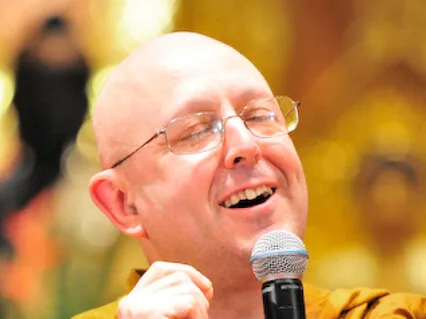
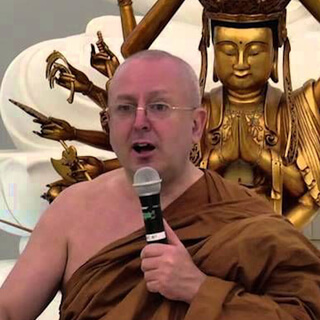
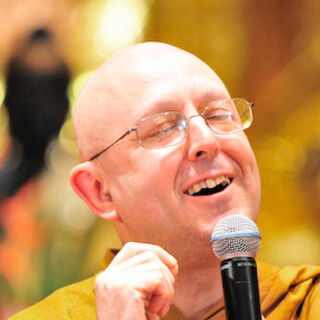
So welcome to this afternoon's meditation class.
As you all know,
I hope,
That there are two meditation classes happening at the same time.
This is the advanced meditation class for the extreme meditations.
Now this is a class which is for those who have been meditating a long time already.
And because here we meditate for 45 minutes.
It's a long period.
We also have the introduction to meditation class,
Which is being taught by Bianca,
A very wonderful teacher.
That is in the room to my right,
As you go out from this room,
If you turn right,
That's the beginner's introduction class to meditation.
So if you come to the introduction class,
That is the room to go to.
This goes a bit deeper into meditation,
Also much longer.
So in this class of meditation,
That we learn how to make our mind really,
Really still.
But it's not just with stillness.
This seems to be like a rather superficial argument in meditation traditions in Buddhism for such a long time.
Is insight and stillness,
Are the two just related or does one do first and the other one come later?
And with one better than the other?
And you never see that discussion in the suttas in the time of the Buddha,
In the way the Buddha described as meditation.
This is just whenever we get still,
Then we can see.
When we see,
It gives us a means to become further,
More still inside ourselves.
So the stillness and the insight always work together.
If you haven't,
If you've been to other traditions,
You may have also seen that instead of stillness,
Some people use what I think is a very difficult and not very helpful translation of calling this thing concentration.
And I often crack jokes about that.
This is not a concentration camp.
We don't teach concentration.
If you want to learn concentration,
Then maybe join the military or join something else.
This is learning how to be still and learning how to be still takes other attitudes of mind,
Other ways to relate to life and to your mind.
Concentration is using force.
It actually strengthens your sense of ego and very often it tires you out quite considerably.
But stillness needs something else.
Stillness needs wisdom to become quiet so nothing moves.
And even learning how to be still is something which takes a great deal of insight and understanding in the nature of your mind.
And I probably say this regularly here,
But I just come back from a teaching and meditation retreat in Thailand.
And I keep on having to say this little simile from Ajahn Chah.
He would wave his hand up and down,
If you haven't seen me do this before.
He waved his hand up and down,
He said,
This represents a leaf on a tree.
It only moves because of the wind.
If the wind stops blowing,
It moves less and less and less until it becomes perfectly still all by itself.
Because that's its natural position,
What we call these days its default position,
To be perfectly still.
It's not as if you have to hold it still.
It's not as if you have to force it to be still.
It's not as if you have to train it to be still.
You just have to protect it from all these other influences which make it move.
So,
He said that not because he was a botanist,
He said that because he was using as a simile for the mind.
Your mind only moves because of the wind of wanting something.
Even wanting good things,
The mind moves.
So imagine,
Imagine the mind doesn't want anything at all.
It's perfectly content,
Totally satisfied,
Just happy to be here,
Not missing anything,
Just happy to be with where you are,
Not having any goals to fulfill,
Not have any places to reach where you aren't there already,
Just perfectly at ease,
At rest,
No winds blowing.
What happens?
Your mind is still moving,
But it moves less and less and less.
And you can watch it becoming more and more and more still,
Simply because the cause of movement has been taken away.
And this is not what you do.
If you do,
You want something,
You want to change something,
Then you find the mind doesn't move again.
But if you just leave this alone,
You stop and watch almost like from a distance.
But then people say,
If I just sit there and do nothing and no wanting,
My mind just keeps thinking and thinking and thinking and thinking.
And the obvious answer is,
You still want something when you're thinking.
One thing you want is to stop thinking.
That's the one that keeps you thinking,
If you understand the psychology of that.
But to be able to learn how to not want anything,
Just to be still,
And just let this moment just become more and more and more still.
And of course one of the ways of doing that is just not overreacting to the stimulus of life.
Good example is somebody comes in late and they bang the door.
Just as you're about to get enlightened.
Ah,
Ah,
Ah,
Ah,
Why do they bang the door?
We should have,
You know,
We should have,
Instead of banging doors here,
We should have these revolving doors,
Which make no noise.
Or we should have like other type of doors.
Or we should just teach people,
If they bang the doors too many times,
They are banned from here.
We can have a blacklist of door bangers,
So that we can allow them in the Buddhist society.
Maybe that we can give them some sort of punishment like they have to sweep and vacuum everything for three days before we allow them to.
.
.
And the reason I said that is because sometimes that's how people think,
That's how I used to think.
And I realized the banging of the door stopped about five minutes ago.
But it's echoing in my mind.
It's made me start thinking.
A little thought which disappeared has now created this reaction inside of me.
That is the biggest problem.
The way we react and want things,
Or want to get rid of things,
Want to stop things,
That is the problem.
So door bangs,
It bangs,
It's gone.
Hardly any disturbance at all.
But the thinking mind,
That is a disturbance.
So in order to become peaceful and not sort of have this thinking mind,
You know,
I think I probably said this last time I talked here again,
That we always try to stop thinking and the thinking tries to.
.
.
How can I stop thinking?
That's another type of thought.
It goes on and on,
Round and round.
But there comes a time when we wonder why.
Why when we've got 40 minutes,
45 minutes just to be peaceful?
Why is it that people waste that time thinking?
And a lot of the reason is because you're afraid of the silence and the quietness and the peace.
Afraid of it.
It's one of the reasons why the longer you come here,
The more you develop your meditation,
You get less afraid of silence and peace and doing nothing.
And of course from my perspective,
I've been a monk now over 45 years.
I was meditating about 5 years before I started,
Before I became a monk.
I've been meditating about 50 years now.
And just over those years you get some very peaceful still states of mind.
And at first they are a bit freaky because you've never been there before.
And that's where I developed this.
.
.
I just call it three stages of becoming comfortable with something new.
And the first stage is just recognition.
You recognize this place is a good place.
Peace is beautiful in your mind.
And peace you recognize you don't have to do anything.
Peace is what happens when you stop doing things.
So first of all is recognition.
And the next stage is familiarity.
You're familiar with peace.
You know what it feels like,
What it touches like,
It's taste,
It's texture.
You know it's so hard to describe peace.
Any of these states where things are missing,
Where there's states of no something,
Because peace is no noise,
No disturbance,
It's so hard to give it words,
To describe it in depth.
I remember when I was at school at one of my school masters.
He used to give out these punishments to write an essay.
And write an essay,
One of his weird tricks,
You had to write a two-page essay on the subject of the inside of a ping-pong ball.
There's nothing much you can write about the inside of a ping-pong ball.
That was why it was very difficult.
But anyway,
To say something about what peace means,
To describe it in words,
Is very difficult.
But nevertheless,
After a while,
You can realize peace,
You can feel peace.
Just one of those little methods which I said a couple of days ago,
I think it was in Singapore.
On the way back I taught a one day retreat in Singapore.
And it was just when you come into a room like this,
Just change your perception coming into a room like this.
When you come into a room,
You may notice what monks are here,
Buddha statue behind me,
Where the chairs are,
Where the open places are.
Do you ever notice the space in this room?
The emptiness in this room?
There's more space in this room than there are things.
If you can work out the volume,
People are just so tiny and small,
The space,
The air all around us is far greater.
We tend not to notice that.
We've developed our ability to notice things,
People,
Not what surrounds people and connects them,
The space between you,
Which is huge.
Once you start doing little tricks like noticing the space between things,
The emptiness which surrounds us,
The great void of space which surrounds our planet,
When you start to notice the space in things which is always greater rather than the things themselves,
Then you have things in perspective.
And when that comes to meditation,
All those problems and difficulties which create these thoughts in our mind,
They are very insignificant.
They are so small compared to the great emptiness,
If you like,
That soon we just put aside those little failings in life,
Faults in life,
Things,
And look at the bigger picture,
The space between things which surrounds things,
Which connects things,
The emptiness,
The stillness,
Where words haven't yet been formed,
Where words don't exist,
There's just nothing there.
It's a place where you can rest.
That's one of the reasons why.
When you change attitudes in meditation,
Use wisdom,
Really good ideas,
Different ways of looking at things.
You find the thoughts can't really hold your attention.
They just vanish.
Instead you're just here.
People keep on asking,
What am I supposed to do?
What am I supposed to watch?
Nothing.
But,
But,
But,
What should I do next?
There is no next.
Oh,
Oh,
Oh,
But,
But,
But,
But,
But,
But,
But,
But,
But,
Stop all these butting,
Butt out,
And just kick butt if you like.
That's a bit too violent for a Buddhist monk to say.
But just see if you can learn how to notice the stillness,
The silence,
The peace.
And when you notice it,
You'll soon become familiar with it.
You can notice it almost anywhere.
It's like a good friend.
Once you become a good friend of peace,
Then you can relax with it,
You're at ease with it.
You notice it,
Ah,
There's peace over there.
And you can chill out together for hours.
Don't need to think.
Because you're with a good old friend,
Do you always think?
People tell me they can't stop thinking.
But you're watching a movie,
You're not thinking.
You're observing.
You're listening to some music,
You're not thinking.
You're going on in nature and doing like things like forest bathing.
Forest bathing doesn't mean you get,
You get submerged in the trees,
But you just,
You just allow the trees to over,
What you might call,
Just to take away all your thoughts.
You go to a cliff and just watch the ocean from down below.
The ocean from on top.
You can just learn how the silence is there many,
Many times.
But we've only noticed how,
We've only learnt and trained ourselves to notice things,
Objects,
Rather than what's there before the object.
What's there when the object stops?
You learn how to notice that,
Then the wisdom,
The insight,
And the comfort of just being with peace,
With silence,
With nothing.
It's not what you do.
It's what happens when you stop doing things.
When you're at peace with this moment.
And then the meditation really takes off.
Woo hoo.
Okay,
So that's a quarter,
Quarter of an hour.
Just a preview of the meditation,
Bit of information for you.
And it's different information every week,
I hope,
Unless I forget.
So if you'd like to get yourself into meditation posture,
And once your meditation posture is nice and settled,
We can begin today's meditation.
.
.
.
So close your eyes.
And with your eyes closed,
Bring awareness onto your posture.
We're noticing things first of all,
To settle the things,
Your body,
The way you're sitting,
So you can have some comfort.
It's not just for comfort,
What we're doing by being aware of our body,
And being kind to it,
Actively kind.
You will find this is developing,
Building up,
Two important parts of the meditation,
The mindfulness and the kindness.
.
.
So I begin by checking my legs.
I develop mindfulness of my legs,
With a very simple technique.
I just ask my legs as if they are independent living beings.
Ask my legs,
How do you feel?
And I listen for the answer.
And if my legs tell me that they could be more comfortable,
Then I would acknowledge and remove.
I would adjust my legs.
And I would stay there,
Are you sure you're still comfortable?
And really put a lot of awareness into the beginning of my meditation,
To make sure that those legs are very relaxed.
And once those legs are relaxed,
I cannot get them any better now,
Then I move up to my buttocks.
And I do that because personally,
Every now and again,
The buttocks were not looked after at the beginning,
And they become sore,
Even painful.
So I put a special attention on this part of the body,
Moving it,
Adjusting it on the cushion,
On the chair,
If you're sitting on a chair,
And not moving on until my buttocks are comfortable.
I don't want to move during the meditation period,
I want to get all this fidgeting completed now.
And then I move up to my back.
People have many different methods for relaxing the back,
I do a stretch,
Just like I've seen dogs and cats,
And even kangaroos stretch in the monastery,
Good stretch,
And then they relax.
And that gives my body,
Especially my back,
A sense of well-being.
You can try other different methods,
But ask your back if it's comfortable.
If you are sitting on a chair,
You can lean back,
Or you can lean forward.
Which is the best for you?
The mindfulness,
The awareness,
Gives you the chance to have the feedback.
Feedback is where you get a response,
And you know this is good,
And I know it could be better.
It's almost like your back is advising you,
Rather than you thinking and telling and ordering and controlling your back.
That's a key point of meditation.
You respond in the moment,
Rather than trying to recall all the instructions.
When your back is at ease,
Then the next thing I do is to be aware of my shoulders.
The muscles in the shoulders are often tense.
So I ask my shoulders,
You know,
How are you?
And I sometimes imagine my shoulders,
Just as I said on last night,
Two strings of muscle,
Two like sheaves of muscles on either side of the spine,
Being pulled apart.
I imagine they're these invisible beings,
Little demons,
Monsters,
Whatever you call them,
Pulling your shoulder blades apart,
And then they let go.
When they let go,
I can feel the muscles relaxing.
They're not being stressed by being pulled apart.
They're way more peaceful.
Once my shoulders are relaxed,
I move my awareness down my body to my hands.
Where I put my hands is usually different heavy meditation.
Today I've got them in a common position in the lap,
Making sure they're comfortable.
You want to be moved hands,
And if they do,
Move them please.
This is being mindful,
Being sensitive to your bodily parts,
So you can adjust,
Move them,
So they're really comfortable.
And then I go back up to my neck,
Making sure my head is well balanced on top of the neck.
Otherwise I get stress,
Aches in the neck,
But also because I do suffer from allergies,
Hay fever,
I want to make sure my throat is relaxed.
It's amazing when you develop awareness,
And you focus that awareness on a part of the body,
Such as your throat,
You soon become aware of it.
You soon learn how it works for you,
And how you can do simple things,
Just like give it warmth,
Give it ease,
Expand it.
You soon find what takes away the tightness of tension,
Which would eventually be the cause of a cough and a disturbance.
Awareness of the body,
And seeing how the body reacts to the way that you associate with it,
Gives you the wisdom of health.
Then I move out to my face.
The face reflects your state of mind,
So you can relax the muscles in your face,
Around the eyes and the mouth,
Once you're aware of them.
You relax them,
Loosen them,
So that nothing is being tightened or pulled apart.
By doing that,
Not only does your face relax,
So do your emotions.
It's a way of dealing with some of the very severe emotions which affect us,
Like fear,
Anger,
Guilt.
So your face becomes relaxed and open.
Now I look at my whole body,
Sort of part by part,
Just one body,
And it's pretty relaxed right now.
And as I look at the body,
If I see anything which is an imbalance,
A tension or a pain,
I go towards it,
I zoom in on it,
I focus in on it,
And I learn how to relax it.
You can relax your digestive system,
Relax your heart,
Relax any ache or pain anywhere in the body.
Mindfulness,
Sustained,
Allows you to learn about your body,
How it works.
You're not busy thinking other stuff,
You're just noticing and being aware of your own body.
So,
You're not busy thinking other stuff,
You're just noticing and being aware of your own body.
You're not busy thinking other stuff,
You're just noticing and being aware of your own body.
And I notice that when I relax deeper and deeper,
That I experience delight.
It's actually a pleasure just to have a body just sitting here,
Very,
Very at ease.
And I'm mindful,
Aware of that delightful feeling of relaxation.
Feels great.
It's not perfect relaxation,
But just this much,
I can see the pleasure in it.
When I do notice delight in relaxation,
I never expected this when I first played around with this.
As the body gets more relaxed,
Gets deeper relaxed,
When you notice the ease,
The freedom,
The joy of having hardly any tension in your body.
I enjoy that delight for a minute or two,
Then go on,
Go on,
Go in,
Inside this body,
Into my mind.
And I use that peace-ometer,
Thermometer,
Speedometer,
Peace-ometer.
I've been mindful for years on how peaceful I am inside.
By watching a thermometer,
Getting a reading,
Usually just keeping it simple from one to ten.
One is being really peaceful,
Ten is being agitated.
Once I see how peaceful I am,
Or how disturbed,
Then I start to notice what brings that reading down and closer to one.
What agitates me?
It may not be the same for everybody,
But when you start thinking about the past or the future,
That usually brings disturbance to the mind.
When you want something,
It destroys the peace.
You may not have much,
But this is good enough for you in this moment.
In this moment is what brings that reading of the peace-ometer down,
Just being now.
And also just looking at the emptiness in your mind,
Not the things,
But the spaces,
The place where there aren't thoughts,
Where there's peace and stillness and ease and freedom.
Even imagining stillness,
Imagining you're in some mountain,
Some cave,
Nothing to do,
Nothing needed,
You've got no duties to perform,
You're totally free,
And you're happy just to be here.
See if those ideas bring the peace-ometer reading down.
Make it more and more peaceful and feel that peace,
Understand it and enjoy it.
When you start valuing silence and peace,
You'll find the thoughts lose their value,
They're not so important to you anymore.
You're lessening your addiction to the words and the thoughts.
And then it happens,
You start being aware of your breathing,
Becomes one of the last things which are moving.
But when you do watch your breath,
Don't do it as if you own the breath.
You don't control,
If it's yours you can control it,
But perceive,
Look at your breathing as not yours,
You're not the driver,
The lungs,
The body,
That does the breathing.
All you do is do the watching,
Feel the passenger,
Make sure you don't grab hold of the steering wheel.
Be as passive as you can.
Just watching the breath come in,
The breath go out,
That's all.
Breathing in peace,
Breathing out,
Let go.
I'm now going to be quiet.
When I start speaking again,
I'll be close to the end of the meditation period.
When I begin speaking again,
I'll be close to the end of the meditation period.
.
.
.
.
.
.
.
.
.
.
.
.
.
.
.
.
.
.
.
.
.
.
.
.
.
.
.
.
.
.
.
.
.
.
.
.
.
.
.
It's getting close to the end of the meditation now.
Don't open your eyes yet.
Just notice how you feel inside.
How peaceful are you?
How still?
And how relaxed is your body?
Notice what causes stillness,
Deep stillness.
What worked for you?
What didn't work?
So every meditation we learn,
We gain an insight,
We develop stillness and the delights of a still mind.
.
And now I'm going to ring the gong three times.
On the third ringing of the gong,
Please come up in your meditation.
.
.
.
.
.
.
.
.
.
.
.
.
.
.
.
.
.
.
.
.
.
.
.
.
.
.
.
.
.
.
.
.
.
.
.
.
.
.
.
.
.
.
.
.
.
.
.
.
.
.
.
.
.
.
.
.
.
.
.
.
.
.
.
.
.
.
.
.
.
.
.
.
.
.
.
.
.
.
.
.
.
.
.
.
.
.
.
.
.
.
.
.
.
.
.
.
.
.
.
.
.
.
.
.
.
.
.
.
.
.
.
.
.
.
.
.
.
.
.
.
.
.
.
.
.
.
.
.
.
.
.
.
.
.
.
.
.
.
.
.
.
.
.
.
.
.
.
.
.
.
.
.
.
.
.
.
.
.
.
.
.
.
.
.
.
.
.
.
.
.
.
.
.
.
.
.
.
.
.
.
.
.
.
.
.
.
.
.
.
.
.
.
.
.
.
.
.
.
.
.
.
.
.
.
.
.
.
.
.
.
.
.
.
.
.
.
.
.
.
.
.
.
.
.
.
.
.
.
.
.
.
.
.
.
.
.
.
.
.
.
.
.
.
.
.
.
.
.
.
.
.
.
.
.
.
.
.
.
.
.
.
.
.
.
.
.
.
.
.
.
.
.
.
.
.
.
.
.
.
.
.
.
.
.
.
.
.
.
.
.
.
.
.
.
.
.
.
.
.
.
.
.
.
.
.
.
.
.
.
.
.
.
.
.
.
.
.
.
.
.
.
.
.
.
.
.
.
.
.
.
.
.
.
.
.
.
.
.
.
.
.
.
.
.
.
.
.
.
.
.
.
.
.
.
.
.
.
.
.
.
.
.
.
.
.
.
.
.
.
.
.
.
.
.
.
.
.
.
.
.
.
.
.
.
.
.
.
.
.
.
.
.
.
.
.
.
.
.
.
.
.
.
.
.
.
.
.
.
.
.
.
.
.
.
.
.
.
.
.
.
.
.
.
.
.
.
.
.
.
.
.
.
.
.
.
.
.
.
.
.
.
.
.
.
.
.
.
.
.
.
.
.
.
.
.
.
.
.
.
.
.
.
.
.
.
.
.
.
.
.
.
.
.
.
.
.
.
.
.
.
.
.
.
.
.
.
.
.
.
.
.
.
.
.
.
.
.
.
.
.
.
.
.
.
.
.
.
.
.
.
.
.
.
.
.
.
.
.
.
.
.
.
.
.
.
.
.
.
.
.
.
.