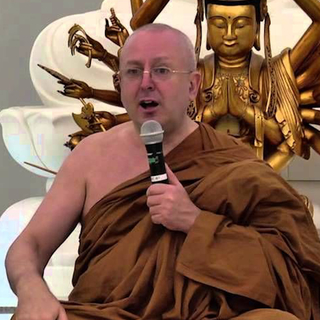
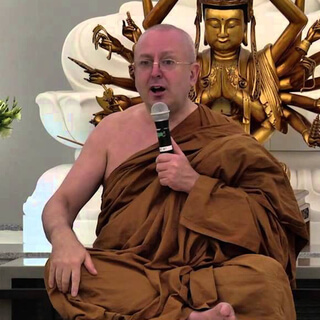
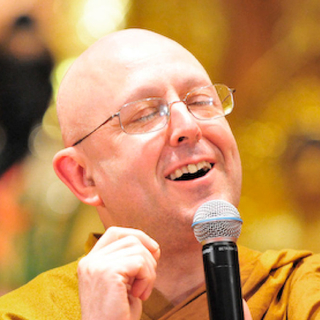
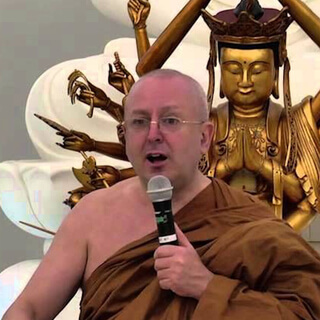
Welcome again and this is the ongoing class.
So anyone who's coming to the Introduction to Meditation class,
The series of four talks to give you the basic instructions of meditation,
That class will be held in the room to my right.
This is the ongoing class where we sit meditation a bit longer.
And at this class we usually talk about something,
One particular aspect of meditation.
And the aspect I'm going to choose today to explain is the mindfulness of the breath.
Very often I talk about how we get to such a place as being aware of the breath and the breathing,
But there is a lot of confusion about exactly what you're supposed to watch and how you're supposed to watch it and how it works,
Why it works,
Where it leads to.
So I'm just going to focus on that particular aspect of the meditation when you start to become aware of the feeling of the breath.
And one thing I noticed over the many years of teaching and talking with other people who have meditated is that the breath meditation was very,
Very popular,
A standard form of meditation in Buddhism.
And people used to go on to the breath far too soon,
Which meant the only way they could maintain awareness on their breathing was using a force and quite a lot of effort to stay with the breath because the mind was still agitated,
It would go backwards and forwards and it was just so difficult to stay with an object like the breath.
And the reason was not because you didn't lack commitment,
But it was because you hadn't done the preparation.
So the first thing about the breath is don't go on to the breath too soon,
Otherwise you'll just get tense,
You'll start to control,
You won't be able to get any peace and meditation doesn't work.
So you do the other preliminary tasks,
Things like relaxing the body,
Present moment awareness,
Silence,
Get those things pretty strong first of all and then if you want to,
You can go on to the breathing.
And you say you can if you want to because in actual fact,
The breath is something which will happen naturally,
Even if you don't choose to watch the breath.
And the reason for that is that the purpose,
One way of looking at meditation is to allow this body and mind to become so peaceful and so still that things disappear.
You close your eyes and when you close your eyes,
You can see the inside of the eyelids,
But because that does not change,
After a while,
The sense of sight turns off.
Anything which doesn't move disappears.
And so sight disappears,
It turns off.
You're listening but there's hardly any change in the sound,
So the hearing tends to turn off.
You're smelling,
Tasting,
But the taste of saliva is the same.
As long as no one had too many baked beans for lunch,
You know some smell changes in the room,
Which means that smell and taste very quickly disappear because nothing is moving.
And you sit still,
You don't keep fidgeting when you get into a comfortable posture.
And because the body isn't moving,
It means after a while,
The body disappears,
At least most of the body disappears,
Except one part which is still moving.
And of course that is your breathing going up and going down.
And that is one of the reasons why,
That if you just do the meditation,
Let go,
Relax,
Be still,
You'll find that the breath manifests anyway as a natural part of this calming the body,
Stilling the mind process.
So that's one of the reasons why it's a very powerful meditation object,
It happens naturally anyway.
And that is always the best way to watch the breath.
That's the Rolls Royce method of watching the breath,
Just everyone else gets so still and peaceful,
So it comes up naturally.
However,
The people who may not be so skilled,
They need to do a little bit of effort onto the breath,
Then what one does then is as one is watching the,
As one is meditating,
One chooses to watch the breath.
One puts one's attention on the breathing,
One deliberately sort of asks oneself,
And this is the way which I recommend,
Ask oneself,
Is my breath going in or is it going out?
As you inquire,
Then you are aware of that feeling of the breath.
And I prefer teaching the breath,
Especially to new meditators who haven't had any experience of breath meditation before,
Because it's a pretty easy object to watch.
Where the problem comes is when people have been told in other traditions to watch the breath at the tip of the nose or watch the breath at the belly.
And when you start focusing on one particular part of the body and you watch the breath,
Then you get a problem.
And the problem is you are using too much effort,
You are focusing on a part of the body rather than focusing on the breath.
And sometimes it might be okay,
Sometimes the breath might be at the tip of the nose,
You may be able to watch it there,
But it's not always at the tip of the nose and that's a problem,
You look for the breath there,
You can't find it.
You try even harder because you can't find the object of meditation looking for and people get frustrated and upset.
Please remember to look for anything in life,
Not where it's supposed to be,
But where it happens to be.
So you don't just go looking at the tip of the nose expecting the breath to be there because sometimes it's not,
It is somewhere else.
And I learnt this because when I was young I used to have hay fever and at a certain time of the year in UK and I couldn't find the breath at the tip of the nose.
And the reason was my nose was blocked up,
I was breathing through my mouth.
And so I thought my goodness,
That means I can never meditate at certain times in the year.
And it's stupid really when you think about it,
But you are stupid,
I was stupid,
It's just the nature of human beings.
And so when I realised after a long time,
Look,
The Buddha never taught nose meditation,
He said look at the breath,
Look at the breath,
Look at the breath.
And that meant I was always breathing and if you are always breathing,
You must be able to notice the breath somewhere.
So when people say,
Oh,
During breath meditation I can't find the breath,
It's only reason is because you are looking in the wrong place.
So instead of expecting the breath to be somewhere,
I ask myself,
Am I breathing in or am I breathing out?
And as soon as you ask that question,
You are aware somewhere in the body of that particular feeling called breath feeling.
And like any other practice of mindfulness,
The more you do it,
The easier it is to be sensitive to that feeling,
To know it,
To be accustomed to knowing the breath feeling.
And when you are accustomed to noticing that particular feeling,
The feeling of the breath,
It does become a very useful object for meditation.
And the reason is,
Many reasons,
First of all it's a physical feeling which you can't really say too much about.
It's not like a painful feeling which means you have to do some business of taking some medication or scratching or doing something to get rid of that pain.
Now the feeling of the breath is usually very gentle,
Pleasant feeling.
And number two,
The rhythm of that breath going in and going out,
Again is quite tranquilising.
And I often wondered why it's comfortable to watch that particular rhythm,
That particular frequency.
And my theory is,
It's only a theory but it makes a lot of sense to me anyway,
That it reminds you of the earliest part of this life when you are either in your mother's womb or just resting on her tummy,
Maybe breath feeling.
And there you recognise that particular rhythm of the breath because her stomach was going up and down together with her breathing.
And that's a rhythm which you recognise from the earliest times of your life,
Reassuring,
Comforting and joyful.
So that means that particular rhythm of watching the breath still has an attraction for you which makes it easy to watch.
So when you ask yourself,
Am I breathing in,
Am I breathing out,
You go into a feeling which deep inside of you is recognised as being safe,
Comforting and full of ease.
Maybe it's a bit too comforting which is why some people go asleep when they start watching their breath.
Maybe it reminds you of when you went to sleep after breastfeeding on your mum's tummy,
I don't know,
That's just another theory.
But certainly the particular rhythm of it is very tranquilising.
And the best thing about the breath,
There's only one or two things about the breath,
The best thing about it is that it does change.
So it gives an interesting experience for the breath to watch.
It's not just every breath is the same,
It's not the in-breath is the same as the out-breath,
It's not even that the beginning of the in-breath is different from the end of the in-breath.
Actually the sensations do change so it gives the mind something of interest to watch.
And if you go to the breath too soon,
You can't see enough of the interesting stuff of the breath because it means the mind goes to sleep or wanders off.
But if you do the preparation first of all and either the breath comes up naturally or you choose to watch the breath but not too early,
When the breath does come up,
You can actually see quite a bit of it.
Not just in-out,
In-out,
In-out,
In-out but from the beginnings of in-breaths,
To the ends of in-breaths,
The beginnings of out-breaths,
To the ends of out-breaths,
All the different sensations just in one cycle of breathing.
When that starts to happen,
You have enough mindfulness,
Enough awareness that what you are seeing,
What you are experiencing is number one,
Tranquilising,
Is calm,
It doesn't generate any business,
It's comforting,
Which means it does relax the search for pleasure and comfort in the mind.
And it does change enough just to be interesting for you.
So after you ask yourself,
Am I breathing in or am I breathing out,
And you start to notice the breath,
It should become a very comfortable object for your mind to follow.
It's mindfulness but comforting mindfulness.
But to make sure that that comfort is maintained,
Please don't try to control the breath.
If the breath gets more uncomfortable,
Harder to watch the joy,
The pessimists of the breath start to disappear,
That must mean that you are interfering with the process.
The nature,
The nature means that that breath has to become more peaceful,
More calm,
More pleasant.
If it doesn't do that,
It means that you are the problem,
You are interfering.
Somehow or other you are controlling that breath.
And so the skilful means to overcome that problem,
The best skilful means I've been teaching recently,
It's to look upon the breath and look upon it as a friend,
Not as a slave,
Because it's the nature of ourselves always to control what we think we own,
We think we own our body,
Therefore we control our body,
We think we own our mind,
We try to control our mind with all these desires and greed and aversions and cravings and wantings.
But it's not the way you treat a friend.
You have a good friend,
You never control them,
You never tell them what to do and how to do it.
You just enjoy their company and just delight in each other's presence,
That's what a friend is there for.
And so when you change the attitude to your breath,
Change it from one of master to slave,
And instead change it to friend to friend,
You'll find it means it much easier to watch the breath and the breath doesn't get this hardness and this unpleasantness.
It gets comfortable and peaceful because when you are with a friend,
You relax.
When you are in this master-slave hierarchy,
Boss and worker relationship,
There's always a bit of tension there.
But friend to friend is where we relax.
So if you do start watching your breath and it does fail to become pleasant,
Remember it is the attitude with which you are watching the breath.
Change it from master-slave to friend to friend.
And then you'll find that the breath does relax and you relax with it.
And the next best thing about the breath,
Or actually one of the great things about the breath,
Is as you treat it as a friend,
As it's delightful,
As it relaxes,
It continues changing.
It continues changing to get more and more peaceful,
More and more delightful,
That's its nature.
And soon it gets so peaceful and so delightful that you can't tell the difference between the beginning of an in-breath,
The end of an in-breath,
The beginning of an out-breath or the end of the out-breath.
The breath starts to take on this character of smoothness and evenness,
A continuous flow of air,
Whether it's going in or out of your body or pausing in between,
It's a similar feeling.
It's that similarity of feeling which the breath eventually offers when you relax with the breath as a friend,
Which allows the breath to disappear.
As I mentioned a few moments ago,
A great way of understanding the meditation is to keep these five senses so still that they turn off,
They disappear.
And the breath serves a purpose of turning off the whole five senses,
Especially the last of them,
The physical feeling of the body.
So just watching the breath,
It gets smoother,
More delightful,
So you can't tell the difference between the beginning and end of an in-breath or out-breath.
Just a smooth continuous flow of breath and then the perception of breath vanishes.
Basically the brain has no business there,
Nothing going on,
Nothing seems to be changing.
And with that,
The feeling of the breath vanishes and with it,
The last of the five senses.
That way you go deeper inside the sixth sense of the mind.
That's usually the place where you're deep inside,
Peaceful,
Happy,
Where these beautiful lights come up called the nimittas.
But that's the subject of another talk.
If you're interested in that type of meditation,
Then we have plenty of CDs or books about it,
The Mindfulness Bliss and Beyond.
But today I wanted to just focus on watching the breath.
And to sum up,
Sometimes it comes up naturally.
If it doesn't come up naturally,
Please don't go to it too soon.
Relax the body and mind enough first of all.
Remember that you don't have to watch it in a particular place in the body,
Wherever it happens to be is good enough.
And notice it's a delightful feeling in its nature because it may remind you of earliest times of your life.
It's a rhythm which is comforting,
Which makes it easier to watch.
And if it doesn't get more and more delightful as you meditate further,
It's because you're controlling it somewhere,
Which means you have to change the attitude to be a friend to your breath.
And then it does get peaceful.
When it does disappear,
Eventually,
Don't go looking forward again.
It's done its job.
Now just enjoy a mind release from the five senses.
Okay,
So that's the introduction there,
Just on the use of the breath in this meditation practice.
So now if you'd like to get yourselves comfortable,
If you're not already comfortable,
Close your eyes and we'll begin the meditation.
I'll give you about five minutes of reading you in and then I'll be quiet.
And with the eyes closed,
Remember to spend some time with your body.
Relaxing it,
Finding any tight spots and releasing them.
Not only does this help generate a comfortable posture,
It also stops the mind wandering backwards and forwards at the very beginning.
You've got a task to do.
It focuses you in the moment with the task,
The compassionate task of relaxing your body and preparing yourself in a good posture.
So resist thinking or wandering and just be inside your body,
Be with your body.
Relaxing muscles and bones,
Changing positions of your limbs until you get it just right as best as you can.
Relaxingipment Sixth.
.
.
.
.
.
When you are ready,
Let go of the body,
Bring the mind into the present moment.
Now we've all got lots of business,
Lots of bruises from the past,
Fears for the future.
Say to yourself,
Not now,
This is my meditation time.
So deliberately renounce the past,
Renounce your future.
So you can rest in the present moment.
Present moment awareness is the best way of dealing with the past.
You just let it all go,
Can't be changed.
Present moment awareness is the best way of dealing with the future.
Because now is the place your future is being made.
Caring for the present is doing the best you possibly can do for your future.
So put the main purpose as settling in the present moment,
The now,
Doing the preparation.
.
.
.
.
.
.
Keeping the mind in this moment and taking it deeper by developing the silent mind.
You don't give a commentary,
You renounce the assigning of names to your experience.
You know without saying anything to yourself.
And knowing beyond words,
The silent mind.
See if you can develop that by deliberately resisting the inner commentary.
.
.
.
.
.
And now if you want to watch the breath,
If you're not already observing it,
All you need to do is ask the simple question,
Am I breathing in or am I breathing out?
You'll feel a sensation called the sensation of your breathing.
Where you feel that is not important.
How you feel that is irrelevant.
Just as long as you know that breath,
You follow it on its journey in and out of your body.
Just enough to know it's going in.
Just enough to know it's going out.
And treat that breath like a friend.
Good old friend.
So you relax in each other's presence and see what happens next.
.
.
.
.
.
.
.
.
.
.
.
.
.
.
.
.
.
.
.
.
.
.
.
.
.
.
.
.
.
.
.
.
.
.
.
.
.
.
.
.
.
.
.
.
.
.
.
We're close to the end of the meditation now.
So how does it feel?
As we recollect the quality of our mind towards the end of every meditation.
So we pause not to take things deeper but to discover how far we've come.
To appreciate any peace,
Any contentment,
Any inner happiness we feel right now.
To appreciate it,
To notice it and then to reflect on where this peace,
This happiness,
This sense of inner freedom came from.
So you reflect on the path of meditation.
What works and what doesn't.
So it's now time for me to ring the gong.
As usual please listen to the three ringings of the gong.
When the last ringing vanishes then come out from your meditation.
.
This meditation,
I'm just focusing on that part of the meditation called the awareness of the breath.
Certainly it's the meditation object which I've used for all the years I've been meditating over 40 years now.
So I know my breath pretty well,
I know how it works,
I know just how I can use it as a vehicle.
And when it's done its job,
You let it go.
And when you get into the deep states of meditation,
Lights and jhanas and stuff like that,
All that breath stuff has done its work so you just let it go.
So don't always keep watching the breath and say I should be watching the breath,
I should be watching the breath.
No,
Keep it natural,
When it goes,
Let it go.
And then have some very wonderful meditations.
And especially once you get used to your breath,
You know it very well,
You're a good friend to the breath,
It's always there for you.
And in times of any stress or tiredness or any anxiety which you have to perform some interview or medical test or whatever,
You can always use that breath as a wonderful way of calming your mind down.
Just to watch the breath and be a friend to it and let it relax with you.
When it is a good friend,
When you know each other very well,
Then breath meditation is very very easy.
Okay,
So are there any questions or comments about today's meditation?
Anyone else?
Yes?
Okay,
It's if you're on a chess game or you're working.
I was in Sydney yesterday morning and a couple of days before,
I visited Ajahn Sujato's monastery and it's got a big cave there which they've excavated and they've done a very wonderful brick wall,
Not brick wall,
A dry stone wall in front.
And I asked who did this and it was one of the anagarikas,
The ladies who's going to become a seminary tomorrow,
Catherine.
And she did just a beautiful job.
I turned around and said,
That shows that she's got mindfulness and her meditation is probably very very good.
Because even just to lay a stone wall,
You have to focus.
You have to maintain that focus for a long period of time.
And you find that's actually how I know that people can do good meditation by seeing how they work.
So the amount of mindfulness and care you put into your job,
You can see that by how you write a letter or how you sweep the paths or how you do a stone wall.
It's the same application,
Kindness,
Not getting frustrated,
Patience,
Making peace,
Being kind,
Being gentle,
Which creates beautiful building projects or beautiful writing or beautiful whatever else you do.
And that same combination of mindfulness and kindness,
You'll be able to use in your meditation to also take you deep.
Does that make sense to you?
Yeah.
Okay.
Well meditation,
Yeah.
But even so,
You're saying that's a good point,
In doing a job,
Doing a task,
You're actually applying your mindfulness,
In meditation you're just letting go.
But even so that when you're doing a job,
You're applying your mindfulness at the very beginning,
You get into it.
After a while it starts to flow.
And it's that when it starts to flow is when you do the best external works.
I know whenever I'm writing something,
Sometimes you have to write an article,
Getting started is really difficult,
Applying your mindfulness.
But once you get into the groove,
Then it flows very easily and that's when you do your best stuff.
So it's actually getting into the groove where the work just flows.
When I was in Hong Kong last month,
I was talking to this artist,
She's quite a famous artist in Hong Kong,
Teaches at the university as well.
And she wanted to tell me about how she uses her meditation with her art and her drawings.
And she said,
That's what she does,
She gets a paper up there,
Applies herself at the beginning.
But then she says she has this relationship with the pencil and just lets it flow.
And that's how she creates such good work.
And she does get into a great mindfulness care meditation state while she's doing this.
So yeah,
You apply yourself at the beginning.
But then if you have a task,
Especially if it's a long task,
Then just let it flow and let it develop.
But if you are just doing IT work for the treasury,
Sometimes you can't really let it flow so easily.
It's people interrupting you,
People telling you jokes or whatever.
If you are doing some sort of work which is a long task,
A big task,
Like building a wall,
Or painting a picture,
Or even just doing house painting,
That can certainly be a great way of applying your mindfulness and meditation techniques in the external world.
Okay,
So now they are getting ready to organise the ATM,
So now we can pay respects to the Buddha,
Dharma and Sangha.
There is going to be a Suta class tomorrow at 3 o'clock,
That will be taken by Ajahn Brahmali,
Because we've also got a committee meeting.
Quickly?
Yeah?
Okay,
Tuesday 29th of May,
Is there a flyer somewhere?
Is there a flyer about that somewhere?
Website,
Okay,
That's a class on happiness.
And if you are not happier after you finish the course,
You can get your money back.