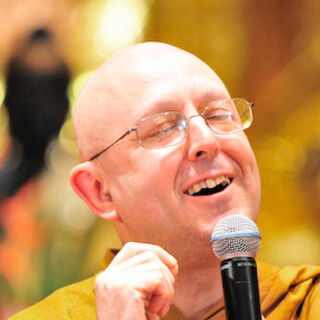
So welcome everyone to the Saturday afternoon happy hour.
That's an old joke,
Still laughing at that one.
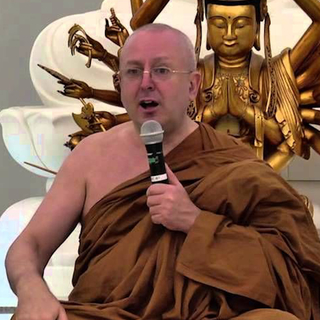
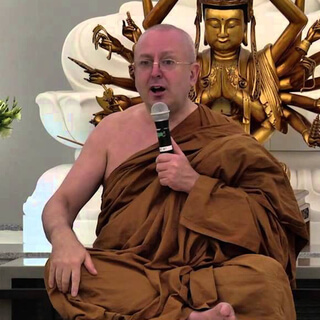
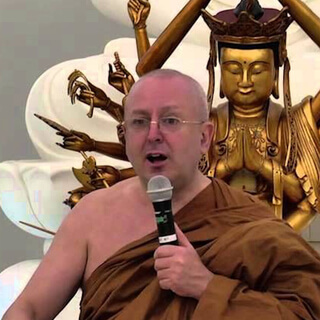
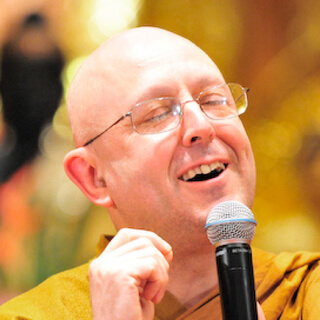
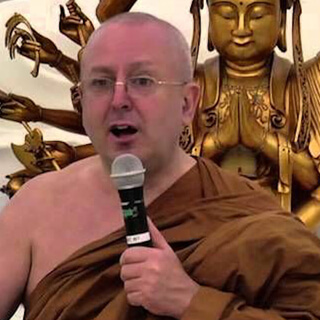
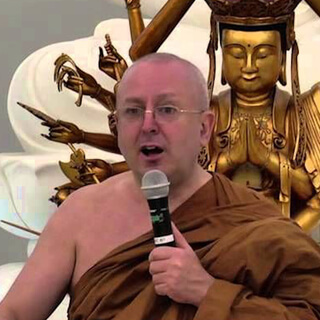
That's the Dhammaloka Buddha Center in Alumara.
This is our ongoing meditation course or class.
So those of you who come for the introduction to meditation class,
That class is being held in the room to my right.
So the introduction to meditation class in the room to the right.
Because otherwise this class over here,
We sit for longer periods.
It's more deeper instructions and sometimes people feel a bit lost if they come here for the first time instead of just getting the introductory class in the room next door.
So,
Having done that little bit of housekeeping,
Sometimes in meditation,
Even in life,
Sometimes we have our difficulties,
Bad habits,
Overreacting to problems.
And sometimes we do it just so quickly,
Almost automatically,
That we have no control over these reactions.
And these problems also occur in meditation,
Where you could get some fear coming out.
You go to a state of meditation where maybe your hands feel like they're disappearing or you may get to a state in your meditation where you are even just the conscious object is changing a little bit.
And sometimes we react overmuch and it spoils the meditation.
And if we try and control things right where we're in the middle of the experience,
Sometimes that makes it worse.
It's like to do something,
It disturbs the meditation,
Not to do anything,
Just keeps the problem going on.
And so we wonder,
What's the solution to this?
And the solution which I have tried and it works,
Is what I call programming your mindfulness.
So,
Let's have just a simple problem,
Like you have problems with sleepiness during meditation.
And it's not the fact that you're tired,
You've had a good rest,
You're relaxed today,
But it's a quick problem about just being dull and just lethargic.
And you're not quite sure what you should be doing,
So just go off into a dullness,
Into a sleep as a form of escape.
So,
What we can do in our meditation is we identify just one problem,
Such as like dullness.
And it could be other problems such as fear,
It could be some other problem such as excitement,
When meditation actually starts to,
Things start to happen.
Wow,
Great!
And the way we deal with this is we choose a major obstacle,
The one which keeps disturbing us again and again,
One at a time.
And then after sitting down,
Relaxing,
Usually once your body is pretty comfortable,
Then you make a resolution,
Say it's sleepiness.
If when I get peaceful,
My mind starts to get sleepy,
I will choose another path.
When it starts to get sleepy,
I will choose another path.
When it starts to get sleepy,
I will choose another path.
Whatever it is,
In your own words,
In your own description of the problem.
Because I mention that because years and years and years and years and years ago,
Someone told me that when you go into meditation,
The mind is getting very peaceful,
Very calm,
And it's like there is a fork in the road of meditation.
And one fork just leads to the sleepiness,
It's what you're used to.
And so you just tend to always go that path,
Always go into sleepiness and drop into this dull state.
But at that fork in the road,
There's another exit,
If you want.
And if you go that path,
You still keep the peace and the stillness,
But you have the energy and the awareness as well.
And you know that path exists,
That sort of turn off,
But you keep missing it time and time again.
So what you do is you tell yourself,
It's like program.
When I get to that point,
Then I will take the path of clarity,
Not the path of dullness.
And that's all you need to do at the very beginning of the meditation.
And then when you get to that stage,
It's really weird but it happens,
You get to that stage and you're about to go off into your old habits of just dullness,
And it's like the mind,
The program starts to kick in.
And you just go the other way,
Into some clarity.
You get the people who say that when they get into reasonably quiet meditation,
Their heart starts to palpitate,
They get excited.
And then it's,
Oh calm down,
Sort of the heart,
And just doing too much and the whole thing just gets disturbed,
The process gets interfered with.
So what you can say is,
If that's your problem,
You say to yourself when you start meditating,
This problem occurs again and again and again.
If I get to that state of peacefulness,
I will just not pay attention to my heartbeat,
I'll just pay attention to the peacefulness.
I won't pay attention to the heartbeat,
Pay attention to the peacefulness.
Whatever instructions it is,
Clear,
Precise,
As if you are giving instructions to somebody who is,
Say your husband to go to the shops and get the shopping for the weekend or whatever.
Clear,
Precise,
Simple instructions.
Otherwise they will just get all complicated and get the wrong stuff.
So you keep it simple,
Keep it precise,
Keep it clear.
And you do that at the very beginning and you find that it's like an antivirus for the mind.
You don't have to keep remembering it,
It just kicks in at the right time.
And for those of you who haven't done this very simple exercise at home,
It's amazing just how much this works.
First meditation retreat I did as still a student,
I was really surprised that the teacher even told us to practice this,
But willing to try everything and anything that works.
And it was from that I realized that it's not just learning how to get up in the morning without an alarm clock,
It's also learning just how this mind works.
And that was when you were instructed to whatever time you want to get up tomorrow morning,
Say it's like four o'clock,
What the monks do,
Or six o'clock or seven o'clock or whatever it is you want to get up,
Say it's Sunday tomorrow,
Say it's eight o'clock,
For those of you who want to sleep in.
So say you want to get up at eight o'clock tomorrow morning,
Set your alarm clock for five past eight.
You have to do this because otherwise people get afraid,
It makes the fear of this not working,
It makes them tense.
So set your alarm clock,
Eight o'clock,
And then as you're in bed,
Tuck yourself in,
Get yourself nice and comfortable,
Just really,
Really snuggle up,
And then when you feel relaxed,
You make the resolution,
Program your mindfulness,
I will wake up at eight a.
M.
I will wake up at eight a.
M.
I will wake up at eight a.
M.
And you say that to yourself,
Really clear,
Pay for attention,
You don't just do it sort of,
You know,
Quickly,
Just to get it out of the way,
Not really paying attention,
But really full mindfulness.
And then what happens?
You forget it,
Go to sleep,
Have a nice rest,
And then it happens,
It's amazing how it happens,
That you wake up in the morning,
I mean what time is it?
I look at one or two minutes either side of eight o'clock.
So accurate,
I was amazed at how accurate that is.
It works if you give it full attention and make it precise.
So when you did that,
When I did that,
Just to get up in the morning without needing to set an alarm clock,
Then I realized that that's what you can do,
Just simple auto-suggestion,
Just in meditation,
And also in other parts of life,
People have problems,
They were smoking cigarettes,
Sometimes they told me,
It's such an addiction,
It's a habit,
They just,
Before they know it,
The cigarette's in the mouth.
So you tell them,
Just,
I'll be aware when I take the cigarette out of the packet,
I'll be aware when I take the cigarette out of the packet,
I'll be aware.
And so actually the awareness actually comes up in plenty of time so they can take another route,
It's not just this automatic habit they've been doing for such a long time that they're not really aware of it.
So the programming of mindfulness is really useful in your daily life,
But it's also very effective in the meditation for any problems which we have,
And they're very,
Very important when you get into the deep meditations.
You know,
Sometimes,
I think,
I always like doing,
Talking about the deep meditations as well,
Things like when you see these beautiful lights in the mind,
I talked a little bit about them a week or two ago,
When you see these beautiful lights in the mind,
People sometimes they get scared,
Rah!
And sometimes it all breaks apart.
So they see a beautiful light and they get scared,
So I shall not be scared,
It's too late by that time,
Your mind is too subtle to interfere and give instructions.
So if you see these lights or whatever and you get really scared,
Or the other one,
Obviously excitement,
Whichever one it happens to be,
It's only one which really dominates,
Then at the beginning of the meditation you say,
If I see that light,
I will not be scared,
When I see that light,
I will not be scared,
When I see that light,
I will not be scared.
You give the instructions prior to the event,
At a time when you can,
You know,
Just give some suggestions and it doesn't disturb the mind,
You're not deep yet.
And as you meditate,
You go deeper and deeper,
And you get very silent,
You're not sort of making commands or anything,
And then breath,
Beautiful breath,
Delightful breath,
Starts to disappear and just see the nimitta,
The lights,
When they come up,
It's amazing,
Just because you've given the instruction,
You don't need to verbalize it,
The instruction is there,
And it just,
You're not scared.
Whatever the obstacle was,
You go through it,
You go past it.
So this is actually the programming of mindfulness.
And I also use this,
I mentioned this to somebody,
One of the monks recently,
That when I was in Thailand as a monk,
There was very poor monasteries in those days,
And you were in the jungles,
Where there were snakes,
Deadly snakes,
And you had to go to the hall for the evening meeting or the morning meeting,
Back to your hut,
Through the forest path of Asia,
And there was really some big snakes there,
And didn't have any sandals,
Because the thongs would sort of break apart after a while,
You just had to go barefoot,
And even the flashlight batteries,
Which they didn't last very long.
So a lot of time,
You're going there just using the moonlight or the starlight,
Actually to find your way through the jungle.
And so because I knew there were snakes around,
And they were dangerous,
When I left one place to walk through the forest to another place,
There was no shoes,
Sandals,
With no sort of flashlight,
I was made a resolution.
Snakes are out there,
They're dangerous,
Be alert.
Just that one thing,
Just looking out for snakes.
So if I saw like a twig across the path,
Or it could be a shadow,
I don't know what it might be,
I'd always either take another path or jump over it,
So I never got bitten.
I was on the lookout for them.
And that's actually just a program of mindfulness again.
Just at the beginning of the meditation,
You're on your lookout for your snake,
The one which always tends to hinder you at this stage of your meditation.
It could be the fear,
It could be the habits,
It could be this intense weird stuff which happens on your body before the body vanishes,
You're on the lookout for you,
You prime yourself up at the very beginning of the meditation,
You program your mindfulness,
And then when it happens,
You don't get caught.
And again,
That's also really important for when we do other sort of habitual habits,
Little buttons,
Somebody says something or does something,
And it always tends to irritate us,
And it becomes such a habit that our friends,
Our partners,
They know our buttons,
You just press that button and get the response again and again and again.
So in a safe place,
Relaxed,
You actually program your mindfulness.
When somebody says that or does that,
I will not react.
When they say that,
I will not react.
I will say that I will not react.
And that just gives another path instead of always reacting to sort of irritating speech or irritating actions,
Instead of always reacting,
You put that program in your mind first of all,
And when you get to that particular part,
Normally you just react,
But then you see that coming,
You stop yourself,
You take another path.
And it breaks the bad habits,
The bad habits of speech,
Emotions,
Actions,
But more importantly,
The bad habits,
Call them bad habits,
But the unskillful habits of meditation,
So you can go deeper,
Faster.
So because I mentioned that today,
Just after we go through the body,
Before I go on to the peace-o-meter,
I'm going to introduce that to program your mindfulness.
So that's going to come in the first part of this meditation,
Because I usually do the leading meditation for about quarter of an hour,
20 minutes,
Then I'm quiet,
And then when I start speaking again,
That's usually signifying the meditation's about to finish.
So okay,
So here we go.
So if you'd like to get yourself in your meditation posture.
.
.
.
Closing your eyes.
And starting with your legs,
The bottom of your body.
Raising awareness of your legs by asking the question,
Are you comfortable?
Legs,
How do you feel?
Can I improve your comfort level?
Really be meticulous,
Really careful,
Because you're going to have to keep your legs like this,
Probably for the next 45 minutes,
Make sure everything is fine,
And then your legs will respond by relaxing and being peaceful.
This also means that you establish this mindfulness,
You get to know the specific feelings,
The aches,
The pains,
The tightness,
You may have tight knees,
Or aches in the feet,
Stuff which may be an old sports injury,
Or injury from an accident,
So you get to know,
And you get to also know how to put your own legs in the best position.
You don't follow the books,
You just follow the information which your own legs provide for you.
And you respond to that information,
You're kind,
You're sensitive,
You take experience as more important than theory,
Until your legs are pretty comfortable.
It doesn't mean you have to keep your legs like that for the next 45 minutes,
But if you look after them at the beginning,
They'll cause you much less problems later on.
Then you look at your butt,
Always do this because that takes a lot of pressure,
And if,
Especially if you're a monk,
You've got a robe and it's a fold of cloth,
It's digging into your flesh,
It may not feel much now,
But it'll give you an ache later on.
And also,
You'll find that your legs don't tend to get the pins and needles if you get your buttocks in the right position.
And then after that,
You look at your back.
As I said last night,
I just love to have a good stretch at this point.
I can stretch the back,
It feels really nice,
All these endorphins going through the bloodstream.
It feels good,
Relaxes.
And I just feel my back,
Just check it out,
Make sure it's comfortable.
I'm checking the belt of my lower lobe.
My back feels about as good as I can get it.
The hands.
I just learned how to put the hands in the lap,
It's good enough.
Some people put their hands on their knees.
It doesn't really matter where you put your hands,
It's almost uncomfortable.
Then I go up to my shoulders.
That's really important because you do get aches and pains in the shoulders.
Especially when I wear the robe over one shoulder,
The shoulder with the robe on,
Sometimes it cuts in,
So I just relax that.
And then just to relax the shoulders themselves,
Just to loosen the muscles.
Every time you do this,
It's easier.
You get to be aware of the tightness,
The tension in your own muscles,
Especially in the shoulders now,
And trial and error,
Visualization,
Skillful means.
You soon learn how just to relax.
You find you just have to think,
Relax,
Let go.
And then the muscles,
They follow suit.
Just as the same,
I can just make this as a choice,
I'm going to raise my hand,
You raise it.
Now I can do that to my muscles.
Relax,
And they relax.
Awareness gives you feedback.
Trial and error,
Experimenting.
You soon learn how to relax your own muscles.
Just whenever you want.
And up to the neck,
Making the neck sort of nice and loose.
Balancing the head on top of the neck,
A little stretching exercise I did.
Inside the neck,
I have an irritable throat.
Feel that itch.
Just know how to be aware and how to relax it.
If you need to cough,
You can cough.
Teach by example is most important.
And up to the face.
Relaxing the muscles around the eyes and the mouth.
And that does help take away any other sort of tension you might have inside the mind.
Because you all know your emotions are played out on the muscles of the face,
Which is why people can read you or look at your face.
And I learn to be aware of those muscles and relax them.
And then I become aware of my whole body sitting here.
I've taken time being careful to relax parts of it.
Now I look at the whole thing.
Sitting here,
Really relaxed.
And needing to move.
If there is a part of your body still which is aching,
Irritating,
Painful,
Probably because it's inside the body somewhere,
Then focus on that.
Zoom in on it.
Get to really know it.
We understand disturbances,
Illness,
Irritations,
Information,
Pain.
We understand it by exploring it.
Once we've explored it,
We have mindfulness,
Awareness.
Soon we find how to relax it.
How to ease an ache in your tummy.
The pain in the back.
Just feeling it.
Learning this wonderful thing called letting it be.
Opening the door of your heart to that feeling.
Not fighting it but making peace,
Kindness.
You find that irritation or pain can actually get less.
Just because you perceive it in a different way.
The mind's interaction on the body.
Your own mind,
Your own body.
You can do this as long as you wish.
I'm going to move on now.
My body relaxed.
Now before I turn onto my emotional world,
I'm going to make this resolution.
You're a snake.
Your biggest problem in meditation.
What is it?
Is it expectation?
Is it fear?
Is it just overreacting to any state of the meditation?
Identify your biggest problem and now make the resolution three times.
When that happens,
This is what you will do in your own words three times now.
Then we leave it alone and go to our peace-o-meter.
It's already in your mind,
You don't have to worry about it anymore.
Now you go to your peace-o-meter.
How peaceful are you or how agitated?
Awareness of that part of your mind which indicates how restless or how peaceful.
Just like with relaxing your body.
Now you find what makes you peaceful.
The cause of inner peace.
And also the cause which makes you restless,
Disturbed.
Soon you become very aware of this in-core peace or rather the peace-o-meter.
The more aware you are of it,
The easier it is for you to decide to be peaceful.
You know what works for you,
What doesn't?
Moving your mind to peace.
It's almost automatic that you let go of the past and future.
You know one reason why you let go of the past and the future is because when the meditation becomes interesting and a little bit of delight in it,
The present environment is just too powerful,
It overcomes your interest in the past or your concern about the future and the present moment is enjoyable.
You don't need to escape from it.
So when you're learning about peace,
Your own peace,
And it's working,
That by itself suppresses the thoughts and concerns about past and future.
And peace is something hard to describe.
So just feeling the peace,
It also lessens the intensity and the power of your thinking mind.
It always tries to capture truth instead of experiencing it.
See what makes you peaceful.
See if you can do right in the peaceful,
Simple mind.
.
.
.
.
.
.
.
.
.
.
.
.
.
.
.
.
.
.
.
.
.
.
.
.
.
.
.
.
.
.
.
.
.
.
.
.
.
.
.
.
.
.
.
.
.
.
.
.
.
.
.
.
.
.
.
.
.
.
.
.
.
.
.
.
.
.
.
.
.
.
Sounds like an anomaly but the cheapest can be the best.
But these are priceless and they are pretty good teachings.
So you can download them and you can use things like your iPads or your tablets or whatever and you just listen to them while you're meditating.
You get those ones which you really feel are just for you.
The length,
The type of guidance which you have and then after a while,
Just like when you're with a driving instructor,
They say,
Well you can drive without me now,
Which means that you learn,
It's for training,
It's a brainwashing,
Conditioning.
And then after a while it becomes second nature.
So when people drive a car,
They don't remember the rules of how to drive a car,
It becomes second nature to them because they've done it for such a long time,
It becomes a skill.
So you start with guided meditations,
Any place,
Anywhere.
And honestly I don't mind where you do your meditation.
On the toilet,
Fine.
In the chapel during the royal wedding,
Fine.
See anybody with those headphones on and you know they must have listened to this talk this afternoon.
In bed,
Because people think,
Oh that's not respectful.
It's more important that you calm your mind and become peaceful.
The location is not important as long as you are peaceful.
I got this email about three or four years ago,
Just somebody saying thank you so much.
She works as a female sex worker in Melbourne and she says after part of her career,
She tells her clients to listen to Ajahn Brahm's talks on meditation.
Why are you laughing?
And I thought,
After I thought that,
This is weird.
Then I thought,
Well why not?
It's you know,
Doing some good work for her clients.
So it's amazing,
Any place you can do this meditation,
I don't mind,
As long as you know you're doing the meditation and it's helping people,
Helping you.
So anyway,
This is where you start and then little by little you don't need the talks anymore because you can just do it for yourself,
Like learning how to do any school.
You're with your teacher,
Practice at home,
Doesn't work,
So you go back to the teacher just on the iPad and little by little you get more and more skilled.
Oh,
Come on.
It's the last question,
I don't know why this is,
Don't know if this is relevant,
But many people would like to know what you think of the royal wedding.
Oh,
Crikey.
I thought I said enough about that.
Sometimes,
Even as a monk,
You can't avoid it.
So the answer is in two words,
Not much.
What you think about it.
Sometimes you might say that it's some good news,
You know,
People enjoy a bit of inspiration,
Instead of like corruption.
It is,
I think I want to say to someone today,
It's just like Walt Disney,
But in real life,
Just you know,
The prince and the beautiful princess or whatever,
And they ride off into the sunset in their carriages,
Happy ever after.
And of course you wish them all the luck.
So people's fantasies and dreams which are just transferred onto that,
Those couple.
So it's just a wonderful little thing.
Okay,
My little royal story,
Just finishing off today.
Because I'm well connected,
Been a monk for a long time,
Working hard here in Australia,
There was an occasion,
The previous Commonwealth Games,
Not the ones in Brisbane,
There was one in Melbourne.
And because it was Commonwealth Games,
At this time it was Queen Elizabeth came along.
And so Tony Abbott was the prime minister.
And so in the post,
Just one day,
I got this letter from the prime minister,
Nice little stamp on it,
With an invitation,
You know,
To come,
It wasn't to come to the Commonwealth Games to represent Australia in the meditation.
But it was to do a Commonwealth Day service in Sydney,
Was it St Andrews Cathedral in Sydney,
Anglican,
And then also to the Kiribati House and also a state dinner afterwards.
But anyway,
In Kiribati House,
That's where Tony Abbott was.
At that time,
It said Ajahn Brahm and partner.
And so I didn't,
Obviously,
Have a partner,
But I thought,
Who do I know in Sydney who can accompany me?
That was Ajahn Sujato.
So,
You know,
We went there together.
I remember Ajahn Sujato saying,
Because it was only about three or four days before,
You know,
We could actually make all the arrangements.
And he had this dentist appointment.
And he rang up his dentist,
Can I change the appointment just to,
I think this was on a Saturday or something,
Can I change it to Friday?
And he said,
No,
Of course,
I'm a busy man.
It has to be something very important to change your dentist appointment.
Well,
Said Ajahn Sujato,
I've got an invitation to see Queen Elizabeth tomorrow.
And the dentist said,
Okay,
That counts.
But anyway,
So anyway,
There at the reception,
There was so many people there,
Obviously Queen Elizabeth,
Prince Philip and who else was there?
I swear,
Prince Andrew.
No,
Not Andrew,
Prince Edward.
Edward,
I think.
Anyway,
Because these were the big shots,
You know,
Queen Elizabeth and Prince Philip.
And then I saw this fellow just standing in the,
In the,
Doing nothing.
And you know,
I saw Ajahn Sujato,
My partner.
I said,
Let's go and talk to this guy.
Because you know,
It's going bald,
Like many of those royal family are,
Sort of,
Sort of.
Anyway,
That's what it becomes when,
You know,
You've got the first person is heir to the throne,
Second or third have got no heir.
So he was quite bald.
So I went up to him.
And just,
You know,
They have to be quite friendly and just being cheeky.
I said,
Oh,
You know,
Sort of,
We're Buddhist monks,
Are very good.
And then sort of,
You know,
If you actually lose any more hair,
I can invite you to become a Buddhist monk in my monastery,
Just like me.
Ha ha ha ha ha.
And then we went away.
And then Ajahn Sujato said,
Who was that?
And I said,
Prince Edward.
And he really scolded me.
Ajahn Sujato,
What?
You can't say that to a prince.
They're just human beings,
After all.
So anyway,
So it was the Royal Wedding.
It's a wedding,
That's all.
But it just,
You know,
It carries the hopes and aspirations and more like,
More of the fantasies,
You know,
Of other people.
So it is just like a reality TV show.
But you know,
Sort of a one which is hopefully,
Sort of gets the best out of people.
So it's very easy to put things down to be fault finder.
But I always think,
No,
Just it brings people happiness.
Well,
Why not?
So anyway,
That's my,
My thoughts of the Royal Wedding,
Not very much,
Because I don't know too much about it.
But anyway,
I did say,
Obviously,
On Friday night,
That I don't know why people ask me these questions.
Why weren't you invited?
I don't know why,
Because whenever I do weddings here,
You know that I have to actually just to do the spinkle of the holy water.
And imagine if I sprinkled holy water on sort of,
On princes and princesses,
I'll get arrested and put in the tower.
So the blessings,
If ever you've seen the blessings,
Which I do here,
They,
You know,
You got married,
For me,
Just,
You just get so much water on you.
And I just,
I always,
Whenever I do,
You always give it everything you've got,
You know,
You don't do it half heartily,
Just give it full on.
So that's one of the reasons why,
You know,
They get drenched.
We could,
We'd be very good sort of TV,
So Ajahn Brahm drenching a prince and princess,
But I probably wouldn't survive it afterwards.
Anyway,
That's maybe one of the reasons.
Anyway,
That was just,
Any questions here on meditation,
Something more serious?
Nope?
Excellent.
So,
Let's now pay respects to Buddha Dham Sangha and then we can go and do what we need to do.
There's a nice filling in of time,
4.
15.
Madhiansa's.