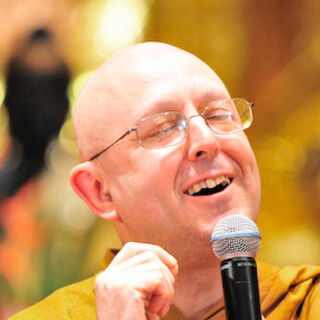
So very good,
Welcome,
We've still got a few,
Couple of minutes to go yet before we start,
But welcome to the meditation class,
This is the ongoing class here for those who have meditated before and who can sit still for roughly about 40-45 minutes.
Those who are coming to the Introduction to Meditation class,
The series of four lectures where we introduce the basic ideas of meditation,
That class will be held in the room to my right,
With Bianca who's the one who is leading that.
So for those of you who are new to meditation,
That is to be recommended,
Because here we just focus on one particular aspect of the meditation,
And after about 10 or 15 minutes of little explanation,
Then we ask everybody to sit still,
To meditate for 40-45 minutes.
And for some people who've never meditated before,
That is like what they do in Guantanamo Bay,
Prolong stress positions,
Which is torture for some people if you don't know how to sit quietly.
So for those who haven't done much meditation before,
The room on my right,
And this is for the ongoing class.
So you have been warned.
Hee hee hee hee.
But anyway,
Now is the time to get yourselves nice and comfortable and just for the meditation,
It's all learning how to relax and be peaceful.
And it's not about concentration,
It's all about stillness,
Allowing your mind to become peaceful and calm.
And the most important word I used there was allowing,
Because every time you get involved,
Every time you try and do something,
Every time you try and get rid of something,
You will find that causes a little bit of stress in the mind.
It is Ajahn Chah Simile,
My teacher,
Who would put his hand up and wave it up and down.
And he said that represented a leaf on a tree and it only moves because of the wind.
The movement isn't inherent in the leaf.
If the wind stopped,
Then the leaf would move less and less and less until the leaf will become perfectly still,
Which is its natural default position.
The leaf only moves because something outside of it is making it move.
And that is a simile for the human mind.
The mind is naturally still,
Believe it or not,
And it only moves and thinks and worries because there's a wind blowing and that is the wind of wanting something or wanting to get rid of something.
And that wind of wanting is a cause for the lack of peace.
So any type of wanting whatsoever,
Even wanting to be peaceful,
Just creates more waves in the mind.
So we try and let things be.
This is good enough.
Learn how to be content.
Make this moment the most important moment in the world.
Not some fantasy of that happiness is somehow going to come in some amazing experience in the future.
This is good enough right now.
So we learn to make peace in this moment.
One of the similes we keep on talking about is learning how to combine kindness and compassion into the meditation.
Sometimes people's meditation is so severe,
They either do that to themselves or someone makes them do that.
So instead of making it unkind,
We introduce compassion from the very beginning just by being aware and kind of our body to make sure our body is as relaxed as possible.
So you can sit on the chairs if you wish.
You can sit in the corner with your back against the wall which is one of the most first taken positions in any meditation hall.
You can sit on the ground.
You can actually sit on these stools but make sure that you are comfortable.
Simple kindness to the body.
When you are kind to the body,
You can get the body in a good enough state where you don't need to move it.
You don't need to want this,
You don't want that because the body is relaxed and comfortable.
So that is the first start,
It's a whole meaning of having a good posture.
It's not what looks good from outside,
It's what feels good from inside,
Comfortable.
And once your posture is comfortable,
You do the same to your mind.
Be kind to it.
And I've often mentioned that everybody understands that what really is a place where you're wanting,
Desires and getting rid of stuff,
The thing which causes the stress in the mind,
They all live in the past and future.
But people find it so difficult to just find an escape from the past and future which is the present moment.
And it always is the case they want to get rid of the past.
They want to get rid of the future.
They want to let go.
And anyone who understands what letting go is,
Wanting to let go is one of the oxymorons,
Two words put together which mean the opposite of one another.
When you're wanting,
You're not letting go.
When you're letting go,
You're not wanting.
Just allow this stuff to be,
Whatever's happening right now.
When you learn how to be kind,
To whatever happens in your mind,
To open the door of your heart to this moment,
Whatever it is,
Then you find the past and future,
They vanish by themselves.
You try and kick them out,
You try and say,
I'm not going to think of the past,
I'm not going to worry about the future,
I'm not going to worry,
I'm not going to worry,
I'm not going to worry.
Try using force when you just get more stressed out.
Using kindness,
You find that it starts to vanish by itself,
The past and the future.
It's one of the reasons why to help people learn how to let go,
What actually letting go is,
When we calm the body down in the first part of the meditation with our posture,
I sometimes ask people to focus on the most irritating part of your body.
The part which is causing you pain,
Disturbance,
Could be an ache,
It could be a headache or whatever,
And then you focus on it,
You're aware of it and you find what you need to do to actually to relieve that pain,
Without moving the body,
Just using your attitude of mind.
And you find that trial and error,
You try this,
You try that,
Eventually you find that when you really let go,
When you're kind,
The ache,
The pain,
The irritation,
The inflammation,
Wherever it happens to be,
Gets a little bit less.
It gets a little bit less and a little bit more,
Little bit less,
It keeps on disappearing as it relaxes.
And you find that thing,
That attitude of mind,
Which relaxes tension in the body,
Which eases pain,
Which allows the inflammation to die down.
What you just did was the meaning of kindness,
Compassion.
This is how we really learn what these emotional responses are,
About how they affect our own body.
A little bit of kindness to your body relaxes it.
When we see that,
When we learn that,
We then not just get a peaceful body and a healthy body too,
We also apply that to our mind as well and how to relax our mind.
Worries,
Fears,
Anxieties,
They are just like tensions,
Information in our body but this is in our mind.
Information of the mind,
A wound in our mental area.
And the only way we can really heal that is actually be aware of it and see what makes it lessen.
We find that is the kindness.
This is where,
As I keep on mentioning in my meditation classes,
You develop this concept of a peace-o-meter.
Just like the comfort in your body,
You can know whether it's tense or whether it's relaxed.
You can see in your mind,
Are you agitated or are you peaceful?
Which one is it?
And when you look at that quality,
Peace or agitation of your mind,
Then you'll find,
You're looking at this thing we call a peace-o-meter,
You're aware,
You're mindful of it.
And how do you actually relax that peace-o-meter?
How do you move the needle,
The meter down to more and more peace?
You know you're peaceful,
You know you're agitated.
Keep looking there,
Keep being aware there.
And after a while you soon realize that when you try and get rid of stuff,
When you're off in the past and the future,
You just get more agitated.
When you're kind,
You find you relax and the needle of the peace-o-meter goes down.
When you let go,
You let go of doing stuff and just let this moment be,
Whatever it happens to be,
Just let it be.
And you learn that skill by the feedback you get from being aware of how peaceful you are or how agitated you are.
You learn how to let go and what it actually is.
You learn it because if you do it right,
You relax and get so peaceful.
This is how we learn meditating.
We get a very comfortable body and a very peaceful mind.
For those of you who find it difficult sometimes because on Thursday we had a,
The cancer group came to our monastery for every year,
This is the 28th year apparently they told me.
And just when one person said,
Oh meditation is so difficult,
I said no,
It's because you're just making it difficult.
So I just taught them the very same exact what I've just been talking about a few months ago but in different words the old empress re-questions meditation.
Now is the most important time.
The person in front of you is the most important person in the world and the only thing to do is to care,
Not to cure but to care.
I've told that story so many times,
I'm not going to repeat it here but I'm now going to say how it relates to your meditation.
You all know that now is the most important time.
Why is it we find it difficult to stay here?
Because we don't give importance to whatever's in front of us right now.
We always say no,
No,
We should be aware of something else.
No,
No,
I've got an ache,
I've got to get rid of that.
I've got a thought that's bad.
I'm sleepy,
That's even worse.
We should keep judging this moment instead of giving the importance.
So when we judge it,
We try and get rid of it,
We want to develop it.
So whatever you're aware of right in this moment is the most important meditation object in the whole world,
Whatever it happens to be.
So you give it importance,
It's happening now,
Then you find you stay in this present moment.
If it's not important,
It's not good enough,
It's faulty,
Defective,
Then you'll try and get rid of it,
Which means you can't be mindful.
So this moment,
The most important in the whole world,
The one thing in front of you right now,
The most important in the whole world,
And the only thing you do is to care for it,
Opening the door of your heart to it as it is,
With kindness,
Letting it be,
And then you find the meditation develops by itself.
Doesn't matter what you're aware of,
Aches,
Pains,
Terrible stuff going on in your head,
It's happening now,
Pay attention,
It's important,
Be kind,
Then you find it disappears,
Slowly but always.
That's what happens.
So,
Now we can actually start the meditation.
So if you'd like to adjust your posture once again because people have come in,
Those of you who have come for the Introduction to Meditation class,
That is in the room to my right,
This is the ongoing class for those who are able to meditate for 40-45 minutes without moving or making too much noise to distract others.
If anybody's too hot or too cold,
For the first time I have the power.
Is everyone okay,
Comfortable enough?
Not too hot?
Not too cold?
Not too perfect?
Good enough.
So,
Closing the eyes.
When the eyes close,
You can have more awareness of your bodily feelings and sensations.
Settle into your body.
Pay some awareness to your legs,
Just a meticulous systematic feeling of your body,
Awareness of any sensations in your legs,
Feet.
If you need to move,
Please do so,
Out of kindness.
If you do move,
The change in sensations allows you to have some feedback to know whether you're moving in a good direction or a bad direction.
The mindfulness and kindness,
If applied clearly,
Carefully,
Will take you through the most comfortable posture for your legs.
This is how we get into good meditation posture,
By feeling it.
Then you're aware of your,
Your bottom,
Your buttocks,
Sitting on a cushion or a chair.
Feel it,
As being aware,
Seeing if you can improve,
Fit you if you want to,
To get the best possible position.
Then become aware,
Move the awareness up to your waist and your back,
Just relaxing it.
You can stretch it if you wish to,
Just experiment to find out the best possible position.
Don't assume that it's the best possible position now.
Just a bit of experiment,
Trial and error,
Until you find the optimum position for your body.
You're going to be meditating for 40-45 minutes.
Get it right to begin with and it's comfortable later on.
And check the position of your hands,
Don't look at them,
Just feel them,
How they're comfortable.
Can you keep them like this without needing to move them for the next 40 minutes?
When you're careful and caring,
You'll get the best possible posture.
Making sure the head is well positioned on top of the neck.
Now once your body has been adjusted through movement,
Look at the whole body,
Making sure everything's okay.
You really do need to move during the meditation,
It's no problem at all,
Just move.
It does disturb the meditation a little bit,
But far less than enduring pain.
And then as I mentioned before,
We close our eyes.
See if you can look inside your body anywhere to find the most irritating or painful part.
Focus in on it,
Zoom in on the most irritating part of your body.
Mindful of it,
Feeling your awareness,
Noticing it does change by itself.
Sometimes gets more intense,
Sometimes eases off.
Why?
See if you can find the link between your attitude,
The way you look at that,
The way you regard it.
Are you giving it,
I want to get rid of you?
Or are you giving it,
I care for you?
Opening the door of your heart,
Embracing this moment.
See if you can experiment trial and error.
You might learn that the way we regard the irritations and pains in our own body can make them worse or can make them ease off.
What makes it ease off?
You will be able to understand that that means letting go,
Kindness,
Opening the door of your heart to this moment,
Acceptance.
You are giving this moment importance and you are caring for it.
All right.
.
.
.
If you find that part of your body gets more and more relaxed,
More at ease,
You are going in the right direction.
And remember this so that later on when we relax our mind we can do exactly the same thing.
This moment the most important.
Whatever is in front of you the most important.
Just being kind the most important thing to do.
So how peaceful are you now?
Or how agitated?
If you can answer that question you are looking at the peace-o-meter.
A part of your emotional world which you can understand tells you just how agitated or peaceful your mind is.
See what is necessary to make yourself more peaceful,
More content,
More emotionally still.
The mindfulness allows you to have feedback.
You soon discover what kindness,
What letting go actually is.
It's what relaxes your mind.
You find once your mind is relaxed,
Past and future disappear by themselves.
When your mind is relaxed you don't need to think.
You are peaceful.
Here the breath will come up later on.
Don't wait until that happens,
Whatever comes up.
That is the most important.
All you ever need to do is be kind.
I will start speaking again when the meditation time is about one minute or two minutes from completion.
You can start speaking again when the meditation time is about one minute or two minutes from completion.
You can start speaking again when the meditation time is about one minute or two minutes from completion.
You can start speaking again when the meditation time is about one minute or two minutes from completion.
You can start speaking again when the meditation time is about one minute or two minutes from completion.
You can start speaking again when the meditation time is about one minute or two minutes from completion.
You can start speaking again when the meditation time is about one minute or two minutes from completion.
You can start speaking again when the meditation time is about one minute or two minutes from completion.
You can start speaking again when the meditation time is about one minute or two minutes from completion.
You can start speaking again when the meditation time is about one minute or two minutes from completion.
You can start speaking again when the meditation time is about one minute or two minutes from completion.
You can start speaking again when the meditation time is about one minute or two minutes from completion.
You can start speaking again when the meditation time is about one minute or two minutes from completion.
You can start speaking again when the meditation time is about one minute or two minutes from completion.
You can start speaking again when the meditation time is about one minute or two minutes from completion.
You can start speaking again when the meditation time is about one minute or two minutes from completion.
You can start speaking again when the meditation time is about one minute or two minutes from completion.
You can start speaking again when the meditation time is about one minute or two minutes from completion.
You can start speaking again when the meditation time is about one minute or two minutes from completion.
You can start speaking again when the meditation time is about one minute or two minutes from completion.
You can start speaking again when the meditation time is about one minute or two minutes from completion.
You can start speaking again when the meditation time is about one minute or two minutes from completion.
You can start speaking again when the meditation time is about one minute or two minutes from completion.
You can start speaking again when the meditation time is about one minute or two minutes from completion.
You can start speaking again when the meditation time is about one minute or two minutes from completion.
You can start speaking again when the meditation time is about one minute or two minutes from completion.
You can start speaking again when the meditation time is about one minute or two minutes from completion.
You can start speaking again when the meditation time is about one minute or two minutes from completion.
You can start speaking again when the meditation time is about one minute or two minutes from completion.
You can start speaking again when the meditation time is about one minute or two minutes from completion.
You can start speaking again when the meditation time is about one minute or two minutes from completion.
You can start speaking again when the meditation time is about one minute or two minutes from completion.
You can start speaking again when the meditation time is about one minute or two minutes from completion.
You can start speaking again when the meditation time is about one minute or two minutes from completion.
You can start speaking again when the meditation time is about one minute or two minutes from completion.
You can start speaking again when the meditation time is about one minute or two minutes from completion.
You can start speaking again when the meditation time is about one minute or two minutes from completion.
You can start speaking again when the meditation time is about one minute or two minutes from completion.
You can start speaking again when the meditation time is about one minute or two minutes from completion.
You can start speaking again when the meditation time is about one minute or two minutes from completion.
You can start speaking again when the meditation time is about one minute or two minutes from completion.
You can start speaking again when the meditation time is about one minute or two minutes from completion.
You can start speaking again when the meditation time is about one minute or two minutes from completion.
You can start speaking again when the meditation time is about one minute or two minutes from completion.
You can start speaking again when the meditation time is about one minute or two minutes from completion.
You can start speaking again when the meditation time is about one minute or two minutes from completion.
You can start speaking again when the meditation time is about one minute or two minutes from completion.
You can start speaking again when the meditation time is about one minute or two minutes from completion.
You can start speaking again when the meditation time is about one minute or two minutes from completion.
You can start speaking again when the meditation time is about one minute or two minutes from completion.
You can start speaking again when the meditation time is about one minute or two minutes from completion.
You can start speaking again when the meditation time is about one minute or two minutes from completion.
You can start speaking again when the meditation time is about one minute or two minutes from completion.
You can start speaking again when the meditation time is about one minute or two minutes from completion.
You can start speaking again when the meditation time is about one minute or two minutes from completion.
You can start speaking again when the meditation time is about one minute or two minutes from completion.
You can start speaking again when the meditation time is about one minute or two minutes from completion.
You can start speaking again when the meditation time is about one minute or two minutes from completion.
You can start speaking again when the meditation time is about one minute or two minutes from completion.
You can start speaking again when the meditation time is about one minute or two minutes from completion.
You can start speaking again when the meditation time is about one minute or two minutes from completion.
You can start speaking again when the meditation time is about one minute or two minutes from completion.
You can start speaking again when the meditation time is about one minute or two minutes from completion.
You can start speaking again when the meditation time is about one minute or two minutes from completion.
You can start speaking again when the meditation time is about one minute or two minutes from completion.
You can start speaking again when the meditation time is about one minute or two minutes from completion.
You can start speaking again when the meditation time is about one minute or two minutes from completion.
You can start speaking again when the meditation time is about one minute or two minutes from completion.
You can start speaking again when the meditation time is about one minute or two minutes from completion.
You can start speaking again when the meditation time is about one minute or two minutes from completion.
You can start speaking again when the meditation time is about one minute or two minutes from completion.
You can start speaking again when the meditation time is about one minute or two minutes from completion.
You can start speaking again when the meditation time is about one minute or two minutes from completion.
You can start speaking again when the meditation time is about one minute or two minutes from completion.
You can start speaking again when the meditation time is about one minute or two minutes from completion.
You can start speaking again when the meditation time is about one minute or two minutes from completion.
You can start speaking again when the meditation time is about one minute or two minutes from completion.
You can start speaking again when the meditation time is about one minute or two minutes from completion.
You can start speaking again when the meditation time is about one minute or two minutes from completion.
You can start speaking again when the meditation time is about one minute or two minutes from completion.
You can start speaking again when the meditation time is about one minute or two minutes from completion.
You can start speaking again when the meditation time is about one minute or two minutes from completion.
It's getting close to the end of the meditation now.
How do you feel?
How relaxed is your body?
How still is your mind?
Why?
What works?
Did you give importance to this moment and care for it?
I will now ring the gong three times.
When the gong finishes sounding for the third time,
That's the signal to come out from your meditation.
Before coming up to the last awareness word,
Let's try one more time.
Very good.
We have the live streaming working.
So this class is listened to by many people overseas.
So let's see what questions we have here first of all.
And then follow from that any questions from here.
Only one.
Ico from Germany.
Is there such a thing as universal life energy and does meditation help to be one with it?
We usually,
Whether it's something or isn't something,
It's not really the question.
It's that we make the reality.
If that's what we wish,
Then we can make that happen.
Universal life energy.
But becoming one with it,
It is sometimes people always say that it's nice to be interconnected.
But to me that it's nice to be able to disconnect from time to time.
And just there was a beautiful little saying from Silicon Valley in a Wisdom 101,
I think,
Conference two years ago,
Where the theme of the conference was disconnect to connect.
Because it was meaning disconnecting your mobile phones to connect with real life.
And also you could interpret that as disconnect from your body when you meditate.
And the only way you can do that is connect with it first of all,
Be kind to it and then it vanishes.
That's the way we disconnect from our body.
So we can be free of our body and understand our emotional world.
And then with the emotional world we disconnect from the past and the future to connect with this present moment.
Disconnect with trying so we can connect with being peaceful and being still.
And being to be able to disconnect with all these ideas like universal life energy or ground of all being or anything to connect with this moment and watch the whole moment vanish until there's nothing left.
Kind of like that idea.
As a physicist,
We used to have this little problem with how a universe could begin.
The mass energy of a universe,
Of stuff.
And also there's,
Because this is,
You all know this,
That it was a fundamental law.
You cannot create mass energy,
You cannot destroy it.
So where did it all come from?
Can it be created,
Cannot be destroyed?
The answer is not hard to understand.
That if all of the mass energy,
All of the planets,
Solar systems,
Energy,
Fields,
They could all come together in one spot,
What would happen?
Because there is such a thing,
Not using the negative energy in the sense of an emotional darkness,
But there is such a thing as a negative mass energy.
What happens if it all cancels out?
I remember proposing that at a seminar with our local professor David Blair at UWA.
And I said,
What happens if it all cancels out?
So if all the stuff which is here in this universe,
If it all came to one point,
It would all be a zero sum.
Came from nothing,
Goes back to nothing.
And I remember him turning around to me and saying,
Wow,
Ajahn Brahm,
You are really up to date.
Omega equals one.
You know,
Insights always have these numbers and figures and symbols for stuff.
So that is the case.
There's nothing here.
Not universal life energy.
But that is just the device,
Division.
And then coming from nothing,
Going back to nothing.
Wow,
I think that's really cool.
And one of the reasons why is amazing,
Just the insights and understandings which you get in the most unexpected places.
And this one I got from a t-shirt.
Where the t-shirt read,
Nobody is perfect.
I am a nobody,
Was the next line.
Therefore I am perfect.
Nobody.
So if you try and be a somebody,
You try and get enlightened,
Try and be a bodhisattva or fully enlightened buddha or everyone to be,
Then you'll never be perfect.
So nobody is perfect.
Therefore be a nobody.
And then you'll find perfection.
For those who are out and out Buddhists,
Who know your scriptures,
That is another interpretation of the Visuddhi Magga's favourite,
Famous line,
The path is,
But no traveller on it is seen.
Nibbāna is,
But not the person who enters.
To enter Nibbāna you have to vanish to be a nobody.
And then you'll find perfection.
Is that a bit much on a Saturday afternoon?
I told you this was the advanced class,
Those people that close to enlightenment,
You will want.
Hehehehe.
Yeah.
How does a jīnya take the name of a vāṭṣu trick?
A vanishing trick,
Yes.
Yes,
I know.
Vāṭṣu.
Vāṭṣu,
Yeah,
Yeah.
What is his famous saying,
Vāṭṣu?
He made it.
Yeah,
Vāṭṣu,
Yeah,
But they pronounce it differently.
Way or not.
Yeah.
Indeed.
What was,
Ah,
He did the,
Ah,
Okay that,
His great story,
I just was getting back my data back,
Was that when he had this amazing rule with his disciples,
That he would go on a walk with them every evening.
He'd choose one disciple every evening to go on a walk with him.
And had a golden rule.
If you went on a walk with the master,
You weren't allowed to speak.
Not one word.
And this new guy,
This young fellow,
He got selected to go on a walk with the master.
And they walked through the forest,
Through the mountains,
Past the lakes,
And they just happened to get to a ridge in the mountains at sunset.
And it was one of the most gorgeous sunsets,
With streaks of orange and purples and golds,
Just illuminating the horizon over the mountainscape.
And it was such an amazingly beautiful sunset.
This new student couldn't help himself,
But say,
Wow,
What an amazing beautiful sunset.
He'd broken the rule.
And Atsu had to keep the rule too.
He couldn't say,
You've spoken,
Otherwise two people would have broken the rule.
He just turned around and went back to the monastery.
And when he got back to the monastery,
That's where he could speak again and said,
That young man is never ever for his life allowed to come on a walk with me again.
And his friend said,
Oh,
That's a bit too tough.
A life man?
He just said,
What a beautiful sunset,
What's wrong with that?
And that's when Atsu replied,
When my student said,
What a beautiful sunset,
He wasn't watching the sunset anymore.
He was only watching the words.
He wasn't watching the sunset.
He was only watching the words.
And I like that because that,
You know,
There's great wisdom there.
Whenever we say anything,
We're just watching words.
We're not watching the real thing.
The sunset.
So if anyone ever,
You take them out to a dinner this evening,
You say,
Wow,
This curry tastes nice.
So you're not tasting the curry,
Are you?
You're just watching the words.
Tell them to shut up.
So that's it.
That's some really nice stuff.
So that's what I always remember,
That lovely story which explains just about how silence.
We always have these ideas,
Universal life energy and stuff.
But,
Oh,
Just one little,
Any other questions,
By the way,
Before I tell another little anecdote?
This actually ends questions,
Which I would love to end questions,
Because I get too many of them.
And you answer one question,
You have another one,
Comes afterwards,
Endless,
Except when?
As a young monk,
There was this very,
Very famous monk,
His name was Ajahn Tate,
One of my favorite monks.
Soon as I became a monk,
That was about 42 years ago,
That he was in the big hospital in Bangkok dying of cancer.
Because he was a famous monk,
He had the very,
Very best care.
And a few people know this,
That that monk actually visited Perth many,
Many years ago,
Just about a year before,
Two years before I came here.
He visited Magnolia Street anyway,
But that's a long time ago,
Ajahn Tate.
But anyway,
He had cancer when I first went to Thailand.
And so he said,
Waste of time staying in a hospital,
If I'm gonna die,
I'm gonna die in my own monastery,
Which was on the Mekong River,
Just upstream of Sri Chiang Mai.
And so he went back there,
And it was about another 25 years before he died.
So he took his time,
Patient,
No rush.
But you know,
He's a really,
Really great monk,
And so hearing his reputation,
That I decided to one day to go and visit him and ask all of my questions.
And I had to wait for an appointment.
He was just such a famous monk.
And to ask these questions,
I really wanted to find the answers for him,
Someone I could really trust.
You know what happened?
When I went into his room,
My mind went so peaceful,
So silent.
There were no questions left.
And I just sat there,
Like you know,
Some idiot,
Only the,
You know,
These guys understand,
These great monks understand what's going on,
So we just sat there in silence.
It just got the peace and the tranquility and the amazing kindness,
This beautiful,
Beautiful acceptance,
That even no matter how stupid I was,
That was not a problem.
You didn't need to improve to be perfect,
To be accepted.
The door of his heart was fully open.
Never needed any more questions.
And that was a wonderful experience.
Sometimes you feel so peaceful,
So kind,
So calm,
So accepted.
There's no need for any questions to disturb the peace.
Many of the questions are just an agitated mind,
Wanting to find out just through giving more names to sunsets,
Instead of just being still.
And all the questions vanish.
Questions like thoughts,
Like the past and the future,
And just how we escape.
It's an agitated mind,
Wanting something more,
Not being able to appreciate we've got enough already.
We have enough wisdom.
But when we go searching for more,
We forget,
And don't appreciate what we have.
How much do you need to be peaceful?
To be agitated,
Yeah.
To write a book,
You need ideas.
To actually get a PhD,
You need to have research.
You need to write something.
But to be still,
You need nothing.
Nobody is perfect.
Or as before I went off somewhere last year,
I think before I went off to Malaysia last December,
This fellow came along and he decided to try to convert me to Christianity.
I would have been a big prize.
So he said,
Come on Ajahn Brahm,
You have to admit,
Nothing is greater than God.
And I said,
Yes,
I agree with you totally.
He said,
Yeah,
Really?
I said,
Yes,
Nothing.
Emptiness,
The great void,
That's greater than your God.
He was really upset,
I don't know why.
I was just teaching him Dhamma.
That's not what I meant,
That's not what I meant,
That's not what I meant.
I'm a very tricky monk.
So the nothing,
The great emptiness,
The void.
What more can you get?
People go from many gods to one god,
And then they finally go to no god.
Nothing,
Emptiness,
Void.
That's the coolest.
So it's not meditation helped to be one with it,
To be none,
To be none with everything,
Instead of one with everything.
I'm saying that quite cool.
So those people whose aim is to be one with everything,
Nah,
To be none with everything.
Or to be one with nothing.
I don't know,
You can have some great fun on this.
Anyway,
Any other answers,
Questions,
Or did it work?
The end of all questions?
Nah,
Just my,
In my dreams.
Okay,
Anyone want to put their hand up?
No,
Great.
Okay,
Again,
This is the final session for the monks,
Before we start our rains retreat tomorrow.
So next week we're gonna find how well I have trained my followers.
Because it's gonna be a class next week,
Isn't it Hugh?
It could be,
Could be not,
That's great.
That's just how it should be,
Totally uncertain.
Maybe there is,
Maybe there ain't.
A recording,
That's,
Well look,
This is the recording anyway,
Isn't it?
I tell the same old stories every week.
What's the difference?
So that's happening next week.
So I wish you all happiness and well-being,
For the rains retreats.
As I said last night when people said,
They said retreats in other places we advance.
And I said,
You don't understand what retreat means.
It comes from re means again and treat,
Having a good time.
So it's another time to have a good time,
A treat again.
So it's also sometimes we call it a rest period for the monks,
Which means the rest of the monks don't do much and have to do all the teaching.
Isn't that right?
Or whatever anyway.
So anyway,
I wish you all happiness and well-being.
Now pay respects to Buddha,
Dhamma,
Sangha,
Or just three bows.
And then if you have a question,
Please can't be too long because 4.
45,
4.
50,
I have to go back to Bhajananda monastery because this evening is a full moon night.
It's a Sanha Puja.
We need to do ceremony of chanting the Patimokkha.
We call it like a party,
A monastery,
The Patimokkha,
For those of you who know what that means.
It's a joke,
Not a very good one,
But anyway that's all you get.
Thank you.