Hi and welcome to The Daily Insight.
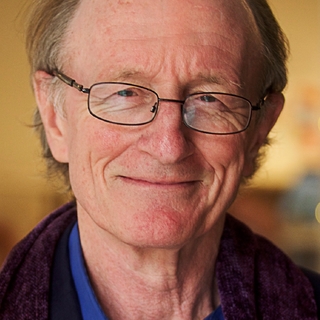
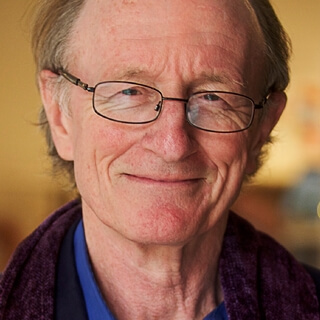
My name is Hugh Byrne and I'm a meditation teacher here on Insight Timer.
This 20-minute meditation is designed particularly for those beginning a meditation practice but may also be helpful for more experienced practitioners.
Begin by finding a relaxed,
Comfortable posture on a chair or a cushion or bench.
Feel the contact of your body with the surface beneath you.
Allow your eyes to gently close or keep them open with a soft,
Unfocused gaze.
Let your chest be open so you can breathe easily and invite your shoulders to relax.
Sit in a way that's relaxed and alert without any agenda or any sense that you need to get anywhere or have a particular kind of experience or get anything right.
Our task in mindfulness meditation is just to meet our experience as it is without judgment,
Clinging or resistance,
Letting everything come and go in its own time.
It can be helpful to begin by relaxing as much as you can so that you're not being pulled along by stressful,
Worried,
Anxious thoughts.
You might do a brief scan of your body and notice if there's any area that is tight or tense where you might unconsciously be holding some tension.
You could move your attention down from your head,
Down through the shoulders and the torso,
The arms and hands,
Down to the lower body inviting any area of tightness or tension to soften.
Relaxing,
Letting go of any unconscious holding.
You could,
If you like,
Just take a few deeper breaths,
Deep in-breath and long slow out-breath,
Relaxing,
Letting go on the out-breath.
As you breathe in,
You could invite the body to calm and be at ease.
Breathing out,
Letting go,
Letting go,
Letting go,
Letting go,
Letting go,
Letting go,
Letting go,
Breathing out,
As relaxation and ease.
You might also invite a smile to your face to encourage a relaxing of the body and the mind.
You could put your hand on your heart or on your stomach,
Just inviting yourself to be at ease.
Sending a message of caring to yourself.
And let your awareness come to whatever is present for you right now.
Meeting whatever is here,
Bodily sensations,
Emotions,
Thoughts,
Whether pleasant or unpleasant or neutral.
Meeting them with an attitude of kindness and acceptance.
Meeting this moment,
This experience,
Just as it is.
Welcoming,
Accepting whatever experiences are present right now.
Now imagine this awareness,
This knowing quality of mind as being really spacious,
Really expansive.
Maybe like a wide open sky,
So that whatever you're experiencing,
Pleasant,
Unpleasant,
Happy,
Difficult,
As happening within this wide open space.
Everything held in this open space of awareness.
So if a fearful thought comes up,
Maybe the body tightens around it,
Just allow yourself to feel that.
Be aware of it within this wide open space of awareness.
So it's not in any way denying what is happening,
What you're experiencing,
But noticing that it's not everything.
That there's space around it,
That there's other things coming and going as well.
So we can let our attention be large enough and wide enough to hold whatever is here,
Whatever's coming.
Letting it come,
Letting it be,
And letting it go.
And as a way of gathering your attention,
You could bring your awareness to the experience of breathing.
Breathing in,
Breathing out.
In breath,
Out breath.
Letting the breath be your central focus of attention,
Or your home base.
And when you notice that your attention has moved from the breath into thinking,
You can gently and kindly bring your attention back to the breath.
It's not a problem when the mind moves into thought,
When we get pulled into a stream of planning or memories,
Daydreams,
Worrying,
Problem solving.
It's a natural tendency of our minds to want to take care of things,
Take care of us,
Look out for things that might cause problems or be threatening.
So it's helpful just to see this tendency of the mind as not in any way a problem,
But something we can be over identified with.
We can get pulled along by our thinking.
So in mindfulness meditation,
It's very helpful just to have a place to rest our attention.
And then when the mind moves into thinking,
Just notice that and gently,
Kindly,
In a friendly way,
Incline the mind back,
Bring the awareness back to the breath,
Wherever we're focusing our attention.
Each time we bring our attention back,
We're building the muscle of awareness,
Or the muscle of attention.
We're making it more likely that we'll stay in the present rather than moving into thoughts,
Plans,
Memories,
Worries.
Put in another way,
We're strengthening the pathways in the brain that are more conducive to well-being,
To happiness,
To ease.
And we're over time,
Untangling ourselves,
Loosening our identification with pathways that lead us to rumination and worry and other difficult mind states.
So just each time we come back,
We incline the mind,
Bring it back,
We strengthen this muscle of attention.
Twenty-five hundred years ago,
The Buddha said,
Whatever a Mankara practitioner frequently thinks about or ponders on,
This becomes the inclination of their mind.
So if we think angry thoughts,
The more we think them,
The more that becomes the tendency or the inclination of our mind.
If we think friendly,
Kind,
Loving thoughts,
Over time,
This becomes more the inclination of our minds.
We're creating habits really that are conducive to well-being,
To happiness,
To ease,
To joy.
This is a training of the mind,
Training of the heart and the mind that leads in the direction of well-being and happiness.
So for the remaining period of this meditation,
Simply bring awareness to your breathing and return your attention to the breath,
To the body,
When your mind wanders.
And open to whatever sensations or emotions are calling for attention.
Untangling yourself from the content of your experience and the stories that can keep us mired in painful feelings of stress and worry,
Rumination,
Daydreaming.
This is a training of the mind,
Training of the heart.
This is a training of the mind,
Training of the heart.
You can begin again in any moment,
No matter how long you've been away,
Perhaps lost in thought.
Just let go of any judgment,
Any thoughts that it should have been different.
And just commit yourself to this breath,
Being present in this moment.
This breath,
This sensation,
This moment.
Here,
Now.
In his short poem,
Enough,
David White says,
If not these words,
This breath.
If not this breath,
This sitting here.
This opening to the life we have refused again and again.
Until now.
This breath,
This sitting here.
This breath,
This sitting here.