In the ancient Sanskrit language of Hinduism and Buddhism,
Mandala means circle.
Gradually working outward from the central first dot,
The creator builds an intricate and beautiful design.
And then the whole thing is wiped clean.
They're ephemeral by nature.
Today I'd like to explore how the principles inherent within mandalas
Could support us and dip into what I'm calling the mandala mindset.
Welcome to the Henny Flynn podcast,
The space for deepening self-awareness with profound self-compassion.
I'm Henny.
I write,
Coach and speak about how exploring our inner world
Can transform how we experience our outer world,
All founded on a bedrock of self-love.
Settle in and listen and see where the episode takes you.
Hello and welcome back to season 13.
Oh my goodness me.
If you've been with me through previous seasons,
Welcome back.
And if this is your first ever episode,
Welcome here.
It is lovely to be here and to be sharing some thoughts,
Some reflections,
Some wisdom that I've gathered along the way,
Guidance from other very wise souls and to be sharing it with you
And to see where it takes us.
So you'll have heard in the intro that I'd really like to explore
This idea of the mandala mindset today.
I'll explain as we go on what prompted this realisation
Or this observation.
And I would love to hear your reflections as well on,
You know,
What the mandala mindset could mean for you.
It feels to me like it's an idea that I keep returning to again and again
To support myself with the practice of ephemeracy.
And I'll talk more about it as we go.
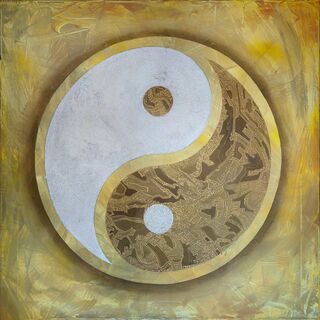
So if you're familiar with the idea of mandalas,
Then you'll already know that traditionally they're a geometric design
Or pattern,
Something incredibly beautiful,
Often very complicated,
But can be something much more simple,
Maybe made out of found materials from the natural world.
The idea is that they're a geometric design or pattern that represents
The cosmos or the deities in various heavenly worlds.
They can represent a path to self-discovery,
Enlightenment
And self-realisation.
And,
You know,
Clearly there's a resonance here with the work
That I do with my clients and also with the things in life
That I'm personally really interested in.
And the idea is that as you move from the outer circles
Toward the centre of the mandala,
You move closer to your true self,
Gaining a deeper understanding of reality,
Reality as it really is,
Rather than the reality that our mind can construct for us
Out of belief systems,
Stories,
You know,
Inherited values,
Etc.
So the practice of creating a mandala is,
You know,
Is deeply rooted in spirituality.
And the idea of what the mandala represents was actually adopted
By Carl Jung,
Who's definitely,
You know,
In terms of like four parents,
I don't want to say forefathers,
But four parents of psychotherapy,
Of modern sort of Western ideas of mindfulness and the work that I do.
He's definitely the practitioner that I kind of lean most toward.
He's got a sort of,
Well,
Gosh,
I could talk about him.
I'm going to go off subject if I start doing that.
But anyway,
If you're interested in Carl Jung,
Then I would share some of that interest.
But Carl Jung actually recognized that the practice of creating a mandala
Could be used as a form of integrative body-mind training.
And it's something that many practitioners have,
You know,
Have adopted as a tool for helping people reconnect
That communication between the body and the mind
So that we can benefit from the full wisdom and knowledge of our whole self,
You know,
That head,
Heart,
Hara,
Or body,
Mind,
Spirit.
And actually a reflection is that,
You know,
Often when people come to work with me,
There is this sense or they have this sense that there is this disconnection
Between the head and the heart.
You know,
They can find it very difficult to really understand what they're feeling.
You know,
If I say,
How does that feel?
Often people say,
I don't know or I don't even know what you mean
Because we've become so accustomed to just operating from our headspace.
We've almost forgotten that we've got all this wisdom in our body as well.
So this idea of,
You know,
Being able to use a practice like creating a mandala
As a way of reconnecting this or reintegrating body and mind.
So if you Google monks making mandalas,
You're going to see some astonishingly beautiful creations.
And as I was preparing for this episode,
Yeah,
There is a whole internet wormhole to dive into.
And gosh,
I mean,
Just watching the creation is an act of contemplation in itself.
It's so beautiful.
So you'll see that working in colored sand,
The monks offer up many hours of quiet focus and attention and creativity to the practice.
And they create something incredibly complex and incredibly beautiful.
And then it's gone.
You know,
The final stage of mandala is to sweep it clean,
To sweep up every grain of sand until there is nothing left
To tell you that it was ever even there.
So this practice,
It represents the ephemeral nature of all things.
And it's a truth that goes beyond the beauty of a piece of art,
Of course.
And for me,
I mean,
There are so many ways of exploring this idea of mandala.
But for me,
One of the most powerful or personally resonant aspects
Of contemplation of this idea of mandala
Is this active practice of non-attachment.
It is the embodiment of a willingness to let go.
Or rather,
Maybe,
You know,
It's more accurate to say it's a willingness to let something be
In the ephemeral nature of all things.
So that Mary Oliver poem,
The Summer's Day,
That I quoted at the end of season 12,
I think it was episode eight,
Season 12.
It holds the line,
Doesn't everything die at last and too soon?
And it feels like the essence of mandala thinking is to always know this.
Although maybe,
Maybe it is simply doesn't everything die at last.
Now,
That could sound morbid.
And I'm deeply aware that there could be an intense tenderness to this idea of
Death,
Of the ephemeral nature of all things.
And if that is activating something within you,
Then,
You know,
Listen gently as we move through.
Hold yourself tenderly and,
You know,
Honour whatever it is that is arising for you.
And if there's something that is being activated that you think,
Oh,
Gosh,
There's something here,
It would be really helpful for me
To have some support with working through.
Then,
You know,
I'm here.
You can always reach out to me.
You know,
Maybe,
Maybe this is some of the work that is asking to be done.
I know for myself,
Grief has been a powerful area to do my own work on.
And maybe that's one of the reasons why this feels so resonant for me personally.
So this idea of,
You know,
The essence of mandala thinking is that,
You know,
Everything goes.
And as I say,
That could sound morbid or it could sound as though it's sort of edging
Toward that often kind of quoted advice to live each day as if it were your last.
Now,
Rarely do we really,
Really,
Really think about what that means.
And instead,
It's often used as a kind of throwaway line
Or it's a meme that gets trotted out regularly on social media
Or we might use it as an excuse for doing something rash or unsought through.
But the original expression of that idea came from Marcus Aurelius,
Who was recognized as one of Rome's greatest emperors.
Now,
I mean,
You know,
It was circa 121 to 180 AD.
So our values of what makes a great emperor might be slightly different
From what they were then.
But,
You know,
He was recognized as being a pretty wise leader.
And what that quote originally comes from is,
Perfection of character is this,
To live each day as if it was your last,
Without frenzy,
Without apathy,
And without pretense.
Now,
That full quote feels so much truer than the abbreviated version we generally hear.
I'm just going to read that again for you in case that's useful.
Perfection of character is this,
To live each day as if it was your last,
Without frenzy,
Without apathy,
And without pretense.
So he's saying,
You know,
To be present.
You know,
Not to be so up in the head that everything is frenetic
Or so heavy in the body that nothing can happen.
And to live honestly without pretending we are something other than what is true for us.
And as I say,
It just feels like it's a much richer,
You know,
Observation or guidance
Than,
You know,
How it's been abbreviated just to live each day as if it were your last.
And my feeling,
And this is my personal perspective,
My feeling is that it's not morbid to be aware of our own mortality.
And in many of the great spiritual traditions in the world,
We see this guidance to be aware of the ephemeral nature of life.
And it's guidance to be in this present moment rather than drowning in the past
Or swimming frantically at the future.
And,
You know,
I say that recognizing how incredibly hard this can be.
And so rather than focusing our attention on this idea and it's like grandiose,
You know,
Expansiveness,
I think it can be useful to try and bring our attention down to some everyday stuff
That can help us see how we can practice this in real life.
And I'm going to talk about something in a moment that has kind of helped me in some way.
And in truth,
I think this really clear eyed view that death comes to us all
Makes life feel even richer or more valued,
Perhaps.
And it helps us see beyond the clinging to youth or clinging to how we wished things were
Or how we think they should be and find how we can best love what is now.
Whatever it is,
How we can best be with what is now.
I'm also deeply mindful of so much of what is going on in the world and,
You know,
How hard it can feel right now to come into a place of calm and rest and peace
When we know that there is so much trouble around us.
And really,
That's what this clear eyed view can support us with,
I feel.
Finding how we can best be with what is now.
Knowing that nothing is permanent.
And we say those words with such love and compassion and wisdom and honesty.
And we see that that is the underlying message of the Mandala ceremony.
Nothing is permanent.
All things are in flux.
All things change.
Beauty,
But ephemeral.
Moving,
But temporary.
A plateau,
Not a summit.
And Pema Chodron says,
Each person's life is like a mandala.
A vast,
Limitless circle.
We stand in the centre of our own circle and everything we see,
Hear and think
Forms the mandala of our life.
I'll repeat that for you as well.
I find it very difficult to take on these kind of quotes if I just hear them once.
So in case you're like me,
I'll repeat it for you.
Each person's life is like a mandala.
A vast,
Limitless circle.
We stand in the centre of our own circle and everything we see,
Hear and think
Forms the mandala of our life.
Isn't that so beautiful?
Isn't that just so intensely beautiful?
And for me,
It shows us where we have agency.
That even when things are happening around us,
We are still able to influence how our own mandala forms
By what we choose to bring into it.
So I've been learning the piano.
Slight segue here,
Key change.
Ha ha,
See what I did there.
I've been learning the piano and it is a recent thing.
And I haven't even told my extended family about this,
So you are the first to hear about it.
So I bought a keyboard,
Oh gosh,
It's got to be maybe 10,
12,
Maybe more years ago.
And I started trying to learn it in the same way that I'd learnt to play the flute
As a child or as a young adolescent,
Which didn't last long,
I have to say.
And it's something that I stopped doing maybe after possibly just a couple of years.
I think I was about 11,
12 when I was doing it.
And in fact,
The last time I picked up a flute,
I found I couldn't even make a sound.
So I'd managed to expunge that whole experience of learning it completely from my mind
As something that I just didn't love.
So,
But,
However,
When I got this keyboard,
I thought,
Well,
I can more or less work out how to read music again
Because I know I used to be able to do that.
And I,
So I started doing that,
Learning how to read very simple music.
And I started learning some songs,
Beatles songs,
And,
You know,
It was all kind of,
It kind of felt like it should be something that I could do.
And I tried really hard.
But trying really hard to learn something also creates some resistance sometimes.
Sometimes it,
Sometimes it can work out.
But for me,
It made learning how to play the piano turn into something that I didn't love doing.
And fairly predictably,
I stopped.
And that keyboard just sat in the spare room under the window for quite a long time,
Goading me,
Taunting me,
Basically reminding me that I wasn't any good at learning how to play the piano,
Blah,
Blah,
Blah,
Blah,
Blah,
Whole load of stuff going on there.
And so then one of the family members asked if they could borrow it.
And it did the rounds of various homes across a number of years until just before Christmas,
I returned it here.
So I brought it home.
I just had this sense that in this place,
In this house,
In this land,
That I could do it differently.
So I decided to learn a different way.
I found a wonderful woman on YouTube who sparkled with joy at teaching and playing.
And I began learning at the very beginning.
So that's a mindset in itself,
A kind of a Zen beginner's mindset to allow ourselves to be a beginner is a really,
Really powerful thing.
And actually,
I hadn't really thought about this before,
But I think that is also tied into this mandala mindset.
Each time a mandala is created,
It begins with a completely clean slate.
And that feels really,
Really important.
Maybe I'll come back to that towards the end.
But anyway,
Let's just put a little pin in that idea.
So I began at the beginning.
And each day now,
I play for a few minutes and it is bringing me so much joy.
Honestly,
I just feel like it has opened up some kind of portal in my brain,
Which is just a delight,
An absolute delight for me.
So I'm just noodling.
I'm allowing the chords and the notes that I'm learning to play themselves in whatever way they wish.
And it feels to me the same as flow journaling or dancing.
So there's no set piece.
There's no set process.
I've got no desired outcome.
I'm simply playing what feels good.
And when I finish,
I found myself literally stroking the keys.
I know it sounds a bit odd.
Stroking the keys and whispering,
Thank you.
It feels that good.
So the other day playing piano,
I realized I was getting really attached to the music I was making.
It just sounded so beautiful,
So fluid.
And I wanted to be able to repeat a sequence.
And I could feel this edge of frustration rise when it didn't sound exactly the same as I'd played it before.
And I kept having a go and kept having a go.
And I could feel that edge of frustration getting stronger.
And it was kind of taking away from the joy of where I'd just been in that flow state and just playing.
And basically my head had got involved and was taking over from just that experience in the body.
And then I remembered to let it go.
Like when you make a mandala.
To allow that lyrical collaboration of sounds to drift off into the ether and for that to be enough.
And my reflection was that,
You know,
Alongside this kind of direct,
Very easy to see experience of,
You know,
That moment at the piano.
There are so many other things in life that we can get attached to.
Like thoughts or feelings or beliefs or desires.
But when we think of them with the mandala mindset,
It becomes,
I'm putting this next bit in brackets,
A little,
Close brackets,
Easier to let them go.
And maybe it becomes a lot easier to let them go.
Depending on,
You know,
How we can relate with this idea of the mandala and obviously what the thing is and what our head state is and blah,
Blah,
Blah.
But I think this idea of remembering that everything is a mandala can actually help us learn that we can release some of these tendrils that get caught up with,
You know,
Ourselves.
And we can release those and practice this mandala mindset,
This art of non-attachment.
So we might make plans for something in the future and become so attached,
So fixed on the idea of the outcome that our thinking becomes very restrictive and narrowed.
And we actually close down to other options or other outcomes that might ultimately serve us better.
So a lovely quote from a Buddhist teacher who once said,
We should learn to see everyday life as mandala,
The luminous fringes of experience which radiate spontaneously from the empty nature of our being.
The aspects of our mandala are the day-to-day objects of our life experience,
Moving in the dance or play of the universe.
So when we remember there is a mandala within everything,
Then we can see that there is no need to cling to a particular outcome,
But to simply allow everything to form,
Fall away and reform.
Returning to Pema Chodron,
Everything that shows up in your mandala is a vehicle for your awakening.
From this point of view,
Awakening is right at your fingertips continually.
So,
There we are.
How was that?
How was this first foray into Season 13?
You know,
As I said before,
I am so aware of the tenderness and also the resistance that we can feel to some of these ideas.
You know,
Gosh,
It's so human and depending on the strategies that we've developed to support us,
To serve us in our life,
You know,
Some of these ideas might feel more or less challenging or complex to navigate.
And as with all of these episodes,
These are really my personal take on something that has shown itself to me and that I have felt is worthy of exploration.
And,
You know,
I'm so delighted to be able to share this with you and also to hear,
Like,
How does this speak to you?
How does this idea of the mandala mindset speak to you?
Where does it feel complicated?
Where does it feel impossible?
Where does it seem possible?
Where does it show up with ease?
I've got some free Journal with Henny sessions.
I think I've actually called them Journaling with Compassion,
But I might change it to Journal with Henny.
Who knows?
There are some free sessions coming up which are available to anybody and everybody.
You don't have to be a paid for member of Insight Timer.
You can just download the app and come along.
And if you like it,
You can make a donation.
All the money comes to me,
Which is incredible of Insight Timer,
Apart from the bit that Apple take.
But,
You know,
Hey.
I'll see you next time.