An open awareness meditation is a practice that helps us cultivate equanimity,
Or the ability to find peace and composure in the midst of pleasure and pain,
Joy and sorrow,
Constant change,
That is,
The full human experience.
Unlike focused meditations,
In an open awareness meditation,
The attention is not focused on one anchor,
Such as the breath,
And instead we rest in choiceless awareness,
A non-judgmental,
Receptive presence of our entire experience.
We cultivate a mind that is open and vast,
Like the entire sky,
With thoughts,
Sensations,
And emotions,
Like clouds,
Weather,
And birds simply passing by.
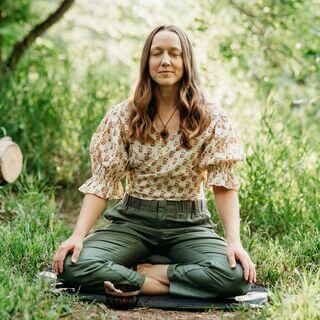
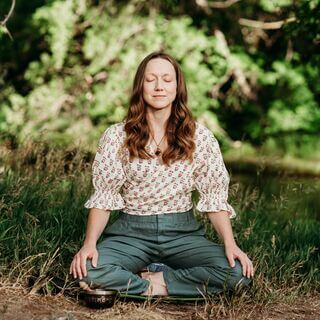
We can begin this meditation by finding a comfortable seated position,
One that is comfortable yet alert.
Scanning the body and releasing any obvious tension.
Smoothing the brow line.
Loosening the jaw.
Relaxing the shoulders away from the ears.
Softening the belly.
Now bringing the attention to the breath,
Beginning with a few deep,
Cleansing breaths,
Then allow the breath to be natural.
Resting your kind attention on the breath,
Bringing a non-judgmental awareness and curiosity to the experience of the breath,
Noticing where the breath is felt most pleasantly,
Perhaps a cool,
Tingling sensation in the back of the throat on the inhale,
A warmth on your upper lip on the exhale,
Or the rise and fall of your chest or belly.
Without trying to change the breath,
Just noticing it,
How it naturally changes,
On its own,
The body breathing itself.
And when the mind wanders,
As it no doubt will,
Recognizing this as natural and gently bringing the attention back to the breath.
And as attention begins to settle a bit,
Allowing your awareness to expand,
Bringing the attention now to the physical sensations in the body,
Taking note of the points of contact with the surface beneath you
And with the clothing you're wearing,
Scanning the body and noticing sensations,
Tingling,
Vibrations,
Heat or coolness,
Heaviness or lightness,
Throbbing,
Twitching,
Pain,
Even numbness or lack of sensations.
Noticing the constellation of sensations as they arise and fall away.
And when the mind gets lost in thought,
Bringing the attention back to the physical sensations.
Now as we've become more in tune to the breath and the body,
Shifting our attention to any thoughts and emotions that may be present,
Bringing a kind attention to these activities of the brain,
Resting comfortably in knowing that we are not our thoughts or emotions.
They are simply products of the mind.
Softly naming to ourselves as thoughts and emotions arise.
Thinking,
Planning,
Worrying,
Judging,
Or content,
Bored,
Sad,
Joy,
Now allowing our awareness to expand to sound,
Without trying to name the sound itself,
But instead to softly name the quality of the sound,
Letting it be in the background of your attention.
Humming,
Buzzing,
Whooshing,
Noting to yourself the rise and fall of sound.
And as we become more aware of our experiences,
We begin to cultivate a space where we can hold it all.
Consider imagining that your mind is as big as the room that you might be in.
Now expand your mind to be as big as the entire sky,
Vast and open,
Limitless,
Inviting an awareness of your entire experience,
The breath,
The physical sensations,
The thoughts and emotions,
The sounds,
All like passing clouds,
Passing weather,
Birds soaring through the sky of our minds.
And without getting caught up in the clouds,
But resting back in awareness as the sky itself.
And after a while,
You will no doubt notice your attention is caught up in a passing cloud.
And when this happens,
Returning to your place as the sky,
Spacious and vast,
Open and limitless,
Trusting and resting in this realm,
Your true nature,
Weather changes,
Birds fly by,
And through it all,
The mind remains open and aware of it all.
For the last minute of this meditation,
Taking note of what it feels like to cultivate this spaciousness,
This receptivity,
In the words of Sanryo Suzuki,
When we realize the everlasting truth of everything changes and find our composure in it,
We find ourselves in nirvana.