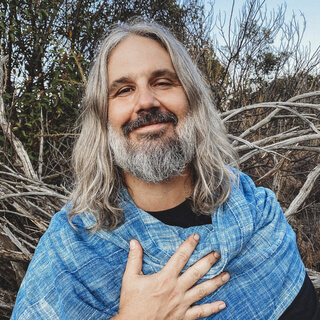
Welcome to this Dharma talk on the power of silent practice.
The observance of silence as a spiritual practice in Sanskrit is known as maun sadhana.
It's a simple but very,
Very powerful practice.
Practicing silence is healing for the mental and emotional bodies and is a powerful way to prepare for deep meditation.
Basically,
It's a practice where we just don't speak.
We hold back the activity of speech on the outside to begin to get some command over the stream of language that flows on the inside.
We practice silence to harness energy,
To quiet ourselves,
And to open ourselves to new levels of perception.
It's profound.
Yoga teaches us that the mind is deeply linked to language.
The tantric teachings tell us that the very basis of our mental bondage is something called matrika shakti.
Matrika shakti is the energy of words and letters.
If you think about it,
Your mind is constantly talking,
And even when it's not,
The beliefs,
Memories,
Opinions,
And fantasies of the mind are all made of language.
Everything we identify,
We identify with a name or a word.
Even our sense of ourselves,
Our ego,
Our very identity is made largely of stories,
And these stories are made of words.
Think about it.
Our souls are woven into cocoons of limitation,
And these cocoons are made of language.
We are encoded.
We are under the spell of our own particular matrika,
And the matrika of our society,
Our family,
Our culture,
Social media,
Capitalism,
And so on.
When we put letters together to make words,
We even call it spelling.
Think about it.
We're under the spell of so much language,
And the degree to which we're under that spell is the degree to which we hold that language within ourselves and within our speech.
So,
The silent practice we do on retreat,
Or whenever we can,
Is a powerful interruption to the constant flow of letters and words that binds us and wraps us up.
We just stop talking.
Practicing silence begins to put a wedge between us and all of those beliefs,
All of that mental bondage.
When we stop talking on the outside,
It means that the inside language has to figure out something else to do with itself.
It's profound,
And of course,
Just because our mouth and our tongue stop moving doesn't mean that our minds do.
In fact,
If you've ever practiced silence,
You'll know that there's a thing where when we first stop our outer talking,
Our inner talking goes crazy.
It's like our mind just goes berserk.
It becomes very loud all of a sudden.
We talk to ourself on the inside all the time.
When we practice silence,
Especially in the beginning,
It gets extra.
At least it seems to,
But it doesn't last.
When we stop pumping that wheel of language with our outer speech,
That inner wheel of momentum slows down and gets quiet,
But we have to give it a chance.
When we do this,
When we practice silence,
There are a few miraculous things that happen.
The first is this quieting of the mental chatter.
This is wonderful,
And it really helps meditation,
But that's not all.
When we stem the outward flow of energy of our speaking,
That energy that was otherwise flowing out collects inside.
Most modern humans suffer from what the sages of yoga call shakti dharidriya.
Shakti dharidriya literally means a poverty of shakti or energy or power.
We live in a depleted state.
Now,
We know that in ultimate reality,
There's no scarcity of shakti.
There's no scarcity of spiritual energy.
Our teachings tell us that everything in the universe and everything that we are is that spiritual energy,
Is shakti.
That's the teaching,
But on our limited level,
In our limited experience,
In our relative experience,
We can all be more or less in touch with that power.
Isn't that true?
Each of us is like a separate energy container.
Our minds,
Our bodies,
Our nervous systems,
Each have certain capacities to hold and retain energy.
In yoga,
We also learn about the subtle body and subtle layers of being that are entirely made of energy.
All of these can be very energized or very depleted,
The same way that our bodies can have plenty of power,
Plenty of strength,
Plenty of energy in one moment,
And in the next moment,
Need to lay down and go to sleep.
On this limited relative level,
We all have only so much energy at any given time.
We need our energy,
Whether it's mental energy or physical energy,
To pay attention to whatever we're doing for survival.
Then,
When we have extra energy,
When we're well-rested,
When we have plenty,
We can be creative or humorous or helpful.
We can be extra productive.
That energy,
And we're just talking about the normal human energy in our mind and our bodies,
It goes up and down.
But there's another energy too.
We have a spiritual energy in us known as Kundalini Shakti.
The Kundalini Shakti is our spiritual intelligence.
It's a kind of deep sensitivity to the subtle energy.
When that energy is awake and flowing,
We can sense the subtle energy in ourselves.
We can sense that subtle energy in other people,
In the world around us.
The Kundalini Shakti is what gives us the inner eye to be able to perceive the sacred in the mundane,
To be able to perceive the magic in the ordinary world,
To perceive the divine energy within our human selves.
But this energy also has a sort of economy to it.
When we practice a lot and live in a way that respects that inner Shakti,
It tends to build.
The Kundalini Shakti is like a fire.
If we tend to it,
It's strong.
If we don't tend to it or we disregard it,
Just like a normal fire,
It gets dim or it goes out.
Here's a side note.
For those of us whose Kundalini Shakti has been truly awakened,
It doesn't actually ever go all the way out.
There's always at least a living coal there.
But that coal can really be small.
It can really get down to just a small ember when we don't pay attention,
When we don't take care of it.
When we do acknowledge and tend to the fire of Kundalini Shakti in our being,
It can get very strong.
The Kundalini can become like a raging fire,
A contagious fire that helps kindle the awakening in others.
But let's get back to silence.
There's a way in which we deplete our energy when we speak.
It's not that speaking is bad or unspiritual or anything like that.
But speech uses a lot of energy.
We have to take a feeling or an impulse or some sort of memory and condense it into words,
Into ideas that can be communicated.
And then it has to go through our being in the form of speech.
It uses a lot of energy.
There's an expression in Taoism that says,
The soul flies out of the mouth.
When we're talking,
Not only are we reinforcing those deeply woven beliefs about ourselves and the world,
We're also leaking a lot of power,
A lot of energy.
And often,
When we're talking,
We're not tapped into our soul energy.
We can learn to speak in this way.
We can learn to speak where we are really deeply connected to our soul.
But normally,
When we're just chit-chatting in ordinary life,
Our speech is kind of an anchor to superficial levels of consciousness.
When we practice silence in a conscious way,
We stop the flow of soul energy leaking out of our mouths,
And we begin to conserve that power.
It's actually quite amazing.
Our senses become sharper.
We can hear things that we couldn't hear before and see things with a different vividness.
Even after a few hours of silence,
Our extra senses kick in.
We can perceive subtle energies in people and spaces.
After a day of silent practice,
We can start to communicate with plants and natural elements.
Practicing multiple days of silence and combining the silence with practices like sitting meditation,
Mantra chanting,
And conscious movement can create deeply altered,
Totally natural states of expanded consciousness.
Even short periods of conscious silent practice can bear great fruit.
In our meditation retreats,
And I'm talking about the ones that are not the silent meditation retreats,
We still observe silence in periods.
For instance,
We like to do silence at night.
So from the time we finish our evening session until breakfast the next day,
We practice silence.
We're silent in our rooms,
And we wake up to journal and meditate in silence every day.
We maintain silence until we've finished meditating and we're going for breakfast,
And then we'll start speaking consciously at that time.
For some time when I was young and living by myself,
I would sometimes practice silence after sunset as an observation,
As a practice.
When I lived in New York City,
I had a 45-minute subway commute every day.
I loved practicing silence on my commute.
From the time I left my apartment until I arrived at my office,
I would practice silence.
Anyway,
I was alone,
So I wouldn't typically be talking much,
But when I made it a conscious silent practice,
It gave it something extra.
My commute became a sort of open-eyed urban subway meditation.
Still today when I'm traveling by myself,
I like to practice silence.
It's a great way to conserve energy while I'm traveling,
Stay alert,
And it also helps mitigate jet lag on long trips.
And yes,
I love to take silent retreats.
A few times a year I like to go off by myself and go into silence for a few days.
Sometimes I do it in India,
In holy places that mean something to me.
Sometimes I do it in natural places,
But I find these little retreats essential.
A few days in silence,
Meditating,
Contemplating,
Practicing,
And I get super rejuvenated.
Super connected.
And I love to conduct silent retreats for students.
In our India pilgrimage retreat,
We spend three days in silence in the middle of the retreat.
And when I can,
I like to offer silent meditation retreats.
But here's the thing.
These containers are not easy to teach.
Silence can be hard and silence has a lot of baggage with it.
People have certain reactions to silent practice that have to be worked around.
If you try silent practice,
Chances are you will run into some of these same obstacles.
The first thing is that people tend to go into their heads.
Without talking or relating with speech,
People become indrawn,
But not necessarily inward in a yogic way.
People space in and get lost in thought and rumination.
They get stuck in their heads and it's not good.
The next thing that usually happens is that people get really serious.
There's something about silent practice that brings out a sort of morose,
Phony spiritual seriousness in people.
Faces get long,
Joy and fun disappear.
I'm constantly reminding people to not get serious just because we're silent.
The other thing that happens is that people get isolated.
We use our unconscious speech,
Like chit-chatting,
To stay connected to people around us.
I've seen it happen so many times that when people go into silence,
Even when they're surrounded by friends,
They go into a cut-off,
Isolated state.
Couple this with the seriousness and going into their heads,
And we have a very unjoyous,
Unhelpful experience.
This is why people don't want to do silent retreats.
This is why people are afraid to practice silence.
Some people want to do silence and want to do silent retreats,
But not as healing,
Delicious experiences,
But as sort of austere,
Endurance experiences.
Like,
I'm going to do this because it's hard and because it's going to be difficult.
I don't think most modern seekers need to get any tougher.
I think that we're already too tough.
I believe that sincere seekers mostly need to soften.
We need to get more receptive and more loving.
Silent practice can do this for us if we know how to do it and avoid some of these common pitfalls.
We avoid going into our heads by going into our senses,
Into the physical,
Into the moment.
In our silent practice,
We don't encourage people to withdraw their senses or avoid eye contact with others or look down at the ground.
We encourage people to look out,
See the beauty,
Move your body.
Even if we're practicing silence in a small space or a cave or a meditation hut,
Move,
Stretch,
Do yoga asana,
Dance.
We also encourage mantra practice.
Having a mantra to repeat in silence can give your strong mental muscles something to do.
Sometimes we also chant out loud.
That's allowed in silent practice.
We also do journaling.
When we journal,
We can write our thoughts out.
We can let them out onto the page and get them and us out of our heads.
We avoid the seriousness first by naming it.
Then we avoid it by consciously and deliberately invoking joy,
Invoking ecstasy,
Invoking laughter.
Silence isn't an endurance practice like martial arts or something.
It's not no pain,
No gain.
Silence is a gift we give ourselves,
And we can approach the practice like that.
It's delicious.
Sometimes it's a matter of reminding ourselves to smile and simply paying attention to our silence.
If it's becoming long-faced or overly spiritual,
We notice it and we let that seriousness go.
The isolation part is mitigated by conscious connection.
Connect first to the body and all of its sensations,
Even if you're practicing silence alone.
Connect to the world around you.
Connect to the elements.
Then,
If you're around others,
Connect with them.
There are so many ways to connect to people that don't require speech.
In our silent containers,
We encourage eye contact,
Hugs,
Smiles,
And all kinds of nonverbal communication.
As long as it doesn't get distracting.
We even let people write notes.
People can ask me questions about the teachings and express simple needs by writing them down.
In the old days,
Silent yogis would use chalkboards.
Nowadays,
You can use a crayon if you want to force yourself to keep it simple.
These things will help you to get the most out of the silent practice without getting caught in the pitfalls.
So now,
You can try it.
Do you want to try it?
If you do,
All you have to do is take a chunk of time.
Take at least an hour or two.
Less than that,
You won't really get much result.
But if you take an hour or two,
Or more,
Let your loved ones know.
If you're living with others,
Tell them what you're doing.
Ask for their blessing and their permission.
And then dive in.
Just stop talking.
Put your phone away.
Put your computer away.
And be silent.
Go outside.
Go for a walk.
If you can,
Walk out into nature.
If you're walking in a populated area,
You can try putting on headphones.
You don't even have to play anything.
But when you're wearing headphones,
It signals to others that you're not available.
If you want,
You can bring a little notepad in case you need to communicate something important.
But chances are,
The world can leave you be.
Especially if it's just for a couple of hours.
And then drop in.
After you've been silent for a while,
Try turning inward to meditate.
See how it feels.
See if it feels easier to glide into your heart space.
It probably will.
After you try it in this little experiment,
You can try to up the ante.
You can try a silent retreat.
Set aside a day or two,
Or more if you can,
And really dive in.
Try to do your retreat in a beautiful place with nature around.
Eat simple food,
Write in your journal,
Meditate,
Chant,
And move your body.
But see what happens if you don't speak for a number of days.
You can do this alone,
Or with others,
As long as they're practicing with you.
And they're supportive of what you're trying to do.
When you do these silent retreats,
It's important to give yourself space afterward to re-enter your speaking life.
We become profoundly sensitive when we practice silence for a long time,
And it's important to honor that sensitivity.
And make sure you have a gradual,
Gentle transition back.
I really hope this has been useful,
And I really hope you try it.
Silent practice is one of the treasures of yoga that is under-practiced and misunderstood.
Your spiritual life is important.
Your spiritual practice is essential.
Your spiritual goals are precious.
May the practice of silence be a beloved and potent medicine to help you on your way.
That's all for now.
See you again soon.