This should be an interesting conversation today.
Today I'd like to talk to you on Zen.
Not about Zen,
But on Zen.
And the difference is subtle,
But it is there.
So sit back,
Grab a drink,
Relax for a minute,
And join me on this talk on Zen.
Whenever we talk about Zen,
It's good to give a little history to how it evolved,
And where it evolved,
And where it's come since then.
Now I have never studied Zen from a Zen master other than Osho himself.
So my understanding of Zen,
My Zen itself,
Is what I've tasted,
What I've experienced.
And that I can share with you,
And that I can expound upon,
That we can grow together with.
But it is not about Zen.
About something is not knowing it.
It is knowledge.
It is not a knowing.
So the difference is subtle,
But it is there.
So long ago,
In Buddha's time,
Buddha was getting on in age,
And he would give sermons like three times a day.
So he'd wake up in the morning and give a sermon,
And then around lunchtime he gave another sermon,
And then around dinner time he gave another sermon.
So three times a day he did this for about 40 years.
But he was getting on in life,
And he had not named a successor yet.
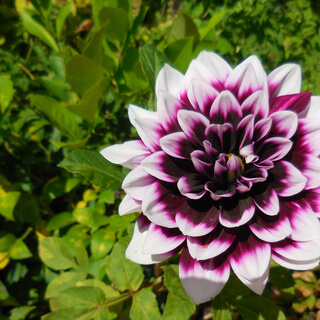
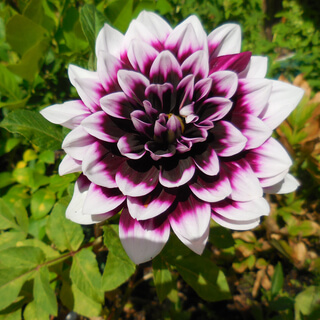
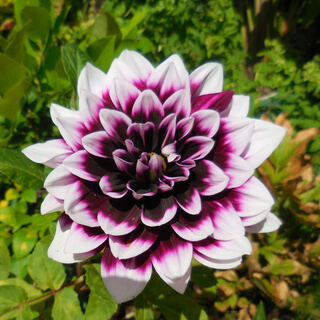
So one time he came out and picked a flower off the ground,
And went out in front of his audience and his followers,
And he lifted the flower up and just sat there with a flower in his hand and didn't say a word.
Now the monks were all a little bit confused because usually Buddha speaks and shares a sermon.
But this one time he just held the flower up,
And he sat there in silence holding this flower.
And after about five,
Ten minutes,
A loud belly laugh came from this guy called Makashapa.
And Makashapa was one of his enlightened monks.
He had many enlightened monks,
Actually,
But Makashapa was very astute.
Not much is known about him after this incident,
But basically Buddha said,
Okay,
So everything that I have said,
Everything that I have shared by words I have given you,
But everything I conveyed in silence I give to Makashapa.
And that was the birth of Zen,
We could call it.
Now Zen didn't really flower too much in India.
There were Indian Buddhist monks who dabbled,
I guess,
With the idea of what this might be,
This not talking,
This understanding through silence.
But it wasn't until Bodhidharma took his understanding of Zen and brought it to China before it really flowered,
Before it started growing.
So it didn't take off and sprout and become a flower in India because the soil was not right.
In China,
Chinese people are very earthly,
They're very grounded people.
In India,
The mystics are known to be very in the sky,
Or their heads are always in the sky,
And they're not very earthly.
But when Chinese Taoism met Bodhidharma's Buddhism,
Then this offshoot flowered.
So you really can't call Zen Indian or Chinese.
It was a crossbreed of these two understandings.
Now Taoism is beautiful in itself.
It is a beautiful flower.
But Indian Buddhism was a beautiful flower too,
But this crossbreed,
The junction of the two forming this new thing,
This new entity,
Was even more beautiful than both of the other flowers.
It blossomed and grew in China.
One of the most extravagant things that Bodhidharma said to his followers was,
Devise no word for God.
Or we could change that word and say,
Devise no word for existence.
His,
Bodhidharma's understanding was that anytime you bring words in,
Then you're talking about something.
Anytime you try to describe something,
You're talking about it and not on it.
So that,
Like I said,
It's subtle,
But the understanding of bringing words in to understand things,
I guess the Western tradition has a little bit of insight on that.
And it's a very beautiful story of in the beginning,
In the beginning in the Bible,
God said,
And the first thing that happened was the word happened.
First there was the word and then the universe,
The earth and everything else was evolved through from the word.
So in that understanding that the word came first could be very true.
And I've even said and heard that the word Aum could have been that word.
The word Aum is very beautiful and it can,
Even though it's a word,
It can resound silence within you when repeated inside of yourself.
So anyway,
We won't get off on that too much.
So the word came first and with the word man's fall began.
Adam fell from the garden of Eden when he tasted of the tree of knowledge.
And that fall is just used to describe the way that humanity is in its reality today or ever since the fall of Adam.
It's not that the story was true or not true,
But it just gives a description as to why things are the way they are.
So now we know about God.
We know about existence.
We know this and we have knowledge of how things are.
But if you look at a rose and stare at it without words,
Without describing it,
Then something happens.
A moment is shared.
And if you can go several moments,
A couple minutes without describing,
Not even say rose,
Just get rid of the word rose and just sit there and relax and enjoy this moment with this thing,
This essence of godliness.
And I know it's kind of funny that we're using words to describe the wordless,
But in a way you have to use a thorn to take another thorn out of your foot if you have one in there.
But you have to remember not to leave that thorn in there.
So the purpose of a thorn is to get rid of one that's already there.
And that works in a lot of ways.
You could say,
Even in the line of medicine,
People take medicines to basically be like it's like a thorn to get rid of a disease,
To get rid of something,
But then they don't ever get off that medicine and they stay on the medicine.
I think that's why Michael Jackson died was because he got addicted to painkillers and it caused him not to sleep.
And all he wanted was some sleep because he had a very heavy schedule of touring and performing live and it took a toll on him and he just wanted to sleep.
So this doctor concocted this concoction of different medicines that allowed him to sleep in a way,
But it also killed him.
So we got to be careful with these thorns that we talk about.
And I'm using the thorns of words to get rid of words,
If that makes any sense.
But it's a necessary evil.
It has to be done.
So Bodhidharma's understanding of Zen,
His understanding of Is-ness,
Was so deep that he said that if you use a word to describe it,
You miss it.
You miss the opportunity.
You miss the moment.
As soon as you start describing it,
It's not Zen anymore.
Now it just becomes knowledge,
Language,
Ordinary.
The sparkle is gone.
The excitement's not there.
So take a moment if you can,
One day,
As you're going throughout your life,
Just stare at the sun in the morning.
Watch the sun come up in the morning and just sit there and watch it.
Just be the watcher.
Just sit there and enjoy it.
If you allow this to happen,
Maybe not at first.
It might take you a couple days or a few tries.
But if you allow it to happen,
You'll have a moment with existence,
A moment of silence.
And it's not that you're concentrating on silence or you're concentrating on anything.
You're just watching.
You're just enjoying the sunrise.
Or you're enjoying looking at a flower.
Or you could even enjoy the beauty of a person that you find attractive or something to just not be rude and stare at the person,
But basically just soak in a moment without thought.
And you'll find that that is a moment of Zen.
We can't really describe exactly what Zen is,
Other than saying,
I guess I could say that it is basically like an active meditation.
It's just a way of living.
You're practicing things with awareness.
You move your hand as you write or as you flip a page of a book or whatever,
And you just watch your hands and you watch and be aware of this movement.
That is a Zen moment.
That is a moment of awareness with conscious awareness without thought.
You just move and watch and just be the watcher.
By just being the watcher,
Something happens inside your soul.
Something happens that opens you up and exposes you to what the reality is.
Imagine a lake,
A lake that has no ripples in it.
The water is just completely calm at night,
And you can see the reflection of the moon in its entirety.
I mean,
It's like there's no distortion.
There's no ripples to break it up.
It's completely calm.
In that calmness,
Your mind can be the same thing without thought.
You can calm it down,
And when it becomes completely still,
Then something beautiful happens.
It's like the reflection of anything you look at in its entirety,
In its beauty,
In the way it's supposed to be seen.
But what happens is that you sit there for a few moments,
And then the mind takes over.
It becomes all broken up and ripply.
The lake becomes all chaotic.
There's still a reflection of the moon,
But it's distorted into a million little pieces.
That's what happens with society,
Is that these millions of little pieces are what we see,
Or what others have tried to comprehend.
There are so many different approaches to religion,
And so many approaches to the understanding of life and spirituality,
That everybody has a little piece,
Just a little piece,
But they don't have the whole picture,
Because any time you start describing something of its entirety,
You break it up.
You dissolve it into pieces so that it can be conveyed in language.
But that's us going into the illusion of something that we think we know,
When it's just knowledge.
There are a lot of teachers out there who expound knowledge,
And in Zen they say that basically there are no students and there are no teachers,
Because this is not something that can be taught.
It's only something that can be experienced.
So any time you hear somebody expounding Zen,
Saying they're talking about Zen,
Then it's a misconception.
You can't talk about Zen,
You can only experience it.
And that's why I'm trying to use the word on,
Instead of about,
Because we're talking on a subject.
We're talking on something that you can experience yourself with just a little bit of understanding,
With a little bit of encouragement maybe,
To enjoy moments of silence,
Moments of beauty with existence,
With your eyes open.
And then the Japanese have a term for sitting Zen,
Where it's not even meditation.
You're sitting there doing absolutely nothing.
You're enjoying just sitting.
And my martial arts class and my Aikido classes,
We used to do a little bit of this Zazen at the end of our instruction.
And it'd be so beautiful,
Because you're not even meditating.
You're not doing anything.
You're just being.
You're just there.
And after a hard martial arts class where everybody's sweaty and you've got all these different highs and all these things you learned in the class,
It's nice to sit back and have a moment.
And it's not even reflecting,
Just absorb everything that just happened and just be there in the now,
In the present moment.
And it's kind of a beautiful thing.
And you can do this when you get off work,
If you had a hard day or a lot of things maybe went on in the daytime,
And things that are worth remembering.
Maybe you saw beautiful faces,
You talked to friends,
You got to enjoy the company of someone that you really like or whatever.
It happens to reflect and then drop.
So yeah,
You reflect and you see the day that went by and you sit there in the Zazen sitting position and you just start just being there,
Just doing nothing,
Just sitting.
And they call that Zazen.
And it's very beautiful.
So in the beginning,
This is maybe not something you're doing all the time or something you may have never done before,
But you can go several minutes at first and then go into actually half hours and hours of not breaking things down,
Of not dissecting them and analyzing every single thing that happens in your life.
So you accept the moment in its entirety.
And to explain that a little bit,
I had one of my first Aikido master instructors that I met,
Was named Satomi.
Satomi lived in DC and he was a very beautiful person.
He was an artist.
And he had an artistic way of approaching teaching his Aikido.
He did not break things down.
He showed it in its entirety.
And then basically it was for you to almost copy what he's doing and teaching you something in its whole without breaking it down.
And then that was beautiful,
But it's also very,
If you're not in the same frame of mind or if you're not very astute in watching,
Then it's very hard for you to learn.
So the approach is beautiful.
But my next Aikido instructor in Texas was called TK Lee.
And TK was more of a technician.
And he would break down,
He would show you the technique and then as you start practicing with your ukes,
Your partners,
Then he would come by and fix little things and adjust things and then show you things,
Why this is done or how this is done this way or how to move this way and not get involved in the conflict of the situation.
And then I went on to another Aikido instructor,
A good friend of mine still named Jim Baker.
He's in Norfolk.
He teaches Aikido of Norfolk.
And if you all ever get a chance to go there,
That is a great school.
And Jim is still teaching there.
And I think it's been 20 years now since I helped them actually build the dojo there.
It was crazy.
But it's a beautiful dojo.
There's plenty of mat space for everybody and visitors are welcome to come and enjoy an Aikido class.
Jim was a combination of Yamada's teachings and Yamada was basically the head of the USAF in America.
But he was a direct student of Yamada.
And Jim also worked with other highly skilled black belts to evolve Aikido a little bit and to take spots that were a little bit questionable and tweak them a little bit in a way that the Aikido worked better without any flaws.
So that was very beautiful.
But each instructor had their own way of teaching.
And it was beautiful to see the artistic approach.
Something taught in its entirety.
It had a beauty of its own.
And that is more like Zen.
And then,
Of course,
Aikido is a martial art so you have to have these senseis,
These teachers,
Help you pick up every little aspect because you may not be very astute.
So if you keep practicing your Zen,
If you go around life not breaking things down,
And I'm not saying be careless or uncautious about your dealings with other people.
There are certainly people out there that you maybe should avoid or avoid getting into.
There could be negative people.
There could be narcissistic people or energy vampires out there that can try to rob your energy from you.
But the cool thing about this understanding of Zen that I think is beautiful is that the more you practice it,
The more awareness becomes of you,
The more whole you become.
You radiate more energy and you're drawing more energy from existence and it fills you more.
So you're kind of like a well that basically is very deep and its roots go all the way down to where there's an endless supply of water.
As long as you keep drawing from the well,
The more you practice Zen,
The more you draw from the well,
The water keeps coming and coming and coming and it never ends.
I know I said don't devise any word for God,
But basically that is godliness.
That source that never ends,
That keeps coming into you.
Zen is a very beautiful way to live in this world,
Practicing Zen,
Understanding Zen,
But never about Zen.
If anyone says they know all about Zen,
Then forget what they're saying.
They are just teachers and I'm not a teacher.
I'm just a person who is sharing an experience on how to grow and get in contact with the source energy in life and to evolve and feel whole.
The word whole and holy all come from the same root,
Which means to be complete.
And the Christians have a word for it that is called unio mystica,
Basically which means the union of the divine.
If you think of life as this practicing drawing closer to the divine and pulling from that source energy all the time,
If you think of it,
It's kind of like a wheel with many spokes on it.
The very hub of the wheel is the source of the energy.
The closer you draw yourself down the spoke line to this hub and away from the periphery,
The more whole and the more complete and the more beautiful and the more energy you'll have in life.
If you turn the other way on the spoke and go away from the hub,
The more schizophrenic,
The more divided,
The more you'll feel robbed of your energy.
A lot of people practice spirituality and feel like they had this awakening happening or happened to them,
But yet they're still drawn and they feel like,
I heard some people call it the dark night of the soul.
It's mentioned in the Bible,
The dark night of the soul,
But in the East,
The understanding of this dark night of the soul is that its existence is last time it can basically have you not afraid,
But basically living in the dark.
Because once you reach the hub,
Once 51% of your energy goes past the fourth chakra and you levitate energy within you every time you practice Zen,
Every time you meditate,
You're raising energy.
Once 51% of your energy gets up past the fourth chakra,
Then a jump happens in life.
With this jump,
You basically stop living in time and you start living in what we call eternity,
This continual moment from moment,
And then you don't feel the stress of time anymore.
It's kind of a beautiful thing to have happen to you.
I guess I've talked on and on a little bit and I hope you guys enjoyed this talk on Zen.
Osho has several hundred books on Zen.
I think one of my favorites was No Water,
No Moon.
That was very beautiful.
I think Alan Watts has a couple of good books on Zen.
I love Alan Watts.
There's some debate whether he was enlightened or not because he died of alcoholism at not a very old age.
I like Alan Watts,
But I ask you to try not to judge him too much.
It's hard when you're going on high peaks all the time and then bringing the message of the high peaks down into the valley.
That's the way it has to be done because we can't carry everybody in the valley up to the top of the peak.
In fact,
You can't carry anybody up to the top of the peak.
You can only get them so far,
Maybe the tree line,
And then you kind of point the way.
That's the work of a master,
Of a Zen practitioner,
Of a Zen master,
Is to basically point you in the right direction at a certain point and give you encouragement to make it to the top of the mountain.
Once you get to the top of the mountain,
The view is beautiful.
It's just something that has to be experienced at least once in life.
Those are moments of peak experiences that a Zen practitioner will and can experience.
I guess that should end it up for today.
I always try to keep my talks relatively short because I don't want to lose anybody's attention span going on and on and on,
Which is contradictive to what I like sometimes because I like to sit and listen to Osho or Alan Watts or one of these great mystics like Ram Dass.
I like to listen for 45 minutes to an hour,
But I also use their talks to help put me to sleep sometimes too because the sound of a master's voice is very soft and subtle usually.
Alan Watts has an unmistakable laugh that just makes you feel real happy inside.
I love the guy.
I love what he shared with us.
Very tragic about the end of his life.
There are problems with almost every single mystic that's ever existed.
Nobody's been perfect.
Even the most perfect master still has some flaws.
Like they say,
Don't shoot the messenger.
He's just delivering the message.
The finger pointing to the moon.
That's another beautiful Zen book that Osho wrote.
But basically the master is just the finger.
Don't get fixed on the finger.
He's pointing at the source.
He's pointing at what you should be looking at.
And if your mind is a calm reflection,
You'll be able to see that moon either through the lake of the mind or through consciousness itself,
Which is even more beautiful than observing something through the mind.
And it all happens through these moments of Zen,
These moments of awareness,
These moments of now.
Take care of yourselves.
Bye-bye.