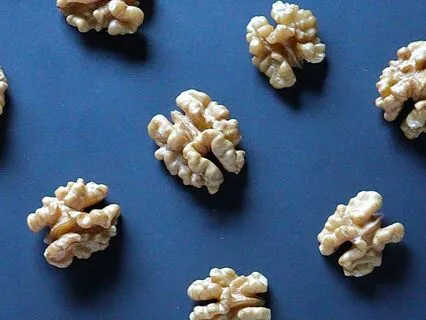
So let's practice having compassion for the brain that we live in.
We all live in our own unique brains and some of these brains of ours have maybe more noticeable differences than others.
So let's give that some empathic attention.
So first get settled in a comfortable way,
The way you like to meditate.
And for an optimal experience of both relaxation and focus,
I would advise you to sit with your back straight,
Elongate your neck out of your back,
But make sure that your throat is still open and free so you can breathe comfortably.
And let your legs really go down with gravity,
Let them become heavy.
And keeping your legs heavy,
Have a slight lift of your torso,
Your upper body out of your hips,
So that you have this pleasant elongation in your upper body.
And at the same time,
Let the face muscles,
The skin and muscles of your face relax down.
It's very pleasant to let go of our facial expression when we're meditating.
I don't always succeed doing that in daily life and when I sit down to meditate it's such a relief to let go of making a pleasant face.
Maybe already automatically you notice that your breathing has become a little bit more relaxed.
If you haven't already,
You can let your shoulders relax more down.
So keeping a gentle lift in the chest,
Your shoulder heads,
Your shoulder blades can relax down.
So don't force them down,
But just relax them down.
And perhaps you wanna join me in just either allowing automatically or intentionally deepening your breath.
And then there's a subtle art of breathing deeper without becoming forceful.
So it's really a feeling of your body,
Where it wants to go right now in expansion when you inhale.
So it's this gentle inner stretch of your chest,
Where you can really feel the space for your breath to enter without it becoming a big effort.
Because then you probably can breathe a little bit less deeply.
So do this kind of thing always in good communication with your body,
Inviting the breath in.
Like an honored guest who was also a very good friend.
So you want to do the effort,
But also stay relaxed.
And enjoy the breath,
If you can.
Maybe your mind state right now is not in a place to enjoy the in-breath and out-breath.
And that's perfectly fine as well as a practice to just be with the emotional quality that you are right now,
Without reacting to it.
And maybe there is a reaction.
Then that is the beginning of your yoga,
Of your meditation,
To be with that reaction as it is,
Without wanting to change it.
And so personally it came to my attention that my brain has a few anomalies that I wasn't aware of.
And when I first got that diagnosis I was sad,
I didn't like it.
And pretty soon after what I noticed was that actually it gave me an avenue of compassion for myself.
Because I did not choose the brain that I grew up in,
That I grew up through.
And that made me realize that there are a lot of us out there with trauma,
PTSD,
ADHD or ADD,
Neurodivergence of any kind,
Or also things like narcissism or Alzheimer's.
Even temporary states such as just not having a well-rested brain,
It's so important for us to sleep well.
And then to live in a brain that hasn't rested well can be very challenging.
So I wanted to just focus on that awareness that we can have a certain relationship with our own brain and to watch it with compassion.
Not in a way to avoid any responsibility,
But actually to fully take that responsibility for our brains,
These structures of our mind.
With some compassionate meta-awareness that can allow us to see the limitations that we live in through our body-mind.
And yeah,
We can see the brain as the material correlate of our mind.
We can see the mind as the mental correlate,
The conscious correlate of our brains.
And maybe that in us which can be compassionate,
Maybe that comes from that free place that is beyond mind or body.
Maybe awareness itself is the essence of that compassion that we can feel,
Where we are free.
So we can be aware of mind,
We can be aware of body,
So somehow this awareness is a free medium,
Goes beyond it,
That comes before it.
So that's a bit of a technical way in which this compassion transcends our limitations.
And so actually how to practice this compassion?
So just now as you're sitting,
I invite you to accept whatever your mind does,
Seeing the mind as the conscious correlate of your brain.
How is it behaving right now?
And looking at that behavior,
Can you let go of identifying with it as yours?
And can you see that your brain is just another organ inside of you with a very specific task?
So we all have a specific liver,
We have our own heart,
Stomach,
Kidneys.
And these all do their things by themselves,
And yet somehow we identify very much with the products of the brain,
Its own activity.
So maybe can you see the activity and the products of your brain with that same closeness but non-identification as you would look to your stomach with?
Your stomach producing stomach acid,
Or the bacteria in your gut producing all these little metabolites that is deeply entrenched in us and with us,
But we do not identify with their activities or their products.
We just try to live with it in a way that we take care of the needs that surround it.
So with this perspective in our pocket,
Let's accept any thoughts,
Any kinds of thinking,
Any thought-induced stress,
Let's accept it.
Let's even accept where the attention in us wants to go on its own and accept any tendencies that our minds have,
That our brains have,
And just be with the awareness,
With that compassionate awareness,
Looking at our brain as this amazing mysterious organ that produces thoughts,
Patterns of behavior,
Modes of thinking,
World views,
Opinions.
Let's just look at that with curiosity and amazement and relativity and compassion and maybe even humor.
So with that I leave you with some contemplation and practice of this perspective.