00:30

Bee Breath Release ~ Relax In Savasana (Bhramari Pranayama)

by Hans van Veen

Rated
5
Type
guided
Activity
Meditation
Suitable for
Everyone
Plays
27

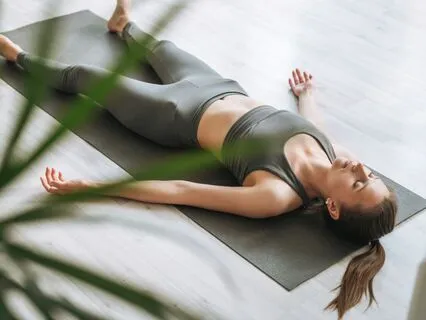
Bhramari Pranayama is healthy and wonderful, and will make your Savasana that much better. The simple humming technique releases nitric acid (NO), which is a boon for blood pressure, immune function, respiratory health and anti-inflammation. In simple experience, it also feels amazing and can be a very pleasant and quite deep sound meditation. For your Savasana, I recommend placing a folded blanket under your neck and head, if your head tends to tilt back. A bolster, rolled blanket or pillow under your knees will benefit those with a sensitive lower back. I will gently instruct you with attention to detail for your anatomy and breath, leaving you in silence for 2x5 minutes during the session: 5 for Bhramari, and 5 for completely still Savasana. Please note: never do breathwork in or next to a bathtub or a pool or a lake, etc. Always contact your physician before doing breathwork if you have any medical issues. Enjoy the practice. image: Getty

RelaxationSavasanaPranayamaMeditationBreathworkHealthAnatomyMotionlessnessShavasana TechniqueSpinal AlignmentLower Back ExtensionChest ExpansionSide BreathingFacial RelaxationBrahmari BreathingMotionlessness Focus

Transcript

Welcome to this guided shavasana for complete relaxation.

So when you're laying yourself down in shavasana the way you do that is typically already the beginning of mindful attention.

So don't just plop down but take a look if you can make your body lay as straight as possible.

We're all a little bit crooked of course in the details or maybe somewhat more coarse but how you do this is you sit up first with your feet on the ground and your knees towards your chest and then you just put your elbows on the floor and then you roll your back down on the floor vertebrae by vertebrae and see that you can do this in a way that you notice each single vertebrae finding a resting place on the floor or the bed or the ground and see that you can make yourself as straight as possible while you do that and when you've positioned your back on the floor then you can grab your butt with your hands lift up your lower back and then extend the flesh of your butt away towards your heels and this helps you to lengthen your lower back giving it more space and less making it less dense basically when you've done that you can extend your heels away one at a time and make sure that when you do this you keep your lower back long and you take that extension of your buttock all the way on the back side of your legs by extending your heel so you want to carry that extension from your lower back all the way through the backsides of your legs to your heels and when you've extended both your feet away like that you have this nice long lower back and long back legs then look over your body and see that you can see that indeed your body is straight you will you will see the middle line of your body kind of being one straight line and then you can very slowly and with a kind of controlled release let your feet fall out to the side and then taking your head back down you can push your elbows a bit on the floor with your hands facing to the ceiling and this will lift your chest a bit and then you can pull your shoulder blades down under your chest and you'll feel that this gives a nice lift to your chest and then your whole back if you notice makes kind of a movement from your shoulders all the way to your heels so there's this if you are standing there will be this downward direction of your back and then when you lay your arms out make sure that you have if it's possible that you have your armpits free and roll your upper arms out so that your thumbs point away from you this also helps your chest be open now you want to balance this you don't want to have your shoulder blades too close together that will kind of constrict your upper back so find a balance between that space don't sacrifice the back of your chest for the spaciousness in the front of your chest okay that is for the technical details now just take a deep breath through your nose if possible keep breathing through your nose the whole time unless it's blocked and then release so every breath instruction that i give always translate it to your own tempo your own rhythm every instruction anyway do it only do it if it makes sense to you and do it in your own tempo so i want to invite you to take a few deeper breaths in through your nose and out through your nose and when you breathe in you can make it slow make it a slow long full pleasant inhalation and feel the expansion of your chest and when you exhale you can try to let your body relax completely to the floor and you'll notice that when you do that that there are these little pockets that were maybe having some tension that can now release and relax into the floor and the breath is an excellent way to make contact with our body and to let it go especially on the exhalation with every in breath the the heart constricts a bit due to the expansion of the lungs and with every out breath there is this expansion and relaxation in the chest that translates into the restful state of the body and i'm going to play a little bit with the breath here so again follow along if you like and if you just like to have a complete non-instruction javasana then just enjoy the relaxation but what i'd like to invite you to do is to when you breathe in try to not let your chest lift so much to the ceiling but more let your side ribs take the expansion so you want to almost like you're putting pancake batter in a pan you want to extend that way your lungs not upward but to the side so when you inhale next time again breathing deeply and pleasantly without forcing it but you can feel the spaces between your ribs also fill up with air now when you relax if you've not done so already on an exhalation close your eyes let the skin on your face become completely soft and relaxed and in fact you can let all the soft tissues in your face and in your head release down with gravity to the floor let the skin around your eyes around your nose around your mouth simply surrender to gravity there's no need to make a pleasant face we're not interfacing anymore with other humans don't forget the skin around your ears but there too we hold stress and tension throughout the day can you also notice if you're breathing as much in your left lung as in your right lung just as kind of not as a rule to be constricted about but just as a curiosity to be mindful and noted that you can actually steer that a little bit you can breathe a bit more in your left lung or in your right lung so can you have a kind of curious curiosity with that and play a bit with that and feel into that and every time you exhale is another chance to let go completely so shivasana is also the art is to lay completely still so can you again as an intention as a almost like a game not like a rule to be disciplined about but just as a kind of curious play can you let your body become completely motionless of course there will be fluctuations right you're an organism not a statue but can you can you become even more mindful by becoming completely still so sometimes i say that if you breathe in the air like you're smelling it that creates a kind of silence and as well if you invite complete motionlessness that also increases somehow presence it's like we're teaching the body to become awake even though paradoxically this is shivasana which looks more like sleep and of course if you do fall asleep that's perfectly fine but it's not actually the idea of shivasana that's really a meditation if you want to sleep i would suggest to do more more a body scan than a shivasana so let's do something else i want to invite you to do a bit of brahmari breathing brahmari i believe means bumblebee and it's very simple again do it if you want to skip it if you don't feel like it check with yourself in the moment it's simply humming or making the sound of a bee and you do it at your own tempo and you want to feel the vibrations a bit in your nose and so i'll simply try to demonstrate you breathe in through your nose and then you simply go and of course this is this is my sound you don't have to try to make the same sound but just do the humming that comes from your nose from your sound with your mouth closed and it kind of gets very interesting and pleasant and you want to try to get that frequency where you feel the vibration and there are all sorts of benefits to this but just know to know that it's pleasant and just go into the experience of it don't mind doing it for the benefits but so i invite you to do this maybe for five minutes it can be very pleasant so breathing in deeply and then exhaling just humming so keep going with the humming i will just give five minutes of no instruction to give you the the space to do that doing it in your own time if you want to stop earlier or if you want to take a break of course take a break stop earlier but if you can then try to do it for five minutes it will really help you to release and relax very good and then if you're still humming then i invite you to find an end after your last humming exhalation and then true shavasana has a bunch of silence in it so i'm now going to be silent for the last five minutes of this shavasana i invite you to stay completely awake and completely relaxed and then there'll be a bell to mark the end enjoy the silence

Meet your Teacher

Hans van VeenUtrecht, Netherlands
More from Hans van Veen

Loading...

Related Meditations

Loading...

Related Teachers

Loading...
© 2025 Hans van Veen. All rights reserved. All copyright in this work remains with the original creator. No part of this material may be reproduced, distributed, or transmitted in any form or by any means, without the prior written permission of the copyright owner.

How can we help?

Sleep better
Reduce stress or anxiety
Meditation
Spirituality
Something else