Meditations for Deep Living.
Today,
Peace of Mind in Troubled Times.
Part 1.
Hi,
I'm G.
S.
Renfree.
Welcome to this exploration and guided meditation in deep living.
This is the first of three sessions created to help you cultivate and maintain peace of mind regardless of life circumstances.
Today,
We'll focus on two practices that promote peace of mind in the face of troubling events.
Session 2 will focus on how to better discern the true state of things in your life in the world.
And the final session will focus on how to maintain peace of mind and equanimity should you become an advocate for positive change.
It's all too easy these days to see ourselves as living in troubled times.
With both social and news media seemingly obsessed with spreading negativity about the world,
It's hard to gauge the true state of things and not be caught up in pessimistic narratives.
Whether or not things are as bad as often portrayed is the subject of the next session.
But for now,
Assuming that these are indeed troubled times,
How can we achieve and maintain peace of mind in the face of that?
And why is that important?
Peace of mind,
The state of tranquility within and patient acceptance of self in the world,
Is essential to our well-being.
It's also critical to the ability to be at our best for ourselves,
Loved ones,
And communities.
Whether we face a personal crisis or contemplate problems of world proportion,
We always respond best with a calm and rational mind.
When stressed and caught up in a negative mindset,
Our perceptions become distorted and we inadvertently spread negativity through our attitudes,
Words,
And actions.
With peace of mind on the other hand,
We're able to see the world more objectively and through the eyes of understanding and compassion.
Instead of being a vector of stress and negativity,
We can become a purveyor of peace and optimism.
If we are living in troubled times,
Is this not what the world needs most?
The secret of achieving peace of mind lies in understanding the nature of the mind itself,
How it interprets our experiences and creates a sense of what's real.
Those interpretations control our mental and emotional reactions to ourselves and the world around us.
There's a popular analogy of the mind that's fitting here.
The mind is not like a camera that passively takes in the outside world and forms an accurate image of it.
It's like an artist that attends only to those things that capture its attentions and are thought to be important in the moment and uses them to create an impressionistic picture of things that's largely based on past experiences,
Their emotional associations,
And the background psychological state at the time.
Sounds tenuous,
Right?
Needless to say,
Our views of the world,
Our sense of reality if you will,
Are always biased and distorted.
Although sometimes a painting by a talented artist can capture an aspect of the human experience better than a camera lens,
It's all too often that our inner perceptual artist creates nightmares.
Negative perceptions give rise to negative thoughts that in turn give rise to negative emotions.
When that leads to toxic words and deeds,
The world becomes just a little darker.
And more often than not,
We become a part of the problem we're facing,
Not a solution.
So how do we overcome this fault in human perception and the negative impact it has on us?
How can we attain peace of mind in the face of troubled times without lapsing into escapism or denial?
Meditation is a means to calm the part of our mind that creates our mental and emotional distress in the first place.
It's often called the doing or busy mind,
And meditation enables us to detach from it just enough to experience the present moment in a way that is as pure and unbiased as we can hope to get in this lifetime.
How does it do that?
Within us all is a deep well of quietude,
A peace that cannot be disturbed by the world around us.
It's our pure essence,
A state of simple awareness without thought or emotion,
And it can never be anything but at peace with what is.
Sometimes referred to as the being mind or the silent witness,
Awareness of it is so easily overshadowed by the busyness of the doing mind,
That many of us only glimpse it in rare moments of deep contentment or spiritual union.
However,
With a regular practice of meditation,
It becomes easier to slip into that calm state and to tap into it when needed.
Our day-to-day experiences become increasingly affected,
Resulting in a greater sense of peace and equanimity,
Whatever the circumstances.
In times of unrest or challenge,
It's like having ready access to a well of fresh cold water in a desert landscape.
That level of transformational change takes time and patience,
But we can more quickly learn to briefly tap into that state of calm to achieve respite from any distress our minds create.
Our distress comes primarily from thoughts about past or future events,
And yet rarely is there anything perilous happening to us in the moment.
By focusing our awareness on the here and now,
Such distressing thoughts diminish along with the emotions they generate.
When the thoughts return,
So do the emotions,
But with practice,
Detaching from those thoughts becomes easier and more complete.
Before we begin our meditation,
I want to stress something important.
There are indeed very real problems in our world,
But there are always solutions and we can each contribute to resolving them.
However,
Getting caught up in negativity and conflict almost always makes things worse.
The goal of today's process is not to take your mind off things and avoid them.
It's to learn to modify your thinking about troubling issues in a way that enables you to stay grounded,
Calm,
And rational.
Perhaps the first best step toward contributing to a better life and world is to cultivate peace of mind so that we can approach those with kindness and compassion.
In today's session,
You'll focus on your breath and imagined body sensations to induce a relaxed mindful state.
You'll then take a moment to think about some aspect of the world that troubles you and to be aware of the thoughts and feelings that arise from this.
You'll then step back into a mindful focus on the moment and experience how that differs.
We'll repeat this several times so that you can discern the contrasting effects of negative perceptions and thinking with being at ease.
So,
If you please,
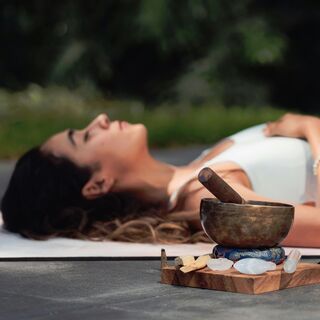
Sit or lie in a comfortable position,
Close your eyes,
And relax.
It's time to be present here and now.
Feel free to make any adjustments in sitting or lying at any time to remain comfortable.
Taking a full breath to the count of three,
Feeling it fill your belly and chest,
And release it.
Take a full breath to the count of four,
Hold it for a moment,
And release it.
Take a slower breath to the count of five,
Pause,
And release.
Repeat this on your own a few times,
Perhaps imagining that each in-breath is filling your entire body and each out-breath is carrying away tension.
Release control of your breathing and observe it in its natural rhythm.
With a sense of curiosity,
Explore some of the subtle body sensations your breathing creates.
Perhaps a slight tension in your chest as your muscles work to breathe in.
Perhaps a faint wave of relaxation when you breathe out.
Continue this for several more breaths,
Being aware of these sensations,
But not analyzing or otherwise thinking about them.
Just be aware.
Relaxation can be enhanced by imagining body sensations that usually accompany a deeply relaxed state.
For example,
Imagine now what it might feel like if the muscles of your body became heavy and soft like warm clay.
Imagine how your legs would feel,
Warm,
Soft,
And heavy.
Your torso,
Warm and soft.
Your arms and shoulders,
Soft and heavy.
Your face.
Return your attention to the subtle sensations of your breathing,
And continue this on your own for several more breaths.
Check in with yourself.
How are you feeling?
Take a moment to recall something about the world or some recent event that has troubled you lately.
Pick something you care about and you believe to be important.
If you have difficulty with this,
Feel free to pause the session here and give yourself more time.
When you have something in mind,
Take a few moments to think about it as you usually do and be aware of the kinds of thoughts and feelings associated with this issue.
Now that you've spent a little time in recollection,
Reflect on how you're feeling.
What are you feeling?
What are you thinking about?
What are you thinking about?
Now that you've spent a little time in recollection,
Reflect on how you're feeling.
Do you feel unsettled,
Agitated,
Or some other form of distress?
Take a deep breath and let your thoughts about the situation go.
An often effective way to detach from thinking about a troubling event is to hold a picture of it in your mind and then visually zoom away from it until it's a very small point.
When you're sufficiently detached,
Re-ground yourself in the peacefulness of the present.
Focus on your breathing,
Taking in a breath to the count of five.
Pause and release.
Breathe into the count of five.
Pause and release.
Let your breathing return to its natural rhythm and passively observe it.
If your mind drifts back to troubling thoughts,
Just acknowledge them,
Dismiss them with words like,
Be at peace,
And return your attention to the breath.
Recognize that there's nothing wrong right here,
Right now.
If you were able to re-ground yourself and return to a calm state of mind,
Reflect on that for a moment.
When you were calm,
The troubling issue itself had not changed.
Whatever went on or is going on that concerns you was unchanged during your calm state of mind.
It had no ability to directly cause you distress or you would not have been able to achieve calmness.
That may seem obvious,
But it's a fact that we tend to forget when we get caught up in troubling thoughts.
When that happens,
We tend to think our distress is caused by the thing we're thinking about,
And that can subjectively feel true.
The reality is,
However,
It's only when we're thinking about troubling issues in distressing ways that we feel uneasy,
And recognizing that is the secret to achieving peace of mind in the face of life events.
Detaching from troubling thoughts,
Calming ourselves,
And returning to an issue at hand in a more grounded state is a learned skill,
But with practice you can master the ability to tackle troubling issues without undue distress.
I'd like you to take a few minutes to return your attention to the troubling aspect of the world you selected,
And let your thoughts about it return.
Think about it as you typically would.
How do you feel as you allow your thoughts to do as they will with this?
Once again,
Dismiss these thoughts with a gentle be at peace,
And return your attention to the breath.
Stay here a few moments and allow your mind to calm.
If troubling thoughts return,
Just silently repeat the phrase,
Be at peace,
And return your focus to the breath.
We're about to revisit what troubles you again,
But this time,
Visualize it as though being far away,
Far enough away that when you imagine it,
It has little effect on you,
Even if that means creating an image of the whole world from space.
When you have a reasonably good image,
Silently repeat the phrase,
Be at peace,
Or something that has a similar meaning for you.
Repeat this phrase,
And then,
Slowly draw closer to the situation visually.
If troubling thoughts return,
Gently dismiss them.
If need be,
Visually draw back from the situation,
Or momentarily return your attention to the breath.
See how close you can get to the troubling situation without lapsing into troubling thoughts and feelings.
In a moment,
We'll be winding this session down,
But before we do,
Take note if you've been able to discern a difference in how calm or agitated your mind was between when you were thinking about the troubling situation in your usual manner,
And when you were more present in the now.
When ready,
Take a few cleansing breaths,
And then slowly return to the breath.
How was that for you?
When you shifted from allowing yourself to think about a troubling situation,
To re-grounding yourself in the present moment,
Did you experience a difference in mental agitation and emotion?
If not,
I hope you did.
If not,
I hope you did.
If not,
I hope you did.
If not,
I hope you did.
If not,
I invite you to repeat this process until you can.
Perhaps creating a foundation of mindfulness through a simple vipassana practice for a few weeks will help.
Perhaps creating a foundation of mindfulness through a simple vipassana practice for a few weeks will help.
As I mentioned in the introduction,
A regular practice of meditation enables us to attain and maintain peace of mind and equanimity in the face of life's challenges.
As I mentioned in the introduction,
A regular practice of meditation enables us to attain and maintain peace of mind and equanimity in the face of life's challenges.
As I mentioned in the introduction,
A regular practice of meditation enables us to attain and maintain peace of mind and equanimity in the face of life's challenges.
What we attempted to do today was to speed the process up a little by shifting between what was likely an agitated state while thinking about the troubling situation.
What we attempted to do today was to speed the process up a little by shifting between what was likely an agitated state while thinking about the troubling situation.
To a more relaxed state while grounded and focused on the present moment.
This was done not only to give you a direct experience of how our thinking affects our mood,
This was done not only to give you a direct experience of how our thinking affects our mood,
But practice in regrounding yourself when you're triggered by troubling thoughts.
Most of us don't have the luxury of being able to meditate whenever some event triggers troubling thoughts that create distress.
Most of us don't have the luxury of being able to meditate whenever some event triggers troubling thoughts that create distress.
However,
There is a simple thing you can do anytime you find yourself caught up in troubling emotions that,
With a little experimentation and practice,
Can help you detach from inner narratives and reground yourself,
Often in a matter of seconds.
It's based on a convergence of mindfulness practices and psychology.
Remember,
Your emotions are not coming from what you're thinking about,
But from your thinking itself.
This technique is a way of redirecting your awareness away from what you're thinking about to the thinking process itself.
How is it done?
Whenever you feel distress,
Take a breath and say to yourself,
I'm having distressing thoughts.
That's it.
For example,
If you're feeling angry about something a neighbor did,
Stop,
Take a breath,
And say to yourself,
I'm having distressing thoughts about my neighbor.
Feeling anxious about a stack of bills sitting in front of you?
Stop,
Take a breath,
And say,
I'm having anxious thoughts about bills.
By momentarily redirecting your attention away from the subject of your thoughts and refocusing on the fact that you're having distressing thoughts,
You should experience a calming of mind and emotion.
A respite from the distressing thoughts and emotion will likely enable you to approach the challenge more calmly and logically.
There's another reason why this quick intervention can be so effective.
We often have little to no immediate control over the things we distress about,
And psychology tells us that the less perceived control we have over something undesirable,
The greater the impact it has on us.
Thoughts,
On the other hand,
Which are often automatic and difficult to manage,
Are within our sphere of control.
By momentarily taking our attention away from the subject of distressing thoughts,
Something less controllable,
And redirecting it to the fact that we're having distressing thoughts,
Something more controllable,
We lessen the impact.
I invite you to try this quick intervention whenever you experience a troubling emotion.
Because it's so simple,
It may take a little tweaking and practice before you fully realize what it can do for you.
In closing,
Remember,
Detaching from troubling thoughts and emotions in the face of disturbing events is a path to peace of mind,
Not complacency.
Greater peace of mind is not only essential to our well-being,
But it gives rise to greater tolerance,
Understanding,
And compassion,
And those are what the world needs most in troubled times.
Cultivating peace of mind is perhaps the best gift you have to offer the world right now.
I hope you found this session helpful.
As mentioned earlier,
The next session will focus on how to better assess the true state of things in your life and the world,
And how to attain and preserve your composure in challenging situations.
Thank you for taking the time to meditate with me today.
May you be warm and safe,
And may you live in peace and happiness.