A Simple Course in Meditation Session 2 Hi,
I'm GS Renfri.
Welcome to Session 2 of the Course.
If you are new to meditation and did not listen to the first session,
You might consider doing so as I shared my views on what meditation is and why it can be a life enhancing practice.
To summarize though,
Meditation is a means for training ourselves to be present for what is truly happening in the moment,
In other words,
To be more mindful.
A mindful state is being aware of what is happening in and around us without interference by distorted perceptions or excessive thinking.
The ultimate goal of meditation is to enable us to live our lives with greater awareness,
Be at peace within ourselves and with the world around us,
And to engage in life consciously and authentically.
In Session 1,
I introduced box breathing as a grounding and relaxation technique.
Today I'll introduce you to another technique and a few variations of it and then guide you through the first step of learning an ancient breath-based meditation called Anapanasati.
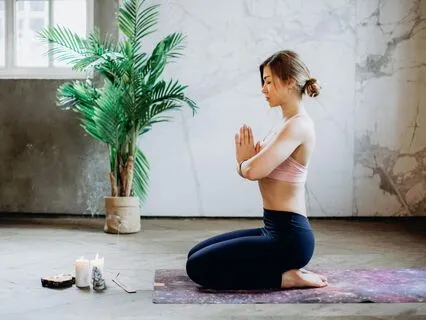
First a word on posture.
When we meditate,
It's best to sit in a way that's comfortable,
One that can be maintained for however long the session lasts without having to make repeated adjustments.
However,
Should you ever feel the need to adjust your posture when practicing,
Please do.
Just do so mindfully.
Traditionally,
We're advised to sit with our backs straight,
Unsupported by a backrest,
And with our torso balanced over the hips.
The shoulders are relaxed and the neck is elongated and the head balanced over it,
Chin tilted down slightly.
Play with these adjustments for a moment until you find your point of balance.
If you're used to sitting with the support of a backrest,
You may find this challenging at first,
But it will become easier with time.
If you're not accustomed to this sort of sitting,
Having a backrest available for when your supporting muscles become tired or tight may be a good idea.
As for your hands,
You can rest one on the other,
Palms up on your lap,
Or simply rest one on each leg.
You may choose to sit on the floor,
Cross-legged on a cushion,
Or in a seated warrior pose if those are available to you,
Or in a chair.
If you choose a chair,
Plant both feet on the ground as though rooting into the earth.
Attending to posture this way aligns the spine,
Makes it easier to find a position that can be maintained with less effort and optimizes mental focus.
Yet another reason to attend to posture is this.
The way we approach meditation,
Our attitudes and mindset,
Is important.
It can make the difference between having a meaningful experience or simply completing yet another task on a busy to-do list.
Meditation is something you're doing to honor yourself and to become more alive and present for your life.
So when you're ready,
Sit with the grace and dignity that befits this view and center yourself.
It's time to be present here and now.
In the first session,
You learned box breathing and perhaps you've taken the time to practice it since.
If so,
You've likely experienced the grounding and relaxing effects it can have.
Today I want to introduce the complete breath,
Often referred to as a full breath,
Though there's a good chance you're already familiar with it.
Let me describe it before we practice.
To perform a complete breath,
We expel all of the air from our lungs and gently squeeze our chest and stomach muscles at the end to push out just a little more stale air.
Then we relax our bellies and inhale slowly,
Imagining the entire torso filling with air from the bottom up,
That is,
From the lower belly to the upper belly,
Lower chest,
Then upper chest.
This imagined wave pattern ensures that our lungs are filled with fresh air as completely as possible.
The exhalation is done in the same pattern at the same slow pace,
Emptying the lower belly first and ending in the upper chest with a gentle abdominal squeeze at the end.
In some traditions,
The exhalation is done from the top down,
That is,
From the upper chest to the lower belly.
We'll try both now to see which feels most natural to you.
Start by exhaling fully and gently squeeze your chest and abdominals at the end.
Then relax your belly and breathe in slowly,
Filling the lower belly,
Upper belly,
Lower chest,
Upper chest.
Breathe out slowly,
Starting with the lower belly,
Upper belly,
Lower chest,
Upper chest.
Repeating that,
Exhale fully as before,
Then relax your belly and breathe in slowly,
Filling the lower belly,
Upper belly,
Lower chest,
Upper chest.
Breathe out slowly,
Starting with the upper chest,
Lower chest,
Upper belly,
Lower belly.
It may be too early to tell just yet,
Especially having only completed one round of each breath pattern,
But one of the two patterns will tend to feel more natural for you.
You can turn the full breath into a simple meditation form by adding a silent count of five to both the in-breath and the out-breath,
Much like you did with box breathing.
The added task of counting is sometimes a good distraction for an overactive doing mind.
Finally,
There's a variation of the full breath that I call the cleansing breath.
The inhalation is done exactly the same way,
But during the exhalation,
The air is allowed to exit in its own time,
With only a gentle tightening of your chest and belly at the end.
In many ways,
The cleansing breath is very much like how we breathe when we yawn.
We take in a full deep breath and then we just let it go.
Exhaling this way causes the heart's beating to slow and often brings a wave of relaxation,
Especially if you pause at the top of the breath.
Doing as few as three or four cleansing breaths can significantly decrease tension and anxiety,
And like box breathing,
It can be done just about any place,
At any time.
If you wish,
You can pause the recording and try a few now,
Or practice on your own later.
It's time to transition into a more subtle breath-based meditation.
This is the practice that will be used in the rest of the series,
And it's where most people start to have difficulty with the busy doing mind.
When we breathe,
There are numerous body sensations that accompany each breath in and breath out.
To help you select one or more for today's practice,
Do a few full or cleansing breaths on your own.
Continue to take long,
Slow breaths,
But direct your attention to the body sensations they cause.
Can you notice changing sensations in your throat or nose,
Perhaps alternating between cooling and drying as you breathe in,
And warming and moistening as you breathe out?
What sensations accompany the rise and fall of your chest and belly?
Choose a sensation that you'll focus on during the next phase of today's work.
Release conscious control of your breathing and allow it to settle into its natural rhythm.
Your body has done this naturally and effortlessly since you took your first breath at birth.
Allow your body's wisdom to take over and passively observe your chosen breath sensations.
After a few moments,
You may find that your mind has wandered.
Simply bring it back to the breath.
Each time your mind wanders,
Gently redirect your attention back to the breath,
Without judgment.
After just a few minutes,
You may notice that your doing mind has seemingly countless ways of hijacking your attention,
Many of which can seem important to attend to.
For now,
However,
Simply smile,
Thank your doing mind for sharing,
And redirect your attention back to the breath.
If your mind keeps wandering,
Just accept that,
It's completely natural.
Accept where you are in this practice without judgment.
Give yourself the space to just be here in this moment.
That's today's practice.
How do you feel?
If you're new to breath-based meditation,
Then feeling relaxed,
Frustrated,
Or nothing particular at all are very common and completely normal reactions.
Like any learned skill,
It takes a little time,
Patience,
And practice,
But the benefits of learning the skill and art form of meditation may well exceed those of any other skill you're likely to learn in this life.
Congratulate yourself on taking the time for your practice today.
I'd recommend repeating this three or four times before moving on to the next segment in the series.
You can do this on your own using a timer,
Such as the one on Insight Timer,
If you'd like to skip the introductory portion of this session.
Alternately,
You can access my recording entitled,
Anapanasati 1.
It will provide you with a 10-minute practice session.
Thank you for taking the time to meditate with me today.
May you be warm and safe,
And may you live in peace and happiness.