A Simple Course in Meditation Session 1 Hi,
I'm G.
S.
Renfri.
Welcome to this introduction to A Simple Course in Meditation.
I created this series as a resource for the meditation community and those wishing to join us.
It's designed to teach beginners of foundational breath-based meditation in the first four segments,
Then guide them in subsequent sessions to explore some of the many variations in focus and techniques available.
For non-beginners and seasoned practitioners,
The course can be a useful refresher.
In this first session,
I'll focus on the hows and whys of meditation as a foundation for the series.
As with the rest of the series,
I've aimed to keep things short and simple.
I'll share more information throughout this series,
But only briefly as future sessions will be more experiential.
If you want to jump right in,
You can certainly skip to the second session.
However,
I will be guiding you through a simple introduction to mindfulness at the end of this session by way of a very effective grounding technique.
Sessions 2 and 4 are a sequence guide to breath-based meditation to provide you with the skill you'll use throughout the rest of the series.
This fundamental method is one of the best choices for the basis of a personal practice.
These sessions will include instruction and four breathing techniques that can be done almost anywhere,
Anytime to calm you and reduce stress.
Session 5 covers body scan meditation and is followed by sensory rotation,
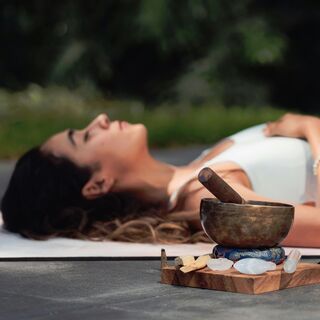
Yoga nidra,
Metta practice,
And mantra meditation.
So what exactly is meditation?
In its simplest form,
Meditation is an intentional exercise for your mind that engenders a conscious focused awareness of the here and the now on what is actually happening within and around you in the moment.
By contrast,
Most of us,
Most of the time,
Are literally lost in thought.
We tend to be thinking about things that have either happened or might happen or otherwise be caught up in internal storytelling about this or that.
We usually tune into the real world around us enough to navigate it reasonably well,
But most of our attention tends to be focused on our thoughts about the real world or be otherwise captivated by other creations of our imagination.
I like to call that our virtual reality.
Virtual because it can be both immersive and completely dissociated from what is really happening in our lives in the moment.
The aspect of our mind responsible for this is sometimes referred to as the doing mind.
It's an apt description because it's constantly doing,
Forever busy,
And when there is an important or worthwhile task at hand,
It busies itself with all sorts of nonsense.
It can be like the proverbial monkey in a tree,
Jumping from branch to branch,
Thought to thought,
Not going anywhere,
Not doing anything other than generating more thought and busyness.
By contrast,
There is an aspect of our mind that's always present,
Ever aware of what's actually happening in and around us in the purest sense,
But never anything but completely calm and at peace with the moment.
This is sometimes referred to as the being mind,
And it's like another monkey simply sitting in the top of the tree,
Silently taking in the world.
Sometimes referred to as the silent witness to our lives,
This aspect of the mind likely doesn't change in any meaningful way from the time we're born until the time we pass.
Some might be inclined to call it the soul.
So what's so wrong with engaging in virtual reality?
Not a thing when we have conscious control of it,
And it's not causing difficulties.
It's our virtual reality,
Our ability to think and project and imagine,
That has enabled humanity to both build and destroy civilizations.
It's our executive function that helps us navigate the complexities of the world,
And it can be a source of deep enjoyment,
As when engaging in a pleasant fantasy or reading a good book.
At the same time,
It also generates most of our emotions and is universally the source of dysfunctional behaviors,
Stress and suffering.
It's far too easy to become so caught up in habitual thinking that we're unaware of our disconnection from the pure,
Undistorted reality of our lives.
That results in living unconsciously,
Subjectively,
Caught up in old habits and thinking patterns that rarely serve us well.
The antidote to this is not eliminating the doing mind,
We couldn't do that if we wanted to,
But developing a greater awareness of it and control over the dance between it and the being mind.
A meditation teacher of mine once shared that our being mind should be the CEO of our life,
And the doing mind the executive secretary that keeps things orderly and manages our day-to-day activities.
He went on to say that,
Unfortunately,
Most of us live our lives as though the executive secretary has the CEO locked in a closet somewhere,
And he or she is not only incompetent,
But has an addiction problem as well.
So how does meditation help?
The type of meditation explored in this series is a practice that enables us to detach from the busy doing mind,
Just enough to experience moments of pure awareness.
Typically,
When we first learn to meditate,
We only enjoy brief moments of this awareness before they're interrupted by the busyness of the doing mind.
With patience and gentle persistence,
The moments of awareness become easier to attain and maintain,
And it's through this dance between the virtual and the real that we become conscious of the folly and tyranny of the unbridled doing mind.
It's rather like stepping off the busy mental treadmill we all jump on first thing in the morning,
Just long enough to be aware of what it's like to stand still before being compelled to jump back on the treadmill.
In time,
We become more aware when we need to step off the treadmill,
More able to do it quickly,
And to remain off as long as we need.
Keep in mind that being on the treadmill is what generates our stress,
Distress,
And dysfunctional thoughts and behavior patterns.
Stepping off of it enables a more objective experience of our lives that can then inform our perceptions,
Thought patterns,
And actions.
Over time,
And perhaps with the help of active cognitive retraining,
We can begin to live more and more mindfully,
With a more objective perception of ourselves and the world,
And the executive secretary will step down as an incompetent tyrant and take up his or her rightful place as an assistant in effective living.
The main path we'll be using to experience grounded awareness is attending to your breath.
It's been said that the greatest gift of the body is that it cannot be anywhere except the here and now.
Accordingly,
When our attention is fully focused on some aspect of our body,
The mind is grounded,
Anchored to the here and now.
Any of our senses can be used as a meditative focus,
Sight,
Hearing,
Taste,
Touch,
Smell,
And kinesthetic or body sensations.
Sensations related to the breath are classic and popular because they provide a rhythmic calming cycle to attend to.
Before I introduce today's meditative exercise,
A quick word of advice.
Meditation for most people can feel very difficult at first.
That's entirely normal and expected.
Most of us come to meditation after having lived lives without awareness of the dual nature of the mind and our busy doing minds have been running the show for quite some time,
Usually our entire lives.
Keeping in mind that the job of the doing mind is to reflect on the past and learn from it,
To anticipate future needs and actions,
And to decide on what needs to be done in the moment.
It's the monumental task of keeping us warm,
Safe,
And happy.
Unfortunately,
It's been given this task without sufficient training and has been asked to do so in the unnatural and overstimulating environment of modern living.
You may be living under the tyranny of your busy doing mind,
But it's not your enemy.
It's an important part of you that has an important job to do,
But it's working without sufficient guidance and way above its competence and pay grade.
Like an untrained puppy,
It wants to do good,
It just needs patient,
Persistent guidance.
As you work through this course and engage in the exercises,
You'll likely find your awareness being hijacked from your intended focus by your doing mind.
This can happen quite frequently at first.
When it does,
Recognize it and simply return to the focus at hand.
Each time you do that,
Each time you become aware that your mind has wandered from where you wanted it to be and gently bring it back to your intended focus without judgment,
It's like doing a rep with a set of dumbbells.
That moment of awareness and redirection is the essence of the exercise,
And if you have to do it many times in your practice,
All it means is that you're getting more exercise.
Now I'd like to introduce you to our first grounding technique.
It's time to be present,
Here and now.
The following meditative exercise is a simple yet effective way to begin using the breath to calm the mind and establish present awareness.
It's called box breathing.
It's a modern technique that has its roots in an ancient yoga practice called Nadi Shodhana,
Or alternate nostril breathing.
It involves taking in a slow breath to the silent count of four,
Pausing without closing your throat or otherwise holding on to the breath to a count of four,
Breathing out to four,
Then pausing at the bottom of the breath for four.
The cycle then repeats itself.
Simple,
Right?
Done over several minutes,
However,
You may find it surprisingly effective.
There's no specific significance to using the count of four.
You could just as easily use three or five.
The important thing is that you count at a rate that enables you to take in a full breath of air,
Pause for the same length of time,
Breathe out,
And pause again before the next in-breath,
And not become either out of breath or light-headed.
Accordingly,
Feel free to adjust the rate at which you silently count so that you can reach a comfortable rhythm.
So in preparation,
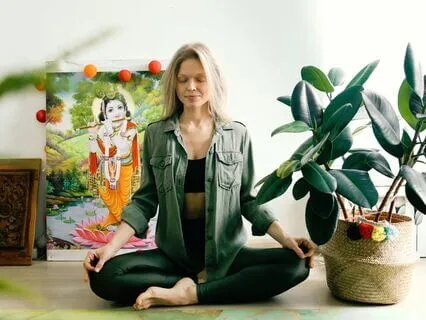
Please sit or lie down in a comfortable position,
Close your eyes,
And relax.
Breathe in to the count of four,
Pause for the count of four,
Breathe out to four,
And pause for four.
Let's repeat that.
In,
Pause,
Out,
Pause.
Continue this on your own for the next few moments.
If you lose count or find your rhythm interrupted,
Just start over with your next breath.
That's it!
How do you feel?
Box breathing is a good introduction to meditation.
It's a wonderful tool to induce relaxation any time during the day as well.
Taking a few moments in the midst of a stressful day to sit and quietly box breathe is a nice way to decompress,
One that you can do in the middle of a meeting,
On the subway or bus,
Or even walking down a crowded street.
I encourage you to practice this for three to five minutes a few times a day for at least a few days before moving on to the next session in the series.
Thank you for joining me today.
I hope you'll join me again for Session 2.
May you be warm and safe,
And may you live in peace and happiness.