Thanks for joining me here.
Now wherever you are or whatever you're doing,
See if you can just come to a restful position.
Notice whatever might feel restless or whatever feels like it might need to be adjusted and see if you can go ahead and make those adjustments now.
It could be in your back or your neck or in your face and your jaw,
Your eyes,
Your stomach.
Allow your body to come to rest in whatever way it knows how.
Just for this time together.
You can allow gravity to settle you into this position.
Notice yourself being pulled down into the ground and the ground below you supporting you as it always does.
And your eyes can be closed or open,
Whatever feels more comfortable.
So today we'll be focusing on the story from the Sufi tradition.
I find that stories can communicate the core meaning of a message in a way that intellectual explanation just can't really sometimes.
And so this is from a collection of stories about Nasruddin.
He's known as the wise fool.
And before I tell it,
You can resettle yourself here.
Notice if you've become restless or become tight or tense or flexed and see if you can return to a restful position.
And you can come to a full cycle of breath,
Breathing in,
Up through the body.
And then out,
Down through the body and out through your feet and into the floor.
And just wait for the breath to come back in naturally.
And this is the story of Nasruddin and the lamp post.
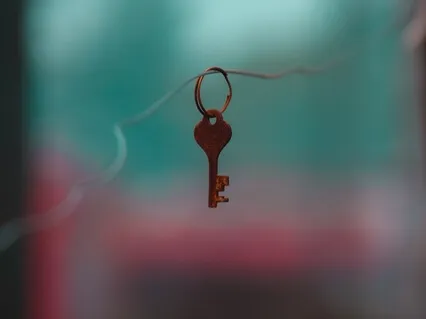
So one night Nasruddin was out on the sidewalk and he was in a patch of grass rummaging through the grass underneath the lamp post that was lighting up the area he was looking in.
And so he's rummaging through the grass and a friend of his walks by.
He notices Nasruddin and he comes over and he says,
Hey,
Nasruddin,
What are you doing?
And so Nasruddin says,
I'm looking for my keys.
And the friend says,
OK,
Well,
I'll help you.
So they are looking together through the grass.
Five minutes passes,
Ten minutes passes.
And then the friend asks Nasruddin,
Hey,
So where exactly did you lose your keys?
And Nasruddin says,
Oh,
I lost them back at the house.
And the friend says,
Well,
Why are we looking here?
And Nasruddin says,
Oh,
Because the lights better.
And so I think the story illuminates the absurdity of looking for something in a place that you never lost it in the first place.
And I think that society and our families and lots of different things can set us up to be continually searching for something in a place that we never lost it in the first place.
And then we can become stuck in this cycle of looking through the grass forever for these keys that aren't even there.
And they're back at the house.
But maybe it's scary to look back at the house because it's dark there and we don't know what might come up if we were to go and look back at the house.
So we stay here where the light is,
Even though that's really dissatisfying.
And we know maybe deep down that the keys aren't really there.