Hi,
It's Brooks and thank you for joining me.
Today we're going to talk about vulnerability.
So generally vulnerability is something that people are uncomfortable with.
It's scary.
It's basically you're being open.
And there's sometimes sides of ourselves that we don't want people to see,
Especially if we're feeling depressed or sick or what we consider weak in one way or another.
We'd rather keep that hidden.
It seems safer to not be vulnerable.
Yet the spice of life,
The real feeling of aliveness comes when we are vulnerable.
So then what do we do?
Where do we go?
How do we overcome that fear of being vulnerable,
Of being open?
And I think we can bring vulnerability in our life by starting to talk about it,
To start to be open about it like this.
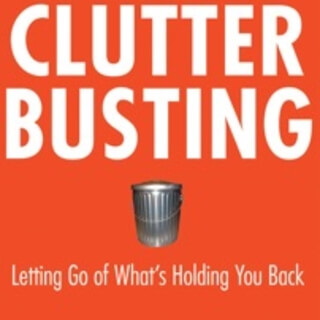
I think I first started noticing vulnerability in a big way when I started clutter busting,
When I started helping people let go of clutter.
Oftentimes people would tell me that they hadn't let anybody in their house for a long while because they were afraid for people to see the state of their home.
And they would tell me they thought they were the only people that had clutter and that everybody else didn't.
And they felt shame about it.
They felt they were wrong.
And I would tell people you've got to know everybody has clutter.
The interesting thing is most people feel that feeling.
Most clients feel that feeling of shame and not wanting to be seen.
Some people would tell me that they wouldn't have someone come over and fix plumbing or washer or dryer because that person wouldn't come over and see their house.
So there's this feeling that we're going to be judged for our vulnerability.
Like somehow or another we'll be hurt by being open.
And then we end up suffering because we don't have that vulnerability in our life.
Which is the real sweet part of life.
When I started working with people once I got over that fear of being seen by me,
Once I told them that I didn't have any judgment about it,
That we all have clutter,
It's not our fault.
We're raised to think that things are more important than us,
That we're not enough.
So it's really about starting to have a different viewpoint and a different understanding and that the feeling of openness is okay.
Once people start getting that they would open up and they'd become very vulnerable.
And they'd express their feelings about whatever it is that I was asking them questions about.
And they would often reveal things about their lives that they'd never share with anybody because they felt safe.
And the really interesting thing is when people opened up,
When they became vulnerable,
They became alive.
When they expressed fears,
When they expressed sadness,
When they're vulnerable with their feelings,
With themselves,
They were so powerful.
So there's power in that vulnerability.
And the more vulnerable they were,
The more comfortable they felt with it and they became more vulnerable,
More open.
And they started to realize that they weren't going to be hurt when they were vulnerable.
So there's something quite wonderful about vulnerability,
About sensitivity.
Often when we're feeling tense and scared and we want to close ourselves off,
We tighten up.
There's this tension in our body and we don't breathe as deeply.
So it's hard on our health to be that way.
And if our health is diminished,
Then our clarity is diminished and we're not able to take care of ourselves that well in life.
We might think that we feel safe by putting up a wall,
By hiding our feelings even from ourselves.
The safest way to be is the openness,
Is the vulnerability.
Because when we're open and we're vulnerable,
We're more aware of our feelings,
Our intuition,
We have our wits about us.
Because we're more aware.
And that relaxation.
We have much more capacity.
I was thinking about this.
This really all came up this morning when I saw something,
A news article about how people that have had strokes often became ashamed that they were slower.
That they couldn't speak as well as they did previously.
And some of the tasks that they would normally do,
They had some difficulty with.
And they felt shame about that.
And so they basically,
A lot of the people in that situation would isolate themselves.
And that had a detrimental effect on them.
So it's a societal thing,
That feeling of needing to hide,
Needing to not be vulnerable.
But just because a lot of people do something,
Doesn't make it right.
And I'm here to say that there's something quite wonderful about vulnerability.
About that openness.
About the aspect of ourselves.
I partially felt a resistance to make it a recording today because last night I didn't sleep that well.
I had allergies.
And so I kept waking up with a sniffly nose and sometimes sneezing.
And so when I finally got up in the morning I just felt,
I felt sensitive.
I felt less than I usually do.
And I thought,
Oh boy,
I can't make a recording because I'm not like my dynamic self.
Which is perfect.
It's a perfect place to make a vulnerability recording.
And so now that I say that,
And now that I'm doing this,
I feel much,
I feel really good about it.
It's not a problem.
I'm a poster child for vulnerability right now.
And I even felt that too.
Like after I had a lung transplant about seven and a half years ago,
And if you want to be vulnerable,
That's the way to go.
I'm telling you.
Because I couldn't talk or walk.
It took me like six weeks to be able to do both those things.
And I had to write whatever I wanted to say on a piece of paper.
And even my writing was really barely legible.
Oftentimes people,
Doctors,
They couldn't read it because I was so weak and didn't have my normal skills.
And it was embarrassing to me.
But then I thought,
I'm in a hospital.
Doctors don't care.
Doctors aren't going,
Why isn't he,
Why isn't he,
Why is he acting so strange?
Why is he not able to do these things?
And it's interesting that I started realizing there's other patients in other rooms.
Sometimes I see them in the hallways.
And they were having a hard time too.
They were especially vulnerable.
So then I thought,
Okay,
This is all right.
And I'd be taken through the hallways to try to walk.
And they were supporting me while I was walking.
But I was just barely able to do it.
I'm sure I had spit coming out of my mouth.
Because you really can't control yourself that well.
And I think that really helped me with the vulnerability thing in a lot of ways.
So I love talking about it and I love to encourage it.
And maybe when I'm talking about it right now,
You might have this feeling that,
Oh,
Yeah,
My vulnerability is okay.
It's okay for me to be sensitive.
Whatever it is that I'm sensitive about.
You know?
And you could even call it a weakness.
But weakness is not in a bad way.
It's just I don't have the normal strength I have in this particular situation.
So I'm weaker.
Which is all right.
No one's ever 100% all the time.
You know,
Our lives have been flowed differently strength-wise.
Some days we're like,
Wow,
I feel great.
Invincible.
And maybe a couple hours later,
The next day,
I'm like,
Oh,
I'm not feeling that good.
And I'm feeling kind of down.
And I don't want anybody to know.
You know?
There's this feeling like I'll put on a brave front.
But once we do that,
We disconnect from others.
And we disconnect from ourselves.
And feeling connected is the best feeling in the world.
We connect with ourselves and with others.
It's what it's all about.
That's the juice in life is the feeling of connection.
And when we're vulnerable,
We connect.
And when we're around somebody who's extra vulnerable,
We have compassion.
If someone's walking across the street and they fall over,
They trip,
Or they have a hard time walking and they fall,
It's natural to have a desire to want to help that person because they're having a hard time.
And they may feel embarrassed and maybe humiliated.
But we don't think that they're any less.
It's like,
Oh,
I'm going to help this person.
And we can be the same way when we're feeling down.
We can have that openness and that vulnerability.
Because the main person that we're here to take care of is ourselves.
And it doesn't matter what anybody else thinks about us,
Actually,
Whether they want to help us or not,
Or whether they think there's something wrong with us because we're whatever,
Not 100 percent,
Or maybe they do support us.
Those things don't matter when we're compassionate towards ourselves,
When we're vulnerable.
So I think I'm going to end the talk.
I think in my vulnerable way,
I'm going to end this talk.
And I hope there's something that rings true for you or that you resonate with that makes you feel good about yourself as you are.
And thanks for spending time with me.
Take care.
I'll see you next time.