Juhannus,
The summer solstice,
Is one of the most joyous holidays in Finland.
Cities become empty when families and friends travel to the countryside and to their summer cabins.
From all holidays,
Juhannus is the most pagan and the ancient customs of the holiday haven't changed that much.
For many,
Summer solstice is magical time simply because the sun does not go down.
This is the time when the sun is closest to the earth in the northern hemisphere.
The name Ukko literally means an old man,
But in the old days Ukko was an honorary title given to a man who had reached old age.
The Finnish word for thunder,
Ukkonen,
Is derived from the word Ukko.
He was the god of fertility,
Agriculture,
Community,
Luck,
Abundance,
People,
Communication,
Thunder,
Lightning,
Rain and the sky.
In many cultures,
Thunder gods are connected to warfare,
But Ukko was a very peaceful god.
He was also a god of love and relationships,
The fertility of the land and the fertility of people.
Vakka means sacrifice.
During Ukkon vakat,
Food sacrifices were left for Ukko.
These were usually bread,
Beer and grain.
Ukkon vakat was a communal celebration where several groups of people gathered together to celebrate.
Festivities usually took place on a hill near water.
Summer was the time when all four elements merged together.
And the landscape where Ukkon vakat was celebrated reflected that.
The celebration included good food,
Drinking,
Bonfires,
Music and dancing.
Ukkon vakat was most often celebrated either during the summer solstice between 20th and 22nd of June.
In some villages,
Ukkon vakat was celebrated at the end of May or at the beginning of June if the weather was good.
Another Finnish name for summer solstice was Mittumaari,
Which is derived from the Swedish Midsummer Festival.
In the early Middle Ages,
Catholic Church wanted to get rid of summer solstice and other pagan celebrations.
Name of the holiday was changed into Juhannus after Johannes Castaja,
John the Baptist.
Johannes Castaja already had his own celebration date in the old Finnish almanac.
This date was the 4th of June.
The church ordered these two festivities to merge.
The new date was set to 24th of June,
Which became the new official date for Juhannus.
This date remained the same all the way to the 1950s,
When the date was updated for the new Finnish almanac.
It was decided that Juhannus would always take place on Saturday between 20th and 22nd of June.
The celebration was returned back to its original place.
In modern-day Finland,
Juhannus is a national holiday.
It is also officially a non-religious holiday,
Despite its name.
For most Finns,
Juhannus is a long weekend,
Which starts on Friday and ends on Sunday.
Modern-day celebrations include good food,
Drinking and lighting bonfires.
Ukko can create lightning,
And he is the god of fire.
Therefore,
Fire is the element of the summer solstice.
In the pagan times,
Bonfires were symbols of abundance,
And they were lit to keep evil and bad spirits away.
Before people worshipped human-shaped deities,
They worshipped animal-shaped gods.
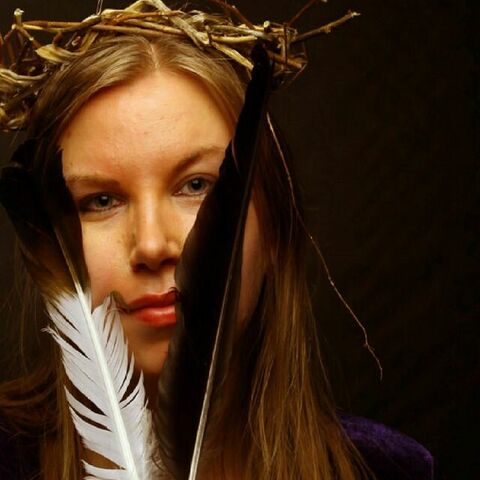
One of the most respected ones was Ukkoslintu,
The thunderbird,
Also known as eagle.
Eagles are massive birds,
And seeing them is always impressive.
Eagles tend to prey just before the storm.
For the ancient Finns,
Seeing an eagle flying was an omen of approaching thunder.
Eagles are connected to the myth of the phoenix.
They can literally recreate themselves.
When an eagle gets old and its feathers start to fall off,
It can choose to die,
Or it can pluck away all its old feathers and grow new ones.
This,
In fact,
Can extend the lifespan of the eagle.
Myths about the thunderbird are common all over the world.
In many cultures,
Eagles are symbols of the thunder god.
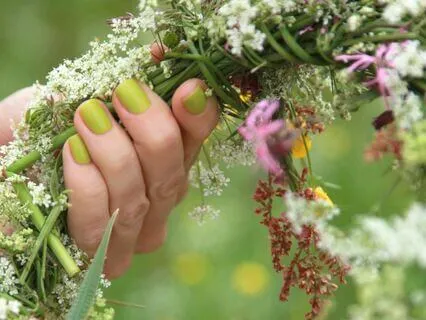
One of the old Juhanus decorations was to cut trunks from birch trees and put them both sides of the doors and gates.
These trunks were decorated with fresh flowers and leaves.
This tradition probably originates from Sweden,
Where midsummer poles are common.
This custom is not practiced in Finland anymore.
If there was a birch tree outside the house,
The tree was also decorated with leaves and ribbons.
Houses,
Saunas and stables were all cleaned and decorated with wreaths.
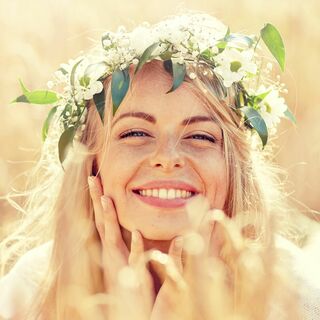
Children made wreaths from flowers and placed them to the foreheads of cows and horses.
Ukko was the god of love and fertility,
And he was a very popular god among women who wanted to get married or become pregnant.
Many spells were performed in the saunas and meadows that were filled with white flowers.
Here are some Juhanus spells and superstitions.
Pick seven,
Nine or twelve white flowers.
They all need to be different species.
Put them under your pillow and in the night of the summer solstice,
Your future spouse appears into your dreams.
Go to the forest on the night of the summer solstice and you find a spring or a well.
Look into the well at midnight and you will see your future partner.
Yes,
Many of these spells are about finding boyfriends and partners and girlfriends.
If you go into a well in the night between the 24th and the 25th of June,
Water has turned into vodka.
If you have a headache in the morning of summer solstice,
Spread some dew into your forehead and the pain will disappear.
If you have tinnitus in your ear,
Pour some morning dew into it and the ringing will stop.
If you drink morning dew on Sunday morning after the summer solstice,
You will get a beautiful singing voice.
And the last one,
Roll naked in the morning dew in the night and you remain beautiful for the rest of the year.
One of my early memories of summer solstice was that I woke up very early in the morning.
I was staying in the guest room of our summer cabin.
Our cabin is in the middle of the woods and it stands next to a pond.
My sister was sleeping and the bonfire was crackling outside.
I remember my father sitting on the pier watching the sun in the sky.
Of course the sun never went down.
There is always this very mystical atmosphere in the morning and the night of summer solstice.
It is almost eerie.
I always felt that it was the time of in-between.
You are in between the reality and the magical,
Invisible world.
Summer solstice and celebrations during this holiday have themes of strength,
Growth,
Success and wealth.
If we look at the symbolism behind ukonmakat,
One of them is abundance.
Not only did people wish abundance for themselves,
But for the entire community.
No one was left behind.
In the summer solstice you can practice some of these spells that were mentioned earlier.
I cannot guarantee if they work or not.
I have slept with flowers underneath my pillow,
But I don't always remember those dreams.
It still can be fun entertainment whether you believe them or not.
Finland has two deities of the sun.
The first one was a male deity called Päivä and he had a daughter called Päivätar.
Päivä means a day in Finnish and in the dialects of eastern Finland.
Päivä literally means the sun.
We don't have much information about her,
But it is believed that there was a large cult back in the days dedicated to her all over Finland.
Päivätar is connected to bees and honey.
She is the creator of bees.
Honey is the golden nectar and it has the color of the sun.
Honey represents pleasure,
Sweetness,
Truth and knowledge.
The energy and the messages that we get from Päivätar is fiery energy of the sun to propel us forward.
It is energy of action.
Päivätar encourages us to live our lives to the fullest.
She is the goddess of warmth and life.
One of the things that we can do is to have a moment to count our blessings.
Give thanks of the opportunities that you have been given.
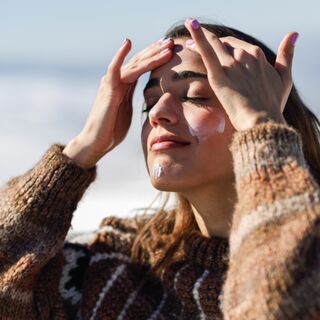
You can do this by finding a quiet spot,
Preferably in a place where you can see the sun above you.
Perhaps it's on the garden or maybe sitting on a sandy beach.
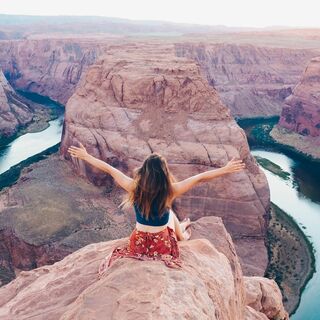
Raise your hands towards the sun and thank all the positive things and loved ones in your life.
Päivätar is here for all of us and she looks after each one of us.
You can do a similar ritual of abundance with Ukko.
Go outside in the morning of the summer solstice.
Gather flowers and with each flower give thanks of the things that you have and the things that you work for to receive in the future.
Ukko,
Being an old man,
Is also the god of wisdom.
Be grateful of your education,
Things that you can learn from nature and things that you can learn from your experiences.
We are never going to be complete,
But learning from our mistakes and learning more about ourselves is part of growth and that is what summer is about.
To grow and to blossom.