And what is very interesting about Finnish pagan holidays,
We have lots of animals connected to different equinoxes and sapphats.
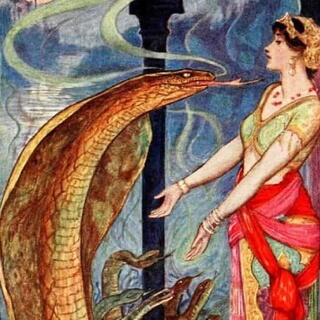
So animal that is connected to Ostara in Finnish context is snake.
So Ostara in Finnish we could say that the 19th to 23rd of March the spring equinox in Finno there called Matopäjda the actual day of spring equinox is called Matopäjda usually crashes to one of those days and Mato is old Finnish and it means a snake and a worm In modern Finnish language Mato means only snake Sorry warm and Kärme is snake but in the old Finnish language Mato meant both snake and a worm and all kinds of things that slither,
All kinds of bugs that slither so Matopäjda was the day of the snakes and the reason why snakes are connected to Ostara is that it was believed that during this time period the spring equinox that was the time when the worms and snakes they would wake up from their hibernation So it was really time to almost a rebirth of the snakes,
You know snakes can create their skin again So in a way it was rebirth of the snakes and at the same rebirth of the earth because in Finnish mythology snakes they have different kind of origin myths and very common is that snake is the creature of Alinen which means underworld and it kind of makes sense because the snakes they live in the ground and they are connected to different goddesses.
They're connected to Manutar and she's also known as Akka Rauni the earth goddess in Finnish mythology and some myths tell that Akka was the one who created the snake and sometimes snake is also connected to Lohi and Lohi is Finnish goddess of the shamans and witches and the underworld and goddess of the dead and the gatekeeper between this realm and other realms So snake is connected to both of these very interesting mythical goddesses and what happened around Mataupeja was that people were not allowed to let the farm animals to go to the fields just yet because there were so many snakes waking up and also there was all kinds of things a George connected to Mataupeja.
One was that all these George to create fishing rods for the coming year and the small traps for animals those were made around this time of the year because if you have been in Finland around March especially and around Easter there's lots of willows,
Willow trees that grow up and pop up from the snow that is melting and the willow trees they're really great when you want to have this kind of very bending tree very bending tree and those were used to make fishing rods and small traps So it was time to cut the willow trees and do them.
Willow crabs Willow ones are pretty powerful,
You know that and one was very interesting thing that there was lots of taboos connected to Mataupeja and this quite common in these holiday star connected to different animals so during Mataupeja women were not allowed to sue or to spinning or even bake bread because the shapes of the snakes they were forbidden not to create It was believed to bring bad luck and maybe the spirit of the great snake might get annoyed this would mean that if if you broke this taboo in the summer snakes might come to your homes and farms and really haunt people and other animals so people have this taboo not to create or do anything that is related to snakes They might like give sacrifices for the snakes and pray the snakes,
But not really do anything with the snake form Stuff like that.
It's very interesting People had quite dual relationship for the snakes I believe it was more positive in the pagan times but with Christian elements later on coming up and the story of Adam and Eve and forbidden food and all that it gave snake and like unnecessary bad reputation but definitely in the older times the relationship was more humane you could say that more respect was going on and in fact many families in pagan times and later on in Christian times they had so called Luli Elain,
Which means like a pet animal,
But it was like a white animal that was domesticated half half,
So it could be a deer or a cat or a snake that lived in the in the farm Occasionally,
They might go like away for a long long time and then come back,
But the families would feed them and for example the snakes if there was a Luli Kärme,
The pet snake the people give them milk and other kind of goodies for the snake and it is believed that these kind of pets half domesticated animals they brought good luck for the house and especially snakes because the snakes they were connected to the underworld so they had also already this kind of shamanistic aura around them this kind of mysterious mysterious aura and the way that snakes were connected to Manutar,
The earth goddess This was believed that if you take out the snake Manutar will give you lots of luck and abundance when it comes to your life and anything that you do around nature and crops,
How good the crop is going to be and food for the family everything will be wonderful and wealthy and harmonious so Matopeewa,
It wasn't only the day when the snakes woke up,
But it was also the time when Akka,
Manutar,
Rauni the earth goddess,
That's the time when she woke up as well.
This is very common in in pretty much in all mythologies in northern hemisphere that are connected to the wheel of the year or star ice time when the goddess wakes up in many myths,
So it's the same in Finland and it is very interesting the way people have this very dual relationship to snakes and especially when it came to snakes using snakes parts in folk magic many people when they found for example snakes skins in nature they they were they were used for protective magic and I have a video about snakes in Finnish and Baltic mythology.
I will put a link to the description box so you can check that out and in Lithuania Lithuanians were known as the snake people in the pagan times because they worshiped snakes as one of their totem animals and in Finland we have proofs that we have some kind of similar worshiping ways worshiping patterns towards the snake that the Lithuanians had and other people in Baltic countries that was the part of the snakes especially if it was a snake skin that you can find from nature they were buried to the different corners of the house to protect the house because the snakes were believed to be holders of very powerful magic and also sometimes could be snake tails or snake heads that were buried but of course it's better that you don't need to kill the snake yourself you can find parts of snakes from nature in Finnish mythology we also have this kind of magical totem it's called the Kärmekke,
The stone of the snake or egg of the snake.
It wasn't real a Snake egg it was a stone that was shaped of an egg.
It was usually white People believed that if they would find a stone like that it was like a philosopher's stone or alchemy stone white people would gain huge amount of wisdom and they would suddenly understand the languages of all the animals so it's like a folklore legend about the mysterious snake egg,
Snake stone,
Kärmekke and then unlike in many other countries especially in western world when witches are connected to Samméin and to October in Finland and in Sweden and many parts in Scandinavia witches they are really connected to Easter,
Witches arrived around Easter and I will when I get to my Easter in Finnish pagan holidays and Easter then I will tell you more about the connections between witches and Easter but definitely in Finnish pagans and witches were believed to be seen around Matapäevä especially they arrived You could see witches flying on broomstick in spring equinox and Matapäevä they were all over and it's very interesting and also when people did spells around Matapäevä in the willows there is that willow twix and this is something also connected to Finnish Easter celebration so people would cut those willow twix and they would do they would use them like once and they would do spellcasting with the willow twix and there's lots of different kinds of spellcasting that you could do with those twillow twix and and especially people get lots of better forecasting around Matapäevä one was that there was a full moon right before Matapäevä that would mean that it would be sunny during the next day and there would be frost in the night very typical Finnish spring Okay,
This was the story of Matapäevä I hope you enjoyed this if you really like snakes and feel empowered with the snakes you might want to research this holiday even more and snakes in Finnish mythology because it's very interesting.