This video is going to be about the reindeers and reindeers in the Sami mythology and the culture as well.
I'm almost finished with my series on Finnish animals in Finnish mythology but the reindeers in the Sami mythology.
So those of you who are new to my channel,
I'm from Finland.
I actually live in Wales where I study in the UK and I have Sami ancestry from Finland and from Sweden and majority of the Finns are descendants of the Sami people.
The Sami people are the native inhabitants of Lapland and Lapland in Sweden,
In Finland,
In Norway and Russia.
So it's a very wide area and among Sami people there are different tribes of Sami people.
There is different languages,
Different Sami languages and Finnish language itself is based on,
Well proto-Finnish language is based on proto-Sami language and there's like Northern Sami,
There's Kota Sami,
There is Inari Sami,
There's different types of Sami languages and there's different types of Sami people,
Sami tribes.
For example in Norway they have Sami people that are,
Excuse me,
Their lifestyle is more around fishing and then there are Sami people there that are more for reindeer herding and so on.
So it's,
There's many different types of Sami and of course in these modern times many of the Sami people they have mixed together with the nature population.
For example one of my Finnish friends,
She's a Sami and she's also a Finnish and she lives more south but her home is there in the north.
Yeah,
It depends on the person and of course the whole Sami lifestyle has changed tragically especially within past decades but I think also has the Finnish life changed tragically,
Not tragically what's the word?
It's not tragically,
Fucking English,
Dramatically.
Yeah,
I found it.
One of the essence in the Sami cultures is the reindeer herding and I think Sami people overall are famous for being the reindeer people so it makes sense that reindeer is one of the Sami's totem animals.
They have several totem animals including bear and the swan.
They're also Finnish totemic animals but let's focus on the reindeer.
What I have done my research,
First of the inhabitants of Finland,
They were some kind of Sami tribes thousands and thousands of years ago but they did not really straight away started to herd the reindeer.
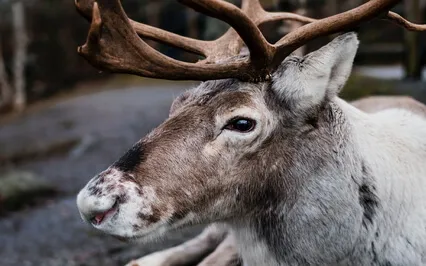
They were most of all hunters and fishermen so the reindeer business started around 500 AC or something like that and it started from the fact that Sami people started to tame the white deer,
The reindeer and this started this kind of companionship and this was before this kind of economical business trading things that we nowadays have but this was more having a reindeer more as pets and I guess pet companions something like that and earliest written documents from people owning reindeer they come from 900 AC and slowly their lifestyle started to go more and more entwined with the reindeer.
The Sami people they got milk from the reindeer,
They got flesh from the reindeer and ate it,
They got their clothes from the reindeer first.
Reindeer helped them to pull heavy things like horses,
Well you cannot ride with the reindeer so I think there was a scene like that in Frozen,
Not gonna happen.
Anyway,
So reindeer became more and more important animal and in 16th century there was this major lifestyle change where when in the past the reindeer herding it happened in one place that people collected certain amount of reindeer to one place and they had their little hut there or their tents or something like that and that's where they kept the reindeer and human beings they started,
The Sami people they started to measure their wealth with their reindeer.
But there came this major change in the 16th century that Sami people started to live more in terms with the reindeer to follow the natural cycle of the reindeer.
For example when the reindeer started mating they started to follow the reindeer to their mating places and when the reindeer gave birth the reindeer went to a certain place to give birth and Sami lifestyle became more a nomadic lifestyle and they started to follow the reindeer.
One reason for this major change was the meat industry.
Can you believe that?
It is that because those places where the Sami family had lived for maybe centuries they started to,
What's the word,
The food ran out.
They had fished the lakes and ate the other animals so then they realized that when they followed the natural cycle of the reindeer the reindeer produced more and lived better and longer life perhaps.
So that was the main reason to start the nomadic lifestyle,
The reindeer meat.
I'm a vegetarian these days personally.
When I was young I already ate reindeer meat.
It's quite expensive and it's very salty but if you think about it it's that kind of food you can survive it when it's very very cold and it gets cold.
Anyway,
This kind of nomadic lifestyle does not exist anymore in Lapland of Scandinavia at least.
Among some Siberian tribes,
The Uralian and Finno-Ukrainian tribes in Russia and in Siberia basically,
Near the Arctic Sea,
Near the Arctic Sea they still have these tribes that follow this nomadic lifestyle and their reindeers they go from one place to another.
I personally think even though it is about reindeer meat it is much more animal friendly approach to take care of reindeers.
But we don't have this anymore in Scandinavian countries.
It stopped around 18th and 19th century because of political issues and the,
I'm sorry,
Checking my notes here,
Because of drawing the national borders.
For example the borders between Norway and Sweden and then Finland got independent in 1917.
So they drew these lines between the countries and also between Finland and Russia and you know.
And that was the end of nomadic lifestyle because they started to build these fences and people had to keep their reindeers in one place after that.
And of course in many ways it has been very harmful for Sami people as well,
Which is quite sad because major deals with Finns for example are descendants of the Sami people.
And nowadays there is electric fences when there is the border so reindeers cannot cross the national borders and Sami people they have the,
I have to check the English word for my phone,
They have these snowmobiles.
So it makes easier to watch over the reindeers I guess.
So that is the current situation of reindeer herding or the history of the reindeer herding in Lapland.
So let's go to mythology which I think it's always the most interesting part.
There is this legend that in Sami folklore when there is a white reindeer,
An albino reindeer that is the most magical reindeer and depending of course what is the Sami tribe where you come from they all have different legends.
So the white reindeer is still very common especially with those Sami tribes that have reindeer culture.
So it is believed that the white reindeer is the leader of all the reindeers and if a man would catch a white reindeer that would be a very good omen and bring much good luck for the reindeer herder.
This totally make belief for this kind of reindeer spirit it has been a motive to take good care of the reindeer.
And in many ways like in Finland and in ancient Finland example when they killed a bear the hunter would pray for the bear spirit to find good place in the universe.
Same way it was with the Sami people when they hunted the reindeer they prayed for the spirit of the great reindeer to take care of those reindeer that were killed or their spirits.
Well this totally believe it.
I doubt that it exists among modern reindeer herders and their electric fences and snowmobiles.
I guess it doesn't exist among Finnish hunters either.
But that's the way Olaf's lifestyle has changed.
The Sami people they also sacrificed reindeer for the great reindeer spirit and usually the reindeer that was sacrificed it was the best reindeer of the herd.
And most handsome reindeer.
Of course this is not a habit that is practiced these days.
But it's one of the oldest traditions is to sacrifice the is to take the reindeer horns no antlers and hang them to the Seda and Seda it's like a sacred crow or worshiping place of the Sami people.
In Finland we call them Heese.
So the Seda it was usually maybe like tree formation or stone formation very big stones so they would put the antlers on the top of it and then they would go there and pray for the great reindeer to give them luck with reindeer.
It was believed that the reindeer spirit it was might have been a white reindeer or this kind of hybrid between a man and a reindeer.
So it would be this kind of reindeer hunter.
You know in many many many many cultures in history there are these god characters that have antlers.
Like in Keitinkin Tochi there is kernudnus and pan in Keitinkin Tochi he often have some kind of horns so it's not unusual.
Reindeer they had very significant meaning for people's lives because basically the whole life was around reindeers.
They lived with the flesh of the reindeer and drank the milk of the reindeer and all their clothes were made from reindeer fur.
But of course the more clothes become modern day more it goes to the reindeer flesh and Sami people become more modernized and get other influences.
Still all the reindeer parts they were believed to have very magical qualities like skin had magical qualities,
The fur had magical qualities,
The milk of the reindeer magical qualities and especially the horns they were sacred.
They were up to the sky so they were very very important part of the reindeer.
Sami people they have very special connection with the bones not just bones of the reindeer but bones of humans and all the animals and the nature connection of the Sami people that is very special and ancient Finns he also had very similar connection like I talked about the releasing the bear spirit after you have the bear and having that kind of what's the word?
Forget in English today.
Respect but also like gratitude for the animal or the nature of forgiving the animal.
That is something we lack in today's society but that is the way things were in the past in the totemic shamanistic belief system and of course many shamans also had horns in their heads or when they dressed up as a animal or trying to connect with the spirits.
If you want one wanted to connect with the great reindeer the shaman would probably dress up into reindeer fur and put the horse and layers to their head and performing a ritual.
Sami children they were taught when they were little that if they would find a dead animal or the bones of the dead animal they would need to collect all the bones together and build the animal from the bones and then bury it so that when the skeleton is complete the animal would continue its life in the afterlife.
So this is why people they were buried there all the parts there and same with the reindeers like it was bad luck to bury a reindeer if it wasn't completely build the skeleton unless if you took the horns then you would use all the other parts to some other purposes.
It was believed that reindeers would continue their journey their life in some other form in some other space.
Some of the Sami tribes believed that they were descendants of the reindeer.
This would lead that in some mythology there are lots of stories of were reindeers and people who turn themselves magically to reindeers.
In what is now Russia in Kula Peninsula it's an area around Murmansk there are Kula Samis and Kula Samis they have an ancestor who was this kind of reindeer shape-shifter man his name was Meandosh I don't know if I pronounced it right but Meandosh he was almost like a god-like figure for them the mystical ancestor and Meandosh his mother was a shaman a female shaman it's quite interesting actually that in Sami people in Scandinavian countries they're all men but then in Siberia and in Russia the Sami people there they can be female as well it's good so Meandosh his mother was a shaman and a Sami witch a cunning woman and she had ability to transfer herself into a reindeer so Meandosh's father was a real reindeer and mother was a human woman transformed into a reindeer so that created Meandosh and Meandosh when he was inside her home tent that was made from reindeer fur and be it from reindeer bones inside the tent he was a human but then when he went outside he would transform into a wild reindeer and he could not be human outside he could only be human inside in the tent and I think it's very interesting myth and the story goes that around the tent there was this river made from blood but I think it tells about this kind of idea that reindeers had their own spiritual place where they would go in the afterlife so in a way they would live in this kind of another reindeer dimension separate from the human world but Meandosh anyway he got very lonely in the tent and he said to his mother that he would like to have a human spouse but I was not very pleased but she loved her son so she went to the earth and found him a human spouse there are several versions what happened after that one is that they got lots of kids and all the kids when they would go outside they would all become reindeers there's one story that the woman the wife of Meandosh she would also return become a reindeer and there's also one story that is quite totemistic in my belief that Meandosh he would actually he would at one point become so much in touch with his inner reindeer that he did not return to the tent he would run wild in the hills in the tantra and the kids would follow him so the wife she would sacrifice a reindeer for the reindeer spirit and at the time the spirit of Meandosh would go inside the woman and she was sitting on a deer fur and half of the reindeer would go inside her as well so she would embody the spirit of her husband and in a way this is a myth about reincarnation so the reindeer ancestry would continue in the wife and when she would remarry a human the line would continue so this is what the Kualasami people believed that that was their ancestry still in the 20s and in the 30s the Kualasami people they hope this myth in very great value but I think nowadays they see more as a fable but in totemic belief systems and in cultures this kind of story where there is a animal that becomes like a clan symbol it usually starts from this kind of story where there is an animal father or mother of the tribe it can be an otter or a crow or bobcat or wolf you know you can find this in many cultures in native american cultures in celtic cultures in finnish mythology in slavic mythology you know it's universal but that is very common in totemic belief systems quite often the animal also represents the way of life of the certain tribe and for example otter could be something a tribe that would live near water reindeer would relate to earth if you have a bird totem more around more about air maybe hunting birds or something or looking for the stars and you know it's an elemental thing as well this motive of any kind of idea of becoming a werewolf or werebear or werebird or whatever shapeshifter i think it comes from this kind of primal idea that humans have looking for the sky and wishing i could be a bird or any other animal be free of human world and become totally free so i think that is the main motive in the reindeer story that watching the reindeer running on the hills there would be that kind of certain freedom if someone wants to see a absolutely the best finnish horror film this in my opinion white reindeer it's really really good it's an old black and white film from 1952 and it tells about this uh sami woman who is also a witch and she she casts this spell to make all the men want her oh well she goes to the shaman to ask some help in that area and then she becomes a were reindeer so i'm not going to spoil the plot for you i'll put a link to the description box if someone wants to see the trailer i think you can find on youtube anyway it's a really creepy film even though it's black and white and what there is in my camera oh there's a fly go away oh it's a really good film but i think it's it's a bit silly because um she's really like where reindeer she gets thanks and all it's funny that's creepy and creepy and funny so if someone wants to watch a quality finish um horror film i recommend that there are so many many bad fitness horror films that i've seen so i will stick with the classics okay these were some of the sami stories in um about reindeer so thank you for watching guys