The day of nuutti was the end of the holiday season.
Still today in Finland a lot of people get rid of their Christmas trees during this day.
Nuutti was a joyous festival and all the household items that had been put away for the holidays,
Like spinning wheels,
Were brought back inside and people were allowed to work again.
As usual this festival also included several mummers.
They were known as nuutti pukki.
These mummers were men and women who wore sheep and goat furs and their faces were covered with masks or painted with black sat and they wore fake beards.
Some of them had a staff with a bundle wet leaves on top that they used to fan people.
These mummers were rather provocative.
They visited houses and asked if there was any yeast left.
If there was no beer the mummers took the plugs of the empty canisters and sang scat songs.
People were expected to give foods and drinks to the mummers if they were offered these things.
The mummers sang and thanked for looking after them.
When the mummers went from house to house people often joined them.
After visiting each house the mummers drew to the wall how many tankards were served to them.
The images remained there for the rest of the winter to show that which houses were generous and wealthy.
In the end the mummers collected all the drinks and foods together and took them to a large house where there was a dance.
The entire village arrived in the evening and had a great party.
The name Nutti comes from a Danish saint called Saint Knud and after a Danish prince Knud Lavard.
They both died a martyr death in the early middle ages.
Lord Knud died on the 7th of January in the year 1131.
He was killed by his cousin after the Christmas festivities.
7th of January was the original day of Knud.
The date was changed in the 18th century.
We don't know exactly why but one of the theories was that it was meant to replace the Viking yule celebration.
The provocative behavior of these mummers had a deeper meaning.
Back in the days it was possible for the mayor to forbid mumming during this day.
Because of all the mayhem the mummers represented an old Scandinavian tradition.
The old belief that the ancestors came to visit their old homes during Christmas time and when the festivities ended it was necessary to drive these ghosts and spirits away so they would not stay wander around or haunt the family for the rest of the year.
Wearing a mask and dressing up was a way to prevent the spirits to see who was trying to chase them away.
Wintertime is a time of great reflection.
In many cultures it was believed that land was dead and the sun was sleeping during this time.
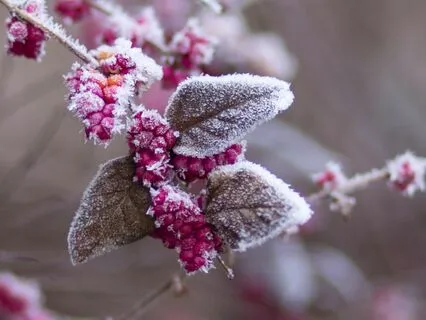
There is great beauty in winter.
Very often when I have traveled abroad people have asked me how do we finscope during winter when it is so dark and there is little daylight.
I will tell you a secret and that is snow.
Snow itself reflects light.
If it is a sunny day snow reflects the sunlight so it can be very bright outside and during the night snow reflects street lights and if there is moon in the sky snow reflects the moonlight.
Especially during December you can see lots of flames and torches and candles and of course Christmas lights.
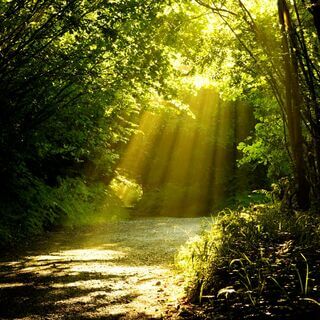
We can find beauty in the darkest of times.
One of the Finnish gods associated with winter is Tapio,
The forest god.
He is the husband of Mielikki,
The goddess of hunt.
According to the folklore when there are winter storms in the woods Tapio is cleaning the forest.
This can be seen as a metaphor to get rid of the old and bring in the new.
The symbol of Tapio is the spruce tree.
Spruce is an evergreen tree and the evergreen tree symbolizes rebirth.
Winter itself symbolizes transition,
Getting rid of old habits and creativity.
Getting rid of old habits is probably familiar to most of us in the shape of the new year's promises.
We may not always be good at keeping our promises but we usually start with good intentions.
Here's a little spell that you can do if there is a habit that you wish to quit or if there is something that you want more into your life.
Back in the days when people had their first Christmas trees the tree was the symbol of the tree of life and people decorated the tree with the things that they wanted to receive from gods.
For example a coin in a tree could symbolize money.
Apple could symbolize love as it is a symbol of Aphrodite.
Small socks could symbolize pregnancy and so on.
One of my bad habits is procrastination.
I could hang a microphone ornament to my Christmas tree to symbolize that I am actually pretty productive on Inside Timer and on my different podcast projects.
When I put my mind into it.
If you want to get rid of a bad habit think what is that you can replace the bad habit with.
If you want to quit smoking don't hang cigarettes to your tree.
Think what it is that you can replace the smoking with.
Maybe it could be dancing or maybe you can travel somewhere with the money that you are saving.
Find an object that symbolizes the passion of yours that you can replace the bad habit with.
Candles were another way to have an eternal flame within the home.
They symbolized the light and warmth of the sun and were used to chase away evil spirits.
Bells were often rung during the winter solstice to drive away demons that surfaced during the dark time of the year.
They were rung in the morning as everyone began to wake to chase away the dark days and herald the warmer brighter days following the solstice.
This is another tradition that we can implement in our lives.
Ringing bells is also uplifting and the energy of the bells is very purifying.
Thank you for joining me on this journey to learn more about Finnish gods and goddesses and all these old festivals.
Each season has something to teach us and each time the wheel turns there are new adventures behind the corner.
Namaste.