The day of the horse was celebrated on the 26th of December.
Nowadays this holiday is known as Tapaninpäivä,
The day of Saint Stefan.
There are many stories about the origin of the horse in Finnish mythology.
The ancestor of all horses was a magical horse called Iku-Tihku.
Iku-Tihku was made by the trolls from fire and ice.
This cold horse could only walk on land among humans during wintertime.
He lived in the underworld and was connected to the element of water.
He could move between the different rivers in Tuonela,
The underworld.
Trolls used him as the model when they created all other horses,
But these horses were made of iron.
Iku-Tihku was a shamanistic traveler who could move between the different worlds.
He enjoyed staying in the world of men,
And he could deliver messages between the living and the dead.
In other stories,
Horses were created by a horse goddess called Tahvatar.
She was also known as Tahvanus.
She has similarities to the Celtic goddess Epona.
Epona was the protector of horses,
And she rode among men on a white horse.
Epona was worshipped all around Europe,
From Britain to Hungary.
The colors of Epona were white,
Yellow,
And gold,
And her symbols were cornucopia and young foals.
She was the goddess of fertility and well-being.
The first written mentions of the Finnish Tahvatar appeared after the Reformation.
It is possible that stories about her were told in folklore before that.
Later on,
Tahvatar was turned into Tapani,
Which is the Finnish name for Saint Stefan.
In Christianity,
Stefan is the saint of builders,
Bricklayers,
Travelers,
And the ill.
During the Middle Ages,
When Finland was converted into Catholicism,
For a long time,
The old pagan faith existed.
Saint Stefan became almost a god-like creature,
Similar to old Finnish pagan gods and goddesses.
He was also known as Matkateppo,
The protector god of the travelers.
The church leaders did not like that there was a pagan festival dedicated to horses.
Stefan also became the protector of horses and cattle.
Originally,
Saint Stefan didn't have any connections with horses or other animals.
Later on,
The Day of the Horse became the Day of the Horseman.
In the 20th century,
Finland was an agricultural society.
Horses were valuable,
For they were a great help on the farm and when traveling.
The magic and spells related to the Day of the Saints Stefan were mostly connected to the well-being of horses and owning good and healthy horses.
In Finland,
Eating horse meat was frowned upon because horses were such highly respected animals.
There were many pagan customs related to the Day of Tapani,
Including many of the old Kekri customs.
Many of the old Kekri customs.
If somebody overslept in the morning of Tapani,
People made all kinds of tricks on them.
In some areas,
There was a custom to wake up early and warm up the neighbor's sauna as a joke.
Mummers visited houses during Tapani to joke around.
They often came to visit very early in the morning when people were still sleeping.
The leader of the mummers was Tapaninpukki.
This character was different to Kekripukki and Nuttipukki,
Who often dressed up as half-man,
Half-animal.
Tapaninpukki dressed up as a wealthy man,
A baron or a count.
He had servants,
And they rode with a hobby horse.
Sometimes the horse was made of straw lanterns.
This master had a mask on his face and a pillow inside their coat.
The servant asked if the master could enter the house,
And then the master would perform a song or a play.
Tapaninpukki is very likely based on Saint Stephen himself.
Tapani was a time to be friends with neighbors,
And there was a custom to visit neighbors and family members.
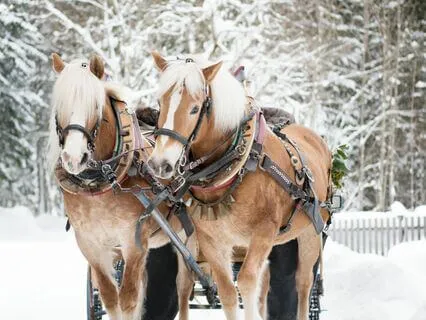
The most common custom was a sleigh ride.
This was a fun event.
People sang,
Made noise,
Laughed and rang bells.
In Savonia,
It was customary to wake up early,
Warm up the sauna and take a bath.
After lunch,
Family went on a sleigh ride.
The horse that got the honor was a first-time runner,
To make sure that the horse would become strong and capable.
Later on,
The sleigh ride became something that was done after,
Visiting the church and families competed whose sleigh was the fastest.
At some point,
The holiday became more about horsemen rather than horses,
And this led to suspicious thoughts about women.
If the first person you encountered this day was a woman,
It was a sign of bad luck.
If the first visitor was a woman,
Sometimes they were not even allowed to enter the house.
Fortunately,
These superstitions have vanished.
Another interesting custom related to tapani was to eat in a unique place,
Like in a stable or a barn.
Still in the 19th century,
One might get a fine if they celebrated pagan holidays that were not approved by the church,
And those who preferred the pagan holidays celebrated tapani in secret.
If someone got caught,
They might explain that they were eating in the barn or a stable,
Because that is where baby Jesus was born.
People left sacrificial gifts to the spirits that lived in the yard and the tonttu,
The protector of the house and the stable.
Sometimes beer was mixed with the rye that was fed to the horses.
Other animals were pampered too.
A new feeding dish was carved for the pigs,
And the pigs were served porridge.
A silver coin was tossed to the bottom of the horse's drinking vessel.
Another trick related to this day was to sneak into the neighbor's barn and give way too much hay for the animals before the family woke up.
This was believed to decrease the good luck of the neighbor's farm.
It was better to lock the stable doors carefully the night before.
Tapani was and is an excellent time to cast spells and forecast the future for men.
The spells were often connected to good luck with horses and for women.
Spells were often about getting married and love spells.
Other popular spells are about money and wealth.
People placed amulets on the walls of stables and drew symbols,
And food was taken to the sacred groves.
Many of these spells were connected to the characteristics that are related to horses,
Such as freedom,
Fastness,
Loyalty,
Fertility and family.
The spirit of the horse was honored with apples and porridge.
Colors related to the day are the colors of horses.
Brown,
White,
Black and yellow,
Green and blue.
If you would like to celebrate the spirit of the horse during this day,
And riding is not an option,
You can lit candles and decorate an altar with horse figurines.
Relationships with the neighbors were celebrated during this day,
And yet there was this element of choking around and making fun of the neighbor.
This duality in these relationships is interesting.
Ideally,
The relationship with the neighbors was respectful and friendly.
In this old Finnish pagan worldview,
There was a belief that each person was born with a certain amount of luck with them,
And it was believed that a person could earn more luck with good deeds,
Or that someone could steal other people's luck to themselves.
And sometimes luck could also be received as a gift from a god or a goddess or spirit.
Many of the holidays that include remembering one's neighbor had another side of it.
If it happened that the neighbors did not get along and were jealous to one another for different reasons,
They could potentially believe that the other person was trying to steal luck from them,
Which could lead into making all kinds of pranks.