Chapter 3 Breakfast was always the same.
Oatmeal porridge,
Which Valancy loathed,
Toast and tea,
And one teaspoonful of marmalade.
Miss Frederick thought two teaspoonfuls extra gavant.
But that did not matter to Valancy,
Who hated marmalade.
The chilly,
Gloomy little dining room was chillier and gloomier than usual.
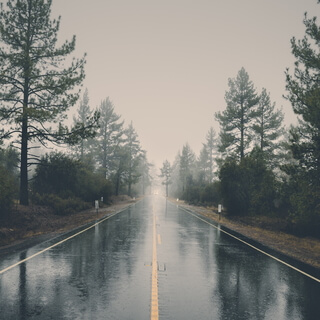
The rain streamed down outside the window.
The parted stirrings in atrocious gilt frames,
Wider than the pictures,
Clovered down from the walls.
And yet Cousin Stickles wished Valancy many happy returns of the day.
Sit up straight,
Doss,
Was all her mother said.
Valancy sat up straight.
She talked to her mother and Cousin Stickles of the things they always talked about.
She never wondered what would happen if she tried to talk of something else.
She knew.
Therefore she never did it.
Miss Frederick was offended with Providence for sending a rainy day when she wanted to go to a picnic.
So she ate her breakfast in a sulky silence,
For which Valancy was rather grateful.
But Christine Stickles whined endlessly,
On as usual,
Complaining about everything.
The weather,
The leak in the pantry,
The price of oatmeal and butter.
Valancy felt at once she had buttered her toes too lavishly.
The epidemic of mumps in Deerwood.
Doss will be sure to catch them,
She foreboded.
Doss must not go where she is likely to catch mumps,
Said Miss Frederick shortly.
Valancy had never had mumps,
Or whooping cough,
Or chicken pox,
Or measles,
Or anything she should have had.
Nothing but horrible colds every winter.
Doss's winter colds were a sort of a tradition in the family.
Nothing,
It seemed,
Could prevent her from catching them.
Miss Frederick and Cousin Stickles did their heroic best.
One winter they kept Valancy housed up from November to May,
In the warm sitting room.
She was not even allowed to go to church,
And Valancy took cold after cold,
And ended up with bronchitis in June.
None of my family ever wear like that,
Said Miss Frederick,
Implying that it must be a Stirling tendency.
The Stirlings seldom take coats,
Said Cousin Stickles resentfully.
She had been a Stirling.
I think,
Said Miss Frederick,
That if a person makes up her mind not to have coats,
She will not have coats.
So that was the trouble.
It was all Valancy's own fault.
But on this particular morning,
Valancy's unbearable grievance,
Was that she was called Doss.
She had endured it for twenty-nine years,
And all at once she felt she could not endure it any longer.
Her full name was Valancy Jane.
Valancy Jane was rather terrible,
But she liked Valancy with its odd,
Outlanding tang.
It was always a wonder to Valancy that the Stirling had allowed her to be so christened.
She had been told that her maternal grandfather,
Old Amos von Sparra,
Had chosen the name for her.
Her father had tagged on the Jane by way of civilizing it,
And the whole connection got out of the difficulty by nicknaming her Doss.
She never got Valancy from anyone but outsiders.
Mother,
She said timidly,
Would you mind calling me Valancy after this?
Doss seems so.
I don't like it.
Miss Frederick looked at her daughter in astonishment.
She wore glasses with enormously strong lenses,
That gave her eyes a peculiarly disagreeable appearance.
What is the matter with Doss?
It seems so childish,
Faltered Valancy.
Oh,
Miss Frederick had been a von Sparra,
And the von Sparra smile was not an asset.
I see.
Well,
It should suit you then.
You are childish enough in all consents,
My dear child.
I am twenty-nine,
Said the dear child desperately.
I wouldn't proclaim it from the housetops if I were you,
Dear,
Said Miss Frederick.
Twenty-nine!
I had been married nine years when I was twenty-nine.
I was married at seventeen,
Said Cousin Stikos proudly.
Valancy looked at them furtively.
Miss Frederick,
Except for those terrible glasses and the hooked nose,
That made her look more like a parrot than a parrot itself could look,
Was not ill-looking.
At twenty,
She might have been quite pretty,
But Cousin Stikos,
And yet Christine Stikos,
Had once been desirable in some man's eyes.
Valancy felt that Cousin Stikos,
With her broad,
Flat-wrinkled face,
A mole right on the end of her dumpy nose,
Bristling hairs on her chin,
Wrinkled yellow neck,
Pale,
Protruding eyes,
And thin,
Puckered mouth,
Had yet disadvantage over her.
It is right to look down on her,
And even yet Cousin Stikos was necessary to Miss Frederick.
Valancy wondered pitifully what it would be like to be wanted by someone,
Needed by someone.
No one in the whole world needed her.
Or would miss anything from life if she dropped suddenly out of it.
She was a disappointment to her mother.
No one loved her.
She had never so much as had a girlfriend.
I haven't even a gift of friendship,
She had once admitted to herself pitifully.
Thus you haven't eaten your crusts,
Said Miss Frederick rebunkingly.
It rained all the afternoon without cessation.
Valancy pieced a quilt.
Valancy hated piecing quilts.
And there was no need of it.
The house was full of quilts.
There were three big chests packed with quilts in the attic.
Miss Frederick had begun storing away quilts when Valancy was seventeen,
And she kept on storing them.
Though it did not seem likely that Valancy would ever need them.
But Valancy must be at work,
And fancy work materials were too expensive.
Idleness was a cardinal sin in the Stirling household.
When Valancy had been a child,
She had been made to write down every night in a small,
Hated,
Black notebook all the minutes she had spent in idleness that day.
On Sundays,
Her mother made her,
Thought them up and pray over them.
On this particular forenoon of this day of destiny,
Valancy spent only ten minutes in idleness.
At least.
Miss Frederick and Cousin Stickles would have called it idleness.
She went to her room to get a better thimble,
And she opened thistle harvest guiltily at random.
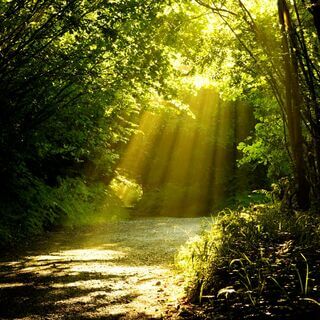
The woods are so human,
Wrote John Foster,
That to know them one must live with them.
An occasional sound terror to them,
Keeping to their well-trodden paths,
Will never admit us to their intimacy.
If we wish to be friends with,
We must seek them out and win them by frequent,
Reverent visits,
At all hours,
By morning,
By noon,
And by night,
And at all seasons,
In spring,
In summer,
In autumn,
In winter.
Otherwise we can never really know them,
And any pretense we make to the contrary will never impose on them.
They have their own effective way of keeping aliens at a distance and shutting their hearts to mere casual sightseers.
It is of no use to seek the woods from any motive,
Except sheer love of them.
They will find us at once and hide all their sweet,
Old-world secrets from us.
But if they know we come to them because we love them,
They will be very kind to us and give us such treasures of beauty and delight,
As are not bought or sold in any marketplace for the woods,
When they give uninstantly and hold nothing back from their true worshippers.
We must go to them lovingly,
Humbly,
Patiently,
Watchfully,
And we shall learn what a poignant loveliness lurks in the white places and silent intervals,
Lying under starshine and sunset,
What cadences of unearthly music are harped on aged pine boughs,
Or crooned in copses of fir,
What delicate savours exhale from mosses and ferns in sunny corners or on damp brooklands,
What dreams and myths and legends of an older time haunt them.
Then the immortal heart of the wood will beat against ours,
And its subtle life will steal into our veins and make us its own forever,
So that no matter where we go or how widely we wander,
We shall yet be drawn back to the forest to find our most enduring kinship.
Doss called her mother from the hall below.
What are you doing all by yourself in that room?
Nancy dropped thistle harvest,
Like hot coal,
And fled downstairs to her bedchairs,
But she felt a strange exhilaration of spirit that always came momentarily to her when she dipped into one of John Foster's books.
Nancy did not know much about woods except the haunted groves of oak and pine around her blue castle,
But she had always secretly hankered after them,
And her Foster book about woods was the next best thing,
The woods themselves.
At noon it stopped raining,
But the sun did not come out until three.
Then Nancy timidly said she thought she would go uptown.
What do you want to go uptown for?
Demanded her mother.
I want to get a book from the library.
You got a book from the library only last week.
No,
It was four weeks.
Four weeks?
Nonsense.
Really,
It was,
Mother.
You are mistaken.
It cannot possibly have been more than two weeks.
I dislike contradiction,
And I do not see what you want to get a book for,
Anyhow.
You waste too much time reading.
Of what value is my time?
Asked Nancy bitterly.
Dust don't speak in that tone to me.
We need some tea,
Said Cousin Stickles.
She might go and get that if she wants a walk,
Though it is damp.
Weather is bad for coats.
They argued the matter for ten minutes longer,
And finally Miss Frederick agreed,
Rather grudgingly,
That Valancy might go.