For this meditation,
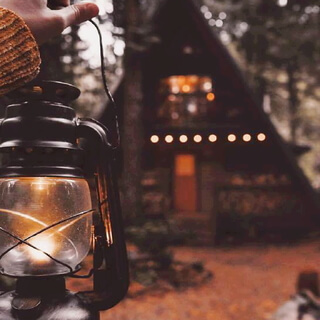
You can use a candle.
It can be a wax candle or an electric candle.
Light up the candle and take your seat.
Make yourself comfortable.
You can sit down or lay down on a yoga mat,
Whatever feels nice to you.
Close your eyes.
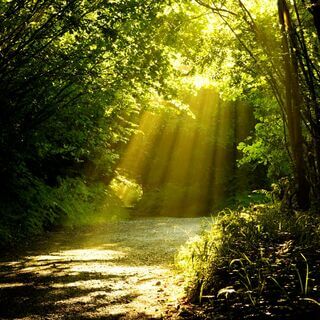
Imagine the Alps,
One of the most enchanting places in all of Europe,
Breathtaking and dangerous at the same time.
Imagine yourself on these high mountains,
Little villages here and there,
Goats and sheep wandering,
Eating grass and hay.
In the spring and in the summer time,
These hills are filled with colorful flowers and there is so much life everywhere,
The buzzing bees,
The birds making their nests and singing.
You can feel the grass underneath your bare feet.
When you run in this green grass and clear lakes just waiting for you to take a dive.
In the winter time,
It is a whole other story.
The birds have flown towards the south.
Mountains are covered underneath a winter blanket.
The snow falls softly from the skies.
In those days when the wind is still,
But when there is a winter storm,
This is not the place to be.
Then we rather sit by the fireplace,
Wrapped up in warm blankets.
These mountains are the home of Persta.
You can open your eyes for a moment and look at the flame on your candle.
Pay attention to the flame and the way it flickers.
Then close your eyes again and in your mind's eye,
See Persta.
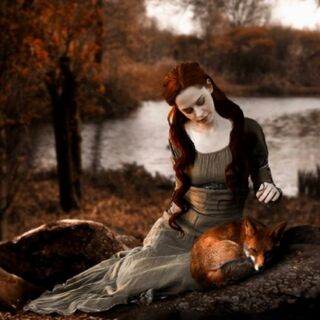
She is a tall woman with her long hair flowing onto her back.
It is dark brown,
Almost black and she is wearing a long white dress and in her hands she is holding a thick white candle and the warm flame lights her face and she smiles.
Persta is a deity originated from Germanic mythology and is closely associated with the winter season.
The goddess is often depicted in a white robe,
A symbol of purity and the harshness of winter.
And she is known to oversee activities such as spinning and weaving.
These activities are representative of the domestic arts that were a crucial aspect of life in the old Germanic societies.
Persta is a mother goddess.
She has a strong maternal aspect and she is the protector of people,
Foremost she is the protector of children.
She loves all children.
She also protects the elderly who don't have anyone to look after them and those who people have forgotten.
Persta is the patron goddess of those who have died because of a broken heart.
This goddess is compassionate and she has love for those who are in the outskirts of society.
I have even heard people comparing her to Princess Diana and Mother Teresa.
This was an ancient goddess who truly loved and cared.
She encourages us to look after each other.
She protected the orphans and the children who had passed away.
She was called the white woman or the white lady.
In the old folk tales,
Persta went to the children who had been abandoned,
Sometimes left to die,
And she took them with her and helped them to move on when the German regions were converted to Christianity.
Unfortunately,
Persta was one of those goddesses who were demonized.
She became an old hag who stole children.
You might still hear stories of this sort in the Alpine region.
The truth is,
The cult of Persta in the Middle Ages was so strong that the church was not able to convert her to their teachings.
So she was turned into the opposite of what she was originally.
Sadly,
This has happened to multiple ancient goddesses.
Persta is the mother goddess who holds three golden keys in her hands.
These keys represent birth,
Life and death.
Persta is the goddess who helps souls to move on to the afterlife.
These are not the only times when she appears.
Persta looks after those who are struggling in their lives and those who are in need of guidance.
Imagine the goddess holding your hand.
When you enter Persta's temple,
It is carved inside the mountain.
You can see that there are candles burning.
You enter into her cave and it is surprisingly cozy,
Almost like a gypsy's caravan,
With curtains and cushions and medieval tapestries on the wall.
There are animals in these tapestries,
White doves and the goose.
In some legends,
Persta is told to have the feet of the goose.
More likely,
She is a shapeshifter who can turn herself into a goose.
Persta is the protector of the wildlife of the alpine region.
In some of these tapestries,
You can see mothers holding their children and grandmothers and grandfathers,
Fathers with their sons and daughters.
And perhaps you see yourself and the people you love.
There are multiple spinning wheels in the corners and colorful yarns on the baskets.
Nowadays we think that knitting and things of that sorts are mostly women's hobbies,
But in the old times,
Men did knit as well and sometimes pinned yarns.
Knitting was something that a lot of people did,
Especially in the regions where the winters were harsh,
Like in Germany,
Switzerland,
Scotland,
Scandinavia,
Knitting was an important skill also for boys and men.
The colorful yarns in the baskets are just waiting to be knitted into sweaters,
Scarves and mittens.
Persta's presence is especially palpable during the Feast of Epiphany.
It is during this time that she is said to enter homes.
To inspect the spinning work that has been done throughout the year,
Persta is particularly known for her dual nature,
A characteristic that makes her a fascinating figure in folklore.
She can appear as a beautiful maiden embodying the serene and peaceful side of winter,
Or transform into an old hag,
A representation of the harsh and unforgiving side of the winter season.
This stark contrast reflects the dual nature of winter itself,
A time of beauty and hardships during the twelfth night of Christmas,
A period that stretches from Christmas Day to the Epiphany.
It is believed that then Persta roams the countryside,
And she is said to reward those who have been industrious throughout the year,
Bestowing blessings upon them.
Her story is a testament to the values of these societies,
Emphasizing the importance of hard work and taking care of others,
And the domestic arts.
Persta's role in Germanic folklore and tradition is significant,
And her story continues to be told,
Serving as a moral guide for many.
Persta is the protector of childhood and innocence,
Nurture your inner child,
Do not lose your childlike curiosity.
At the same time,
Persta is the goddess of phantoms,
The white lady who leads the phantoms from the darkness to the light.
She is the goddess of winter,
Because it is during the winter when the world is darkest.
But the candles she lit are the flickering lights of hope.
Slowly return back to this reality.
Open your eyes and feel yourself surrounded by love and compassion.
And you can blow the candle.
Thank you for meditating with me today,
Blessed Be.