Unlike other Lithuanian holidays,
Rasa does not include honoring the dead.
Rasa means dew.
Dew collected in the morning of rasa had magical qualities.
Herbs collected during rasa included healing powers and possessed great strength.
In the evening of rasa,
Young maidens gathered together to pick up herbs.
Common herbs of rasa were bilberries,
St.
John's wort,
Daisies and all yellow flowers.
Another important aspect of rasa was the kupole.
Kupole was also a Lithuanian deity.
He was the god of spring and vegetation.
Later on kupole came to mean a branched pole,
Which was placed upon the center of the festival area.
The top of the pole has a triple branch.
In Eastern Lithuania,
The story goes that one branch shines like the sun,
Second one like the moon and the last one like a star.
Young ladies who wished to get married played games underneath kupole.
They threw a thread over their heads,
Wishing that it would land on kupole.
In Prussia,
The Balts decorated their kupole with flowers and greenery.
This kupole stood next to the fields,
Close to the Rhine.
This had very likely to do with fertility of the land.
If kupole was decorated with nettles and fern,
It was believed to keep witches away and the following chant was sang.
Oi kupole,
Dear little kupole,
Where did you winter?
Where are you found in the summer?
Are you among the fragrant greenery or underneath a flower?
In winter I am covered in dawn,
In summer I play amongst the grasses.
Dew was most magical before the dawn.
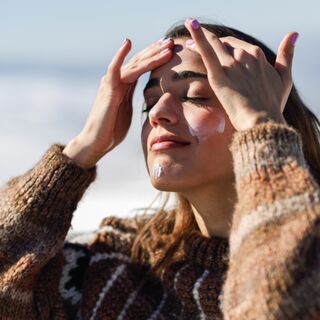
When one cleansed their face with dew,
Especially with dew that came from rye shoots,
Their skin would be clear around all year.
Young women woke up early and washed their face with dew and then dreamt about their future spouses.
The bathing and rolling in dew made one youthful.
During the night,
The dew was scattered into a cloth,
Which could be later used for healing in some occasions.
If one followed rituals carefully,
They could become clairvoyant and be able to see fairies,
Witches and other magical folk.
Rasa was a great feast.
People gathered together to eat,
Dance and sing.
Table was decorated with greenery and common foods of Rasa were beer,
Cheese and egg dishes.
Bonfires were a big part of celebrations.
These ritual wreaths were made from holy herbs and they were used to decorate homes,
Doors and gateways.
Women wore wreaths made from oak leaves.
During the night,
These wreaths were placed into the waters and were set to sail into rivers,
Ponds and lakes with candles attached to them.
If the two wreaths touched,
That could be seen as a sign of marriage.
Rasa was also the time for love spells.
One of the rites was to find a magical fern that only blossomed during one night of the year.
The fern had to be found in total silence and approached with respect,
For the fern was created by the thunder god Perkunas himself.
A finder of this fern would gain great wisdom and knowledge.
Rye fields were visited during Rasa with songs and blessings.
Rye was one of the main sources of food for the Balts and the welfare of the rye was important.
Tables were made of rye stalks and then casted into the fire.
Gates and gateways built from greenery were an essential part of Rasa.
Each person that entered became part of the Rasa rituals.
Maidens circled around one pole and men to the other.
Then they greeted each other as they passed,
Circling through the gates singing Dinah songs.
Rings were constructed.
Swinging also had a metaphorical meaning,
Representing heaven and earth.
Another custom was to jump over the ritual fire.
In the midnight there was the greeting of the sun when she was dawning.
Rasa was also known as the night of witches.
Raganos,
And many of the spells performed around this time,
Was meant to protect one from witches.
Baltic goddess who is associated with summer is Solei,
The goddess of the sun.
According to the legend,
Solei put the sun in her wagons that were put by two white stallions and by the end of the journey she landed to the sea with her horses.
She lived in a beautiful palace where she had a lush garden with multiple apple trees.
Apples were her symbols.
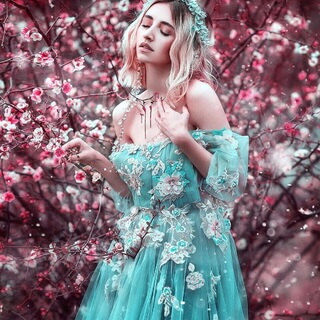
Solei is described to be a beautiful blonde woman,
The most beautiful of all the Baltic goddesses.
She was associated with love,
Abundance,
Beauty,
Happiness and family.
Perfect goddess for the summer solstice.
Here are some tips and ideas on how you can celebrate summer solstice or the Lithuanian rasa.
If you live close to a forest or a field,
Why not make a trip,
Either alone or with family and friends,
To pick some white flowers.
In Baltic magic,
Many plants and flowers were particularly magical during Midsummer Eve and the Midsummer Night.
Enjoy the time picking flowers.
Smell the flowers and enjoy their colors and their beauty.
You can take some of them home with you and place them on your altar.
Don't stay inside.
If there is a park or a field or a forest,
Go and have an adventure.
Explore your surrounding nature during the Sabbath.
Perhaps you will find an isolated place to perform a ritual.
If you run into a creek or a river,
Take a dip.
Latvians and Lithuanians made a great deal of divination during the summer solstice.
If you find an area with lots of ferns growing,
You might be able to gain the gift of foresight.
You can scry with water as well.
Use a bowl or use the surface of the lake as your mirror and look for patterns and images.
Scrying is a fun thing to do when celebrating summer solstice.
If there is a bonfire,
You can try to scry the flames.
If Sole is a goddess to whom you feel especially connected,
You can leave offerings for her.
She loves apples and apple blossoms.
Apple blossoms are particularly her liking,
And she likes to attach them to her long hair.
You can do this yourself as well.
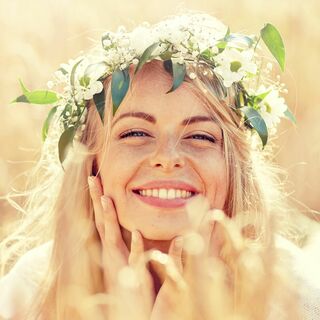
Another tradition that Polts still do today during summer solstice is making wreaths.
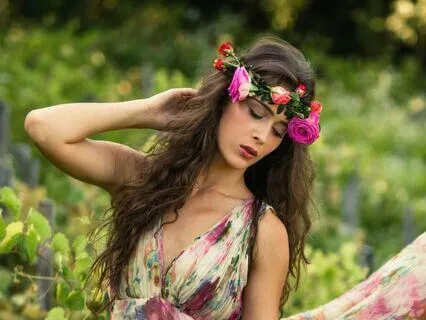
Make yourself a flower wreath and wear that with pride.
A flower wreath is a beautiful symbol of the earth and a representation of the goddess.