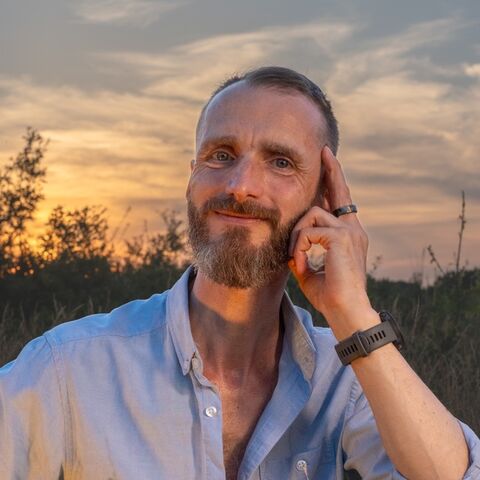
When I'm teaching meditation,
I'm often asked the question,
How do I stop my thoughts?
Really the question needs to be,
How do I wake up?
Thinking is here.
Thinking is what the brain does.
The thought,
I don't want to have any thoughts,
Is creating a resistance to what is arising in the present moment.
It's saying that I need to be somewhere else.
I need to be in a state where I'm not having any thoughts in order to be at peace.
Now it's true that we can get into a state in meditation where there is no thinking.
The Buddha taught that there are the jhanas,
And as we go up through these heightened states of consciousness,
We reach a level where thinking stops.
But when he was the seeker,
Siddhartha Gotama,
The seeker,
Who had left his palace in order to find freedom,
He went through all of these jhanas,
And he found that even though he could remain in them for a long time,
Eventually he would come out.
Thinking would resume,
And he was no more free from resistance or grasping than he was before he'd gone into these jhanas.
So simply stopping thought isn't the answer.
In order to become enlightened,
Siddhartha sat underneath the Bodhi tree,
And as he sat there,
Determined that he would not move until he knew the truth,
Until he was free.
Mara,
The embodiment of all unskillful mental states,
Arrived with his army,
And Mara gathered around Siddhartha.
His army,
Greed,
Lethargy,
Lust,
Desire,
Anger,
All of the unskillful mental states.
They readied their weapons,
And then at a sign from Mara,
They released their weapons,
Showering down upon Siddhartha as he sat in meditation underneath the Bodhi tree,
The tree of awakening.
Now,
Rather than resisting or fighting Mara,
Siddhartha sat and cultivated this state of allowing,
Presence,
Exploring,
Recognizing what was arising within him,
Recognizing the temporary nature of it,
Recognizing that everything that arises is also the nature to dissolve.
He saw the truth of impermanence,
And as he witnessed impermanence,
He also witnessed the fact that there was no fixed self here to be experiencing these thoughts,
And the sense of a solid self dissolved.
In that moment of seeing through the illusion that the ego would weave,
Of being someone that has to fight their thoughts,
Or have better thoughts,
Or arrive at some destination,
In that moment Siddhartha woke up,
And in waking up,
There was a realization that there was nothing there to fight,
Other than the appearance of the illusion.
It's as if we spend our life fighting a mirage,
Thinking we have to do something about the mirage,
Until at some point we look at it and realize it's only a mirage.
The mirage dissolves,
And even if it's still appearing to us,
We remind ourselves it's a mirage,
It's a dream,
It's not really here.
And so,
At that point of waking up,
The Buddha became the Awakened One,
And Mara realized he had lost his grip upon the mind and heart of Siddhartha.
Now Mara did still appear to the Buddha throughout his life as the Awakened One,
The Awakened One,
But the moment Mara appeared,
The Buddha would turn to Mara and say,
I see you,
I see you Mara,
And with that Mara would drop his lute and exclaim,
I have no hold on the Blessed One,
I have no foothold,
The Blessed One is free from me,
And then Mara would dissolve and disappear.
So I find this fascinating in that it suggests that even in the mind of an Enlightened One,
All of the unskillful mental states still arise.
The Buddha still had mental states of desire,
Fear,
Lust,
Anger,
Disgust,
Jealousy,
Pride,
That was still all arising within him and the thoughts associated with that.
But there was no foothold,
There was no way that they could start to build a sense of identity,
There was no thinking,
Oh,
That person is really rude to me,
Oh,
I'm really annoyed with them,
Oh,
I'm going to show them,
None of the narrative could take place.
Instead,
The Buddha would simply observe,
Oh,
I see you Mara.
So how can we do that as unenlightened beings?
How can we start to cultivate that attitude?
One of the simplest techniques that is taught is as we're meditating,
To simply observe thinking,
Very gently,
Not in a judgmental or a critical way,
But as a thought arises,
We acknowledge thinking.
And in that act of saying thinking,
We see the thought dissolve.
In that moment of waking up,
We recognize that the thought is a temporary phenomena,
Arising within this space of consciousness and awareness,
Dissolving again.
So our work as we're meditating is not so much to have the right thoughts or to get rid of thoughts.
In fact,
My teacher Ajahn Sumedho,
I remember him once in a talk saying,
The thought I want to have a quiet mind is just adding another thought to a mind that's already busy.
We want our practice to be one of waking up.
Rather than one of trying to perfect ourselves or resist and reject the parts that we don't like.
Of course,
We choose how to act.
Alan Watts has a beautiful talk,
There Are No Wrong Feelings.
And in that talk,
He makes the point,
There may be wrong actions.
There may be actions that are unskillful.
And if we were to act on certain thoughts and feelings,
That might well lead us into unskillful behavior.
But there are no wrong thoughts or feelings.
And the Buddha himself says that thoughts and emotions do not create karma.
It's only action that creates karma.
So I can have whatever thoughts arise within me and witness them.
They only become volitional.
They only create karma seeds.
If I then move into the world and act on them.
So that means in meditation,
We can sit with whatever thoughts are arising,
Witness them,
And then observe them dissolving.
And this simple reflection of saying to ourselves,
Thinking,
Allows us to notice,
Okay,
That's thinking.
And of course,
Then there can be the contemplation of what is it that knows thinking that is not thought?
Whenever there's an observer,
There's an observed.
So there's something that is recognizing thought and saying thinking.
But that which is observing thinking isn't the thought.
So what is it?
What is that quality of attention that recognizes thinking and then lets it dissolve?
And so there are some teachings that we are already enlightened.
Our Buddha nature,
The clear light,
The true nature of our being is already here.
So we don't have to create it.
We wake up to it.
We come home.
So the question again isn't how do I stop thinking and how do I become enlightened?
It's how do I wake up from this illusion of not being enlightened?
How do I wake up from being caught in this world that is created out of duality,
Out of opposites?
This world that the Buddha described through the eight worldly winds where we're constantly caught in praise or blame,
Gain or loss,
Pleasure or pain,
Success or failure.
So we get pulled by these winds.
We're doing well,
Everything's going well and our thoughts are around,
Oh,
I'm so good.
It's like,
Oh,
People love me.
This is amazing.
Then we make a mistake,
Blame.
I'm useless.
I've got it all wrong.
Thoughts of failure.
Thoughts of success.
Then in our body we're noticing pleasure and pain.
Thoughts connected with,
Oh,
This is so nice.
Oh,
I love this sunshine.
It's like,
Oh,
It's so warm here.
Oh,
It's so cold.
Oh,
I can't believe how cold it is.
Then thoughts connected with gain and loss.
So what we want to do is,
Again,
Just cut through,
Cut through these thoughts.
The archetypal figure for wisdom in Mahayana Buddhism is Manjushri and he holds a sword and a book of wisdom.
The sword has flames on it.
So wisdom cuts through.
The way we cut through is by training ourselves as we sit in meditation and every time we get caught in a discursive thought,
Ah,
Thinking.
The Buddha also encouraged us to contemplate,
Does this way of thinking lead me to greater happiness,
Joy and peace?
Or does it take me away from that?
So we can use conscious thinking in meditation.
And if you notice,
Oh,
This way of thinking is taking me closer to joy and happiness.
I'm reflecting on the nature of experience.
I'm having a contemplation that is taking me deeper into my sense of being present.
Well,
Great.
Then we continue that.
If we notice,
Ah,
This way of thinking is causing me distress and worry and anxiety.
And then we go,
Ah,
OK,
Thinking cut through.
Our meditation is about training our muscle of attention.
When we first sit,
Our thoughts will be chaotic.
They'll be all over the place because we haven't trained our muscle of attention.
And so when we most need to start that training is when we're most easily put off because we start to meditate,
We sit for the first time and then it's like,
Oh,
My God,
I hadn't realized how busy my mind was.
It's like,
Oh,
It's so chaotic.
It's like maybe other people can get really zen when they meditate,
But it doesn't work for me.
And so we've got this misconception that meditation should be a space where it immediately creates this sense of calm.
Instead,
Meditation is a space where we witness the busyness of the deluded mind.
Constantly thinking about ourselves,
Thinking about situations,
Remembering the past,
Anticipating the future.
It's never ending stream of radio me chatting away.
Sometimes it's radio happy,
Sometimes it's radio doom and gloom.
Sometimes it's radio repeat as we just go into old familiar repeating patterns of thinking.
Again,
We simply recognize,
OK,
Thinking.
That sort of wisdom comes through thinking.
In the contemporary mindfulness based cognitive therapy,
A week course,
There's another reflection,
Which is to say to ourselves,
Thoughts are not facts.
So another way of cutting through with that sword is to remind ourselves,
Thoughts are not facts.
Just because I'm thinking something,
It doesn't make it true.
So you might like to play with these.
We need to take all of these approaches into the laboratory of our own life.
We play with them.
We go,
OK,
Maybe just thinking that works for me.
Maybe more of a contemplation.
Thoughts are not facts.
OK,
I notice I'm having this thought.
Ah,
Catastrophizing.
OK,
Just because I'm thinking something,
It doesn't mean that it's true.
When we get caught up in worries and anxieties,
I heard a lovely contemplation recently,
Which is to say to oneself,
What was my worry three worries ago?
Because the worry that's presenting right now will be presenting as this is so important.
This is the only thing that matters.
I've got to think about this.
So this is this is going to go on forever.
This is so significant.
I will never forget this.
This is awful.
I've just got to dwell and dwell and dwell on this.
And yet if we ask ourselves in that moment,
OK.
And what was I worrying about three worries ago?
Then we we recognize the impermanent nature of this state of worry.
I maybe can't even remember the self that was caught up in a worry three worries ago.
That self is dissolved.
And this current self is appearing within this dream state of wakefulness.
So some forms of Buddhism describe this state that we are in right now,
The waking state as a waking dream.
One that we haven't woken up from.
And from this waking dream,
We go to sleep into the sleeping dream,
And then we wake up into the waking dream again.
So that's why the Buddha is said to be the one that is awake,
Is woken up from this dream.
Woken up from this dream of duality.
Opposites creating the appearance of an ego in the world.
Woken up to his true nature,
To Buddha nature,
To the clear light of the mind.
So as you meditate,
Exploring this,
Noticing this tendency to get pulled into the eight worldly winds as you meditate,
Noticing when you get pulled into thoughts connected with praise,
When you get pulled into thoughts connected with blame.
Noticing as you get pulled into thoughts and emotions connected with a sense of gain or loss,
Pleasure or pain,
Success or failure.
And then see how it is to wake up to those thoughts.
Just as Manjushri holds his sword and cuts through.
We recognize thinking.
We have a question of what is it that knows thinking?
A reflection I received from one of the monks at the monastery where I used to live when I went back on a retreat there.
He uses this reflection in his meditation.
This that knows the person is not the person.
Let me just let that drop into the space of the meditation.
This that knows the person is not the person.
A bit like a Zen koan,
We're then left wondering,
So what is the this?
What is the this that is knowing?
And then we have to allow the discursive mind to let go of that because it's not going to find an answer.
The answer comes from the heart.
And finally,
A method that I use myself a lot is to say to myself,
I don't know.
Notice how often your thoughts will be presenting facts,
Presenting supposition as fact.
It's a disaster.
It's going to be like this.
It's going to be like this.
It's like,
Oh,
I know it's going to be.
And we're living in this drama of the world of our mind.
And yet so much of that doesn't happen.
I think it was Mark Twain who said something to the effect of,
I've had many terrible things occur in my life.
Some of them actually happened.
It's like we we catastrophize and worry and and so much of that doesn't ever transpire into into any lived experience.
So as these worries are coming through and as these these mental chaotic atoms of thought are occurring,
Then we can cut through them by by just saying,
I don't know.
It's going to be a disaster.
I know I'm not going to remember my speech.
It's like I'm going to make a fool of myself.
I don't know.
This thing that I really want to happen,
I know it's all going to fall apart.
I know it's not going to happen.
It's like I don't know.
What I can know is what's happening here now in this present moment,
And I can respond to that.
This reflection is something I started using in my own meditation,
And I think the seed of it was from Ajahn Chah,
Who was the head of the Thai forest tradition I trained in.
And he used to say,
Unsure,
Uncertain,
Don't know.
His contemplation when all of these different chaotic thoughts were presenting themselves,
Particularly catastrophizing thoughts,
Worry and anxiety,
Unsure,
Uncertain,
Don't know.
The ego loves its drama.
The ego loves weaving itself into existence.
And it's more than happy for you to be unhappy as long as it has a sense of existing.
So it will resist these processes as you want to contemplate and reflect in meditation.
It will bring up a sex fantasy to try and get you absorbed into that.
It will bring up feelings of anger about someone that's done you wrong,
And so that you'll get consumed in the sense of being an identity,
Feeling angry with someone.
That's Mara.
That's Mara presenting himself.
So what we have to do is,
Like Prince Siddhartha,
We have to sit in the middle of that.
As Mara's army was throwing his weapons at the prince,
Siddhartha simply sat there,
Recognizing all of this that was arising within him without any resistance and without any grasping.
And in that moment,
He became the awakened one,
Buddha,
The one who is awake.
All of Mara's weapons dissolved into flowers and fell around the Buddha as petals and flowers blessing him.
And at that point,
Mara knew that he had lost his power over the Buddha.
And likewise,
As I said,
Whenever Mara did appear to the Buddha afterwards,
The Buddha would simply turn to him and say,
I see you,
Mara.
And so we need to do the same with our own thoughts.
I see you.
I see you.
Thinking.
Thoughts are not facts.
I don't know.
This that knows the person is not the person.
Whatever method resonates with you and that you choose,
You might find your own contemplation that works.
But you want that sort of wisdom that you already have.
State of being awake.
And you want to bring that sort of wisdom through.
These thoughts.
Not to stop your thoughts or to have a better thought.
But to become awake.
To the nature of the thoughts that are arising in this present moment and then dissolving.
Having no more solidity than a mirage.
Or an unjuror's illusion.
I hope there's something there that you can use.
And of course,
As we meditate,
It's annoying.
Like having all these thoughts bubbling away is annoying.
But then recognising that very nature of the annoyance of the thoughts that we have is giving us that wisdom of duality.
As I sit,
There'll be a moment of feeling calm.
Then thoughts will come.
And then the thought will be,
Oh,
I want to be back.
I want to be calm again.
It's like,
Oh,
I don't like having these thoughts.
It's like,
Why can't I be calm?
It's like,
Oh,
I'm bored.
It's like,
Oh,
I'm so bored.
It's like meditation is so boring.
And then we notice,
Okay,
So onto this space of open,
Vast awareness is being imposed the thought,
I'm so bored.
I'm so angry.
I'm hungry.
Whatever it might be.
Final contemplation,
If you like to do something more visual,
Is that you can think of that spacious awareness as being like the screen of a cinema.
And if we think of the old fashioned cinemas where it was a projector and there'd be light coming down through the cinema onto the screen.
Our state of being asleep to our true nature is like watching a film and being totally absorbed in it.
Right now,
You're looking at this screen and you're seeing me and you're seeing the objects in my room.
You're not seeing the empty nature of the screen.
So it's the same as we sit and meditate and there are thoughts and desires and everything that's going on.
That's just like the film that's being projected onto the screen.
We're totally absorbed in the film.
And we're totally absorbed in the film.
And yet the screen has had drama,
Murder,
Sorrow,
Joy.
It's had sunrises and explosions all occurring on its surface.
And yet at no point has the screen been touched by any of that.
And so it's the same with our true nature.
All of this drama of lifetime after lifetime has occurred.
And yet at no point has our true nature been touched or defiled by any of that.
And our true nature is here in the same way that the screen is intimately there as all of the drama plays out upon it.
We just have to see through the illusion of the drama that's playing out on the screen and recognise the true nature of the screen.
And once we know our true nature,
Then all the drama can play out.
It carries on playing out.
It's still there.
But it's playing out from a place where I no longer feel that the drama is real.
I recognise that it's all an illusion.
It's all a game.
It's all a dream.
So another contemplation you can have as you meditate,
Rather than going into this duality of fighting your thoughts or trying to make your mind calm,
Is to simply contemplate,
Ah,
The mind is like a screen.
Look at all this drama playing out right now.
Wow,
How fascinating.
Look at this identity being woven into existence right now,
Right in front of this eye of awareness.
Look at how it takes form for a while and dissolves and change,
Shifts.
And yet at no point does it actually become this solid entity that I can really say is me.
So we watch the drama playing out,
Being projected and obscuring the clear light of our true nature.
Then we just stay with that sense of,
Well,
What is this subtle sense of bliss?
This subtle sense of just being okay,
That is underneath all of this,
If I can dive through it,
If the cacophony of the noise of worry,
Anxiety or boredom isn't drowning it out.
What is that warm glow,
Well-being and bliss,
That is actually my true nature,
That's been hidden,
Lost?
And it might be so lost that we can barely feel it.
But our meditation is about coming home,
Coming home to our true nature,
Waking up to being bliss.
The Buddha said that enlightenment has two qualities,
Bliss and wisdom.
And so we don't wake up to a cold,
Analytic wisdom of knowing the emptiness of everything.
We wake up to a wisdom that is also in a non-dual state,
So let's all wake up to bliss,
Wouldn't that be a wonderful thing?
If the whole world woke up and instead of fighting and being in a state of conflict,
Instead of feeling,
I want those resources,
Those are mine,
I want them,
I want them,
I want them,
I want them,
I want them,
I want them,
I want them,
I want them.
Being in a state of conflict,
Instead of feeling,
I want those resources,
Those are mine.
We just looked at each other and saw each other as being a Buddha,
An awakened one.
And that each of us,
Our true nature is bliss.
So I hope there's something there that you can use in your practice.
Do put in the comments anything that you're finding helpful and any of your own ideas.
Obviously there's other ways we can work with thoughts.
I'll make a separate video about how we actually work in meditation,
Because yes,
It's like,
How do we sharpen that tool of attention?
But these are some contemplations that you can use as you sit in meditation.
Bye for now.