Hello,
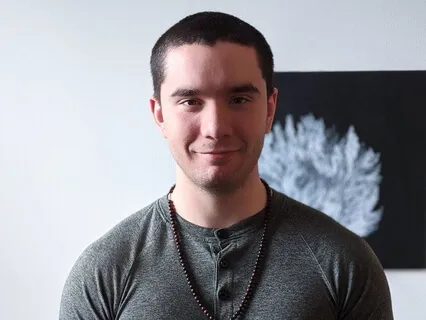
And welcome to episode 0 of Theological Rascality,
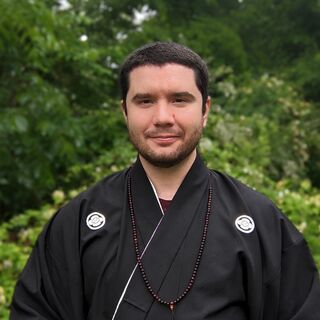
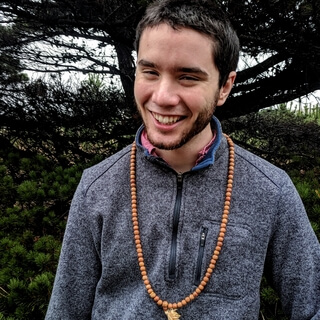
A new little project that I've started with a good friend of mine who is a Catholic deacon,
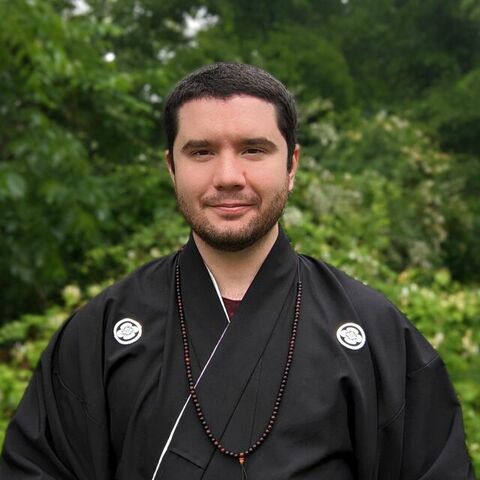
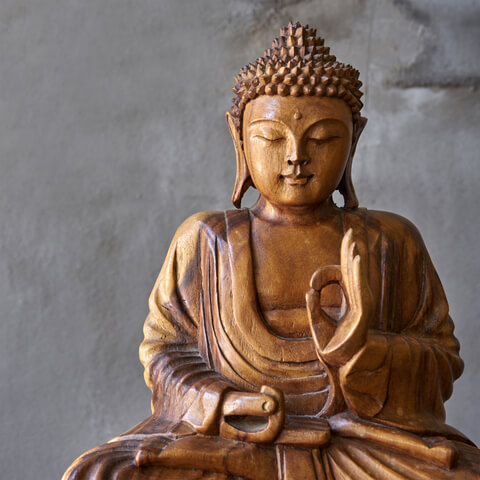
Where we will be discussing a variety of subjects and offering our somewhat casual perspectives from the Buddhist and the Catholic angle.
It isn't too serious,
And mostly it's just a fun conversation between two friends.
Theological Rascality will be coming out at noon every Sunday at Midwestern time.
You'll be able to find it on YouTube,
ITunes,
Insight Timer,
And just about anywhere you get your podcasts.
Your comments,
Shares,
And likes are greatly appreciated,
And if you have a question for us at all from these talks,
Just let us know,
And we'll try and get them answered.
Thank you so much,
And I hope you enjoy listening.
Hello and welcome to episode 0,
Or the introduction to Theological Rascality,
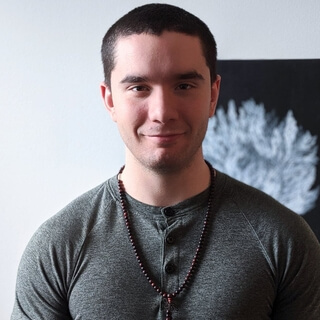
This new-ish kinda idea I had with my friend Madison here.
Hey!
And I'm Silas,
And what we're going to be doing is talking about comparisons,
Differences,
And all kinds of subjects surrounding and pertaining to Catholicism,
Buddhism,
Spirituality,
And whatever kind of tangents we'd like to go on.
But instead of having some kind of wild episode 1 introduction,
Why not an episode 0 so that you can get to know us a little bit,
And maybe our speaking patterns and our thoughts.
So yeah,
Hi Madison!
Hey Silas!
So how did you get to where you are today?
Take me back as far as you wish to.
Well,
Back in junior high,
There was this girl that I had,
Not a girlfriend,
She's a gal friend,
And a gal friend named Lauren,
And she was obsessed with this guy named Silas.
Oh.
Absolutely.
And I kinda heard this guy,
We had to stalk him on Facebook,
All this stuff,
And we got all the rumors,
All the tea,
And.
.
.
I haven't heard any of this.
Oh yes.
Oh god.
Oh yes.
You told me as far back as I want to go.
Okay.
We're getting it all on the table.
So come high school,
I finally get to meet this mystery man,
Silas.
Turns out we have a lot of stuff in common,
And too much stuff in common I think,
Because we clashed and butted heads like crazy.
Yeah a little bit.
And at one point in high school,
I was a full-blown witch,
Had a circle,
A little coven.
I was about to say,
I think besides taking refuge in the Buddha,
And you might have to say,
Because I think this might make me a heretic rather than a heathen,
I think you inducting me into a Wiccan coven was like.
.
.
We weren't Wiccan.
Okay,
What were we?
We weren't Wiccan.
What were we?
We were just witches.
Okay,
Just witches.
There's a difference.
This is the most religious ceremony I've ever taken part in,
Besides my Buddhists.
And I did accidentally take communion in an Anglican church once.
That's okay.
Most Anglicans don't.
They don't.
Exactly.
Were you baptized as a child?
No.
Oh you weren't.
That's right.
You are a full-blown heathen.
Well,
And I don't know what it means,
But I was anointed in the oil of my people.
I think that's a Baptist thing.
Well no,
It's a Jewish thing,
But my parents aren't Jewish.
When we celebrate Passover.
.
.
Are they.
.
.
Oh.
Yeah,
I don't know.
I mean all the power to them.
If they like messianic.
I mean,
I love the messianic Jesus movement.
You know,
I've always kind of thought of them as Jews for Jesus,
But in the most Protestant way ever.
Yeah.
But anyway,
Continue.
So yeah,
I definitely inducted a few of my friends into a.
.
.
It wasn't a cult.
No.
Not by any means,
But as it's coming out of my mouth,
It sounds a little culty.
But anyway,
I did that for a few years and then I kind of started reconnecting with Christianity that I was raised with,
Which was actually a super Protestant,
Super fundamentalist view,
But that got me inspired to read the Church Fathers.
Not too many Catholics in Arkansas.
Well,
Actually there are,
Not in this area,
But down in the Fort Smith area.
There's St.
Scholastica,
Which is a convent.
Subiaco.
Oh gosh,
I've got an oil painting of them in my house.
But there's a lot of Catholics in Central and in the River Valley,
But not so much up here.
No,
Not quite.
But in high school,
I went on a trip to Italy and I was like,
Oh,
Awesome.
Let me do a bunch of research because I'm a reader.
And we looked around.
I ended up having a day to spend on my own in a little place called Montepulciano,
Which is if you watch the Twilight movies,
When they go to Volterra,
They're not actually filming in Volterra.
They're.
.
.
Volterra is about 30,
45 minutes from Montepulciano.
And that's actually where they filmed it.
So I had a religious experience in the town that they filmed.
I think it was Eclipse.
I think it was Eclipse.
Maybe New Moon.
The one where he exposes himself.
Honestly,
I haven't seen them.
I'm calling BS on them.
I truly haven't.
We went to high school together.
I'm calling BS on that silence.
I know,
I really haven't.
I've seen the first one.
I haven't seen anything past it though.
Well,
I'll strap you down one day and make you watch it.
Every good American does.
Uh huh,
Yeah.
You know,
I think I know some good Americans who might disagree with you there.
You know what?
Different folks,
Different stripes.
So what was your.
.
.
What was the religious experience?
So I went.
.
.
My grandma set me loose on this town.
Middle of Italy.
I'm like 15,
16 years old.
And I'm just.
.
.
So old enough to drink and buy a prostitute and you go to church?
And exactly.
And my grandma's like,
Well,
I'm just gonna drink my wine and sit on these little palace steps here.
Read my book.
You go do whatever kids do.
And I'm like,
Alright,
Grandma,
Thanks.
So I walk around and I find this little dome church that is old,
Like in the old style.
Yeah.
And I'm like,
Ooh,
All the doors are open.
It's Italy.
I mean,
There's very little AC heating and cooling doors are open and all the churches are very public.
Right.
So I just wander my little happy butt in there and start looking around.
And I had this like.
.
.
And this is where words stop really working.
Because this is where it kind of gets into that mystical experience,
Experiential gunk.
So I go into this little church and I'm looking around and just the beauty.
.
.
Beauty is the best work that I have.
It was like I was feeling it with every single particle in my existence.
Was resonating with the beauty of this tiny little church.
And going back and looking at pictures,
The decorations weren't that pretty.
It was kind of like.
.
.
Right place,
Right time kind of thing.
Exactly.
It was a set and setting and I wanted to sing.
I can't explain it.
I don't know why,
But that reminds me,
There's a character from history.
His name is Terrence McKenna.
And he used to say that you can sing your way out of hell if you need to.
Hey,
I think I might have.
I mean,
We'll try.
Yeah.
At least sing myself a shot out of hell,
I guess.
But I went in there and I looked around because I was like,
I don't really know if I'm just singing in here,
If that's going to be a problem.
So I looked around,
Tried to find the priest,
Somebody who looked like they were in charge.
Like the altar guild leader,
Whoever is going to be mousing around the church at two o'clock on a Tuesday.
Right,
Janitor.
Exactly.
Anybody just to say,
Hey,
Is it cool if I sing?
Because I've been in choir and we had a lovely choir that they always taught us a few Latin hymns that were very non-denominational,
But they were good for churches.
So I looked around,
Couldn't find anybody,
Peeked my head out and went to the shop that was right next door and asked this lady.
And I said,
Hey,
Is there anybody over in that church or am I just looking for a ghost?
And they're like,
Oh no,
There's nobody there right now.
But the priest is a good friend of mine.
So I'm like,
Oh cool.
All right.
She said,
I'll give him a call and I'll see where he's at and I'll take you to go meet him.
I was like,
Oh,
Okay.
So she shuts down her shop for the day.
Her friend next to her is like,
Oh,
Where y'all going?
And we're like,
We're going to go find the priest.
She's like,
Oh,
I'll come.
So this woman and her friend,
Two shops right next to this little,
El Chiesa del Jesu is the name of the church.
And they both shut their shops and drug me through Monte Puciano to go find this priest.
Wow.
It's like the plot of a movie.
Oh my gosh.
It definitely was like,
I was living my best 90s movie life for sure.
Like Disney,
Like as seen on TV.
Perfect.
So we go,
We find the priest.
We walked back to the church and he's like,
Okay,
So what do you want to sing?
And I was like,
Well,
There's a song called Ubi Caritas that we learned in school that I'd like to sing.
And he goes,
Uh,
Here,
Sure.
Sure.
Here,
Sing a few bars.
And I went,
Okay.
And I sang,
I got about two little measures in and the priest joins in.
Exactly.
Yeah.
Exact same version,
Exact same song.
He's like,
I learned that in seminary.
He said,
For sure.
Absolutely.
Come and sing.
Uh,
He said,
We'll help mass tonight at like five,
Five o'clock,
Go home,
Put some clothes on.
Cause I was in like a tank top and shorts and like flip flops.
He's like,
Go put some clothes on and then come back.
So I go and I do what the nice man,
Nice man in the collar says,
Come back.
And then he introduces me during communion during the mass of that day and invites me up and has me sing during communion and just that moment of singing during communion.
That must've been nerve wracking.
Oh my God.
Yes.
I am a backstage behind the stage person,
Stage manager.
You can put me on stage.
I make a,
I can do a lot of really good Anton Chekhov plays characters that nice blue flame intensity gotcha.
But as far as just like going out on in front of people to do things.
That's not me.
Much more of the contemplative reserve.
My Bishop says that I'm very stoic.
I'm like,
I don't know if that's a good thing or a bad thing.
I don't know.
I think it's a good thing.
You know,
Traditional masculinity.
So what led you to want to kind of be involved within the Catholic ministry in some regard?
So I'd always kind of had this draw to,
To actively take part in my faith.
And since that moment in Montepulciano,
I have felt a visceral connection to the divine,
To God,
Whatever God is.
And that's,
It puts me in a weird place that it's like,
I for sure can say I believe in God.
But if you ask me any question outside of like,
Does God exist or do you,
Well,
Even if you,
Does God exist?
I mean,
That's a,
That's a hard one to answer because tell me what existence means.
I'll formulate my best plan.
Or you even have to be like,
If someone,
Cause I mean,
I've had people ask me that,
Like,
Do you believe in God?
My biggest thing is like our definitions of that word are like,
There's like an 0.
1% chance that we mean the same thing when you say that word.
That's something that I found in because kind of trying to prepare for this and getting to know you better these past few months,
I have tried my best to kind of understand more the Catholic side of like writings.
And it's like,
It's,
I find it the same thing.
It's such a problem of vocabulary.
It's like,
That is the first barrier to entry in anything.
And like,
Once you do have the vocabulary under your belt,
Like you can do so many things and you can read all these things and have an idea of these things,
But until then,
Like you'll read a paragraph and I'll be like,
Oh my God,
What are these people even talking about?
But,
But anyway,
So you,
You want it to be involved in your faith.
Okay.
And so what did that lead you to do?
So I had a very peculiar issue because as a gay person and Roman Catholicism doesn't really work.
Right.
Um,
At least for me,
It,
The Roman Catholic church has come leaps and bounds over the last Pope.
Yeah.
Yeah.
Um,
But when I was really coming into my Catholicism,
There was a lot of very heavy,
Um,
I want to say abuse,
But heavy,
Um,
There's a lot of reservations about gay clergy,
Gay seminarians.
I reached out to the diocese of Little Rock at one point,
Um,
Just to express my interest and say,
Hey,
Where,
Where do I go next?
I had this experience.
I,
I feel called or drawn to do something,
But I don't know what.
Right.
What can I do?
Right.
You,
You had a,
You had a life-changing experience,
But didn't want to like entirely define or change who you were as a person for that thing.
Well,
It wasn't necessarily that right.
It was,
I had had this life-changing experience that I didn't understand.
Oh yeah.
And I was reaching out to say,
Well,
I experienced this in a Roman Catholic setting,
So maybe I should go and contact Roman Catholic and say,
What does this mean?
Okay.
And I never heard back.
No.
I'm still waiting for a response from,
Uh,
The,
Uh,
Bishop's office of Little Rock.
Right.
Maybe it went to a spam folder.
I maybe,
Maybe that's what,
That's what I can help.
I always,
And you know,
Maybe I was young,
I was doing it by myself.
I maybe I emailed the wrong person.
Who knows?
Um,
But it didn't work out.
Um,
And that was,
That was that.
So I was attending a local Roman Catholic church,
Just kind of as a guest,
As a visitor.
And I eventually ended up meeting this guy who said,
Hey,
I have a friend who is an old Catholic and he's gay and he's a priest.
He's actually about to be consecrated as a Bishop.
Would you like me to introduce you guys?
Maybe you can talk or figure something out.
He may get me able to at least offer you some advice.
I was sure.
Heck yeah.
So I meet,
I actually didn't meet with him until his consecration day after his consecration.
And that was my current Bishop and he was consecrated a Bishop.
I attended first thing outside of the Roman Catholic church that I had attended.
It was beautiful.
It was lovely.
Um,
Very traditional.
Um,
But everybody around the crowd looking around where people like me,
There were gay people.
There were,
I mean,
There were straight people and gay people.
There was like,
There was a mix.
It wasn't like when I was a lot of times,
Especially here,
We have a large Hispanic population.
Right?
So if I go to a mass sometimes,
If I don't go to the white people time slot,
I will be the only white person there.
And the form of Catholicism that I follow has different responses and things like that.
And then the Hispanic culture also has different responses.
So I end up super lost.
Yeah.
Well,
No,
I mean,
I totally understand.
You put me in like a Laotian forest tradition kind of thing.
And I'm like,
I'm like,
I'm like a fish out of water.
I'm like,
Okay,
I kind of know what's going on.
But other than that,
I got no idea.
That's exactly what it is.
And what it's really interesting kind of about,
Like about what that metaphor about that metaphor is that with Catholicism,
After meeting with this Bishop,
I now Bishop,
I learned that there are different kinds of Catholicism.
There is not just Roman Catholicism and Orthodox orthodoxy.
There is there's a mix even within the orthodoxy.
There's Greek,
Russian,
And Tiaqui and Alexander.
Like the thing is,
There's always been multiple different Catholic churches.
Yeah,
There's been many heresies.
Yes.
But even as far as canonical,
Non heretical,
Like mainline Catholic churches for centuries,
There have been other Catholic churches.
So I finally was able to get on board with this old Catholic movement.
And in America,
Old Catholic is it's different than what something that you said that in Europe,
Because in Europe,
They're very conservative,
Typically.
And very traditional,
Very traditional.
Yes.
The old Catholics of Europe separated from the Roman Church before,
Before over Vatican One.
Okay.
So that tells you just how far back that was.
Yeah.
It's an old beef.
Exactly.
Exactly.
But we,
But I ended up I got introduced to this old Catholic gig,
And eventually fell in line,
Realized that,
Oh,
I can,
It's a small community.
It's a,
It's people who are sincere about their commitment to orthodoxy,
People who are sincere about their commitment to pastoral care of all people,
And people who interpret the gospel in similar ways that I do,
That Jesus didn't just come to save a select group of people.
Right.
That,
In my opinion,
Jesus came to save everyone.
Yeah.
You're not one of the,
What is it,
The 144,
000 elect or something like that?
No,
No.
We can,
We can talk about revelation.
That'll be later.
Apocalypse as a,
As a genre,
Whenever we have time for that.
So what is your,
What is your position right now?
I am currently a,
I'm ordained as a deacon.
If we wanted to get real fancy,
I'm technically,
I think,
The vicar general of our diocese,
As well as the chancellor.
However,
The titles don't mean much.
It's more so like,
Those are things that if we are working with other churches and they,
They know that,
Oh,
I'm supposed to send this to the chancellor of the diocese.
So it's pretty much everything just comes to me.
Everything comes to me unless it has to go to the bishop.
And then if it has to go to the bishop,
They send it straight to him.
And then I deal with everything else.
So do you lead any services?
Do you help write anything,
That kind of stuff?
So as far as leading services,
We don't do a whole lot of public services.
It's a,
Like I said,
Very small community.
We actually operate more so as an oratory,
Which is a group of clergy in an area who meet for services.
So the bishop will a lot of times be the priest.
He's the only priest that we have in this area.
We are a missionary diocese.
I should probably mention that.
He's the only priest that we have in this area.
So he will act as the priest.
I will act as the beacon.
And then we have a few people who we are teaching and raising up in the faith to hopefully take our places one day.
And to kind of help just keep this tradition of an inclusive,
Easy to swallow Catholicism that doesn't rob and rip the religion of its tradition.
That's probably a really tough thing.
Yeah.
It puts us in some weird spots because people will come to us.
I mean,
Like I did,
I was very hurt.
I was very broken and I was looking for something and the Roman church just didn't have it there for me.
Yeah.
So do you think that the Roman church will ever get to that point?
Honestly,
I do.
I do.
I think that as far as LGBT issues,
LGBT rights,
I think that is a truth that the church universal is coming around to just like it took a couple centuries for the church to admit that the earth was flat or not flat.
I mean,
That the earth was round.
It's going to take,
It may take a few centuries for the church to officially recognize LGBT people as normal,
As not a perversion of God's plan,
But as an integral part of God's plan.
Interesting.
So,
Because that's something that's always been very kind of important to me in the observation is how a tradition and a faith learns and grows with its time.
Because I feel like if it doesn't,
It just dies.
It just dies hard or it ingrains itself and it gets left behind by the world.
That kind of thing.
Well,
Cool.
I didn't know a lot about a lot of that.
So yeah,
You were living across the country.
I think a lot of that.
I was in Washington.
And so I guess it's my turn.
So tell us about yourself,
Silas.
How did you get here?
So I was raised in a very kind of faith minded family,
But there was always an air of curiosity and learning in it,
Which I highly appreciated.
And there,
I could always ask questions.
I could always say,
You know,
Why this,
Why that,
And some of my earliest memories are getting to sit around with my dad.
And as long as I was quiet and him and his friends were talking about scripture,
I could stay in the room.
So it taught me to listen.
And so I went through that and when I was,
I don't know why,
I think I blamed the internet and probably read it.
And I kind of went through a atheist agnostic kind of phase.
I was reading too much,
Like not Bill Hicks.
Who's that Bill Mayer?
Is he the big proponent?
Oh,
I honestly couldn't tell you.
He made that documentary like Religilist or something?
Oh yes.
Yeah.
And as well as a bunch of other like Charles Dawkins and these kinds of atheistic agnostic Sam Harris,
All the cool kids,
All the new wave atheism.
And I went through this period of maybe a year where I was,
I never went like full hall,
Full like God is dead,
Not real kind of atheism,
But I was definitely truly questioning it.
And what happened is I had a girlfriend at the time and she didn't mean to,
And bless her heart,
She's a sweetheart,
But she broke up with me on the day my grandfather died.
So it was a big convergence of not so good feeling.
And so I had read,
I think it was Descartes who emptied himself of like all of his ideas and then like only brought them back into himself if they fit a certain factor or fit certain factors.
It might've been Hume.
I can't remember right now.
Descartes.
Descartes.
I remember,
I know who you're talking about.
I couldn't tell you who it really was.
And so I decided to do that and I was,
So I empty myself and I said that I wouldn't take anything back within myself,
Any ideas of myself,
Any ideas of the world,
Any ideas of other people when I was like 13,
14 years old,
Unless they were like,
They generated peace within me and others.
They were like nice and promoted like growth and positivity.
And I would consider them like wise and well-rounded and not too sectarian.
And so I did that.
There were some other things and I emptied myself of them and I realized that there wasn't a lot about me that made sense.
I realized that there was very little of me that was actually me and my own ideas and that I wasn't just saying the words of other people.
And at the same time I had just finished reading the autobiography of Gandhi,
Which was very influential and it was the first taste and time I'd ever really read anything on a person outside of the Christian faith.
And I mean up until that point I knew a little bit just from being around.
I was never terribly interested in religion or spirituality or anything,
Even though I was surrounded by incredibly faithful and religious people,
They just didn't,
They had the good graces not to pressure it on me,
Right?
And so from there I was given a book by a teacher and that book was Houston Smith's The World's Religions and I poured over that book.
I became incredibly interested in Islam,
I became incredibly interested in Hinduism and Taoism and the variety of paganisms and Buddhism.
So for a while what I would do is,
It's strange because I kind of found something that I actually liked and it kind of became a passion of mine,
And so I scoured and I read everything I could on Islam.
I think I remember this.
Yeah.
I was like hearing stories like,
Do you hear that Silas Day is converting to Islam?
No,
No.
I was like,
No,
I don't think he's going to.
There was never a moment where I thought of converting to Islam.
I don't think that's real,
Y'all.
But I did read the Quran and the Hadiths and I read a lot of Bernard Lewis or Bernard Smith.
He wrote What Went Wrong and a lot of incredible books on Islam and Muslims and everything.
And so I think the reason why I went from Christianity to agnosticism and then Islam is because it was like at the same time foreign and alien but it was close to home.
And I kind of read and I got interested and then I started reading about Taoism and I read Lao Tzu and Zhuangzi and all of the classical Taoist texts.
And I never,
I dip my toes into modern and medieval Taoism,
But those guys get a little weird with the bureaucracy of heaven and alchemy and very strange practices that we can get into later that I would love to share.
And then I got into Hinduism and I read the Bhagavad Gita,
The Ramayana,
The Upanishads,
The Vedas,
All these things and I listened to a lot of Hindu speakers and I listened to a lot of characters like Alan Watts and Krishna Murthy talk about Hinduism and thought it was really interesting.
And this is when I started to meditate,
Kind of.
I tried contemplative prayer,
I tried that kind of thing and I actually do have an experience from when I was younger where I asked for forgiveness and felt great forgiveness come over me.
I know,
Right?
But I started meditation and so I started doing kind of Vedas Upanishadic oriented meditation,
Specifically from the advice of the Yoga Sutras of Patanjali or the Yoga Sutras of Patanjali,
Which is utter nonsense without a commentary by the way.
It's like 26 pages and you're like,
Okay,
This is the whole thing but no,
It's supposed to be read with a commentary,
I later learned.
And so I tried it for a while and I wasn't really connecting with it and I'm not very good at devotional practice.
I'm not very good at like surrendering myself unto something.
And so I started to read,
I read a book called Zen Mind,
Beginner's Mind by Shunriya Suzuki,
Who we actually have a portrait of back here and it blew my mind.
Oh,
I thought that was Thomas Merton.
Well,
They knew each other,
First of all.
But yes,
From the side angle,
He does look like Merton.
It's that bald hair.
Yeah,
And he's got like a black robe on.
I thought that was a cassock.
Sorry.
And so I read Zen Mind,
Beginner's Mind and it clicked with me.
And I think from then,
I've probably read the book 32 times because it's only like 130 pages long.
And there,
At the time,
There was a free version of it on YouTube that I would listen to.
And so I started to sit in zazen or zen meditation.
And I was about 16 at this time.
And I got really,
Really interested in zen and I had the good graces to discover Zoketsu Norman Fisher,
Who is a zen abbot teacher kind of person out of the San Francisco Zen Center.
And he had a website called everydayzen.
Org where he had hundreds of hours of his recorded services and lectures and that kind of thing.
And what I would just listen to them because at the time I was working full time during the summers as an industrial painter.
And so I had like 10 hours a day to myself.
And so I would just pop it in and I would listen to lectures all day long.
And so I learned a ton about Zen and I learned to like Dogen was and Huineng and Bodhidharma and all these characters.
And I really fell in love with their practice style.
And I fell in love with their air of mystery because they weren't really trying to explain anything completely and fully.
And they were admitting that these things may be beyond words,
Beyond explanation,
Beyond tactile understanding and that they are like experiences rather than like intellectual things that you can grasp.
And so I did a bunch of Zazen and I even got to go and sit in a Sheshen for two weeks and that was terrible.
I was not prepared at all mentally or physically to sit for like 12 to 16 hours a day.
And I don't know what that means.
You might have to translate that one.
So Sheshen is a two week period of meditation that's done in the winter.
But they can have other – the winter one I think has a special name.
I can't remember it right now.
But a Sheshen is just a two week period of meditation in Zen where it's mostly in silence and you're doing Zazen all day long basically.
Okay.
So it's like a contemplative retreat.
Yes.
It's a contemplative retreat.
And if you're really lucky,
You're doing Orioki eating which is a very,
Very specific kind of eating practice that you do where Zen takes every aspect of your practice and ritualizes it.
It ritualizes your eating.
It ritualizes you opening doors,
Closing doors,
Walking,
Looking,
Moving,
All these kind of things.
And the specific school that I was practicing in was Soto Zen.
So I wasn't hanging out with the Rinzai Zen guys.
I was with the Soto Zen guys and gals.
It was a mix.
But I found it really interesting because the Zen Buddhism that is practiced in America is a lot more laissez faire than in Japan.
Like they weren't hitting us with the stick like they do in Japan where if they find you slumping that you'll get a few good smacks on the shoulder.
But it does wake you up.
I did get to experience it once.
But what I found was that even though I was reading everything and practicing daily and I'd gotten very good at concentrating what I later realized I got very good at concentration style meditation,
I didn't really find a lot of what there was to offer.
And so I decided to kind of go somewhere else and look at a different tradition.
And so I went from that.
I looked at Chan which is just an earlier form of Zen that takes place in China.
And I studied Chan for a while and their masters and their meditation styles and then I moved to the Tibetan schools.
Specifically the Yellow Hat school which is the school that the Dalai Lama is a part of and then the traditions of the tradition that Nagarjuna is a part of and I'm going to butcher this,
Anyone who speaks Pali or Sanskrit the Muhulda Makama school or the Great Emptiness school.
It's better than I could have done.
Probably.
Just saying.
And then the Xiochun and the Mahamudra schools and I gained a ton from them that Zen just didn't talk about.
It was a tradition that was a lot more open about their discussions,
A lot more open about mapping which I found like mapping meditative experience,
Mapping contemplative experience,
Just understanding the everyday aspects of existence and how to intertwine that with a meditative and spiritual and religious practice.
I'm very interested in that.
We'll have to make a note about that.
And what it did is it showed me,
Because Zen has this thing called the ox herding pictures which I never really understood or made much sense of,
But the Tibetans,
One of the Tibetan schools has this chart,
Another chart,
But it made way more sense to me.
And I was like,
Oh,
That's what the ox herding pictures are about.
It's like it was Zen's attempt to kind of map out the progress of meditation to awakening.
But I think the problem was since I wasn't raised in that culture and I was missing the joke,
And Taoism has a lot of that too where it's like I don't speak old Chinese.
So there's like a bunch of jokes that I'm just not getting.
And so I really appreciated that.
And I read a lot of the books,
A lot of the traditional like Long Chenbe and that kind of thing,
And I made my way to this character called B.
Alan Wallace.
And he is a very interesting person within the Tibetan kind of meditation community.
And though I disagree with him on a lot of what he says now,
And I think many of his books are very good and helpful to people that are interested in it,
And I highly recommend you read them if you are interested in kind of the Tibetan style of practice.
He really spurred me on to a true seriousness of practice.
So this was when I was about 18,
19.
And so that's when I started to sit for,
You know,
Four,
Sometimes five or six hours a day and really decided to dedicate myself to the practice.
I took refuge in the Buddha,
The Dharma and the Sangha and kind of became properly Buddhist.
And then as I studied more and more,
I found that it was,
While I do love the flowery language,
And I do love the philosophical heights that Tibetan Buddhism can sometimes get to in their explanation of it all,
Their technical language was,
I would say,
Much more oriented to the higher end of practice.
So much further down the path than I was.
These were for people who had been like monks for many years.
And though it like really helped me like see the mountain down the way,
It wasn't really helping me where I was.
And so I found this book called,
Well,
I found two books called The Mind Illuminated by a guy named Kulldasa.
And then I found a book called The Hardcore Teachings of the Buddha by a guy named Daniel Ingram.
And I read both of them and I actually got to get in contact with Daniel and Kulldasa and have conversations with both of them.
And Daniel in particular took my practice from a place of,
I wouldn't say slow growth,
But I would say kind of average growth and the way in which he explained things and the way in which he came at things in a very pragmatic,
Down to earth.
And he also wasn't afraid to talk about things like magic,
Like the powers,
Cities that can come from meditation,
Mystical experiences,
That it really inspired me and I've actually gotten to stick in conversation with him.
Though he'd never claim it,
I consider him a very helpful teacher of me.
And so he was able to propel me specifically in my concentration meditation to where I was able to even get into some of the formless jhanas and experience those and understand them.
But he comes from the sort of Theravādini tradition and so I turned my head when I was about 20,
21 to the Theravādin school,
Which is the old school of Buddhism,
Which is considered the old school because they just use kind of the original teachings of the Buddha and the sources directly around the Buddha instead of all these other things that were written.
It's kind of like the fundamentalist movement.
Yeah,
Kinda.
They still have.
.
.
Y'all don't use the apocrypha,
Gotcha.
Yeah,
Exactly.
And so I think it's so funny because that's when I started to truly and finally study the actual teachings of the Buddha through the middle length discourse and the writings and translations of Bhikkhu Bodhi and Ajahn Chon and all of these Theravādin monks.
And I think it's so funny that I've been studying Buddhism now relatively seriously for four years and then casually for six to eight.
And it took me that long to finally get to what the Buddha's actual advice.
I worked my way backwards from zen to the Buddha and it's like,
Oh.
Sounds like a lot of Catholics.
We work our way around.
We find a nice saint like,
Oh,
Saint Therese.
Yeah.
Oh,
And then you start reading about Saint Therese and then you find out that you like Jesus and it's like,
Oh,
Wait a minute.
Yeah.
I should probably get it from the horse's mouth.
And I've had the great privilege to be in conversation with many incredible teachers.
I've had the great privilege to sit a long time with many Tibetan teachers and zen teachers and talk to people like Norman Fisher and explain myself and kind of get a good understanding of where I'm at in my practice.
But where my practice finds today is I am trying my best to help beginners,
Absolute beginners not have to go through the same crazy process that I did and not have to go on this like wild goose chase to get to the Buddha and like get to like,
This is what you need to do to see results.
I try to be incredibly pragmatic about it while leaving the door open to people if they are curious to some of the,
I wouldn't say less pragmatic,
But probably more esoteric aspects of it.
In my tradition,
We call that it's the metaphor that we use is that as you're walking along the river path,
Every now and then you can take a glance at the waterfalls and the scenery.
Right.
And just don't step off of the path.
Right.
You can enjoy everything around you.
Just stay on that river path.
And so my practice now is a few hours of meditation a day.
I try to do my reading.
I've really gotten into audiobooks,
Especially this.
I'm trying to understand the meditative experience from the Catholic perspective because I think you guys do have a very interesting literature in it.
I was,
I know this is a little off topic,
But I was reading about,
So in meditation,
Whenever you go to sleep and you are actually entering a state of meditation that you can get to while awake.
Yeah.
And I can't remember what it is right now.
It might be one of the like jhanas or something.
I think maybe the first formless jhana.
And I was reading about a Catholic tradition where they go on contemplative retreat and this might be for like months on end and they only sleep for like two hours,
Two or three hours and the rest of the time they're in some sort of contemplative prayer.
But that way that they,
They like dip under like waking consciousness and like,
Like maintain that.
Do you,
Do you know anything about that?
I don't.
No.
I think for sure it wouldn't surprise me,
Especially in some of like the more like hardcore monastic traditions like the Trappists,
The,
Where's some other,
The Trappists are hardcore.
Yeah.
For some reason I thought they were like relatively middle of the road.
Oh no.
They're like a reform of,
Of,
Of a reform of a reform of the Benedictine tradition because it had gotten too loose.
So they came back and then I can't remember what the middle branch was because the Trappists are the,
Are like the American version.
Okay.
There's a whole bunch of them here.
I can't remember what the name is,
But yeah,
There's a whole,
Like they're like a reform of a reform that was going to more austere,
More ascetic practices.
Now was it,
Was it just Merton who had his relationship with the Zen people?
No,
There's actually a lot of kind of cross cultural dialogue between,
Especially a lot of the monastic houses of the Carmelite tradition and Benedictine and in the Franciscans,
The Franciscans,
They like everybody.
They're like the Episcopalians of the Roman Catholic church.
They like everybody.
They're kind of down for anything.
Just look at father Richard Rohr.
They have,
They have their own theology,
A non-Dominican theology that is very,
Very compatible with a lot of the Buddhist ideas as well as some of those,
Like that oneness and unitive,
A lot of those traditions come out of the Franciscan school.
Other than that,
Like where I find myself in my practice is so right out the gate,
I,
One thing that I despise in my tradition with where I'm at in my practice is there is this big taboo almost,
I guess you could say it's a taboo to talk about attainment or like where you're at on the path without like disguising it in language.
There's a guy who wrote,
His name is Budigosa and he was from the sixth century and he has this big title that comes before his name on the book that he wrote and like never once in the book does he mention his attainment,
But it's like fully clearly realized that he's an arhat,
Which is what we call fourth path or fourth stage awakening,
Which is the highest in the Theravadan tradition,
But it's like he never says it.
So if you didn't know the language of it,
Like you wouldn't know.
But there's this big taboo around like claiming like,
Oh,
I'm a stream enter or I'm an aganami or this,
That,
Or the other.
And I never quite understood it because like,
Wouldn't you want to know the qualifications of the person that's teaching you like blatantly and clearly?
Yes.
I don't know if you've ever,
I see why that's important.
I get it too.
But like,
If someone is curious about it and you have an honest teacher that you trusted a long time and you have heard their teaching and understood and kind of like meditated with them and you're curious,
I totally understand asking.
But like personally,
Like I'm not a stream enter or even like I have a bunch of fun with concentration meditation,
But I haven't broken through into the stream yet.
Like I haven't attained first path or anything.
And a lot of the people that I talk to now in the pragmatic Buddhist realm are very open about this kind of thing,
But we're also very scrutinizing.
But like,
Why are you saying this?
And like,
Like you need to prove that thing that you just said,
Because it can be bad if like,
And that's my thing is that,
Because like in Catholic world,
In particular,
In like the Carmelite tradition where I'm probably most rooted,
It would be,
It's like,
When you talk about the spiritual life and experience and stuff like that,
Words don't work.
Like I was saying earlier,
It's like words don't work well enough in order to keep the ideas and thoughts concrete because their ideas and thoughts that by definition are not concrete.
Yeah.
So to put titles and to make those claims could put you or the person,
It can make people make assumptions about you.
It can,
That may not be true because how well is your understanding,
If you're again,
What is your understanding of entering the stream versus their understanding?
So and that's the thing is like,
That's one reason why I appreciate like the Theravadin tradition so much is in particular,
Like Mahasi Sayadaw school,
As well as like the manual of insight and the writings of Buddhaghosa,
Which are the Visuddhimagga and the Vemudhimagga,
They have very specific,
Like they're very specific on what it is that qualifies the experience in meditation to do this.
What was I about to say though?
Oh,
Well,
So you,
I just got finished putting the studio together and I did all my decorations,
Which are mostly Eastern stuff.
If you look around and some paintings,
I've got Avalokitesvara over there and I've got an Amitabha Buddha in the corner.
And so I told Madison to bring something so that at least Catholicism and Christianity would be represented.
And what did you bring over here?
Well,
Here,
I'll bring it a little closer to us.
This is a small statue of Our Lady Mary,
Untire of Knots.
I have a pretty,
Pretty intense devotion,
I would say to the Blessed Mother.
But this particular depiction,
You can see it's a woman.
She's standing on like a cloud or a globe.
There's a moon underneath her and then her foot is on top of the snake.
So there's a lot of symbolism here.
So is this the lady they're talking about when like the French say Sacre Bleu,
Like the sacred blue?
Possibly,
Possibly.
There's a very good chance.
I'm not quite sure.
I've always thought that was hilarious that the French say like Sacre Bleu and it's like,
Oh,
The holy blue.
And it's like,
You're literally saying Mother of God.
Yeah.
I would bet money on that,
That that is correct,
But I cannot speak for sure.
I remembered what I was going to say.
So with the like claiming attainment thing,
One of the big things in Buddhism that like,
I'm kind of curious,
As you could tell that it was a later development,
Like within the monastic schools as kind of being a taboo thing to talk about attainment with non monastics.
Because like,
If you read the discourses of the Buddha,
He'll be like,
I am the Tathagata like conqueror of worlds,
The destroyer of this,
That and the other like attainer of this that.
And he'll also be like,
Oh,
There were so many arhats at this place.
There were so many aganamis,
So many stream mentors,
So many like of these people.
And he's so like,
Blatantly or like,
When someone asks a question to him,
He'll be like,
Oh,
The aganami blank,
Or like an ordained office almost basically,
Yeah,
Or like the arhat blank,
The Porter,
The Subdeacon,
Right?
Acolyte.
Yeah.
And,
And it was just very interesting to me that it's like that that's been like an interesting like reverb where it's like,
Buddha was very open about it.
And there's kind of been taboo and then it's kind of become less taboo.
Now a little bit,
We're starting to break the cracks.
But then in other traditions,
Like the Tibetan tradition,
Like the yellow hat school,
Like you can't wear certain hats unless you're like a tainted certain,
Like meditative states.
And I have certain hats that I can't wear.
Hey,
I do.
I do have a special funny hat that I can wear.
Why is it hats?
You have?
Well,
At least for us,
It was so that way,
If you were walking down the street,
People would know what to do.
Yeah,
Like because if I like if you were just walking out in public,
So like with mine,
I have a hat that has three fans.
And it's but it's missing one,
Right?
And I do not have a pom pom on top of my hat.
Pom pom is important?
The pom pom is very,
Very important.
I have to get myself a fancy fez.
Yes.
So the because I don't have a pom pom,
That means that I am not ordained as a priest.
Okay.
But because I have one,
Actually,
I may be wrong.
I think I might be able to get a pom pom now that I'm a deacon.
Right.
I'm not sure I need to check.
I'm gonna have to talk to my bishop about it.
We have a retreat coming up.
Okay.
But I may be able to get a pom pom now.
But if I had a four,
If I had four fans,
It would mean that I would have I have completed my doctorate in theology.
Yeah,
I have not done that.
So I only get the three fans that should I believe in each fan,
I think stands for it's like philosophy.
It's different schools,
Right?
And you earn a fan for each degree basically that you get.
So just out of curiosity,
Would I be allowed to go to like a seminary?
Or would that be frowned upon?
You could,
Well,
Lay people can go to seminary and study as lay people.
So you could.
You could.
It depends on what kind of seminary.
Right.
It's like,
If it's a benedictine seminary,
You can be a Buddhist all you want.
Right.
But you are going to be the best damn Buddhist that you've ever been in your freaking life.
I appreciate that.
So that's actually they're going to hold you accountable.
That's quality.
If you were a Christian,
They're going to hold you accountable to pray in the office with them.
Really?
And if you're a Buddhist,
They've done,
They've had plenty of retreat masters who were all kinds of Buddhists.
Yeah.
They're going to know exactly what you have.
Do you have what you need?
If you need to borrow some prayer beads,
I think we have like,
They will be there.
We've got someone with the bell going,
Hey,
At 6am,
You ready for morning prayer?
Yeah.
And that's quality.
Oh my gosh.
That makes me so happy.
Oh yeah.
And if you were to stay at Subiaco Abbey down in,
It's in Subiaco,
Arkansas,
But it's down in Portsmouth,
Russellville,
A little bit in the left little area.
So there's this,
I think it's in Massachusetts,
But it is a shared monastery between,
It's like a Buddhist retreat center,
But it is also a benedictine monastery.
And it's like,
Cause I was looking to go to it and I was like,
What's with all these like mother Marys and crosses everywhere.
I was like,
What's going on?
Oh,
They're sharing the space.
And also a couple of the Buddhist monasteries around the nation are old,
Like benedictine and Catholic monasteries that we've just bought from you guys and not redecorated for some reason.
And it's like,
Okay.
So just kind of a last thing for this episode zero,
What is your hopes to come of this conversation between you and me?
I think most of all,
I want to kind of explore the intersection of arts,
Culture,
And science and the contemplative life.
Because arts,
Culture,
And science from our two different perspectives,
Me mostly being rooted in the West,
Western Christianity,
Western classical West.
Whereas like with you,
You're a little bit more anchored in that Eastern philosophy.
I'd still call myself a stranger in a strange land.
Exactly.
But also same,
I am by no means Roman nor am I Orthodox.
So we're not Roman.
I'm not Roman.
Darn.
I'm an old Catholic.
Do I need to leave now?
No.
But no cosmetics allowed.
Gotcha.
Yeah.
If you're a Cathar,
I'm going to have to throw you off the building.
I'm sorry.
Oh no,
You're good.
We successfully got rid of that heresy,
I think.
Yeah.
Long time ago.
It's been a while.
Same with the Nostrians,
Right?
Well,
Okay.
So that's one of those heresies that's still kind of around,
But in like the flavor of your theology.
So between the East and the West,
Some are more,
Some are.
.
.
And that's why there's so much difference between the East and the West.
It's like the West fought a.
.
.
And I think it's the West had to fight a really.
.
.
It was the opposite of Nostriism.
And so they kind of swing a little bit more towards that.
Whereas in the Orthodox tradition,
That's who they were fighting.
So they swung to the opposite direction.
Right.
So for me,
I think my biggest thing is one,
I just want to re-engage a lot more with the Western tradition and not just Catholicism,
But things like Stoicism and the Greeks and how they thought and kind of where we got to the idea of the Western person and why we think the way we are and what the crucifix is and why for some reason that is our religious symbol.
And as well,
My biggest interest is in understanding the way in which the ideas of consciousness in the East and the West can kind of come together and maybe form a better idea.
Because I see that being kind of a hot button issue that no one really wants to talk about in psychology and science.
And it's.
.
.
Though we have used religious words,
Like the Catholics have used religious words,
Though the Hindus and Muslims and Buddhists have all used religious words.
I think that we're banging at the same thing in terms of trying to understand this experience of what's happening right now and all the weird stuff that can happen within it.
Daniel would say to me that the arhat fractal is infinite,
Meaning that basically anything can happen if you peer far enough in one very specific direction.
And so I'm very interested in how the intersection between these two schools and ideas can sort of like rouse a conversation long-term between us about this subject.
So anyway,
I think that's good.
Do you want to stop here for zero?
Yeah,
I think so.
Cool.
All right,
Guys.
Well,
This is Theological Rascality.
I'm Silas.
I'm Matty.
And we'll see you next time.
Bye-bye.
If you enjoyed episode zero of Theological Rascality,
Please consider leaving a like,
A comment,
Or a share wherever you get your podcasts or wherever you're listening from.
It really does help us and it allows us to answer whatever questions and engage with you folks as wonderfully as we can.
If you have a more specific question for one of us,
You can find us by the email provided somewhere in the description.
Otherwise,
Thanks for listening and we'll catch you next time.
Bye.
Bye.