Hello,
Hello everybody.
Welcome,
Welcome.
Hi,
Ellie.
I hope I'm saying that right.
Thanks for being here.
I'm just gonna give everybody a few seconds to log on a minute.
Hi,
Sherry.
Welcome.
Yeah,
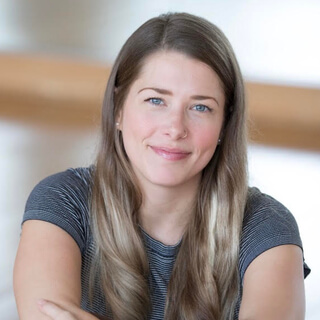
My name is Errol and I'm really grateful to have you guys here with me today.
What a great way to connect with people from all over the world who are on a similar path,
Right?
Of wellness,
Of yeah,
Trying to feel good and manage your mind.
Release my anxiety,
Please.
Yeah,
You got it.
We're gonna work on that today.
Hi,
Abby.
Hi,
Mano.
Let me know where you're at geographically.
I'm in Muskoka,
Which is just outside of Toronto.
So I'm in Canada.
VA,
I'm assuming that's Virginia,
Caitlin.
Florida,
Sherry,
Cool.
Rick,
Hey Rick,
How's it going?
Okay.
Well,
As everyone gets sort of comfortable here,
Just make sure that you have a journal or at least a piece of paper and a pen.
We're gonna do a bit of self-reflection and we're also gonna do a little bit of gentle stretching,
But we're gonna do it from our chairs or the floor.
So you don't need to have a yoga mat or anything like that.
Really all you need is again,
A piece of paper,
A journal,
A pen or pencil,
And maybe some water so that you're feeling nice and comfortable and supported in your spaces.
All right.
When do we get started?
Okay.
So if you're feeling anxious and stressed and overwhelmed,
And I know many of us are right now in the world,
You're in the right place.
So this mindfulness talk is all about sharing some really simple and effective tools that we all can access that are free and natural.
They can help us to release anxiety now and in a long-lasting way.
Yeah.
So you might feel like you've tried different techniques,
Maybe different methods,
Different mindfulness practices to find some release and some relief from your anxiety.
And maybe it works for a minute or two or an hour or a day,
But your anxiety ramps back up right after that.
So this is about creating sort of a sustainable and a long-lasting practice for supporting yourself and for managing your mind.
And it's a daily practice.
Okay.
So we're not planning to,
Right after this talk,
Change your entire life and our lifestyle and start meditating for four hours a day and working out or doing yoga a hundred hours a week,
Whatever,
Right?
It's about making small,
Simple and realistic changes.
Okay.
So just wanted to set the expectation there.
We're going to do our best to meet ourselves where we are and to sort of share a little bit about my journey.
So,
You know,
That this is coming from a very personal place.
I've dealt with anxiety for many,
Many years.
I started having panic attacks when I was a kid,
Maybe seven or eight years old and continue to have severe anxiety,
Social anxiety,
Anxiety around school,
Relationships,
My body,
So much anxiety all through my,
My twenties,
Really.
And I still deal with anxiety now,
Definitely,
But it doesn't rule my life anymore.
It doesn't run my world.
I'm in my mid thirties now and through my profession as a yoga and meditation teacher and an anxiety coach and through my own journey,
My personal journey with mental health,
I've connected to some really powerful mindfulness tools that have changed my life.
So I'm not just surviving anymore.
I'm actually thriving in my life and I want to share these tools with you.
I had a lot of panic attacks.
Like I mentioned,
I quit a lot of jobs when I didn't really need to,
I ran away from love.
I've self-medicated with drugs and alcohol and really any kind of substance I could get my hands on that would just allow me to take away my pain and my anxiety.
So I was constantly running away from myself and it got very real,
Very,
Very real,
Very,
Very quickly.
My mid twenties,
I started to feel hopeless and didn't want to carry on anymore.
And I ended up in a mental health emergency ward and I was ready to end it,
End it all.
And that's really,
And that's really sort of the breaking point for me is I realized I had to stop running myself and I had to start turning towards myself and turning towards my anxiety and actually looking at it,
Which can be really uncomfortable,
Right?
So if you're here right now,
You're showing up,
You're already doing that.
You're already taking that first step,
Which is acknowledging that you're feeling anxious and that you're ready to do some work around it.
So Ellie,
I see you said,
What did you do to release it?
I'm 45 in the past two years.
It's been bad.
I hear you.
So stick around and we're going to do that work together.
I promise you.
So these mindfulness practices that we're going to get into in just a moment here are our suggestions.
There's three of them that we're going to talk about,
But you might find that one practice works for you and another doesn't,
Or you're really not into expressing yourself that way or moving your body that way.
That's okay.
This is an opportunity to explore different methods,
Different tools and find what works for you.
Okay.
So the first one we're going to focus on is movement.
So number one,
The first tool we're going to focus on is get moving.
And this might sound sort of obvious,
But when we're anxious,
We tend to get stuck in our heads,
Right?
We're stuck in thought.
We're living from the shoulders up and it's so,
So hard to move out of that.
So what we need to start to do to move out of that is to move our body.
So it's about coming out of thinking about it and stressing about it and trying to analyze yourself out of anxiety,
Which never works.
I'm sure you've tried that and you can agree with that statement.
Instead of thinking about it,
We're going to start to feel it.
And when we apply sort of a somatic approach,
We connect with the body,
We're able to start to move some of that energy and release it because anxiety is physiological too,
Right?
It shows up in the body.
For me,
It shows up in my shoulders.
I feel tense when I'm anxious.
My breathing's really shallow in my chest.
I grind my teeth,
I furrow my brow.
It's really a physical manifestation when I'm anxious,
As well as a mental manifestation.
So maybe you can relate to that,
Right?
So I want to talk about yoga as a form of movement.
And I think some of you have taken my yoga classes on here.
So maybe you've started to experience that for yourself,
But yoga is an ancient practice.
It's been around for thousands of years.
And it is all about coming into your body in a safe way.
Thank you,
Abby.
I'm so glad that you're enjoying the classes.
Yeah,
So yoga for me was life-changing.
I kind of came to it just before I had that breakdown in my mid-twenties.
And I didn't know why it was feeling so good,
But I knew that I had to keep coming back to these classes because I started to feel,
Yeah,
Connected to my mind and my body and my spirit in a really powerful and healing way.
Yeah,
Kelly,
I see you.
I hear what you're saying.
It's so good for the mind,
Body,
And the spirit.
So when we look at how yoga impacts the nervous system,
We're going to look at this from a physiological standpoint,
We can see that it's super,
Super healing because through that movement,
Through mindful movement and breath,
Yoga is a lot about connecting with our body,
Connecting breath with movement.
We're starting to shift out of the sympathetic nervous system,
Which is fight or flight response.
It's a stress response in the body that many of us actually kind of stay at all day,
Every day,
Right?
Yoga helps us to shift out of that stress response and moves us into rest and relaxation and calm by activating the parasympathetic nervous system.
So you don't need to know anything really about that.
I'm just trying to give you sort of a scientific or physiological explanation for why yoga works so well for our mental health.
I'm going to check in here with the chat.
I see Rosemary saying,
I'm having the hardest feeling one in life and yoga and breath work is working for me.
Yes,
Breath work is super powerful and it impacts our nervous system in the same way.
So we're going to actually explore that in our second tool here.
I think I tried to overdo it now with yoga,
Rick,
I hear you.
Yeah,
So that's a really interesting point to bring up.
Thank you for sharing that.
It's easy to end as lanes for our anxiety,
Our struggles,
Our self-control,
Wherever we go.
So even if you're trying to do yoga and you're trying to be gentle with yourself,
You might find that you're still pushing yourself because that maybe is your default mode.
So one of my favorite ways to think about yoga is that the yoga mat is your mirror,
Is reflection.
Whatever happens on the mat is a reflection of how you're feeling about yourself and how you're showing up in your everyday life.
So I don't say that so that you can judge yourself or maybe pushing yourself too hard or not taking rest or taking a lot of rest.
It just shows us,
Gives us an opportunity to show us,
Hi,
Pauline,
Maybe how we're showing up in our everyday lives.
So with that awareness,
I'm pushing myself in yoga a lot and what I really wanted was to feel peace.
I'm going to try for this next pose or this next breath to soften.
Maybe I'll skip a flow.
I'm going to practice self-compassion.
That's why it's called a yoga practice.
We keep trying.
We keep showing up.
Ellie says,
I was told to do the breath work when you first wake up.
Yes.
So again,
We're going to explore that very soon.
Thank you,
Pauline,
Kind words.
So why don't we just for a moment try this on,
Try on this mindful movement.
Okay.
All you need is to stay seated.
So if you're on a chair,
That's perfect.
You can come to the floor if you want to.
You don't need a yoga mat for this.
We're just going to take a moment or two to tap into the powerful healing benefits of yoga.
So if you're seated,
You can just sit up nice and tall,
Feet apart,
Hip distance,
Taking up space,
Ground really,
Really key.
And then you're just going to bring your hands to your knees or your thighs.
And then set your eyes on the floor.
That might feel really nice or from there,
You might feel called to just close,
Feel safe for you.
That might feel really nice or from there,
You might feel called to just close,
Feel safe for you.
To shift out of anxious thoughts,
Come into your body.
So all I want you to do right now is direct your focus and your attention to your feet.
You might give your toes a wiggle and you might not have connected with your feet and your toes in a long time.
So this might feel a little funny,
But our feet take us so many places,
They support us,
They connect us with the earth.
Gratitude,
Let's feel that for our feet.
Letting your legs be heavy,
Arms heavy.
And then let's start to bring some movement into this position here.
So take a deep breath and lift your shoulders towards your ears.
As you exhale,
Release them back and down.
Again,
Connecting breath with movement.
Inhale to lift shoulders.
Exhale to release them back and down.
One more time,
Lift your shoulders nice and high.
Allow them to relax and notice maybe how that feels to just soften your shoulders.
Putting down burdens,
Sense of self-control.
Stepping into ease.
Try to keep your shoulders relaxed now as you reach your arms up.
You get nice and tall,
The length of the body,
The length of the spine,
And then bring your palms together above your head.
You can bend your elbows a little bit like me,
That just helps me to relax my shoulders here.
So opening your eyes,
Maybe looking up a little bit here,
Taking a little bit of space here.
As you exhale,
Just stretch over to the right side a little.
Really small,
Gentle,
Easy movements here.
Staying rooted through the left sitting bone.
Draw the lower belly in,
Come back to center,
Breathe in,
Exhale over to the left side.
Don't worry about what the center of the body is,
Just relax.
Come back to center,
Breathe in,
Exhale over to the left side.
Don't worry about what this looks like.
Focus on how it feels.
So you're breathing into that right rib cage,
Feeling the power of your breath.
And then coming back to center,
Take another deep breath here.
Straighten the arms.
As you exhale,
Bring your hands to heart center.
Opening the arms wide,
Reaching them up again,
Big breath.
Exhale,
Hands to heart.
One more,
Reaching up.
Hands to heart center.
Place your hands down,
Bring them to your knees or your thighs,
And just draw your right ear to your right shoulder.
So you might close your eyes again if that feels grounding.
Imagining that every breath is going through all the areas of your body that feel tense.
Coming back to center,
Left ear,
Left shoulder.
And then back to center.
Okay,
So just tapping into that movement,
That mindful movement,
Is a way to get out of the head and into the body,
Where the present one exists.
We're able to then live from a more grounded and centered place.
So hopefully you felt a little bit of that in those first few movements.
Okay,
So number one we did,
Get moving.
That's the number one tool we're going to focus on.
For me,
It's yoga.
For a lot of us,
It might be yoga.
If that's not your thing,
You might try dancing in the morning or throughout the day,
Or going for a walk or doing a workout.
Just incorporating movement every day from fitness to anywhere.
Super,
Super important.
Make it realistic,
Right?
Let's go on to number two.
The second mindfulness practice we're going to look at today is getting still.
So I want to focus on meditation.
And for many of us here,
There's 62 meditators here.
I think we're all pretty familiar at this point or interested in meditation as a technique for releasing anxiety.
So you're not alone.
There's 500 million people across the world,
Apparently,
Studies show that are practicing meditation.
And this number is growing every single day because there's more research coming out showing that meditation is super powerful for mental health challenges,
For preventing burnout,
For trauma.
Its benefits are great.
And it's free,
Right?
You don't even need to be on an app to meditate.
You can just focus on your breath at home.
And it's a really natural,
Great tool for cultivating self-awareness.
If we're not aware of the thoughts and the patterns that are keeping us stuck in anxiety,
We can't do anything about it.
So meditation gives us the opportunity to build awareness for our own mental health.
So meditation gives us the opportunity to build awareness from a neutral,
Non-judgmental place sort of observing those thought patterns and those feelings,
Getting curious about how we're responding to life,
And then choosing to respond in a way that feels comfortable and calm and safe.
So because meditation can give us sort of space from our thoughts and our feelings,
We're able to approach life from a responsive place and not a reactive place.
Okay,
To give you an example,
I used to get really,
I was driving.
I don't drive a lot anymore because I live in the city,
But anytime I was on the highway,
If someone would cut me off in traffic,
My first reaction was always to give them the middle finger or clench my teeth or get really pissed off.
That was kind of like an anxiety or stress trigger for me.
And then I started meditating regularly,
And it's not like it cured me and made me superhuman or anything like that.
It just gave me the ability to pause when I'm feeling triggered and to take a deep breath and to choose how I want to respond to the situation rather than just knee-jerk reaction,
Blowing things out of proportion,
And then feeling really bad about it later,
Right,
For letting it ruin my entire day.
So in that same situation,
Someone cuts me off in traffic instead of getting really pissed off and wanting to,
I don't know,
Bother them in some way.
I would take a deep breath,
Move lanes,
Focus on my lane,
Keep moving forward,
Right,
Let it go.
So meditation can be a everyday life situation.
It can be helpful when we're dealing with major stressors,
With grief,
With loss,
With trauma,
Addictions,
Right?
It's a very powerful tool for teaching us how to be uncomfortable and to grow through that.
Instead of running away from pain and anxiety,
We learn to be with it so we can process it and let it go.
We need to feel it all to heal it all.
If you take one thing away from this talk today,
That is it.
We need to feel it all to heal it all.
Meditation is just another tool to do that.
So let's practice that right now.
We're going to do some breath work.
We're going to incorporate pranayama,
Some breath work in the meditation.
We're going to do just a two-minute meditation.
This is,
Again,
A talk just to give you a little sample and taste of three really powerful tools for releasing anxiety.
So coming to,
Again,
A seated position.
If you're already there,
Great.
If you want to come to the floor,
That's fine too.
Feet apart,
Hip distance if you're seated on a chair.
If you're lying down or seated on the floor,
You can cross your legs,
Whatever feels most comfortable for you,
Okay?
Bringing your hands to the top of your thighs or resting them in your lap.
Check in with what feels comfortable and intuitive for your body.
And then close or soften your eyes here.
Notice the length of your spine here,
Nice,
Tall spine.
Feeling the crown of the head lifting up towards the ceiling and the tailbone rooting down towards the floor.
Just relax your belly and start to breathe into it.
Instead of the chest,
Sending your breath into the low belly.
Feeling in and out of your nose to start if you can.
Just so on the inhale,
All the buttons like a balloon.
You know,
The exhale is a little bit more relaxed.
So you can feel the air coming in through your nose.
And on the exhale,
It deflates like a balloon.
Inhale,
Belly does.
Exhale,
Belly falls.
You give your focus,
Your attention fully to your breath.
You're able to keep your mind to break.
Come into your body.
Okay,
Now take a nice deep breath in for one,
Two,
Three,
Four.
And then you're going to take a deep breath in for five.
For one,
Two,
Three,
Four.
Open your mouth,
Exhale for one,
Two,
Three,
Four.
You might even want to sigh it out like I just did there.
Okay,
Take another deep breath for one,
Two,
Three,
Four.
Hold your breath.
Exhale,
One,
Two,
Three,
Four.
Relax the muscles of your face.
Breathe in,
One,
Two,
Three,
Four.
Hold your breath.
Open your mouth,
Exhale.
Inhale,
Two,
Three,
Four.
Let's do that one more time.
Your biggest breath yet.
One,
Two,
Three,
Four.
Holding your breath.
Fully clear out your lungs.
Inhale,
One,
Two,
Three,
Four.
Deep breath in.
Let it go.
And then just take a moment to notice.
Noticing how your mind and your body and your spirit feels now.
Opening your eyes when you're ready.
So we did a counted breath exercise there.
And all we did was inhale for four,
Hold it just for a moment,
And then exhale through the mouth for four.
So this is a nice way of slowing down our breath.
And again,
Coming into the parasympathetic nervous system,
Which is the rest and digest mode in the body,
Which also allows us to think calmly,
To widen our perspective,
And to release stress in a simple way.
Awesome.
Thank you for trying that one on.
Okay,
To recap,
You've done get moving.
That was the first tool.
And we talked about yoga and how powerful that can be for moving anxiety out of the body.
The second tool we looked at was get still.
And talked about meditation as a way of creating stillness in the mind and body.
A really great way to tap into your body during a meditation is to use your breath.
So you might want to focus or work on connecting with your breath throughout a meditation.
Make it simple,
Just focus on the sound of it.
What does it sound like?
The temperature of the air,
Right?
Okay,
So we can't have two complete thoughts at the same time,
More than one thought.
We can't process more than one thought at a time.
We might be tricking ourselves into thinking,
You know,
I'm going to think about this,
And then I'm going to think about this,
And then I'm going to think about that,
And then I'm going to multitask over here.
But nothing actually gets done.
And this just creates burnout and stress and a scattered mind.
So if we give our brain just one thing to focus on at a time,
We're able to respond to our environment and our stressors from the really grounded place.
And that one thing can be breath,
Right?
All right,
Let's do our third and final tool we're looking at today.
Get writing.
So self-reflection is super,
Super powerful when it comes to managing our emotions,
Processing our feelings,
And creating intentions for how we actually want to live.
So we're not living on autopilot or behaving in a way that's not mindful.
And I find journaling a really,
Really easy sort of powerful tool.
Easy sort of powerful,
Maybe not easy,
But simple and powerful way to do that.
To do that self-reflection.
If you're not a writer,
That's okay.
You don't have to be in order to journal.
You might just do sort of a pre-flowing thing where you sit down once a day or in the morning after you've stretched and done some mission,
Write out how you're feeling or a couple things you're grateful for.
Doesn't have to be intense or long.
It's just about starting to put down what you're thinking onto paper.
And we can think about this like a really beneficial friendship.
So you might feel better after you talk to a real human being.
You can vent to a friend or a family member.
And as soon as you've put words to what you're feeling,
You often feel lighter,
Right?
A little bit better.
But we can burn out friendships.
We can judge sometimes when it comes to opening up to people this way.
There are always safe people that we can turn to.
But we can also in that same release find out,
Right?
The piece of paper or the journal or laptop is that friend that we're able to talk to about anything.
They're not judging us.
They're not rolling their eyes.
They're not exhausted.
This is a place that we can safely explore our feelings,
Connect with our anxiety,
And find a way to let it go.
So to finish off this chat,
And I'm going a little bit over time,
But I think it's going to be worth it.
I'd like to offer you three journaling prompts to explore.
Okay.
So I'm going to read them out loud.
And you can just write them down or type them out.
So you can do this reflection piece.
And if you find this really helpful,
Then go online.
There's so many websites that offer journaling prompts specifically for anxiety.
And you might choose the same prompts to respond to every day.
You might try different ones.
Anytime you're feeling triggered,
Get it out of paper.
Try it.
If that's not your thing,
You can paint.
Do something creative just to express that anxiety in a way that feels safe and productive for you.
Okay.
So the first journaling prompt that I want you to answer just privately on your own is what does your anxiety feel like in your body?
And if you're like,
I don't know.
I don't know what it feels like.
That's all right.
You can often feel kind of uncomfortable or scary to feel it physically.
So if that's where you're at,
I suggest tapping into your body next time you feel super anxious.
Closing your eyes,
Scanning your body.
Where do you feel tension?
Where do you feel sensation?
And let that pull you into where your anxiety is living in your body.
And you might be very aware of it.
It might be in your belly.
It might be in your chest.
You might get red or tense in your upper body.
This is a way to create awareness so we can start to notice when we're getting this before it's too late,
Right?
And breathe through it.
So number one was what does your anxiety feel like in your body?
Number two,
Just take your time to write down these questions.
You can answer them on your own time,
But I just wanted to leave you with a little bit of journaling prompts,
Okay?
Number two is what happens to your mind when you focus?
What happens to your mind when you focus on your breath?
And the last question I want you to write down,
Reflect on is what is one thing anxiety has taught you?
What is one thing anxiety has taught you?
It's easy to throw resistance,
Anger,
Frustration at our anxiety.
It's not so easy to show gratitude for it,
To thank it for maybe showing us where we're off balance,
Maybe acting as a warning signal or a red flag when things in our environment or things within us aren't feeling so safe.
The thing about one thing,
Anxiety has taught you.
Okay,
So just writing those questions down and taking time after this chat to reflect on them.
And you might want to come back to those questions throughout your week,
Your month,
And keep an open dialogue with your anxiety.
Keep asking it what it's here to tell you.
As soon as we bring it to light,
We're able to process it,
Right?
Instead of repressing it,
Where it gets bigger,
More severe,
More disruptive,
We just look at it.
We need it.
So the takeaway of this talk is,
You know,
We need,
Like I said before,
We need to feel it in order to heal it.
And that is,
Can be extremely challenging.
It can be really scary to feel our anxiety,
To actually allow it to be here,
To be in our body with it and to look at it eye to eye,
Right?
That can be very,
Very scary.
So you go at your own pace.
Feeling your anxiety might just look like saying it out loud,
I'm anxious.
It might look like writing it down,
I'm feeling anxious.
Step one,
Acknowledge it,
Right?
And use these three tools to start to process it and release it.
So we talked about movement,
Get moving.
Yoga is a great way to do that,
If that works for you.
We talked about number two,
Getting still.
Meditation could be an awesome way to do that.
And number three was get writing,
Journaling,
Putting it all out there,
Getting it out of your body,
Putting words to it.
It gives us the ability to see it in a different way.
It's first to lose its power as soon as we see it and acknowledge it,
Right?
It's also important to note that,
Yeah,
These are mindfulness practices and tools that can be extremely helpful in managing your mind.
But for many of us,
It's not always enough to feel stable and healthy and grounded every day forever,
Right?
So you might need medication,
I'm on medication.
You might need therapy,
You might need group support.
And these are other tools that can just go into your toolkit.
I think it's a holistic approach to health that we're looking at here.
So you've got your meditation,
Your yoga,
Your journaling,
Your medication if you need that or want that.
It doesn't have to be a one size fits all.
You adapt these practices to suit you.
No shame in doing what you need to do to feel stable and balanced.
Thank you so much for being here.
It's a pleasure to talk about this,
To share my story and connect with so many of you.
Millions of us struggle with anxiety.
You are not alone.
You're taking a huge step just by tuning into this chat today and acknowledging it.
I teach gentle yoga classes for Inner Peace every Thursday on Insight Timer at 12 p.
M.
Please try to tune in.
We can put these practices to work.
And if you find that you need extra support,
I do anxiety coaching.
So that's a one on one thing where I help you identify your anxiety triggers and create a mindfulness plan customized to you so that we can start to work through it.
That's interesting to you.
Send me a message.
And if you are able to make a donation for today's talk,
I would so appreciate it.
Have a beautiful day.
Take care.
Be kind to yourself.
And be well.
Namaste.
Thank you for showing up.
I'm just checking the chat here.
So I see a lot of you have some extra questions.
Again,
Send me a message privately and we can talk about it.
Okay.
Have a beautiful day.
Thank you for your donations.
Take care.