Hi,
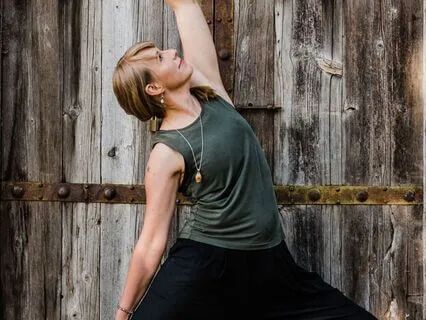
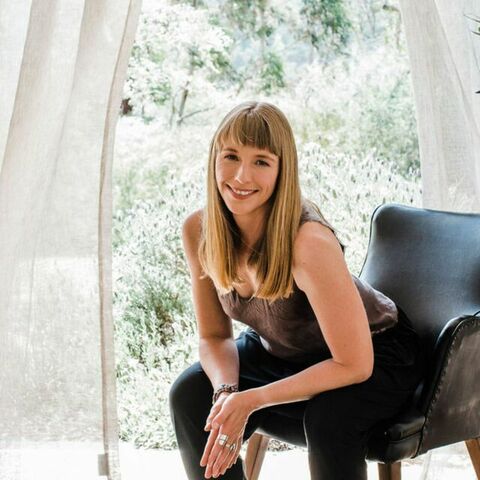
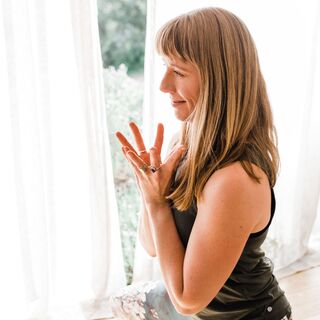
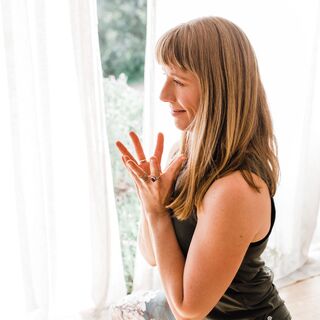
I'm Emily and I'm a teacher here on Insight Timer.
I've been teaching mindfulness meditation and yoga for over 10 years and I'm passionate about showing how we can combine ancient philosophy with modern science through movement,
Through breath and through meditation to bring balance and a sense of true connection in our lives.
And I'm guiding these practices on the traditional lands of the Dudaroa,
The Tangarong,
The Waiwuru and the Yaitmatang here in Victorian Australia.
And I pay my deepest gratitude and respects to the elders of this land,
Past and present.
Welcome to your practice today.
I'm going to be guiding you through a breath practice,
A pranayama technique from the yogic tradition called Viloma breath.
And Viloma is translated to mean the interruption of the breath.
So it's a breath control practice where we're going to be both interrupting the inhalation and also the exhalation.
And when we release that,
The idea is that then we will have more capacity in the breath.
The breath will be more expansive.
So this can be a tricky one to learn.
You might like to do this lying on your back when we're not using the muscles of the core to kind of hold us upright.
Sometimes we're a little more able to allow those breathing muscles to relax and allow the breath to expand a little bit more.
So whether you're lying on your back or whether you're sitting,
Just make sure that your spine is nice and long.
So that could be making sure that you're nice and even on your mat lying down or that you're sitting up tall in a chair.
And take a moment to settle.
You might like to sigh your breath out a few times.
You might like to move a little bit just to kind of open up through the sides of your ribs.
Roll the shoulders a few times if you like.
And this interruption of the breath,
We're going to be creating two pauses in the breath so that we split the breath into three parts.
And we'll start by doing it on the inhale and we'll just let the exhale be free.
And then we'll try it on the exhalation and then we'll explore putting them both together.
And you can keep coming back to this practice as many times as you need to.
Until it feels comfortable for you.
So go at your own pace.
And so I'll guide you through.
We're going to take a breath in and then let all of the air out.
So breathing out through the nose or maybe the mouth if you need to.
Letting all the air out.
And then we're going to start breathing in just the first third of the breath.
And then you're just going to hold for a second.
And then keep breathing in the second third of the breath and then hold for a moment.
And then breathe in all the way to the very top.
And then hold for a moment and then release your breath out.
Try not to gasp and sigh it but just release that breath slowly.
And then again breathing in the first third of the breath.
Hold.
Keep breathing in the second third.
Hold.
And then breathe in all the way to the top of your lungs and hold.
And then breathe all the way out again.
One more time.
Breathe in the first third.
Hold.
Keep filling up the second third and hold.
And then fill up all the way to the top.
Maybe sipping the breath into the very top of the throat and hold.
And then let the air all the way out.
Beautiful.
And then just breathe naturally.
So notice whatever's present.
If you need to take another couple of sighs and just release that out,
Move your body,
Feel free to.
So we're going to reverse that.
Sometimes the holding on the exhalation,
The interrupting on the exhalation feels a little bit more difficult.
So let's practice together.
So breathing in.
Let's breathe out all the way first.
And then inhale all the way to the top.
Nice fluid,
Smooth breath to the top.
And then breathe out just that top part of the breath and hold.
And then breathe out a little bit more.
The second third and hold.
And then breathe out all the way.
And you might just draw the belly in slightly to squeeze all the air out and hold.
And then breathe in all the way to the top again,
Filling up.
As you get to the top,
Just breathe out the first third of the breath and then hold.
Breathe out the second third and hold.
And then breathe out all the way,
All the way to the bottom.
Squeezing the last bit of air out,
Holding at the bottom.
And then last time,
Breathing all the way in.
Breathe out the first third of the breath,
Hold.
Breathe out the second third of that air and then hold.
Breathe out all the way,
Drawing the belly in slightly maybe.
And then holding at the bottom.
And then releasing and allowing your breath to move in and out freely.
And again,
Just noticing,
No judgment,
No expectation.
Noticing how that was for you and how that is now.
If you start to feel a little bit dizzy,
Just maybe placing the hands on the ground or on your chair,
Feeling your feet on the ground.
Just allowing the breath to be nice and smooth.
Now for this last part,
If you wanted to,
You could just focus again on one part of the breath.
So if you found the holding on the inhale more difficult,
Just focus on that.
If you wanted to practice just the exhalation,
You could do that for this next round.
If you want to breathe with me and we're going to inhale the interruption on the inhale and the exhalation.
So both the inhale and the exhale will have those three parts.
If you like with this last version,
You might even start to really feel those separate three parts.
So the breath moving into the belly,
Then into the mid-ribs and then all the way into the upper chest and releasing the same way.
So again,
Let's just do one slow fluid breath to start with.
Inhaling all the way to the top.
Exhaling all the way out.
And then inhaling the first third of the breath,
Maybe the belly expanding and hold.
Inhale,
Second third,
Feeling the ribs expand front,
Side and back and hold.
And then breathing in all the way to the very top of the lungs,
The collarbones might broaden and hold.
And then exhaling the top part of the breath,
Collarbones contracting,
Hold.
Inhaling all the way to the top of the lungs.
Exhale,
Second part,
Lower strips draw in and hold.
And then third part of the breath,
The belly drawing in towards the spine,
Squeezing the last bit of breath out,
Hold.
And then breathing in first third,
Hold.
Second third and hold.
And then the top part of the breath all the way,
Sipping the breath up to the top of the lungs and hold.
And then exhaling top part of the lungs,
Hold.
Exhale,
Second part,
Hold.
And exhale,
Belly drawing in and hold at the bottom.
Last round,
Inhale,
Belly expands,
Hold.
Keep inhaling,
Mid part of the breath and hold.
Keep inhaling all the way to the very top,
Hold the breath at the top,
Maybe hold for a little bit longer this time.
And then exhaling top third,
Hold.
Exhaling mid part of the breath and hold.
And exhaling last part,
Belly draws in,
Hold at the bottom,
Squeeze the pelvic floor,
Squeeze the belly.
And then releasing and breathing normally.
And as you breathe in,
Really feel that breath expand into every corner of your body.
Wait until you naturally want to breathe back out again.
And just becoming aware of that body breathing itself now,
Letting go of the control,
Letting go of the interruptions,
Allowing the breath to flow and be free.
And taking this opportunity to notice how you are.
And when we can be caught in a sympathetic nervous system,
Not fight and flight response,
Our body can be really holding on,
Breathing shallow,
Tension in the shoulders and the ribs and the belly.
This practice encourages us over time,
Over practice to expand that breath.
And so notice how you feel not only physically,
Not only the breath,
But the nervous system,
Your mental state,
Your energy,
Your emotional state.
And there's no wrong answers when you listen in for this.
If the practice was difficult,
Was challenging,
Honor that,
Acknowledge that.
And go easy on yourself and keep coming back to this,
Keep practicing and over time it gets easier and easier.
Just like strengthening our muscles at the gym.
And you can slowly start to maybe bring a little bit of movement back into your body,
You might roll the shoulders again,
Turn your head from side to side,
Maybe place hands on the heart or both hands together and take a moment to to honor and to acknowledge whatever insights you might have gained from this practice.
As you're ready to blinking open your eyes and moving gently into the rest of your day.
Thank you so much.