Hi there and welcome.
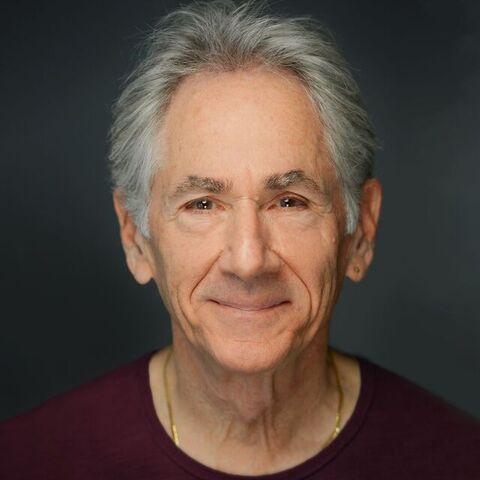
My name's Ed,
And I want to share with you two powerful steps that you can take that work when your PTSD kicks in.
I want to show them to you right now,
And then afterwards,
Possibly if you're feeling better,
I can share a little theory with you.
But first,
Let's take care of what's going on in your mind and body right now.
So what I'd like you to do is sit,
If you can,
In a chair.
If you need to lie down,
Then go ahead and lie down and close your eyes.
The first step is a breathing exercise that will calm your body,
And when your body gets calm,
Your mind will calm down a little bit.
It's called the 4-7-8 breath,
And what it entails is breathing in deeply for the count of four,
Holding the breath for a count of seven,
And then releasing it evenly,
Hopefully,
For the count of eight.
So,
Let's try it right now,
And don't worry if you can't do it perfectly.
We're going to do it a couple of times,
And I'll count for you.
So,
Let's begin breathing in through the nose deeply.
One,
Two,
Three,
Four.
Let's hold it for the count two,
Three,
Four,
Five,
Six,
Seven,
And then let it out evenly.
Two,
Three,
Four,
Five,
Six,
Seven,
Eight.
Great.
How does it feel?
Maybe you take some time to bring your breath back to normal,
But possibly you're beginning to feel a little calmer.
Let's do another round,
Okay?
I'll continue to count for you,
And we'll start now with the in-breath.
Two,
Three,
Four.
Hold it.
One,
Two,
Three,
Four,
Five,
Six,
Seven.
Let it out.
One,
Two,
Three,
Four,
Five,
Six,
Seven,
Eight.
Good.
Notice how you feel now as you begin to get back to your normal breathing.
Normally,
We would do three of these in a row,
But as you're maybe doing this breath work for the first time,
I'm taking a few moments in between.
So,
Let's do another one,
Okay?
Let's get ready for the in-breath.
One,
Two,
Three,
Four.
Hold it for one,
Two,
Three,
Four,
Five,
Six,
Seven,
And let it out slowly,
Evenly for one,
Two,
Three,
Four,
Five,
Six,
Seven,
Eight.
At this point,
You may feel some relief,
Or you may not.
That's okay.
We're going to move on to step two,
And step two is a step where we get in touch with the sensations that are in the body.
So,
With your eyes closed,
I'd like you to scan your body.
Put your attention on your whole body,
Checking out where in my body is the strongest sensation.
It may be tingling.
It could be acute pain.
It could be heat,
Vibration.
Find out where your body is talking to you,
And then I'd like you,
When you've identified it,
Put your dominant hand on that part of your body,
And just feel into it.
Now,
Here,
The word feeling,
The sensation in your body,
Means feeling,
But not thinking.
We're used to thinking and feeling at the same time.
This also takes some practice,
To be able to just feel the sensation without a commentary,
Without a reminder of what happened or what caused it.
It takes a little learning curve here,
But let's begin.
Feel it.
Let's say you're feeling something in your chest area,
Or your solar plexus,
Or anywhere.
Your hand is on that area,
If you can reach it,
And you're saying,
There you are,
Sensation.
I feel you,
And I don't judge you.
I have no thoughts.
I just want to feel you.
How do you feel?
Are you tight?
Are you aching?
Are you acutely painful?
What color might you be?
What shape might you have?
Are you round,
Ragged,
Or sharp?
Feel the sensation and invite it to release.
Release.
I invite you to release sensation.
I invite my body to let go.
Use the power of your intention,
And even though you're thinking this,
You're allowing and feeling it.
It's a powerful step,
And what you will find is three things can happen.
First,
The sensation will sort of begin to move or get stronger,
Because a spring releasing causes an increase in its activity.
So,
You'll find that sensation getting stronger.
Don't be afraid.
It's releasing.
It may get stronger for a while.
Be courageous.
Again,
You're feeling,
Not thinking about it,
Not judging it,
And soon you may find that it will release and subside.
Wonderful.
A second possibility is that it may increase and seem to release and then move to a different part of your body.
Why doesn't matter right now.
Follow it to that other part of your body.
Maybe it moved from your shoulder to your abdomen or to your solar plexus.
Say,
Oh,
There you are,
Sensation,
Moving to my solar plexus.
I'm going to move right with you,
And I'm going to feel you right there and invite you to release now in my solar plexus,
And then feel it,
Sense it.
Is it as strong as the first place?
Is it achy?
Is it sharp?
What color is it?
Do the whole thing of exploring it on that proprioceptive sensational level with as little commentary as you can do,
And feel it and invite it to release,
Always inviting it to release.
So now I want to give you a few minutes to do this on your own.
You may notice that you may work on one sensation and it releases and then another one comes up.
Perfect.
Go ahead.
Now I'm going to give you a few minutes to do this on your own,
Scanning the body scanning the body,
And then following the sensation.
Good.
How do you feel now?
Take a picture,
Take a reading on total sense of feeling,
Mind and body.
How do you feel now?
More centered?
More embodied?
Less frantic?
Less your body feels more calm?
Perfect.
The combination of using the breath work and then after three rounds doing the sensation work is very powerful.
It's powerful because it works on the deep levels of the body,
Inviting your body to let go and release,
Unleashing the body's natural ability to relax and heal and throw off stress,
Rebuild,
Replenish,
And restore.
I would recommend that you either listen to this audio many times and get well versed in these two steps,
These two techniques,
And eventually you'll learn them and be able to do them on your own.
Each one of these steps,
You'll become more adept at it,
More smooth.
It'll be more smooth and more normal for you.
And because PTSD is and triggers are so tenacious and they could be in our mind and body for so long,
Months,
Years,
Decades,
In some cases,
It will take some time for you to begin to work to begin to work and diminish the intensity of the PTSD attacks.
It doesn't happen overnight.
The most tenacious part of PTSD is that it's trauma that has been endured for so long,
So consistently,
That it takes the mind and body to overwhelm.
And the body remembers this overwhelming sense of losing total identity of itself.
That in and of itself becomes a trauma.
And that's why PTSD becomes such an accentuated situation compared to regular trauma.
And so it takes a lot of practice in doing these techniques to begin to wear down,
Unwind,
And allow the body and mind to let go of the physical sensations at work that were taken in from the original trauma in the mind and in the body.
There is also a third step,
But it's not part of the initial,
Say,
Triage of what to do when your PTSD kicks in.
But I want to bring it in now,
And I will be doing other audios around this.
And that is what happens to the mind in terms of beliefs.
In other words,
Why did we get traumatized?
When,
How young were we?
What beliefs did we create around the trauma in terms of,
Did I deserve it?
Did I cause it?
Should I feel shameful?
Should I feel guilty?
These beliefs eventually,
In this third step,
Which is another time,
Is when I would encourage and I talk about how when a story begins to go on in your mind,
Sometimes we can see something or hear something or someone could look at us a certain way,
And it can begin to trigger us.
And if it triggers us so quickly and unconsciously,
Then we need to do these first two steps immediately.
However,
Eventually,
Once you work on it,
Or sometimes,
It doesn't jump on us and surprise us so unconsciously,
So quickly.
We have a story goes on in our head,
And that story begins to grow and gets us excited in a very slower and conscious way.
And that's when we can use this belief work to say,
What am I thinking right now?
What am I believing?
Does that look represent real danger?
Did that someone really mean to,
Is really telling me that I'm not good enough or that I'm bad?
The third step is to actually determine what's real in the moment and what is a triggering of a memory from the past.
Working on our past beliefs,
Not just about the world,
But about who we are,
How worthy we are,
What we deserve is very essential.
And again,
Like I said before,
It's another audio that I will do.
And I hope this helped,
And I hope that you continue to practice these first two steps when you need them.
And you will notice over time a difference.
So good luck in your practice and take care.