Hello and welcome.
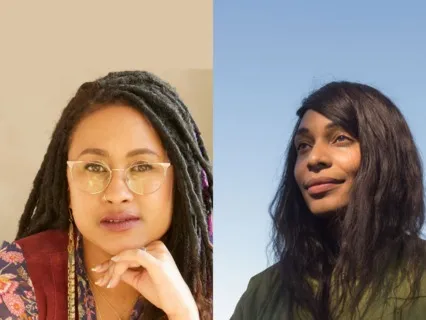
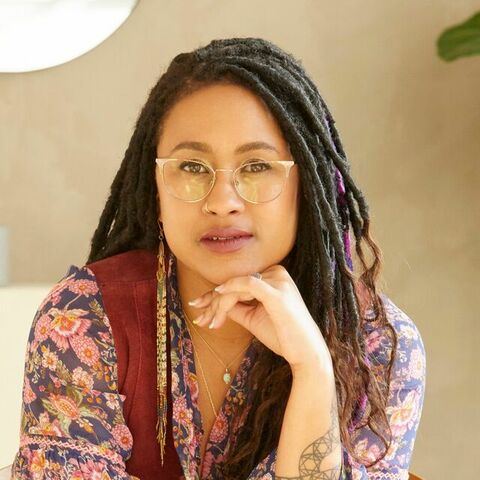
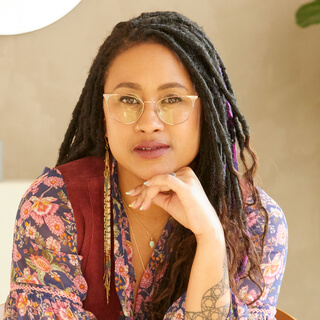
My name is Nkechi Njaka and I am here with Dr.
Sarawak King.
It is a pleasure and honor to be here with you all at Insight Timer.
Today's practice is going to explore the intersection of identity,
Race,
And well-being in honor of Black History Month.
The structure will be a brief talk,
A guided practice,
Followed by a conversation with the two of us.
We will complete our time together with a closing practice and concluding remarks.
I first want to acknowledge the land that we sit on where we are currently located for this recording.
We are here on unceded Ohlone land,
Also known as San Francisco Bay Area.
This acknowledgement is an attempt to pay respect to First Nation peoples as the original custodians and stewards of this land.
It is our wish that it would be returned back to them and we resist the erasure of Indigenous histories,
That which include our own.
February is Black History Month in the United States and in honoring this we feel it is important to direct our focus to be that with mental wellness and well-being.
With all that we have collectively been through in the past three years,
The hot buzzword of this time seems to be self-care,
But even in this seemingly straightforward concept,
What is often overlooked are the nuances that play into the ability to take care of oneself.
Nuances that aren't discussed,
Such as race,
Sexuality,
Class dynamics,
And gender.
All of these are extraordinarily important and in framing it that way we might call this also a conversation about intersectionality.
So what does it truly mean to be present in mental well-being and to really take care of oneself?
In honor of Black History Month I want to provide context for what and why we are honoring Black people during this month.
For 400 years this country has learned about,
Witnessed,
Invented,
And experienced the unprecedented amount of human consumption of the earth and her resources,
Which include vulnerable human beings,
Often the marginalized,
Often women,
Most often people of color.
These are important times friends and you've made your way here.
Whether you are present to it or not,
You're longing for connection and belonging,
Justice and freedom for all.
It is what has brought you here,
It is what has brought us here,
And we are here together.
So my question and inquiry for us in our practice,
For us to be with today in our time together,
Is how do we heal in the context of social practice?
Healing is meant for all of us and when the Black community heals,
We all heal.
I invite you to find a comfortable way to be in your space for a guided mindfulness meditation.
If closing your eyes is a part of your practice,
I invite you to close your eyes.
If you would like to keep your eyes open,
You can lower the gaze in towards the heart or towards the earth.
We'll begin our practice with three breaths together,
Inhaling in through the nose,
Exhaling out through the mouth.
Again,
Inhaling in through the nose,
Exhaling out through the mouth,
And again inhaling in through the nose,
Exhaling out through the mouth.
Arriving here,
Landing here.
As we sit in our practice,
We might begin to consider our bodies here in space,
Taking time to acknowledge where you're making contact with the earth,
The floor,
The cushion,
The back of a chair.
Maybe with yourself,
Maybe your hands are folded in your lap or placed on your knees.
Maybe you have a hand on the heart or hand on the belly.
Maybe you notice the fabric of your clothing,
The temperature of the room,
The temperature of the body.
Then this acknowledgement of us being here in this moment,
We are able to find presence with what is here,
What is now.
In paying attention to the sensation felt in the body,
You might begin to notice the sensation of breath as it's happening.
There's a gentle,
Subtle rise and a wave of air in the body,
Out of the body,
A tide of a coming and going and expanding and shrinking.
And letting this breath be exactly as it is,
Not doing anything to change it,
Just simply observing,
Simply witnessing,
Simply noticing.
The breath is our way to ground and our way to remember our aliveness,
Our knowing that we are here in this moment,
In this space,
In this body.
It is this knowing that allows us and brings us back into community with ourself.
Noticing what you notice,
Allowing what you notice to be present here and beginning to feel into parts of the body that might feel held,
Restrained,
Restricted in some way.
And offering softness,
Offering an openness and a letting go of maybe feeling the support of the chair,
Your seat,
Cushion,
The earth,
Supporting the body,
Maybe even finding support within the body,
In the spine,
The structure of the spine,
The sits bone,
The ribs,
Being with the body,
Being with the breath,
Touching into what is present,
What is here,
What is now.
And again,
Scanning the body for any place that's holding,
Seeing if you can offer soft,
Maybe even offer breath to these places and spaces within the body,
Having a hard time relaxing.
We as a people hold a lot of tension in our bodies,
Either to protect ourselves or to prepare for any and everything that might happen.
We might do this as a way to guard or a way to brace ourselves for what is unknown,
What is stressful or what is challenging or what is worrying or what is grief.
And this holding of the body really does serve a purpose a lot of the time.
Can I invite you in this moment to really see what can be softened,
See what can be relaxed,
See what can be surrendered,
Maybe creating an opening for healing to happen.
Healing happens in layers,
Cycles,
Seasons.
Healing happens in an unfolding,
An uncovering,
And a letting go of,
Noticing what you notice,
Allowing whatever is here to simply be here as an invitation for healing.
Might our healing be a practice.
Might our practice with presence be that of healing.
And may both invite our freedom,
Our freedom individually,
Our freedom interpersonally,
And our freedom collectively.
We'll close this practice the same way we started with three breaths together.
Inhaling in through the nose,
Exhaling out through the mouth.
Again,
Inhaling in through the nose,
Exhaling out through the mouth.
And again,
Inhaling in,
Exhaling out.
When you're ready,
Only when you're ready,
Begin to introduce movement back into the body,
Maybe shifting the weight from side to side,
Rotating the spine,
Dragging the shoulders,
Wiggling the fingers,
Wiggling the toes,
Fluttering the eyes open if they were closed,
Coming back into the physical space you're in,
And coming back into the space that we're in together.
And as we sit with whatever is here,
Whatever is present,
I invite us to keep our hearts and mind open as we transition into a conversation.
I want to welcome and say hello again to Dr.
Sarah King.
Hi,
Nkechi.
Hello.
So the first question that I have for you is,
What is your current research and how does it relate to Blackness,
Identity,
And healing?
I so love and appreciate this question,
Nkechi.
It's incredibly timing,
Or sorry,
Timely.
In a lot of ways,
You could say that all of my research has something to do and pivots and orients around Blackness,
Identity,
And healing because as a neuroscientist,
I really am always approaching my research from the perspective of my lived experience as a Black woman in the United States.
It's really actually hard for me sometimes to say,
Oh,
I can make total claims of objectivity as a scientist because I feel like my experience as a Black woman is so powerful that it's really hard to extricate that in a lot of ways from the research that I do.
So my research framework is all about exploring the relationship between social justice and well-being.
I call my framework the Science of Social Justice and one of the things that I am really excited about exploring when it comes to the Science of Social Justice is the very specific ways that I'm framing the words science,
Social,
And justice.
I'll go into that in just a moment and just say,
You know,
First of all,
A lot of the time when people hear this word justice,
They're thinking,
Maybe they're thinking about law and order.
Maybe they're thinking about even the prison industrial complex or they're thinking about justice in terms of the ways in which we as a society have really been socialized to penalize one another and think that that is justice to punish and to exclude.
But what I mean when I say justice in my research is loving awareness in action.
And I'll say that again.
Justice in the framing of my research is loving awareness in action because when we frame it in this way,
The experience of justice in itself becomes embodied.
It becomes something,
An experience that is really emanating from our capacity to be lovingly aware of the emotional energies that we have towards ourselves and one another.
It actually means that in the framing of this word social,
Right,
When we put social together in justice,
I'm using the way that Thich Nhat Hanh likes to describe this word social as the field of our shared interbeing.
So when loving awareness in action is being showed,
Demonstrated,
Enacted in this field of our shared interbeing,
In this like real embodied acknowledging of the ways in which we are all fundamentally interdependent,
Then that means from a scientific point of view that we can really use our powers of investigation through contemplative practices like yoga and meditation to develop consciousness and awareness around the times that we are really showing up with loving awareness in the world or to develop awareness around the ways in which we have also been socialized towards violence,
To show psychological violence towards ourselves with various forms of negative self-talk and then to really examine the ways in which psychological forms of violence,
Which even can show up in the form of the way that we other one another on the basis of our identities,
When we develop awareness around that,
Then that means that we can also develop a space of conscientious pause around how violence is showing up in our relationships and there is power in the space of that pause.
There is the potentiality for liberation and for experiences of well-being and interconnection in that pause and so truly in my thinking social justice and well-being are one and the same thing and they are mutually interrelated paths towards individual and collective healing.
And you know as a fellow neuroscientist I'm really interested in hearing about your research as well,
Especially from this perspective of how your research really relates to the experiences of Blackness identity and healing.
Thank you for sharing that with us and helping us to think differently about these words that we hear and also yeah what does it mean to even be thinking about things scientifically,
Cognitively,
Behaviorally and then also practically.
Our research is really similar and very very like close friends,
In fact siblings and so like you I'm a neuroscientist.
I right now I'm calling myself a practice-based researcher in creative and non-creative research and so I'm also complicating this idea of science and what does it mean to produce empirical evidence through my body specifically that is a Black body in America,
Black female body and my journey to arriving to quote-unquote research lab which is our body and our life and our life experience is very specifically tied to healing and my own healing,
My own journey with anxiety and depression and stress which research shows us that these things are more prevalent in bodies that look like ours.
And I was really just on a healing journey that started with the brain and brought me to mindfulness and also brought me to embodied practice and all of this is really in search of a question where I'm constantly asking every day how do we be well in these set of circumstances and how can I be as free as quickly as possible?
And my current research is looking at embodied presence-based practices and its efficacy on healing and healing specifically and historically marginalized excluded bodies like our own and then what happens when there's a transference or a resonance or a ripple effect can we all heal collectively?
I'm just like so in love with thinking about the ways in which you as a scientist are really breaking new ground and new territory within the field of research and how you're redefining really for all of us our capacity to be in relationship with science.
It's almost like you're giving us this capacity to for all of us to kind of put on our citizen science hats because like what you're saying is like I have a body all of my subjective experiences of having a body are valid are real are authentic and should be raised and acknowledged to the to the degree of saying because I exist I have expertise because I exist I am my own laboratory and in fact if I have the capacity to move my body as a form of expressing myself yourself ourselves then dance becomes this incredible methodology and language by which to express these deep scientific truths that are embedded within us in terms of how it is that we are individually and collectively navigating our stress response which has you know everything to do particularly for you and I just speaking for you and I with our experience of identity whether that be racialized identity gender identity the multifaceted intersectionality of all of the parts of our identity and what those that the fact that all of that it has incredible importance for how we heal how we get well how we get free as you just said and so that also leads me to wonder what feels urgent right now in the space of mindfulness you are considered to be a global expert on mindfulness as a practitioner and a scientist so again what feels urgent in the space of mindfulness right now especially as it pertains to issues of race?
Thank you for that question.
What feels urgent in the space of mindfulness right now I'm sure it has to do with race but what just feels urgent is this embodied embodied peace like being in the body feels incredibly urgent being in touch with one's body feels incredibly urgent and having the sense and always the sense of knowing the body tracking the body regulating the body listening to the body moving from the body and being in choice around embodiment feels very urgent and I say this in thinking about what is currently populating on all forms of media and conversation and news what happens when we witness the harm and brutality of bodies we are all impacted by that in our own body and it feels very urgent to acknowledge this and to know what to do with that information and that impact and there are many many ways to work with a variety of embodied presence-based practices whether that is working with stress response or regulating the nervous system or working with trauma response there's so many ways we have so many tools and it is imperative that we all know them that we all know what they are and that we begin to heal using them and I suppose how this has to do what this has to do with race is or how this has to do with race is that because of the environment that we're in we are all in a racialized body not just us and black bodies but white bodied people and non-black non-white bodied people brown bodied people and anything in between the fact that race is a way in which we as a culture as a society as structurally oppressed institutions however we want to see what our environment is we all are impacted by by the separation and I think the more we get in touch with the feeling sense of who we are less of that matters and I think that less of that matters and then we're just connected through being through sharing in this experience of being a human being so that feels urgent.
Absolutely yeah that brings up so much in my heart in my body around just questions of you know what is it going to take from a very heart-centered space for us to get to the kind of liberation individually and collectively that you're describing what is it going to take for us to be able to meet in this field of inter-being that Thich Nhat Hanh loves to describe as really like the foundation of the truth of our being what is what is that going to take is something for us you know that I'm really holding in my heart in this moment.
My question for you is what and perhaps where is a space you feel needs healing or transformation and maybe this is interpersonal or maybe this is in your life respectively or in your practice or in your community where is a space you feel needs healing and transformation?
All of the spaces.
Yeah all spaces everywhere all the time.
Everything everywhere all at once.
Always.
Always in all ways but to be more specific than that you know I'm for an example I am a mom of a teenage girl a teenage daughter and right now there is so much suffering that is happening particularly amongst the youth and for youth of color in the aftermath of this pandemic the challenges the mental health challenges that they are facing have become truly exacerbated because there is just there's just like no way to describe like what this generation of kids had to go through in being separated from one another not only socially but during the pandemic a lot of youth of color black and brown youth were separated from really vital resources that they had access to when they were really a part of their school communities right they had access to certain for instance mental health services food services social and psychological services that you know there was no social infrastructure that was present to keep them really connected to during that time and so now that they are back in school we really are witnessing an epidemic of collective trauma and like a real lack of resources financially and in terms of you know just sheer people power like the presence of enough staff and faculty who who have trauma-informed training around what it means to create a safe school environment and so that's just like one particular space that I really want to speak towards right now and maybe it sounds a little bit like a little bit a little bit I don't know like cliche to say well the children are our future and so we have to care about them but really truly like what we are investing in our school communities like the ways in which we are noticing the kinds of social disparities and health disparities that have not only persisted but have become worse because of the kinds of structural inequality that has been built into the education system there is a crisis that is unfolding but to speak some life and to speak some positivity in that direction it is my hope that for people who are listeners to this conversation that there is some awareness building up that through the cultivation of contemplative practices such as mindfulness we can begin to really get in touch with our compassionate selves and that means getting in touch with our own suffering that means getting real about the pain points and the mask that we're carrying around you know just moving through our lives a lot of times with like survival mode and with compassion and compassion alone when we build up the capacity to meet with the suffering in our own hearts with loving kindness and with forgiveness we are really opening up this capacity to also not just be compassionate for ourselves but to recognize suffering and others in vulnerable communities of which you know youth of color and the education sector are just one really powerful example and as I'm you know as I'm kind of you know like really have my daughter on my mind and in my heart and just the youth community of the United States and of the world I'm it really brings me to a space of curiosity like what's something that you in Keiichi like what is really present on your heart in this moment like is there some area of your life personally or some aspect of your community involvement that you really want to highlight in this conversation about blackness and identity and healing?
Thank you.
The youth are on my heart too and in thinking about this question like where is a space that needs healing and transformation I think of the space of my own body and not just my specific body but the individual body like all of us have this space that needs healing and transformation no matter how much therapy or non-traumatic or undramatic things that happened like we all face trauma in everyday living and particularly in like I said earlier these environments these spaces or institutions or structures that were all emerging from the histories of how we got here and what had to happen in order for us to be here it's part of our ancestry and our epigenetics and it's part of our it's part of it's just part of the land like it's part of everything there's trauma and everything and and because that is true not my opinion because it is true we are all carrying this in our in our everyday living and in all of our relationships and in the way that we speak to people in the way that we behave in the way that we love in the way that we don't receive love it's and so it feels really simplistic to say the space of one's individual body but that feels I mean even thinking of the other question or the word urgent it's that feels urgent to me is really getting people the tools that they need for themselves to for themselves to experience healing and transformation within themselves so that everything permeates for the better and if I wasn't going to answer it that way um I would say friendship I think that there is a massive gap in conversation around how to be a loving and kind friend um especially as an adult I think it's probably true across all generations and age age levels and ages um but friendship has been on my heart that's real talk that's real talk because you know truly friendship might just be one of the only relational territories that we get to experience as people throughout our lives that provides a a structure within which to experience loving awareness to have that unconditionally reflected back to us especially when so many of us grow up in families of origin or communities that do not necessarily reflect acceptance and trust and the capacity to like really hold us in a way that allows us to be the full the full extent of our authentic selves and there can be so much pain around that when it's like the body that you're in and the way that you are choosing to express yourself is not being received as real as true and as something as someone who is worthy of being celebrated right and so maybe that ties a little bit back to this Black History Month celebration because truly when Black people are being celebrated holistically by every facet of society for not only celebrated for the things that we have had to endure because surely that's true but celebrated for the ways in which in spite of the things we have to grieve we bring so much joy and creativity into society at every given moment of our lives and that is really truly worthy of uplifting in the space of our conversation today.
Yeah I think that it's a good place to transition into a closing practice with you.
Many things to think about here and many things to give our attention to and to really be contemplative about.
Absolutely,
Absolutely.
I would love to open up an invitation for those of you who would like to join in with a closing practice to take a moment and really feel whatever energy is moving throughout your body in response to this conversation.
Maybe you might take a moment and get a little bit more comfortable wherever it is that you are located whether you're standing up or you're sitting down.
Maybe you might have the capacity in this moment to offer up a little bit more support to your spine or whatever part of your body is meeting with the earth and shifting the attention inwards to the space of your body.
Shifting the attention inward.
The invitation here is to close the eyes if you feel comfortable with that and then if that's not going to be a part of your practice you can lower the eyes with a soft gaze a couple of inches in front of wherever your body is meeting with the earth.
And taking a few deep breaths here as an expression of our embodied collective solidarity.
Can you imagine everyone else who is listening to this is taking three deep breaths right by your side and turning the breath back to your natural cadence and rhythm.
Noticing the weight of your feet against the earth.
Feeling into that ever-present support,
That ever-present loving awareness that is constantly emanating from the earth towards our bodies.
Noticing here also if the belly,
The muscles of the belly are being held tightly toward the spine.
Maybe on your next breath you can offer up some softness and relaxation here.
And when we soften our bellies we are truly embodying this position of vulnerability and openness towards what is.
You may experience a softening of the muscles behind the shoulder blades.
Taking another deep breath in here and noticing if there is any tension in the muscles of the face.
See if you can bring some relaxation to the muscles of the chin and the cheeks,
The jaw,
And the forehead.
This is the practice of taking off the mask and revealing our authentic selves.
What do you notice here?
In the space of this practice you may notice that there are certain areas of the body that feel like they're really lit up and engaged.
There might be a certain tingling or just an extra feeling of presence.
And wherever you notice this happening you might direct your attention and awareness to these places and be in a gentle inquiry with your own body.
What's arising for me right now?
In the space of my practice maybe there are places of spaciousness or resonance.
Spaces where you feel that you are being somehow pulled from within towards some really deep inner knowing.
And you can bear witness to these sensations as they are arising and fading.
Noticing the impermanent nature of our moment-to-moment experience.
And in this moment you might call into your imagination some person or place,
Animal,
Or object that really reminds you of what it means to be courageous and to have well-being.
Who are you looking up to?
What reminds you of what it means to be courageous and to have well-being?
Bring them into the space of the room with you now.
And the invitation is to notice if anything feels even ever so slightly different when we consciously open ourselves up to inviting that kind of support into our practice.
Taking a couple more deep breaths here.
Bringing the inhale all the way up through the front side of the body and allowing it to cascade up through the top of the head.
Allowing the exhale breath to cascade down the back side of the body.
Flowing down through the center of our feet into the earth.
Completing this feedback loop of the breath.
Such a simple and beautiful way to engage with our embodied awareness,
With our connection to everything that is,
To this gorgeous field of shared interbeing of which we're all a part.
Maybe take a moment to send some amount of that courage or that well-being that you began to sense into to someone who you sense in your life could really use that.
Who do you sense is in need?
Reaching out from the center of the heart to make that connection and share in this moment of healing.
Taking in and really witnessing the entirety of the body.
Again,
What do you notice might be different about how you're feeling in this moment?
What's alive?
What you're present to in your body than the way that you felt when you started this practice?
And when you're ready,
Taking your time,
If the eyes are closed,
Maybe beginning to gently open up the eyes.
And we'll end with a little bit of an orienting practice.
Gently tilt the head and the neck up as much as it feels comfortable and gently direct the gaze above the body,
Rotating the head and the neck ever so gently to the right,
And then rotating the head and the neck to the left,
Gazing over both shoulders,
Maybe even looking behind you.
Really taking the room in,
Really noticing that there's a different energetic quality of aliveness that you notice in the space around you.
You can even take the time to look down at the earth and connect.
Thank you so much for sharing your practice with us,
For sharing your time and your energy with us.
We are both so incredibly honored and grateful that you're here with us today.
And one thing we want to mention is that there are also so many other incredible practices here on Insight Timer that are honoring Black voices and Black history.
So we'd like to take a moment and highlight and uplift some of those voices.
Mariel Bouquet,
Liza Culpa,
Jasmine Marie,
And Justin Michael Williams will all be participating in Black History Month and giving beautiful heartfelt offerings to the Insight Timer space.
Insight Timer will also be circulating a list of teachers of color,
A playlist with lots of delicious tracks that will be added to over the coming days.
Once again,
Thank you so very much for sharing your practice with us.
Thank you Nkechi.
We hope to practice with you again.
You can find us both here on Insight Timer.
And may you be well.
May you transition into whatever's next with ease and with freedom.