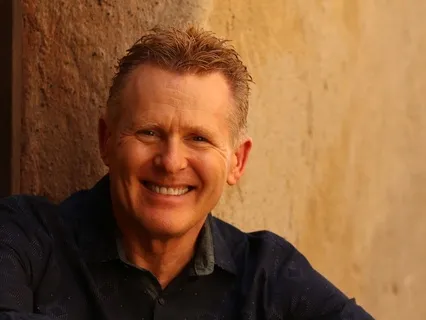
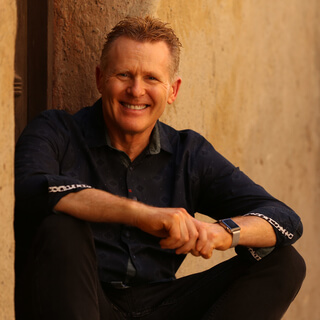
Welcome to the Happiness Podcast.
I'm Dr.
Robert Puff.
There's a severe malady that a lot of people struggle with these days,
But it isn't talked about very much,
Unfortunately.
If I were to label this condition,
I'd call it the arrival fallacy.
And here's the core symptom.
Most people live by the logic that when I arrive at X and finally get there,
Then I'll be relaxed,
Happy,
And fulfilled.
We see it all the time.
It feels like it's omnipresent.
When I graduate from high school,
When I graduate from college,
When I graduate from medical school,
Then my life will really begin.
When I get that promotion,
When the kids are grown,
When I retire,
Then I'll arrive.
Let's pause for a second and think about our own lives.
Is there something we're waiting for in order to finally arrive and be happy?
When I get through this medical crisis and my body's feeling better,
Then I'll be happy.
When I finally find my soulmate,
Go down that aisle,
And we commit to live happily ever after,
No matter what,
Then my life will begin.
For many of us,
This makes complete sense.
Our goals,
Our things that we're working towards will bring about a greater amount of happiness.
After all,
When we make more money,
Won't we be happier?
When we finally retire and don't have to go to work anymore and sit in traffic for hours,
Won't our lives finally begin?
I call all these thoughts arrival fallacies because it's based on the mistaken belief that a future destination holds the key to our present contentment.
The wisdom of this fallacy goes way back.
For example,
There was a Roman philosopher called Seneca,
And in his essay called On the Shortness of Life,
He powerfully argued that most people don't live,
But are merely preparing to live,
Constantly deferring their peace and happiness and enjoyment until a future that is not guaranteed.
We haven't changed much,
Have we?
But why are we,
Throughout human history,
So susceptible to this?
Our brains are wired for planning and delayed gratification as a survival skill.
When we do this,
We have a better chance of surviving,
But this can be misapplied to happiness.
Our world inculcates us into a linear path of achievement,
First school,
Then career,
Then marriage,
Then retirement,
As the only template for a successful life.
But there are consequences to this template.
There is often a high cost to waiting.
The first thing we do is we devalue the present moments.
When we live for the future,
The present moment becomes a mere obstacle or a means to an end.
Life's small,
Everyday joys,
Like a conversation,
A meal,
A walk,
Are overlooked because they aren't part of the big plan.
And sadly,
We end up being not present for so much of our lives.
I'm sure most of us have heard of Leo Tolstoy,
The author of War and Peace.
Of course,
Because of his success,
He achieved immense literary fame,
Wealth,
And status,
The future that he had put so much energy into working towards.
You could compare him to the life of a modern-day movie star or rock star.
But after he achieved all these great things,
He found out how spiritually hollow they were.
So did he give up and just live a life of despair?
No,
He didn't.
He spent his later life renouncing his life's works and fortune,
Realizing that the goals he had pursued had not brought him meaning he craved.
So he switched his energy towards living a life of simplicity and faith.
He even,
Towards the end of his life,
Had a correspondence with Mahatma Gandhi.
But haven't we all known people or at least heard of people like Leo Tolstoy that had so much success in their lives and then they renounced it all and went down a very different path?
I attended a talk once by a Chan Buddhist meditator,
And he was telling his story,
How he'd been in the corporate world,
Rising to much success in his career,
But his body just couldn't take it,
And he almost died.
And he realized that he had to make changes,
And he did.
He became a Buddhist monk and went around the world teaching people how to meditate.
And there's another high cost of waiting for the future to start living,
And it's the unreliability of imagined futures.
The future that we're postponing everything for is an illusion.
First,
It rarely unfolds as we imagine.
Second,
Even if we achieve our goals,
We're still ourselves.
The new job can come with new stressors.
Retirement can bring boredom or loss of purpose.
The goalpost for happiness keeps moving further away.
I remember one of the first times this really hit home with me.
I was an undergraduate at university and had a long ways to go before I was going to finish my PhD.
I hadn't even applied to graduate schools yet.
But I was in my academic professor's office,
And we were talking about my future,
And we began to talk a little bit about his life.
He was married,
He had his doctorate,
He had children,
He had a beautiful home,
I'd been to it.
I thought,
Wow,
Your life must be great.
But I immediately realized there were so many things that he was working towards,
And his life was on hold like mine was.
He had achieved everything that was still far in the future for me to achieve,
And yet he hadn't arrived.
But I'm so thankful for that conversation,
Because it changed my life.
I realized at that point I had to stop putting all my eggs in a future basket that may not turn out the way I thought it would.
And thankfully I was able to change it and start living along the way instead of waiting until I arrive at some elusive goal that I thought would make my life happy.
So what is the solution to the postponement problem or the arrival fallacy?
How do we break the habit of later?
We need to shift from outcome to process.
What do I mean by that?
You may be thinking that I suggest that we abandon our goals.
I am not.
I have a long list of goals that I will be working on until the day I die.
But the shift comes from finding fulfillment in the process of pursuing them.
Though this may be a cliche,
It's a very wise one.
Success is not just a destination,
But the quality of the journey.
How we do this is by embracing daily practices.
The small wins,
The learning,
The effort itself becomes a core of a meaningful life.
I don't know if you've ever read the autobiography by Benjamin Franklin,
But it is a good read.
And it's a prime example of a process-oriented person.
While he did have grand ambitions,
His daily focus was on his schedule of virtues and self-improvements.
He found satisfaction from the daily acts of becoming a better person,
Not just from the future wealth and fame that it might bring.
For example,
I just wrote a new book called Awakening Wonders.
And writing a book,
If you haven't written one,
Is a lot of work.
You have to first compile the information,
Put it into written form,
Write it,
Get it edited,
Then work towards getting it published.
And I also put on an audible so I had to find someone who could read it for me.
And then after you write a book,
You never know how it's gonna do.
It may do nothing,
Which can happen.
But what I did do is I really enjoyed the process.
I wrote a book on a topic that I'm very interested in and like.
It's about seeing wonder everywhere in life,
Creating a childlike heart,
Which I think is a beautiful way to live life.
And because I had to research it in order to write a book,
I learned all kinds of things that I was able to apply to my own life.
If the end result had been just focused on getting the book out,
I wouldn't have enjoyed the journey.
But I really did enjoy every aspect of writing this new book.
And life is like that.
We can have goals.
Goals are good.
But the key is to enjoy the journey of each goal that we work towards,
Realizing we don't know the outcome.
But if we have a wonderful time heading towards a goal,
Then the outcome is somewhat irrelevant.
So I do think as we work towards our goals,
Ask ourselves,
Is this something that I'm gonna enjoy getting there?
Is it something that I'm somewhat interested in and maybe even passionate about?
Because the more we enjoy our goals all along the way,
The more if we reach the end result or we don't,
We will have had a wonderful time getting there.
And then the last and very important thing that we can do to avoid the postponement problem is develop skills of cultivating presence.
For example,
We can savor life,
Deliberately paying attention to a positive experience like the taste of tea in the morning or the warmth of the sun on our face.
We can practice intentional unplugging,
Giving ourselves moments free from future-oriented distractions like emails or news alerts.
Spending time in nature,
Having quiet time just to read a book,
Making room for meditation in our lives.
Periodically going on retreat for a weekend where we don't engage with others,
But we're just still present with ourselves.
And we can also practice journaling on the present.
At the end of each day,
Write down not what you plan to do,
But one small,
Meaningful thing that happened today.
One of the most beautiful examples of this is a Stoic and Roman emperor named Marcus Aurelius,
Whose journals were later published into a book called The Meditations.
I really doubt any of us listening to this podcast have a more rigorous life than he did.
He was in charge of,
For years,
One of the largest empires that ever existed in human history.
But if you read his personal journal in The Meditations,
You find he focuses on the present moment,
Acting with virtue now,
And accepting what was outside of his control.
So in conclusion,
It's so helpful to remember the future is a direction,
Not a destination.
The goal is to build a life that is so engaging and meaningful in the present that the future takes care of itself.
And each day,
Ask yourself this,
Not what do I want to achieve,
But how do I want to live today?
On the Happiness Podcast.
Until next time,
Accept what is,
Love what is.
♪ Oh,
Oh,
Oh,
Oh,
Oh,
Oh,
Oh,
Oh,
Oh,
Oh,
Oh,
Oh,
Oh ♪