Welcome to the Happiness Podcast.
I'm Dr.
Robert Puff.
When I was growing up,
One of the traditions that my family had was at least once a month,
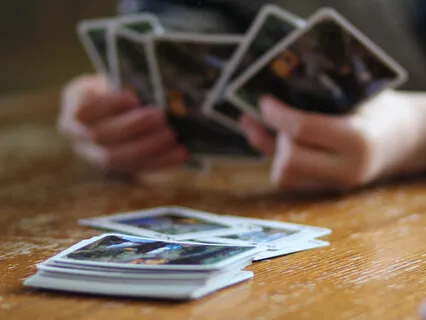
We'd go over to my grandparents' house and play cards,
A variety of card games that my parents and my grandparents really loved to play.
Well,
I remember at four years old that I had been watching them play these card games and I really wanted to play with them.
So,
They started to let me play.
And of course,
At four years old,
I wasn't very good.
But I kept playing and I got better.
And with time,
I was able to compete with them.
And I remember it being very difficult at first,
Just keeping track of all the rules,
Knowing how to play the game well,
And then with time being able to compete with them on the more simple games,
And then with time being able to compete with them on the more difficult games.
And we just played throughout my childhood,
Often on weekends when we got together.
And then when I went off to university,
And even when I was older,
Because my grandmother lived to be 90,
I would often go visit her.
Of course,
She'd pull out the deck of cards,
And we start playing a new game.
And I think my metaphor today of playing the game of cards throughout life and playing more difficult games as we get older is a really wonderful metaphor of how happiness works in our life.
I know there's a tendency to think that,
Well,
Some people are just born happy,
Stay happy and die happy.
And others of us have more difficult challenges with life,
And really never can be happy.
Of course,
I don't believe that's true at all.
Going back to my card playing analogy,
I was very curious to learn about the games these adults were playing.
My sister,
On the other hand,
Wasn't.
She didn't want to know,
She wasn't interested,
And she didn't play.
So,
I think it's like that with happiness.
We're born into this world,
And around us we see what's going on.
We see how the adults in our life,
Particularly our parents and our relatives,
Are interacting with life.
If they're doing it well,
Or if they're doing life poorly,
They're our teachers.
They teach us how to engage with life.
It's almost automatic,
And we really don't give it much thought.
So that's why I think we do find people who are happier,
Because they were raised in a more happy environment.
Others have more challenges because they had a more challenging environment.
There's nothing right or wrong about this.
It's just whatever environment we were born in is,
Of course,
Going to impact us.
But,
Some people develop a more curiosity about life.
They think,
Okay,
I see the people around me and how they're living.
But,
Other people are living differently than this.
A lot differently.
I wonder why.
In the analogy of card playing,
They're playing a game that I,
Or we,
Don't understand.
And we then say,
I wonder what game they're playing.
What are the rules of the games they're playing,
And how do I learn to play these games instead of my childhood games that I've been grown up with?
And so we get curious,
And we begin to study philosophy,
Religion,
People's biographies of the past and present.
We meet people that are doing exceptionally well in life,
And we learn.
We learn about different options that we have in regards to how our life unfolds.
Now,
I know this isn't a lot of people.
Most people will just do exactly what they were taught to do growing up,
And they really won't ever question.
But,
Since we're listening to this podcast,
We're going down a different path,
And it has two parts to it.
The first part is learning how to play the game well.
And we have to decide,
Well,
What game do we want to play?
Do we want to play the game of wealth?
Do we want to play the game of fame?
Do we want to play the game of physical fitness?
Or do we,
Perhaps,
Want to play the game of happiness?
And then we begin to study people who understand or teach us about how to be happy,
Like listening to this happiness podcast.
And then with time,
Because we learn the skills,
We get better.
We become a very good player of the game of happiness.
But here's the key on phase one.
We have to be curious,
Very curious.
If we just don't do anything,
Don't really seek to grow,
Don't seek to learn,
Don't seek to improve the skills that we have,
Then we're probably going to turn out just like our family did.
And that may be fine,
But perhaps we may be curious because we realize that some people on this planet have lived exceptionally well lives.
And if they did it,
The game they played,
I want to play too.
And of course that takes time,
That takes effort,
That takes commitment.
But no matter who we are or where we are in life,
We can choose to learn to play the game of happiness.
And if we do it well,
If we really work at it and learn the skills like detachment,
Like living in the present moment,
Like watching our thoughts,
Like being in nature,
When we learn these skills and implement them,
Then what we'll find is we will become quite proficient at living a happy life because we're playing the game of happiness,
Developing our skills and getting quite good at it.
Any of us can do this.
It takes time.
It takes curiosity.
It takes effort.
And if we were raised in a more negative environment,
It may take even more effort.
Or if we don't have the gifts of a happy disposition,
Perhaps we're more morose or sad,
Then that may take even more effort.
But I always remember I had a professor in college.
She taught French and she told me once that she didn't really do well in school at French.
It just was a very hard subject for her.
But she was very curious about it and loved the language.
So she worked incredibly hard at it,
Got her PhD for a while,
Was a translator at the UN and then was one of the best professors I ever had.
But if she'd been naturally gifted at languages,
It would have been easier for her.
But the challenge didn't stop her and no way precluded her from becoming incredibly proficient at speaking French.
We can do the same no matter our background,
No matter how dark it is.
We can find that happiness does not have to elude us.
It may take a lot of time.
It may take effort,
But it's worth it.
Now,
Phase two of this learning to play the card game of happiness is once we learn how to play,
We have to keep working at it.
Because life in many ways,
Like challenging card games,
Can continue to throw us very challenging decks of hands that we have to deal with and learn how to play well.
We can play them well,
But it takes ongoing effort.
Over the years after my grandmother passed,
I didn't continue to play cards nearly as much.
But every once in a while,
I'll get together with friends and we may play some cards.
But when I do that,
I have to refresh myself on the rules of the game because it's been a while.
Now,
If I continue to play cards,
I would know the rules and wouldn't forget them.
And it's like that with happiness.
We need to keep working on our skills of being happy.
Because we've all heard of the story of someone's life who's seemingly going well and then something happens and then it isn't going well anymore.
We know these stories and this happens because they stopped learning the skills of playing the game of life well.
And we need these skills because life sometimes deals us a very easy hand and sometimes,
Maybe a month or a year later,
Can deal us a very difficult hand.
If we developed our skills,
If we have them in place,
Then we will learn to respond well.
We'll play that game well.
But if we get slothful,
If we get lazy,
And we stop working on the skills of happiness,
Then what will happen is when life throws us these very challenging cards of life,
We won't know what to do and we'll lose this game.
And that can be a very sad,
Tragic loss.
Not living well when things happen that are challenging is sad.
Because we have the capacity to overcome any tragedy at all.
But it takes work.
It takes effort.
It takes time.
It takes curiosity.
So let me review,
In conclusion,
The two parts of how we can,
In just regards to happiness,
Live well.
The first thing we have to do is develop that sense of curiosity.
We have to say,
Okay,
Perhaps my childhood and my upbringing has been really good.
Perhaps it's been quite challenging.
But I do see people out there playing the game of life quite well.
They're happy.
When tragedy hits,
They do extremely well.
They're resilient.
They're able to bounce back no matter what comes their way.
And these are our teachers.
These are the people that we go to to learn.
Because there are things that we can learn about being happy.
But we can't learn them if we don't set aside time to learn these skills.
Like when I was four years old,
I never would have learned the more challenging games like Pinnacle if I hadn't sat there and watched and asked questions.
But we can learn these skills.
Any of us can.
We have to be curious.
We have to take the time.
It takes time to learn these skills.
It takes time to learn how to play these skills well in life.
But life gives us ample opportunities to learn.
We learn how to be happy.
And then when life throws us challenging hand decks,
We learn how to play them well.
So in the end,
We maintain that smile in our hearts.
There will be ongoing opportunity to learn these things.
As we get older,
We face challenges,
Relationship challenges,
Work challenges,
Health challenges.
They all are opportunities for us to learn how to play the game of happiness very well.
But we also need to maintain these skills,
Which is part two.
I think there's a tendency once life is going well to really stop working on the skills of happiness.
But I think this is a very dangerous path to go down.
Because life has a tendency to give us very challenging decks of hands sometimes.
And there's often not warnings.
These things can come out of the blue.
So if we don't have our skills well developed,
We won't do well.
So our curiosity should teach us how to be happy.
But the knowledge we learn about happiness should tell us that we can't just rest on our skills.
We need to keep developing them.
We need to keep practicing them.
Because they are skills.
And they take work.
And they take ongoing effort.
So in conclusion,
Curiosity is a beautiful trait.
And if we develop that curiosity to understand and to live a happy life,
Then what we'll find is our lives will go exceptionally well throughout our lives.
Whether we're dealt easy hands or whether we're dealt very difficult hands.
On that site you'll find a Yelp link,
A Google Plus link,
A testimonial link,
Or perhaps even the site you're listening to this podcast on.
Often you can leave reviews there too.
The reviews are an awesome way to encourage people to start listening to the Happiness Podcast.
And until next time,
Accept what is,
Love what is.