Welcome to the Happiness Podcast.
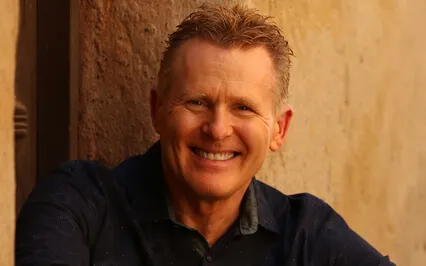
I'm Dr.
Robert Puff.
Do you ever wonder what makes one person so happy,
So jovial,
Life just seems to go so smoothly for them,
No matter what's happening in their life?
And yet another person seems to struggle with depression,
Anger,
Anxiety,
Fear,
Again,
No matter what's happening in their life.
The difference between these two people may shock you.
It's very simple.
It's all about habits.
All day long,
We are engaged in activities,
In things that we do to interact with our world.
And these things that we do,
These habits that we do throughout the day,
All day long,
Impact us.
They shape who we are and how we experience our reality of life.
For example,
Let's take two twins who are born identically at birth.
But for whatever reason,
One ends up really enjoying working out and eating a healthy lifestyle and another does not.
Well,
When they hit their 40s and their 50s and their 60s,
Their bodies or health is going to look very different because over the years,
The one has been going to the gym,
Eating well,
Staying fit.
The other has had a sedentary lifestyle and eating a very rich diet of unhealthy foods.
And after 10,
20,
30,
40,
50,
60 years,
Their bodies,
Their health is going to look very different because they have different habits and those habits have different consequences.
I don't want us to judge them.
I just want us to realize habits have consequences.
Let me use another example.
When I was in graduate school working on my PhD in clinical psychology,
One of my courses was taught by an MD because he was dealing with the medical aspects of psychological disorders.
And he was talking about how when people go to university after high school,
Let's say there's 10 people on average that want to go on and become a medical doctor.
But what he said is out of those 10 people,
Only one will actually go on and become a medical doctor.
Well,
The tendency is to think,
Well,
That one person just was really smart and the other weren't as smart as he or she.
I don't believe that at all.
I've known many,
Many medical doctors over the years,
And some of them will adamantly argue that their intelligence was average.
But what they did do is they had very good habits in place that allowed them to study hard.
When other people were wanting to party or play video games,
They were studying.
And because of those habits they had in place,
It allowed them to end up going on and getting their MD and become medical doctors.
Habits were in place.
And because those habits aligned well with becoming a medical doctor,
They were able to go on and get their MD.
But at a deeper level,
Habits are just habits.
We all have habits.
Things that we do every day regularly are pretty often.
And the older that we get,
The habits become more ingrained.
They're more solidified.
For example,
If we're a morning person and get tired at night,
We probably,
As we get older,
Will come home early,
Go to bed early,
And find a job that suits us,
That fits that type of personality.
We'll find a job that starts early and allows us to get home early.
If we're more of a night owl,
Like to be up late,
We'll probably find a job or career or lifestyle that fits that type of personality.
Our habits clearly shape our lifestyle and our lives in general and how our lives are going and what we're doing.
Habits are very much ingrained.
And the older we get,
The more ingrained they are.
But when we're younger,
Particularly,
They can be changed.
Have you ever known anyone who's gone to the military?
And perhaps they were a very lazy or very undisciplined person.
And after four years of being in the military,
They are now a very efficient,
Disciplined person.
And they like that lifestyle.
And often,
If they keep it up,
It will become a permanent part of who they are.
Because that habit now is becoming entrenched.
And our habits have consequences to them.
For example,
A person who really develops a love and passion for exercise and eating well,
Will age probably very differently than a person who prefers to just come home,
Have a bottle of wine,
Watch a lot of television and do nothing,
And perhaps eat a very rich diet of fats and sugars.
That's going to look different as time goes forward.
Habits are just that.
They are habits.
We are very much habitual human beings.
Now,
Of course,
We can change our habits.
We probably all have known people that may have gotten a cancer scare when they were a smoker.
And they stopped smoking that day and never smoked again.
Or a person who was a drinker and had liver damage.
And it scared him or her so much that they never had a drink again.
We can change our habits.
But the older we get,
The more entrenched,
The more solidified they are.
It is possible.
We all know people that have done that.
But it is easier to change habits when we're younger.
And when we do something over and over again,
Which we all do,
We all have habits that we do every single day.
It's not about that successful people have habits and unsuccessful people don't have habits.
The difference is successful people have good habits that create good consequences.
And other people just have habits that have different consequences,
Perhaps negative consequences,
Because some habits are negative for us.
Again,
Coming home and having two bottles of wine every night or smoking two packs of cigarettes every day will have negative consequences.
But at a deeper level,
It is just all about habits.
And our habits have three responses to them.
One would be neutral.
For example,
If we make our bed the second we get out of bed,
Or we wait until after we have breakfast,
It's not going to make any difference on the consequence,
Negative or positive towards our lives.
We have these habits in place because they just make life easier.
We have to make a lot of decisions throughout the day.
And having habits in place help us not get overwhelmed with all these different decisions and make our lives go more smoothly.
So we have a lot of habits that are just basically neutral.
This is things that we do.
And they're kind of irrelevant.
But there's habits that make it so we don't have to be making so many decisions throughout the day.
Then there are negative habits.
Let's say we're a woman,
And our father was very abusive towards our mother.
And because of that,
We have a habit of dating men that are abusive.
It's just a habit,
But it does have consequences.
And even though we meet someone who may be in quotes,
Nice and kind,
We don't date them because we find them boring.
We're not attracted towards them.
We have the habit of dating,
In a sense,
The bad boy.
But with the bad boy comes negative consequences.
But again,
It's just a habit,
A habit that can be changed.
We're going to talk about that before this podcast is over.
But it's just a habit.
Someone else may have the habit of really seeing life as a cup half full.
When something goes off and something goes wrong,
As it does in our lives,
They have a tendency to say,
Well,
How do I make this work?
What can I do to make this a good experience and realize what I have control over?
And when I don't have control over,
And I'll focus on what I have control over,
Like my attitude towards what's happening.
And because I have that control,
I can change this experience that other people may experience as negative into something positive.
They have habits with good consequences.
So I hope I've convinced you that we are creatures of habit.
We all have habits in place.
We do them.
And it's just what we do.
We're comfortable with them.
But some habits are good for us,
Some habits are neutral,
And some habits have negative consequences.
So now let's talk about our habits and being happy people,
Being people that life's going well.
Because you probably now can imagine that people where their lives are going very well,
But their lives are going well,
Not because at their core,
They're happy people.
They're going well,
Because they have habits in place that feed their happiness.
And they keep doing these things day after day after day.
There really aren't happy people.
There are people that do things that create happiness in their life every day.
Here's an analogy.
I love working out at the gym.
I go pretty much every day.
And it's one of my favorite things to do.
When I'm at the gym,
And I see a person perhaps in their 40s,
50s,
60s,
And they're in great shape,
I mean,
Astonishing shape.
They weren't born that way.
They aren't just naturally healthy.
They work at it every day.
And that working on it keeps them physically fit.
And let's say,
For example,
They got in an accident,
Or they stopped coming to the gym,
Because that happens sometimes people change their habits.
Well,
If we ran into them,
Say six months or a year later,
They would not look the same.
Their habits feed their health.
If they're not doing their habits,
Their physical shape would not stay the same.
It's the exact same way with our happiness.
We do need to have habits in place.
And then we need to do them every day throughout the day.
That's how happy people do well in life.
They're working at it on a regular basis throughout the day.
And if they stop,
Or they stop doing the things that are feeding their happiness,
Then they too will not be the same person in six months to a year.
And we've known people like that.
They had a tragedy that hit and life was going pretty well.
And that tragedy,
They just couldn't come back from.
It's like having a physical injury and not being able to come back from it.
They had a psychological injury.
And for whatever reason,
They gave up and they created different habits.
And those different habits created different consequences.
And I think that's one of the tricky parts of life,
Because life does throw us things,
Curveballs,
That trick us,
That get us upset,
That make us change our healthy habits.
And when we change them,
There are consequences.
So we have to be careful because life changes.
And we just need to keep doing healthy habits,
Happiness habits,
To keep our hearts in a happy place.
So let's talk about what can we do right now to start improving our lives and get on the path of creating happiness habits for our life.
Well,
The first thing we need to do is to begin to become aware.
We need to start looking at what are the habits that we participate in all day long.
We all have habits.
Hopefully I've made that crystal clear.
The question is,
Are the habits that I'm participating in throughout the day neutral?
Are they positive?
Or are they perhaps negative?
Well,
The ones that are negative,
We have to say,
Okay,
This is a negative habit that I participate in.
When I get in my car and drive to work,
I'm a stress basket.
I want everyone to drive calmly and safely,
And people don't.
And it makes me so upset.
By the time I get to work and by the time I get home,
I'm a stress basket.
That's an unhealthy habit.
So what we do is we say,
Okay,
Let me start tackling this.
Let me give myself more time to get to work,
Not being in a hurry to get there,
Perhaps listening to the happiness podcast on the way to work,
On the way back to focus on those type of things.
So what we do is through awareness,
And awareness is pivotal.
We begin to become aware of areas in our life,
Habits in our life that are causing us damage,
That are definitely not good for us.
And it isn't that hard to figure them out.
We all pretty much know if we're honest that this habit is not a good habit for my life.
We know that we tend not to change them because we don't like change.
We're creatures of habits and our habits keep us stuck.
Now,
If they're good habits,
That's a good thing.
But if they're bad habits,
That's a bad thing.
So first thing we do is we just observe ourselves.
Well,
What habits do I have in place that are good for me?
But more importantly,
What habits do I have in place that aren't good?
And then let me choose one or two to start tackling,
To start changing.
And initially,
It will be hard because of the habit in place.
But you know what's something wonderful?
We can change our habits by consistently doing the new habit.
And with time,
The new habit will become enjoyable.
It will be the habit.
And we won't even have to fight to do it anymore.
It will be like,
Of course,
I get up in the morning and go to the gym every day.
I like going to the gym.
That's a good habit I have in place.
Of course,
I listen to positive motivational podcasts and watch positive motivational shows because these are good habits.
And I like doing that.
I don't want to do other things that are negative anymore.
I'm not even attracted towards them.
Because here's the key.
The key is habits are habits.
Yes,
There are some that are bad for us.
Yes,
There are some that are very good for us.
But they're just habits.
And once we identify that bad habits and then work towards changing them,
Guess what?
The bad habit now becomes a good habit.
And it's a habit.
We don't have to work at it as hard anymore.
It's just what we do.
So the key of life is to identify the good habits,
Keep them,
Identify the bad habits,
And take one or two at a time so we don't get overwhelmed and work towards changing them until they become a good habit.
And then once they become a good habit,
We tackle new issues that we know we need to tackle.
And then we change them.
And as we keep working on ourselves,
Our lives will get better and better.
Because the truth of it is,
If habits are ultimately what shape us,
All we have to do is cultivate good habits.
I know this isn't easy.
And some of you may be wondering,
Well,
Dr.
Puff,
I don't even know what a good habit is.
I come from such a dysfunctional background.
What do I do?
Well,
Again,
The good news is I'm almost approaching 400 podcasts of how to have a happy life.
So there are a lot of things you can learn here to work on changing.
And we can change.
There are going to be specific tools here to help us change,
To change our habits.
It's not always easy.
It can be challenging.
But having an unhappy life is very challenging and definitely not easy either.
So may we all explore our habits,
Really cultivate our good habits and work towards changing habits that are causing us suffering.
And with this effort,
May we find that each and every day keeps getting better.
And we find that our lives are becoming a beautiful adventure one day at a time,
One breath at a time.
Thank you for joining me on the Happiness Podcast.
Until next time,
Accept what is,
Love what is.