Hi,
This is Dr.
Natalie Feinblatt.
I'm a licensed clinical psychologist in Los Angeles,
California,
And I provide spiritually informed care for addiction and trauma,
Among other things.
If you're interested in contacting me or maybe even working together,
I will give you my contact info at the end of this guided meditation.
So today,
Our guided meditation is going to be something called progressive muscle relaxation,
Or PMR.
This is more of a physical technique than a visual one,
So it's a little bit of a different kind of guided meditation.
What I'm going to be doing is I'm going to be walking you through various muscle groups in your body and asking you to briefly tense them very tightly and then release them.
And progressive muscle relaxation is based on the fact that when you,
And you can do this right now if you want,
Tighten your fist as tight as you can and just hold it,
Hold it,
And then just let it flop open.
It kind of feels nice.
It kind of feels a little relaxing,
Like there's this kind of flood of coolness going through your muscles.
So this is a meditation designed to help relax you physically and hopefully mentally.
And the cool thing about progressive muscle relaxation is that once you've done it,
You don't really need to listen to a recording again,
And you'll get this more at the end.
But you can pretty much pick this up,
Do it anywhere,
Anytime,
All on your own.
So let's go ahead and get started.
So if you like,
You can put on some quiet instrumental music in the background for this meditation,
But it's not required.
So first get comfy,
And comfy means whatever feels good for your body.
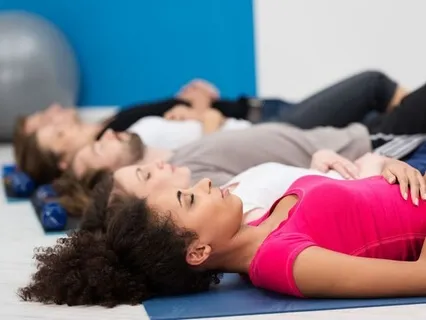
You could be laying down,
Sitting down,
Just find a physical position where you don't have to move your body too terribly much during the meditation.
And when you feel ready,
You can close your eyes.
Most people prefer to meditate with their eyes closed because it helps them get relaxed and centered.
However,
Some people,
Particularly people with severe anxiety or a trauma history,
Might find that closing their eyes during a meditation makes them anxious as opposed to relaxed.
So if that is the case for you,
You can absolutely meditate with your eyes open.
It's kind of like a soft,
Unfocused gaze in front of you.
Again,
This is about what works for you.
And now we're just going to draw attention to the breath.
And first we're just going to start by noticing it.
Not doing anything to it yet or trying to change it.
Just noticing if you're breathing quickly or slowly,
Shallow or deep.
Or if your breathing's totally unremarkable.
And the next time it feels comfortable with a little bit more intention,
You're going to take a nice,
Slow breath in through the nose.
And let it out through the mouth.
Allowing your breath to help ground and relax you.
Again,
Inhaling through the nose.
And exhaling through the mouth.
Dropping down within yourself.
Breathing in through the nose.
And out through the mouth.
And just continue to breathe at your own pace.
Noticing your abdomen rising and falling with each breath cycle.
And as your breathing becomes more relaxed and restful,
Take your awareness down to your feet.
And we will start this process with the muscles in the feet and toes.
And when I say the word tense,
You will tense the muscles in the feet by curling the toes down and holding for a count of four full seconds.
And then you will release the muscles in the feet when I say the word release.
And we will repeat this process two times in various muscle groups throughout the body.
So,
With your awareness in your feet and toes,
Now tense and hold the feet for one,
Two,
Three,
Four,
And release.
Notice the difference between a tense muscle and a relaxed muscle as you go through this process.
Remembering to inhale through the nose.
And exhale through the mouth.
Releasing any residual tension in the feet.
With each tense and release cycle,
You will notice it becomes easier and easier to release and relax each muscle group.
Now again,
With your awareness in your feet and toes,
Tense and hold for one,
Two,
Three,
Four,
And release.
Inhaling through the nose and exhaling through the mouth,
Relaxing even more with each breath.
And now we'll move our awareness up to the lower legs,
To the calf area.
When I say tense,
We will tense these muscles by pointing the toes up toward the knees,
Again holding for a count of four,
And then releasing the calf muscles.
So,
With your awareness in your calf muscles,
Now tense and hold for one,
Two,
Three,
Four,
And release.
Noticing the difference between a tense muscle and a relaxed muscle as you go through this process again.
Remembering to inhale through the nose and exhale through the mouth,
Releasing any residual tension in your calves.
And with each tense and release cycle,
You will notice it becomes easier and easier to release and relax each muscle group.
So again,
With your awareness in your calves,
Tense and hold for one,
Two,
Three,
Four,
And release.
Inhaling through the nose and exhaling through the mouth,
Relaxing even more with each breath.
And then move your attention to the muscles in your thighs.
When I say tense,
We will tense the muscles in the thighs by pressing the back of the legs into the bottom of the chair or floor,
Holding for a count of four seconds,
And then releasing.
So,
With your awareness in your thighs,
Now tense and hold for one,
Two,
Three,
Four,
And release.
Notice the difference between a tense muscle and a relaxed muscle as you continue through this process.
Remembering to inhale through the nose and exhale through the mouth,
Releasing any residual tension in your thighs.
Once again,
With the awareness in the thighs,
Tense and hold for one,
Two,
Three,
Four,
And release.
Now move your attention up to the muscles in the abdomen and lower back.
When I say tense,
We will tense the muscles in the abdomen by imagining that we are trying to touch the belly button back to the spine,
Pressing the low back into the chair or floor,
And holding for a count of four seconds,
And then releasing.
So,
With your awareness in your abdomen,
Now tense and hold for one,
Two,
Three,
Four,
And release.
With each cycle,
You notice it becomes easier and easier to release and relax each muscle group.
Now again,
With your awareness in your abdomen and lower back,
Tense and hold for one,
Two,
Three,
Four,
And release.
Inhaling through the nose and exhaling through the mouth,
Relaxing even more with each breath.
Now bring your awareness to the muscles in your upper arms.
When I say tense,
We will tense the muscles in the arms by curling the arms up toward the biceps and holding it as if you're lifting a weight and holding it to your chest,
Holding for a count of four seconds,
And then releasing.
So,
With your awareness in your upper arms,
Now tense and hold for one,
Two,
Three,
Four,
And release.
Continuing to notice the difference between a tense muscle and a relaxed muscle as you go through the process again.
Remembering to inhale through the nose and exhale through the mouth,
Releasing any residual tension in the arms.
And now again,
With your awareness in the upper arms,
Tense and hold for one,
Two,
Three,
Four,
And release.
And now bring your awareness to the muscles in your hands.
And when I say tense,
We will tense the muscles in the hands by clenching them into tight fists,
Holding for a count of four seconds,
And then releasing.
So,
With your awareness in your hands,
Now tense and hold for one,
Two,
Three,
Four,
And release.
With each cycle,
You notice it becomes easier and easier to release and relax each muscle group.
Now again,
With the awareness in the hands,
Tense and hold for one,
Two,
Three,
Four,
And release.
Inhaling through the nose and exhaling through the mouth,
Relaxing even more with each breath.
Now notice the muscles in your upper back around your shoulder blades.
When I say tense,
We will tense the muscles in the upper back by pressing the shoulder blades together,
Holding for a count of four seconds,
And then releasing.
So,
With your awareness in your shoulder blades,
Now tense and hold for one,
Two,
Three,
Four,
And release.
Noticing the difference between a tense muscle and a relaxed muscle as you go through the process.
Remembering to inhale through the nose and exhale through the mouth,
Releasing any residual tension.
Now again,
With your awareness in your upper back,
Tense and hold for one,
Two,
Three,
Four,
And release.
Moving up,
Notice the muscles in the shoulder area and neck.
When I say tense,
We will tense the muscles in the neck by pressing the shoulders up toward the ears,
Holding for a count of four seconds,
And then releasing.
So,
With your awareness in your neck and shoulders,
Now tense and hold for one,
Two,
Three,
Four,
And release.
With each cycle,
You notice it becomes easier and easier to release and relax each muscle group.
So again,
With your awareness in your shoulders,
Tense and hold for one,
Two,
Three,
Four,
And release.
Inhaling through the nose and exhaling through the mouth,
Relaxing even more with each breath.
Now bring your awareness to the chin and jaw area.
When I say tense,
We will tense the muscles in the jaw by pressing the chin into the chest,
Holding for a count of four seconds,
And then releasing.
So,
With your awareness in your chin and jaw,
Now tense and hold for one,
Two,
Three,
Four,
And release.
Again,
Noticing the difference between tension and relaxation in your muscles as you continue through the process.
Remembering to inhale through the nose and exhale through the mouth,
Releasing any residual tension in this area.
Once again,
With your awareness in your jaw,
Tense and hold for one,
Two,
Three,
Four,
And release.
Now bring your awareness up to the facial muscles.
When I say tense,
Tense the muscles in the face by furrowing the brow and squeezing the muscles together as if you've just eaten a very tart,
Sour lemon,
Holding for a count of four seconds,
And then releasing.
So,
With your awareness in your face,
Now tense and hold for one,
Two,
Three,
Four,
And release.
With each cycle,
You notice it becomes easier and easier to release and relax each muscle group.
Now again,
With the awareness in the face,
Tense and hold for one,
Two,
Three,
Four,
And release.
So,
That about wraps it up.
I hope you can now see what I mean by once you've done this,
You can pretty much have this in your toolkit whenever,
Wherever.
You don't have to have a recording.
You can do this in bed if you're not falling asleep or if you're on the bus and you're having some anxiety.
It really kind of works anywhere.
So again,
This has been Dr.
Natalie Feinblatt.
I'm a licensed clinical psychologist in Los Angeles,
California.
I provide spiritually informed care for addiction and trauma recovery.
I have a private practice where I see clients in person as well as via video sessions.
If you're interested in learning more about what I do,
Contacting me,
Or maybe even working together,
You can find me at www.
Drnataliefeinblatt.
Com.
That's www.
Drnataliefeinblatt.
Com.
You can give me a call at 323-284-7888.
I don't text on this number,
So calls only please.
Or you can email me at drnatalie at drnataliefeinblatt.
Com.
Thanks for joining me today and please keep a look out for my other recordings here on this awesome app.
Take care.
Bye for now.