What if aging well was less about luck and more about what you know and what you do?
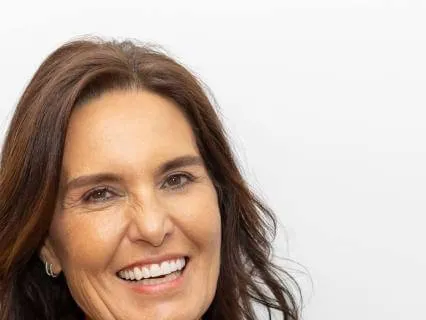
I'm Dr.
Linda Friedland,
And this is the Longevity Blueprint.
I never imagined I'd be speaking publicly about my own poop.
And I certainly didn't expect that a gut microbiome test taken out of curiosity as I stepped into my 60s would send me down one of the most fascinating rabbit holes in modern medicine.
Because what I discovered wasn't just about digestion.
It was about my brain too,
My mood,
My immunity and how I'm aging.
Today,
I want to share what I learned.
And what I think every person in midlife should understand about the remarkable conversation happening between your gut and your brain right now without you even knowing it.
What is the gut microbiome?
Deep inside your digestive tract lives a vast ecosystem of trillions of microorganisms.
They are bacteria,
Viruses,
Fungi,
In constant interaction with your body.
They are not passive passengers.
They break down food,
They synthesize vitamins,
They regulate inflammation,
They support hormone metabolism,
Including estrogen.
In perimenopause and menopause and produce brain chemicals,
Including serotonin.
You've heard of serotonin,
The neurotransmitter most associated with your mood and emotional well-being.
He has a fact that always stops people.
Approximately 90% of your body's serotonin is produced in your gut,
Not your brain.
Which is why scientists now call it the second brain.
The gut,
Your gut and your brain are in constant two-way communication through a network of nerves,
Hormones and immune signals.
We call this the gut-brain axis.
We all know that the gut-brain connection works in one direction.
Anxiety before a difficult conversation,
Stress that immediately upsets your digestion.
But this connection runs just as powerfully the other way.
Your gut influences your mood,
Your stress.
Response,
Your mental clarity and also your sleep.
When your microbiome is diverse and balanced,
This communication is stabilizing.
When it's disrupted by too many processed foods,
Antibiotics,
Chronic stress or poor sleep,
The effects can be surprisingly far-reaching.
You get anxiety,
Brain fog,
Fatigue,
Lowered immunity and disrupted sleep.
This isn't some kind of wellness theory.
This is increasingly well-supported science.
What did I discover about my own gut?
Interestingly,
With my vegetarian whole foods diet,
I assumed my microbiome results would be excellent.
They won't.
I had low levels of several key beneficial bacteria.
And I'd been quietly making a common mistake,
Focusing more heavily on protein to preserve muscle mass at this age,
That I'd crowded out the variety of plant foods my gut bacteria actually needed to thrive.
Here's also what I learned,
That probiotics,
Taking probiotics are not enough.
Your gut bacteria need to be fed with a diverse,
Fiber-rich diet built on real food.
The goal isn't just adding good bacteria,
It's nourishing the ones you already have.
What actually supports this gut-brain axis is diversity,
Eating a wide variety,
Up to 30 different ones a week.
Of foods,
A broad range of beneficial microbes.
A simple shorthand I love is G-bombs,
Greens,
Beans,
Onions,
Mushrooms,
Berries and seeds.
Fermented foods are brilliant,
Yogurt,
Kefir,
Miso,
Kimchi,
Sauerkraut,
These introduce the beneficial life cultures.
And have been shown to really increase your microbial diversity.
Sleep protects the gut.
The microbiome has its own circadian rhythm and poor sleep disrupts it directly.
Movement too,
Strangely,
Regular physical activity is consistently linked to greater microbial diversity in a better biome.
Where to begin,
You don't necessarily have to have a microbiome test to start.
The foundations are the same regardless.
Feed your gut,
Diversify your plate,
Protect your sleep and manage your stress.
Because in the biology of aging well,
Your gut may be one of the most powerful places to begin and one of the most overlooked.
This is the longevity blueprint here on Insight Timer.
Until next time,
Age boldly,
Live well and make good choices.