Hello and welcome to Within All Things.
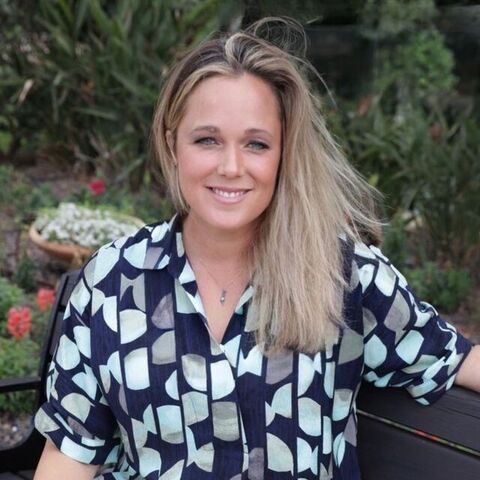
My name is Azriela Jankovic.
On this show,
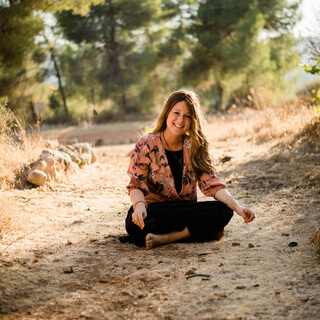
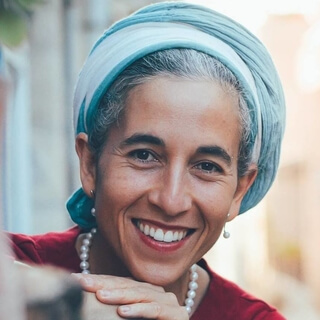
I'll be interviewing Leah Aharoni.
Leah is a successful business woman,
Business consultant,
And business coach.
She has been in the field for over 25 years.
She will tell us a fascinating story of when she was born in Russia and how learning about her spiritual heritage was actually illegal.
And she faced serious threats to her life and the life of her family for simply learning about her heritage.
We'll learn more about her life,
Her journey from Russia to the United States,
And finally to Israel where she resides now.
In addition to her work in the business sector,
She has also been a head of the mayor's office at the Bet El Municipal Council.
She has a master's degree in industrial and organizational psychology,
A bachelor's degree in education,
And certifications in life and business coaching.
In this episode,
She'll share with us her secrets to success.
As you'll discover,
She teaches and she also lives by certain spiritual principles that have the ability within themselves to bring us abundance,
Healing,
And really a host of other benefits that can make our lives in this world a better place.
Let's go ahead and get started.
Leah,
Tell us a little bit about your life.
I was born in the former Soviet Union.
And my upbringing is a little bit different from what people have in the West because growing up in the former Soviet Union in a family that actually was opposed to the regime meant that I lived in two different realities.
There is the reality we had at home.
My parents would tell me basically everything they think about communism and how they oppose it and how wrong it is.
And then I would go outside into the world and there was this story told about how communist is the best thing that could ever happen to people and how we're living in the best society possible.
And sort of navigating this double story from literally from as far back as I can remember myself is an upbringing that gave me an understanding that really all of the world is multifaceted and complex and that multiple stories and multiple layers to every reality.
So that was one thing.
The other thing that I grew up with was a very strong Jewish identity.
Like I said,
Although Judaism wasn't practiced in the Soviet Union,
My parents really told me all about my Jewish identity from a very early age.
Like I was three years old,
I would stand on the couch and scream,
I'm Jewish.
And when I was around 10,
My mother literally took me into a snow covered forest away from prying ears and told me everything that she knew about Israel and Judaism,
Which wasn't much,
But everything that she knew,
She made sure to tell me and with a lot of pride.
And my father would actually turn,
He had a transistor that enabled him to listen to Kledestan radio broadcasts,
American and Israeli radio in Russian.
It was illegal to listen to them,
But he would turn them on every night.
And I would fall asleep listening to stories from the West and stories about Israel and to Jewish content.
So,
Like I said,
Really growing up with two identities,
The public identity and your private identity and trying to manage and navigate two of them.
Okay,
Leah,
So for those of us who are not yet so familiar,
Can you walk us through a little bit in terms of when your parents were teaching you about your religion,
What were the dangers?
Why weren't they not allowed to do that?
And what threats did they face if they were discovered teaching you about these things?
So when I was nine,
My mother,
Who was a Russian lawyer,
Literally sat me down and told me what I should do if my parents are ever arrested,
What my rights are,
If I'm ever interrogated by the KGB,
What I should say,
What I shouldn't say,
Whom should I call,
What should I do?
It was literally like we knew that this person,
This neighbor is a KGB informant and that person you shouldn't trust and you cannot talk about anything here at home outside.
And my mother's first cousin and his wife were actually killed by the KGB in a staged car crash.
Your mother's first cousin was killed by the KGB in a staged car crash.
Yes.
So when I was nine,
I had this second cousin being brought up by his grandmother because he was an orphan.
And I knew that,
You know,
There were no stories.
I totally knew what happened to his parents.
So the danger was very real and you live with it.
I know it sounds scary and preposterous now that we're sitting out here,
You know,
In the free world.
But for me,
That was just everyday reality and understanding that,
You know,
These are things you can't say,
These are things you cannot say from a very early age,
From as far as I remember myself.
Literally like as soon as I started talking,
I knew that the things you just don't say outside the house.
So you knew that there was this secret world of spirituality that must have been so important to your mother,
Who was a lawyer,
Who knew full well the dangers that she faced in teaching these traditions to you.
And yet she took you out into the snow covered forest and she told you everything that she knew.
Yes.
What did she share with you?
What do you remember from that day?
I think she shared about,
I don't remember.
It was a long walk.
It was a very long walk.
She told me about Israel.
She told me stories from the Six Day War.
We're talking in the mid 80s.
But you know,
What she heard were things from the Six Day War about how,
You know,
How Israel was created,
How it triumphed in its wars and certain bits and pieces of Jewish tradition.
Really she didn't know much.
But I think it was very,
Very important for her to instill this Jewish identity in me.
And thinking back to it,
My grandfather,
Her father traveled to visit relatives and friends during the mid 80s.
And he brought back two items made in Israel,
Actually smuggled them in because if he would have been caught,
He would have been sent to prison because this,
These items were not allowed in Russia.
He smuggled in a tiny prayer book in Hebrew.
None of us knew how to read Hebrew,
But just having it was important.
And he smuggled in a napkin holder with pictures of the Western Wall on it.
You would open this little window and there was a set of pictures of the Western Wall that would come out.
And I remember as a child sitting by my parents dining room table,
Looking at these pictures and just somehow sensing and knowing that my home is not in Russia.
My home is in Israel.
So when I was 17,
As soon as I finished high school and basically it was a free person,
The first thing I did was just get on the plane and come to Israel.
So one more significant thing happened to me before we left Russia was that when I was 12 and the Soviet curtains sort of lifted a little bit,
American Jewish organizations made sure to bring Jewish books into Israel.
And I got the first set that was brought in a prayer book and a copy of the Hebrew Bible was Russian translation.
And my uncle got a copy.
He had nothing to do with that.
So he nothing to do with it.
So he gave it over to me.
And reading these texts really sort of gave me the first inside educated glimpse at what Judaism is and what it's about.
And then shortly afterwards,
It became possible to actually leave Russia.
And my parents got applied for a visa.
And we left when I was 13 and came to the United States and in the United States,
You know,
It's like you taste freedom all of a sudden.
You don't have to look over your shoulder.
You don't have to be worried who's listening to your phone.
And you can basically do anything you want and think anything you want and say anything you want.
And you can pursue the education that you want.
So as soon as we got to the United States,
I walked into the local library and read everything they had on the Jewish shelf.
And when that was not enough,
Basically,
I opened the phone book from the nearest Jewish school knocked on the principal's door and said,
Hi,
I want to study here.
So that enabled me to get a Jewish education.
And by the time I was 17 to actually know how to read Hebrew,
Be familiar with Jewish texts,
Be familiar with the Bible,
And then come to Israel explore that in more depth.
Soon as we left Russia,
Our first step was actually in Austria,
In Vienna.
And when we got off the plane,
We had to make a decision.
The family had to make a decision where to go.
And my mother told me,
You keep quiet because you want to go to Israel,
But we are going to America.
So I kept quiet then.
But you know,
Four years later,
I really realized my dream and came to Israel.
And it's been amazing ever since.
So have you been in Israel since you graduated high school?
Yeah,
I've been in Israel for the past 26 years since I graduated high school.
I came to Israel at the age of 17.
And I got a degree in Bible because I really wanted to learn more as much as I could.
And I got married.
I have seven kids.
And I'm bringing them up here in Israel.
And about 15 years ago,
I became exposed to the Hasidic tradition and to the Hasidic teachings,
Which has been,
I think,
The turning point of my life because it's like having a veil lifted and you're seeing this whole spiritual underpinning that I was talking about earlier.
You're seeing this whole spiritual reality behind the physical world.
So learn a little bit about Hasidism,
It's a movement that started in the mid 1600s in Ukraine and Poland and started by the Baal Shem Tov,
Rabbi Israel.
And the two main parts of these teachings are that God creates the world every single second.
Not like we're saying that God created the world once in the beginning in Genesis and then the world just continues going on autopilot.
But what Hasidism teaches is that God literally creates the world in you every single second.
And if you know anything about modern physics,
That's actually exactly how it is.
So understanding that God creates the world every single second creates a very different reality and ability to relate to the world and to what happens to you in a very,
It's much more equanimity than would otherwise be possible.
And the other thing that Hasidism teaches is that every person's worth is unconditional.
Every person's worth and value are based on only one fact that God created them and put them into the world.
And that's the beginning,
Middle and end of your worthiness.
Because in the Western world,
We think that I am worthy if I met a certain criteria that was instilled in me as a child.
And we all have conditions for our self-acceptance and self-love and self-worth.
And what Hasidism teaches is no,
There are no conditions.
You are worthy just by the fact of being a human being and then any kind of accomplishments you make,
That's step two.
And that's amazing.
Sometimes they will have to accomplish things,
But that doesn't say anything about your worthiness as a human being.
So these teachings for me were really revolutionary and I've been spending the past 15 years integrating them into my life and teaching them to other people.
And they can make a huge difference in people's lives.
In thinking about these two different ideas,
The first one that the world is constantly being recreated and the second one that we are intrinsically worthy because we have been created and we are being constantly,
Is that right that we are also because we're part of creation,
Are we also being constantly recreated by this infinite God as well?
Yes,
We're part of creation and we are being recreated every single moment.
And there's actually a very powerful idea that Jewish New Year is coming up next week.
And there's a very powerful idea that every year before the New Year,
God just takes our consciousness away.
And then on the New Year,
As we blow the shofar,
He gives us a new higher consciousness for the coming year that we have never had before.
So I think most people feel like they're limited to what they can,
To their consciousness,
To what they know,
To what their abilities are.
But this idea is you get new consciousness every year.
The work of this year is not the same as the work of last year.
So you're getting a whole set of new tools and abilities and consciousness for the work of the coming year.
And in a certain sense,
You actually get that every day,
Every day,
Every morning,
You open your eyes,
You get a new download,
Something you haven't had the day before.
It's a very liberating idea because what I can do today is not what I can do tomorrow.
And what I'm expected to do today is not what I was expected to do tomorrow.
So my abilities are different every single day.
It's very liberating.
So I'll give you an example I had a few months ago,
Which was very profound for me.
It's very random,
But it was very profound.
I was supposed to speak to a group of American college students in Jerusalem.
And I obviously got left on time to be on time with Santa's Fair.
And I got on the light rail,
Which runs through Jerusalem,
To get to my speaking engagement.
And then half way through the ride,
The light rail just gets stuck.
And it stands there for five minutes,
10 minutes,
15 minutes.
And at that point,
I'm saying,
OK,
I don't know how long it's going to be stuck.
I'm just getting off and I'm walking in heels on cobblestone.
There's no car traffic in this part of town.
You just really have to walk.
Now,
I called the organizers,
Explained the situation,
And told them,
I'm sorry,
I'm late,
But I'm coming and walking.
Now for me to be late is like earth shattering.
I hate being late.
And especially being late to my own speaking engagement.
But what hit me at that moment was God creates the world every single second.
And God created the world in this second in a way that you cannot get to your speaking engagement on time.
There is nothing you can do to get there on time.
So just let go and do the best you can.
And I do not know why God decided that I'm going to be late 25 minutes for my own speaking engagement.
But if that's what he decided,
That's what it's going to be.
So instead of being nervous,
Stressed out,
Annoyed,
Angry,
And all the other negative emotions I could have had,
I just relaxed.
And it just worked.
And yes,
I was 25 minutes late and I said,
I'm sorry.
And I told them why.
And actually shared my thought process with the students there about understanding that God created the world.
And if that's what he meant for the best of me and those listeners,
That was going to happen.
And I don't know what effect that had or did not have on them.
But I know that I had a minute of equanimity and actually the situation that could have been so stressful and negative turned out into something positive because I really connected to God at that moment.
So that's an example of when I'm in this consciousness of God creating the world every second,
I can really take a negative experience and turn it into something positive.
I don't need to know why God decided that.
That's just maybe one day he'll show me and maybe he won't,
But it's really relevant.
Wow.
I think we all have so much to learn from that idea.
And as I'm imagining you walking in your heels down the cobblestone and you're late and there's nothing that you could do to change that situation,
I'm thinking about the biochemistry of stress and how this very much can,
The simple idea that you're sharing with us is so powerful because it has the ability in itself to allow us to relax.
We're not getting frustrated.
We're not getting angry.
We're not affecting our other people negatively.
And because of that,
We are able to tune in with a higher level of consciousness simply by being present with the fact that reality is as it is supposed to be and I am going to be in a place of acceptance.
Very true.
Very true.
And I think the more we do that,
The more it becomes our reality.
Because at first it's really hard,
Especially when something like being late is a problem for you.
We all have our issues.
We all have an issue that really sparks stress for us and it's different for different people.
So the first time you have to really be in this place of acceptance,
It's a lot of effort.
And the second time it's a lot of effort.
But at a certain point,
The more you practice this and the more you get into this consciousness,
Then it's just,
You know,
It's not an effort anymore.
Like yesterday I gave a class and,
You know,
10.
30 PM I have to get back home,
My car doesn't start.
So I stopped somebody and tried to get my car jumped and it didn't work.
So that person gave me a ride back home.
It could be a very stressful situation or it could be just a situation of,
You know,
This is what there is,
We do what we best we do.
And you know,
Go on with your day and just be totally okay.
And I know some people listen to this and this is really odd to them.
Like how can you be okay in this stressful situation?
And I think we're really just,
This stress is the stress we're creating for ourselves.
I don't think it's necessary.
You've done so much in your professional life and you've lived in three countries and you've really taken on this journey professionally and spiritually all on your own.
And I'd love to have you paint a picture for us of what that transition looked like and how you got into this current project of visiting the masters and bringing other people with you.
Okay,
So the two steps to this project.
I was running a translation agency about seven or eight years ago,
Which I established and I was asked to mentor a small group of women on just business management,
Just from my experience.
And after a year of volunteering with these women,
I understood that basically that's what I want to do when I grow up.
I want to help other people establish their businesses.
You need to understand that growing up in Russia,
One of the things you're taught is that nobody cares what you think.
And especially in the kind of family I grew up,
The message is you don't need to think,
We already thought for you and just do what you're told and you'll be okay.
And when I was six,
There was this message in my family is that you're an amazing child until you had an opinion of your own.
So I've been taught from a very early age to just sit down,
Shut up and do what you're told.
And at the age of 35,
I'm understanding that I actually have a voice and I actually want things and I can create those things in the world.
And business is just really an extension of this voice that I have for the world.
And being able to help other women find themselves,
Their voice and project it as a business,
As a career or just in any other way was very,
Very interesting and also healing.
So I got trained in coaching.
I got a master's degree in organizational psychology.
I closed my translation business and I went into business coaching and consulting,
Which is what I've been doing for the past seven years.
And as part of working with so many people,
With individuals and businesses and organizations,
I've discovered that no amount of marketing or business help can help if people do not have this very deep grounded self of self-worth,
Self-acceptance and self-love and just being okay with who they are and being okay in their skin.
And the more I realized that,
The more I understood that this is the work that's really important.
That's the work I want to be doing.
That this is the work I've been doing mostly for the past couple of years,
Just helping people understand that they are okay.
Just one situation,
I was working with somebody who is a CEO of an organization and they had a few bad run-ins with clients.
And this CEO was literally like feeling such a failure because things are not working out with their clients.
She was literally throwing up every Sunday just thinking about going back to work the next day.
It took her a while to integrate this into her thinking because this was such a foreign idea to her.
But we integrated this idea that she is worthy just because of who she is,
Of what she is.
She's God's creation.
Her worthiness does not depend on what her client thinks of her that day,
Whether that's good or bad.
And the more she integrated that,
The calmer she became,
You know,
She started throwing up every Sunday.
And the better her relationships with her clients became and actually her clients became much more appreciative of her because she was appreciative of herself.
And I know many people think that's irrational,
But that's exactly how it works.
And I've seen that with my clients so many times.
The second my clients start to appreciate,
Accept and be okay with who they are and just be okay being,
No matter how they perform,
The more the world reflects that back to them.
Wow.
It's really incredible how this teaching of our intrinsic worth that you learn from these spiritual masters has such a practical application.
And I think you really showed us so clearly with this situation,
This CEO who was able to overcome physical symptoms because she integrated the idea that she was intrinsically worthy.
How do I actualize this in my own life?
Or can I do this by myself?
Absolutely,
You can.
Well,
First of all,
For many of us,
It doesn't,
It feels counterintuitive.
But what I'm asking people to do first is to just intellectually connect to the idea.
I know it doesn't feel right.
I know it doesn't fit right,
But can you intellectually at least make certain steps,
Wrap your head around the idea that you have intrinsic value because God put you there.
And after some conversation for some people,
It's quite a big jump and big leap of faith because they just don't understand what that means.
But once they sort of can intellectually wrap their head around this idea,
What I suggest is actually just talking about it to other people,
Discussing it with other people and looking out for examples and clues in your everyday life to see how that's true,
How the world supports this idea because the world really reflects through us what we believe.
So that's step one,
Really just making intellectual sense of this,
Talking to other people and looking out for clues.
And then taking a little bit of time a day,
Maybe like five,
10 minutes to think this idea through,
To maybe meditate on it,
To think of all the things that are right with you,
All the things to your great full swirl.
There are many,
Many,
Many,
Many more things right with every person than there are wrong with every person and certainly with people who are growth oriented.
There are many,
Many things,
Many more things that are right with us than that are wrong with us.
So embracing that part,
I find it very helpful.
I can tell you that even 15 years ago,
If I would think of anything I have done wrong and any kind of wrongdoing or wrong saying of my own,
I would have a physical sensation of wanting to be swallowed by the earth.
Literally,
I felt it.
And I thought about it recently.
I haven't felt that in a very long time because who I am,
My worthiness,
My value in this world is just not dependent on my performance.
It's total.
And if I make a mistake,
So fine.
So I made a mistake,
I'll learn from it.
I'll fix it.
I'll do better next time.
But if I make a mistake or if somebody doesn't like me or if somebody has bad feedback,
It doesn't really say anything about my worthiness.
So when you have feedback in terms of,
Say,
Your business performance or a speech that you gave,
Be that feedback positive or negative,
Are you saying that you're not listening to it or are you saying that there's just a part of you that it doesn't necessarily affect?
Obviously,
It's work in progress.
I can't say that feedback doesn't influence me at all.
But if it's positive feedback,
I understand that there's something of value of what I'm doing.
It's obviously validating.
But there's something of value that I'm doing.
For example,
I just did a retreat last week and women were very,
Very happy and gave me a lot of positive feedback.
So obviously,
It felt very pleasant,
But also it gave me feedback that I'm doing something of value or I should be doing more of that because that's what people need.
And if people give me negative feedback,
So it's one of two things.
It's either I made a mistake,
Okay,
Let me re-evaluate what I did wrong and how I could do it better next time.
Or it's,
You know,
They're just projecting their own stuff onto me and I don't really have to pay attention to that.
I think it's a really deep idea.
I think a lot of this speaks to the fact that when we are focused on doing spiritual work in the world,
We realize that it's not entirely us.
There's something bigger going on.
There's something that we are really a part of.
And I just,
I love this idea.
I think it's so valuable.
I'm curious to hear a little bit more from you in terms of your trips.
You just mentioned that you did a retreat and I saw the amazing pictures.
I know that you did this one in Israel.
And I'd love to hear more about your retreats in general.
And also,
I'm just so curious about these trips to Eastern Europe where you visit the spiritual masters and if you could share with us a bit about that too.
So my background,
Like I said,
Is very scientific,
Rational,
Logical,
You know.
And I wasn't really into mysticism or visiting spiritual masters.
And then one day I had a really,
Really bad day.
This is about two years ago,
Just a really bad day.
And I decided that,
You know,
Instead of this becoming a train wreck,
I'm just going to take myself to the Western Wall.
There's a spot in the Western Wall tunnels that's right across from the Holy of Holiest.
It's the holiest place in the world,
According to the Jewish tradition.
And I took a book of Psalms and I decided that I'm going to read the entire thing.
It's like a three-hour undertaking.
I have never done it before,
But I had such a bad day.
You know,
That sounded like a good thing to do.
And as I'm reading the Psalms and I'm crying and reading and crying,
All of a sudden in the middle,
I get this light bulb going off in my mind,
Now this lightning flash that says you are going to Ukraine.
And you know,
I got up and I'm like,
Where did that come from?
Me,
Ukraine sounded very far-fetched.
But then that's what I did.
I actually decided that I looked at,
There are a few women who do these trips here in Israel,
Not that many women who do it in English,
But a few.
And I decided to organize,
Because I teach Hasidic teachings,
I decided to get together with a woman who has done trips like this before and organize a group and go.
And we got a group together and we got the tickets,
We got the reservations,
Everything's ready and set to go.
And then she calls me and says,
Laya,
I have to cancel.
My daughter's graduation is on the day of our trip.
And I tell her,
Yes,
But we have a group of 10 women.
What are we going to do?
She says,
You're going to lead them on your own.
And I say,
Yeah,
But I have never been there.
She says,
You'll do fine.
Wow.
And talking about you have no control over the situation,
Like literally nothing you can do.
I just had the sense of this trip was not my idea.
God planted this idea into my mind.
He got this group together.
He changed her daughter's graduation schedule.
So obviously,
God entrusted this into my hands.
I'm going to prepare the best I can,
Read as much as I can,
Interview as many people as I can,
Just learn everything I can.
And I'm just going to go and take this woman with me.
And you know what?
It was an amazing,
Amazing experience,
Just an amazing experience.
And since then,
I've done quite a few of these trips.
And I'm doing another one in November.
And the trip consists of visits to the resting places of the different Hasidic masters around Ukraine to about five days.
We visit five different cities.
And every one of the spots,
Every one of the places we come to,
We'll learn from the teachings of that Hasidic master.
And we connect to those teachings on a very emotional and also in an experimental way.
I'll give you an example.
There is a teaching in one of the books about baking challah bread in a form of a key,
Because there are certain times during the year when you can open the gates of heaven with this key.
So what I did with women,
For example,
Was sit down and just do guided imagery of what door do you want to open in your life?
What would that key look like?
And what would be on the other side of that door?
What do you want?
Now,
What's your next step?
And then,
OK,
So let's bake that key.
And we did that at the study hall of the Hasidic master who taught that teaching.
So it really comes alive because you're literally in the room where this person sat down and wrote this text.
So it becomes very profound,
Very experiential,
And very connected.
I don't think you can learn these texts on the same level of intensity and experience them with the same level of intensity as you can there on the spot.
This is how it makes sense to me.
You have eyes to see and you have ears to listen and you have a mouth to taste.
So these are different ways of experiencing the world and they're all valid.
And they all give us a different input and different ways of understanding and relating to the world.
So I absolutely believe in rational logic and in the rational physical world.
But the way I think about it,
It's one way of perceiving the world.
There are other ways of perceiving the world that are more intuitive and more emotional and really more spiritual and connecting to that spiritual aspect.
They don't negate rational logic.
They're just a different sense.
There is a tradition in Judaism that a certain part of the spirit of a master,
Of a rabbi,
Of a person,
Of a righteous person,
Is present at the resting place.
So when you come there,
You just feel it.
It's not something rational,
Really.
You just feel it.
And the interesting thing is that we go to different spots,
Different resting places,
And you feel different energies,
Different emotions,
Different things,
Different realities at the different places.
And you come out a different person.
People have told me that five days on this trip are really transformational.
And another thing that is really quite amazing is that how a group of 20 women who have never met before can bond and coalesce so quickly and become so connected and so trusting and so open and vulnerable with each other and just become and so caring for each other and give each other so much.
I've seen friendships form there within days that go on for years afterwards.
And it's quite amazing.
It's so incredible.
You know,
I really identify with the way that you describe the spiritual and the rational and how there's a lot of overlap.
It's not necessarily like an either or.
And one thing I'm curious to hear more about,
One thing that I've been fascinated by recently is the science of visualization.
And I'm curious if your visualization practices that you do on the retreat,
Were these actually informed by the spiritual masters?
So yes,
Many of the Hasidic texts actually have suggestions for visualizations you can do and for ways you can,
You know,
Things you can picture or ideas you can bring in.
And you see,
Not everybody reads them as visualizations and not everybody reads them as meditations.
And then they don't really make so much sense.
But I'll give you a beautiful idea.
I read in a book by the Piasets in the Rebbe,
Who he died during the Holocaust in the 1940s in Poland.
He gives a beautiful metaphor,
Which I think gives us a way of understanding this.
He says that,
Imagine a poor person,
A poor person who,
You know,
Who can't handle on the street and collects money to feed his family.
So you know,
So he spends about eight hours collecting charity and then at the end of the day he has,
You know,
What,
$20.
He goes,
He buys some fruit and vegetables and some bread and he comes back and feeds his family.
And then this poor person has a dream at night that he is the king.
And he wakes up and thinking,
It takes me eight hours to connect enough charity to feed my kids.
If I was the king,
How much charity would I need to collect to feed my whole army of 20,
000 people?
So I think we're a little bit like that.
We have certain tools and certain ways of living and we create certain results with that.
And then we see other results,
You know,
Bigger ways of being,
And we can't imagine how we can create and access those high levels of being with the tools that are hardly working for us now.
Everything in our world is created twice.
First it's created as a concept and then it can be created to exist.
You cannot create something without the concept of it.
So there is a way to meditate in which you can close your eyes and just picture what it is that you actually want.
What is this reality that you would actually like to happen?
What does it look like?
What would it look like?
What would it feel like?
What would you feel like being in that reality?
Just really in a very strong 3D technicolor,
Imagine being there,
Living it.
That's step one.
But then there's step two.
And step two is just letting go.
And it's understanding that you can want it,
You can work towards it,
But you don't control it.
And you don't always control how it's going to happen.
And really understanding that you're going to do things to make it happen,
But you're going to outsource the results to God.
And let Him.
.
.
I love that.
Outsource the results.
That's one tool that I find to be very powerful.
And once again,
It gives you that sense of equanimity of,
Yes,
I want this.
Yes,
This is my goal.
Yes,
I'm going to work towards it,
But I will be okay no matter what.
I'll be okay with it and I'll be okay without it because God is in control of results.
I find that to be a very powerful way of visualizing and working towards things.
That's incredible.
I really appreciate so much of what you're saying and how it all ties together.
And now that I'm thinking back at these two core teachings that you were sharing with us earlier,
And this notion that we are all intrinsically worthy,
I think has so much power to further our ability to maintain a state of equilibrium,
This emotional equanimity where when we receive praise or when we receive negative feedback,
Whatever's happening around us,
There's a part within us that it is not touching.
And that is the part that knows its intrinsic worth.
So I really appreciate that teaching.
And then this idea of visualizing too,
I myself have been exploring,
As you know,
This field for a while now.
And it's fascinating how visualization has made its way into medicine and science.
And we're only now in the brink of discovering its power.
In this understanding that we are more than just what the senses sense exists in all traditions and all religions.
So that already makes it universal,
Because if it's out there for people to access,
Then it's universal.
And there's no reason why it shouldn't be.
And I think obviously what makes Judaism very different is that it believes in one creator who created the world and who is constantly involved with the world.
And nothing is too big or too small to bring to his doorstep.
I have a class at Cheech,
And yesterday a woman was discussing the fact that she sends her husband to do groceries,
And he always buys rotten apples.
So I know she has shown him and scolded him.
And they've been married for 40 years.
So this is 40 years of rotten apples now.
And she said nothing works.
I said,
Have you tried something different?
Have you tried visualizing your husband bringing good apples and just letting God handle this?
So she said,
Do you think I'm going to bother God with apples?
And I said,
Yes,
Why not?
Nothing is too big or too small to bring to his doorstep.
I think when we make that too big,
We make him small.
We limit him.
Nothing is too big or too small to bring to his doorstep.
He can handle it.
Wow.
That is so beautiful.
So I'm listening to this and I'm thinking how any issue that we're having in our life,
Anything that we're observing that we want to see changed,
We can begin to visualize that.
I think that the more we incorporate that and the more we live that,
I think we actually make the world better because it makes us more relaxed,
Patient,
Present,
Helpful people.
Because if we know that we can bring everything to God's doorstep and ask him for anything and everything,
And he's there to really increase compassion to give it to us,
It eliminates a lot of the tension and competition and backstabbing and a lot of negative emotions people have when they think they live in a world of scarcity with limited resources they have to fight for.
Whereas when we live in God's world,
Then really nothing is too big or too small to ask.
He obviously always decides if he wants to give it to us,
That's his decision.
But when we live in this world of being able to rely on an unlimited God for whatever needs we have,
I think it just makes for a much better world,
For a much more pleasant world for all of us to live in.
A pleasant world,
Indeed.
I'm reflecting over the teachings that you've shared with us over the course of our conversation and I'm just marveling at all the benefits I think that these teachings can really bring to us on a daily basis from being more calm,
More centered,
Kinder,
More relaxed,
More bigger visionaries and even possibly more excited about life and excited about the future.
I think it's just bringing really more good and more consciousness.
I live in a town that's a little bit isolated and the bus service here,
The public transportation here is not so good.
So there is a gas station where people actually hitch rides to get home.
And when I drive back home,
I always stop and I pick somebody up and take them back home.
It takes me two minutes.
But having the patience and having that sense of calm actually allows me to make that stop and not feel harried and rushed to get back home.
And then when somebody,
You know,
I pick somebody up who is also has to make it home to pick up her kids from kindergarten,
It's just,
Wow,
Thank God some of this stuff,
Right?
So I hear I'm stopping for her and she says,
Thank God it's doing little things for other people that really lets those people live in a positive world,
In a better world,
In a world that God does good things for them.
So by actually by giving kindness to other people,
We are letting other people experience the world as just a good,
Beneficial,
Happy world run by benevolent loving God.
And I think that's really in Jewish teaching,
That's the purpose of the world.
The purpose of the world is for each one of us to lead other people to realizing that we live in a world run by a loving,
Benevolent father who is here to do the best for us.
And the more we can give that to other people,
The more we're really realizing the purpose of creation.
There's more good in the world than there is of anything else.
And I think it's a matter of putting on these glasses,
Whether we're looking at ourselves or looking at the world,
When we're looking for something,
We're going to find it.
But I see in my own life that it's made a big difference.
And now from what you're sharing with me,
I'm already feeling so inspired to reincorporate these anew.
So I want to thank you so much for being here with us today.
And if there's anything else you want to share with the listeners about your upcoming projects or what it is that you do,
I want to go ahead and give you the opportunity to do that for us so that we can hear more from you.
First of all,
It's my pleasure to be here and really to have this conversation.
It does sound too good to be true,
But it's not.
And it's actually a lot of hard work incorporating it into our life because life just happens and then we're too busy to think.
But the more we incorporate,
The better it becomes.
I'm always available for people to reach out to me if they want to discuss,
If they have a question,
If they need some support,
If they want to join me on one of the retreats,
And they can visit me at my site,
Which is www.
Loveyour.
Biz.
And I'm here for any questions or any inquiries.
It's phenomenal.
Phenomenal.
Thank you so much.
I'm going to go ahead and put your website and your retreat information and everything else about you in the show notes for today,
So those will be accessible on the outlet where our listeners are finding the podcast.
And thank you.
I thank you so much for joining me.
This was really an incredible,
Incredible way to kick off the show.
Thank you,
Azriella.
Thank you so much for joining me on this episode of Within All Things.
I hope you enjoyed.
Feel free to send me your questions or feedback about any of the content.
You can find some sources for these spiritual teachings in the show notes as well as information for Leah and how to contact her.
I'm looking forward to a really fruitful season of inspiration,
Spiritual teachings,
And connectedness.
So go ahead and subscribe to the show wherever you're finding this podcast.
Stay tuned with what we've got in store.
It is going to be phenomenal.
Thanks so much again and every blessing to you.