Welcome to Within All Things,
Where we explore universal spiritual teachings to enhance our lives and better our world.
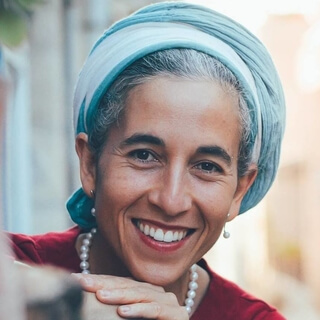
My name is Azrielle Jankovic.
My goal for each one of our shows is that you and I both will walk away feeling inspired and empowered to live with more joy,
Purpose,
And a greater sense of spiritual connection.
Welcome to Within All Things.
Let's get started.
I'm so excited for our show today.
I'm here with Dr.
Robin Owens,
Who is a creator of the Purpose Based Decision Making System.
And she's going to tell you a little bit more about what that is and why it's so important,
As well as how it can help you.
She is also a professor of religion.
She is really a spiritual seeker and I know has inspired me over the last year and a half or so that I've known her.
So Robin,
If you will,
Fill us in a little bit about what it is that you do and how you got to this really unique interest of yours.
Okay.
But first let me say hi everybody.
I'm so glad to be here and Ozzie,
I want to say to you,
I'm so proud of you with your book and all the work that you're doing in this podcast.
You're really making a difference in a lot of people's lives.
And so I commend you and I'm very proud of you.
Thank you so much.
I really appreciate that.
Yeah,
It's good to see.
It's good to see all you're doing.
Thank you.
Okay,
So let me see if I can go back to your question.
You asked me how I got started.
Yeah,
You maybe can fill in a little bit for us in terms of what it is that you do.
You know,
We hear the word purpose used in several different contexts and I'd love to hear from you in terms of,
You know,
How do you see purpose?
What do you do around purpose and why is it so,
What makes it so important?
Okay.
All right.
So let me start with you and I mentioned this briefly.
It started really when I was very young,
When I was very young,
But and I'll flash forward to current time in a minute.
But when I was a little girl,
I was one who always thought about the big issues of life,
The big questions of life.
I just,
For some reason,
I would have to have some time away and think about it and reflect on these questions.
And I remember when I was growing up here in the U.
S.
In Connecticut,
In the state of Connecticut,
And my family and I lived in this big three family house and we had lots of cousins and around my same age.
And one time in the morning I went out and I was in the summer,
Went out on the porch and just was sitting and thinking about these questions as I often did.
And I heard my father inside with the other kids about to come out and they were laughing and playing.
And then he said to them,
Don't go out there and bother Robin.
She's out there contemplating the meaning of life.
And so then they laughed because this was a big joke,
Right?
They all laughed and everything.
He thought that was funny.
And so I was embarrassed by that because,
You know,
They were laughing.
But now looking back at an early age,
I remember he was absolutely right.
I was thinking about the big questions of life.
So I'm sure that impacts my work today,
Even though it didn't stay on my mind all those years.
So now let's fast forward to today.
Today,
I do a couple of things.
As you mentioned,
I teach in the university,
I teach religious studies and I'm always interested in how people find meaning through religion and text.
But when I'm not teaching,
What I do is I teach women how to make decisions based on their purpose.
So they have confidence and clarity in their decisions and also that they live their life in alignment with their purpose.
Now,
Most people say at this point,
Well,
What if I can't find my purpose or what if I don't know my purpose or what is my purpose?
Right.
And this is how I understand it.
Purpose is within us.
It's deep down within us.
We may not realize what it is.
So I don't think we have to necessarily find it.
We have to let it reveal itself to us because it's already.
I love that so much.
Yes.
I love that so much.
Purpose is already within us.
We just have to let it reveal itself to us.
Yes.
Let it reveal us.
And so someone might say,
Well,
How do I do that?
And then I would say it leaves clues.
Purpose leaves clues because it's in us.
Right.
And so then it reveals itself in our life and in our experience.
We don't really have to look that far.
So we look at three things.
We look at our passions.
Those things we absolutely love.
Absolutely love those strong passions,
Those things that we just have to do because we love them and they energize us.
The second thing,
Look at our values.
Those things that are very important to us.
I mean,
That really matter.
And the third are natural abilities.
Some might call them strengths,
Some might call them gifts,
Skills.
It's those abilities that so naturally come to you.
They're so easy that you do them.
You almost don't even pay attention to them.
And people compliment you on them all the time.
And you think,
Why are they complimenting me on that?
It's so easy for me to do.
Those are indicators of your natural abilities.
All right.
So those are three clues.
Passions,
Values and natural abilities.
Right.
So those are three clues.
And how we get to our purpose is we combine those.
Once we get an idea of the main aspects of those,
Combine those and use them in service of something or someone other than ourselves.
Then you're in your purpose.
Use them in service.
Wow.
Service.
I love that so much.
So I definitely want to get into those three areas specifically so that we can all understand a little bit more about,
You know,
How do we look for these clues?
But before we do that,
I'm curious to hear from you a little bit more,
Because I know that you're a professor of religion.
I also read your dissertation a long time ago.
Yeah.
Oh,
I remember that.
You did do that.
Right.
And it was so interesting because you spoke about something.
You spoke about religion,
But it was also very spiritual.
And if I remember correctly,
It was the biblical references of a particular congresswoman.
Correct?
Yes.
Yes.
Okay.
And I'm just curious if you could walk us through your story a little bit.
Like,
How did you get passionate about religion?
Are the religious piece and the spiritual piece tied together?
Where does purpose fit in?
I want to hear all of it.
Okay.
All right.
Now,
Keep in mind that you said all of it.
I want to hear all of it.
Keep that in mind.
Well,
I grew up in a family,
Well,
My mother was the one who was religious.
She went to church.
My father did not,
Which I think is interesting now because he was the one that always did the prayer at dinner,
Although he didn't go to church.
But anyway,
So I grew up in a Christian Protestant household.
So growing up,
I liked it.
I liked being in church.
I liked the idea of the sacredness and the spiritual aspect of it for some reason,
Even though I didn't have language for it then.
So I always enjoyed that.
I mean,
I veered off the path and had my,
You know,
I just want to sleep in days when I was a teenager in high school.
But other than that,
I was always drawn to it.
I was drawn to it.
So something about that atmosphere in your church spoke to you.
Yes.
Yes.
And it probably had to do,
If I think about it now,
The questions that I had,
You know,
The questions about things that we couldn't see.
The things that we couldn't see,
But it really got magnified when my mother passed away suddenly from a heart attack.
That was really a life changing moment for me,
Needless to say.
I had just spoken to her earlier,
Like three or four hours.
I was out of the state on my way back home.
We lived together.
I was 30 years old.
This was like a few days before my 31st birthday.
I was with a friend at a college reunion in another state,
Called her on the phone,
And she knew I was at the homecoming with my friend Monica.
And she said,
Tell Monica I said to take care of you.
And I thought that was strange.
And I said,
OK,
All right.
And so I say to Monica,
That was strange.
So then she tells me a little bit about her day and what she did.
And I'm like,
OK,
Well,
We're going to get out.
We're going to the airport now.
We're getting a flight and I'll see you later.
A few hours later,
When we got there,
I found her,
What looked like taking a nap in her bed,
But she had passed away.
And the look on her face was so peaceful.
I knew that that wasn't her normal look.
I mean,
It was all wow.
Yes.
And so that that was like something happened.
I mean,
The shock of I knew that she wasn't there,
But that look on her face spoke to me.
So,
You know,
Call 911.
She went to the hospital and then later they told me she passed away.
So needless to say,
I was in shock.
Wow.
Wow.
Robin.
So.
I've heard you tell this story in the past,
But every time I hear it,
I'm so shocked by it,
Because not only did your mother tell you out of the blue.
Yeah.
Have Monica look look over you.
Out of the blue.
Yeah.
And then you found her looking so,
So peaceful.
And you mentioned that this really took your quest to another level.
It did.
It did.
Because she and I were so close.
I wondered,
Like,
Well,
Where is she now?
I mean,
You know,
We had the teachings about it.
But now it was a reality.
Where is this person that I love so much?
And what happens after death?
And what does that all mean for my life?
And what's the purpose of my life now?
Because my life was so focused and centered around hers because we were so close.
So that began the quest of asking those questions at another level,
Not the same level as six-year-old Robin,
But now 30-year-old Robin is asking about these questions.
So this was,
You said 20,
20 years ago?
Yes.
20 years ago,
You were looking for purpose,
Not only in terms of,
You know,
Solving the question of,
You know,
Where where is my mother gone?
As much as you learned growing up in religion,
You know,
What the text said,
What the text said,
You had a new level of curiosity.
A new level.
A new level.
Yes.
And now you're thinking about your own purpose,
Your own life.
You are so close to your mom.
And this is like starting over.
Yes,
Exactly right.
So where do you even start?
Where do you go from there?
So I went to where I knew,
Which was church,
Religion,
Spirituality.
It was kind of a combination for me at the time.
And then I realized I needed some more help to answer these questions or at least attempt to answer the questions.
So that began my journey to graduate school.
So I went on and got a Master of Divinity degree and then went on to get a Ph.
D.
In religion in pursuit of these questions.
So you went to a lot of school,
My friend.
I did.
I did.
Apparently,
I like school because I'm teaching in the school,
So I just can't get away from school,
Right?
I can completely hear that one.
Wow.
Yeah.
Yeah.
And so now,
Fast forward 20-something years later,
In addition to that intellectual and academic pursuit,
I had my own personal and spiritual pursuit.
And I could say today,
I have a clear grasp on my own purpose and what it means to live a fulfilled life on purpose and in purpose.
And so this is why I do the work I do today,
Helping other women find their purpose and then make decisions every day based on their purpose.
So it sounds like you have been through quite a journey on your own.
I have.
You've looked in academic literature.
You have been learning about personal development.
Yes.
You've been on your own emotional journey.
I know that you've worked as a social worker even before your academic journey.
Yes.
And now you know definitively that you've got this thing.
Absolutely.
Without a doubt.
Without a doubt.
And so for those of us who are new to the idea of purpose,
How do you know?
Like,
How does someone know that they're living with it?
Or that they're not living with it?
I think people who are not living with it probably know,
Right?
Because there's something missing.
There's a sense of,
I'm going through life and it's okay.
In some cases,
It's okay.
But there's something missing.
There's some dissatisfaction down beneath the surface.
There's some longing.
There's some yearning for something more.
Those are indicators that you're not living your life in purpose.
Your purpose is actually trying to get your attention through that longing,
Through that yearning,
Through that dissatisfaction.
Your purpose is trying to get your attention.
It's trying to get your attention.
Wow.
That's so profound.
Your purpose is trying to get your attention.
You know,
It's so interesting to me.
I read a lot about the state of society in our day and age.
And the loneliness epidemic that's growing.
And the mental health issues from depression to anxiety that really have exploded.
Attention issues and focus.
And when we look at these things all together,
I often wonder,
Where does purpose fit in with this?
I know I've been taught in education and also spiritually to teach a child according to their way.
To try to find a child's way.
And I wonder in our society if we're doing that in the school system or within the workplace,
In universities.
And I'm curious when you say that our purpose could be calling to us.
Is that,
I mean,
Are those some of the ways that people might experience a lack of purpose?
I do believe that.
I do believe a lot of the mental health issues that we're experiencing collectively and individually is because on an individual level,
We're cut off from that part of ourself.
The part that is calling us,
That spiritual essence,
Which is our purpose,
That's trying to get our attention.
Because,
As you mentioned,
The education system,
It's not cultivated or developed or even taught.
Right?
And so to think about yourself,
We put our focus outwardly.
And that's not to say not to care about others,
But there's a sense of finding who we really are.
We're all individuals.
We are all unique.
We all have individual gifts,
Talents,
Abilities,
And just ways of being.
And if we don't have any connection to that,
Then I believe we have these,
What Gay Hendricks says in his book,
The Big Leap,
These diseases of unfulfillment.
Wow,
Diseases of unfulfillment.
So,
Love that book.
I think you recommended it to me a long time ago,
And I got so much out of it.
And so the diseases of unfulfillment that he talks about,
I want you to go into that a little bit more.
And also,
This idea of the upper limit problem and what that is.
We could both talk about it a little bit.
I got so much out of reading this book,
And I saw myself in it.
I'm sure everybody sees themselves in such a great handbook,
Really,
For our psyche.
It is.
And for the listeners who may not be familiar with the book,
Gay Hendricks was a psychologist.
Now he does personal development work and works with leaders and other folks.
But at the time of the writing of this particular book,
The Big Leap,
He surveyed many of his patients who he had worked with over the years.
And he discovered if they weren't using that part of themselves,
Which he calls your zone of genius,
What I'm calling your natural talents,
And there's aspects of yourself which if you're disconnected from those,
He saw in his work with hundreds of patients that they had these,
What he calls,
Diseases of unfulfillment,
Which expressed themselves like things that doctors just don't know what's causing it.
They say it's stress,
But they can't quite pinpoint what's going on.
And they're usually chronic,
Long term.
And he also found once his patients at the time,
When he guided them and helped them move into this area of working in their zone of genius,
Then they would overcome some of these diseases.
Now let me make a caveat and say this is not a cure for all health and medical conditions.
I'm just expressing these particular cases of this.
Right.
You know,
It's so interesting,
Robin,
And we're definitely not getting medical advice here.
But I do want to tell you that I met a doctor earlier this year who practices something called functional medicine.
And he himself is an M.
D.
He went to Harvard.
He's a very highly educated and learned person who explains exactly what it is that you're talking about.
And I think he's going to come on the show later in the season.
But essentially what he says is you can have two patients with the same looking x-ray,
And one will present differently than the other.
One will feel pain and the other one will be popping out of bed in the morning.
And the difference very well could be passion,
Purpose,
Expression.
That's awesome to hear,
And it's not surprising to me.
Yeah.
So I think there's a lot to it.
And in thinking about this disease of fulfillment and this idea of what's holding,
If we all have this purpose and we all have a passion,
What are the things that could be holding people back?
Like,
What should people look for?
I think there's a wide variety of things because we are typically socialized from our families.
Right.
And so then we are often doing things based on others' expectations of us.
Now,
Let me say,
I'm not saying don't be responsible and that kind of thing.
But if we are leading our lives in the main part of our work because of others' expectations,
We often don't even take the time to think about what we really want.
I mean,
Like at a basic level,
What do we really want?
What do I want for myself?
And even if you can't do what you might think is your dream job or your dream passions,
There's ways of incorporating some of your passions in your life separate from your job.
But we don't give credence to it.
We feel like either we don't deserve it or it's just not reasonable or rational or it doesn't make sense with the rest of society.
I like that a lot.
So to walk back a little bit,
Let's just talk about an example.
I remember reading the book The Big Leap as well and being fascinated by these cases that would come up.
So for example,
Remember one about a child who grows up,
I think it's a young girl,
Very academic.
Because she's academic,
She relates well with her father who is in business.
Her mother is a stay-at-home mother,
Very dutiful,
Wonderful,
Loving mom and wife,
But just doesn't connect to her on the intellectual level.
And so when she and her father have this close connection,
She feels resistance from her mother.
And so she learns to kind of dumb down that part of herself.
I think he gave another example of a sibling,
A child who really shines in school and the sister or the brother gives a dirty look or some sort of gesture of dismay at the success.
And so she learns not to shine.
And I feel like it's so clear how these things can happen.
I think it's also so amazing how the childhood can be so impactful so many years later.
Yeah,
Absolutely.
And yeah,
Those are very good examples.
And I have an example from my own life.
My mother,
Who I mentioned that we're very close.
But growing up,
I could see that,
Well,
She talked about it somewhat too.
I could see that she was very unhappy in her work,
In her job.
And that it was not really a job that was suited to her in any way or form.
So she ended up working in a factory,
Sewing,
But in a factory for 30 years.
Oh,
Wow.
And she hated this job for 30 years.
So I'm sure that impacts me to see this unfulfillment.
But I also saw the influence of that on her life.
She had bouts with depression and other forms of illness.
At the time,
They called them ulcers.
You have ulcers.
They don't talk about that so much now.
But back then,
They talked about having ulcers in your stomach area,
Which caused by stress.
All this was caused by stress.
And I believe it's because she was stuck in a position that she was unsuited for it.
Now,
Let me tell you why I think she's unsuited for it.
Nothing wrong.
There's nothing wrong with working in a factory.
If that's what you want to do.
But she wanted to be a teacher.
Oh,
Wow.
She wanted to be a teacher.
She was a valedictorian of her high school class.
And her goal was to go to college and become a teacher.
But because there were eight siblings,
Her parents had to make a decision.
So the way they decided,
They said the boys,
Which were the two older ones,
They would pay for them to go to college and then the oldest girl.
So now my mother was next in line,
But they couldn't afford to send her.
The goal was to have her older sister,
After she left college,
She was supposed to come back,
Get a job,
And then help my mother so then she could go to college and move forward.
But that never happened.
And I would hear her occasionally talk about this sister and the disappointment of that so many years later of why she didn't get that opportunity to go to college.
And so I think,
When I mentioned earlier about purpose leaves clues and is found in you,
The thing that was in her that wanted to be a teacher was always there,
But it was not expressed or fulfilled.
And so I think she had one of those diseases of unfulfillment,
Or at least two of those.
Wow.
So you grew up watching this.
Yes.
And you spoke earlier about when you lost your mother,
How you felt reinspired.
And not only from the void that this created in your life,
But also in sort of revisiting your own purpose and your own passion.
Do you feel like there are certain lessons you took from her,
Or is there a certain process you went through to get to this point?
There is a process.
The lessons I learned was what I didn't want for my life.
That's what I learned.
From her,
Watching her on fulfillment,
I knew that that's not what I wanted.
I wanted the opposite.
I wanted to have a fulfilled life,
And then I was determined to have it no matter what because of hers.
Not just in her job,
But in every aspect of life.
And so I did set out on a quest.
And so now,
To this day,
How I came up with this idea of this purpose-based decision-making system comes directly out of my experience.
Over the years,
In my quest for purpose,
I learned different aspects about myself and what worked and what didn't work.
So I mentioned earlier about the passions.
Because my first professional job out of college was in branch banking in a bank.
And so I learned some things from that.
I learned that there was a part of it,
My passion was a part of it because I did some public speaking and I really enjoyed that.
But there was another piece missing,
This idea of service.
And that made it unfulfilling for me.
So then I moved on to the next position thinking,
Okay,
Let me incorporate this service.
But then there was another piece missing from that.
And what I realized what was missing from that was one of my other values.
And then I moved on to the next position after that.
And it had,
Once again,
The values in the service,
But it didn't have the passion.
So now I realize,
Because today I'm living this in my university role,
I'm living my passions,
My values,
And my natural abilities in service to a group of people that I care about.
And so that's how I determined that purpose-based decision-making system.
That's incredible.
And the fact that you've stayed reflective over the years,
You've had such a growth mindset in that you're looking at the reality and you're making calculations in terms of what's working and what do I want to improve.
And you just kept going.
You just kept going.
It's really,
Really beautiful.
So you mentioned a few things in terms of these three different areas,
The passions,
The values,
The natural abilities.
I'm curious if we could talk about those three things in two different ways.
So perhaps we can start for the person who's in a job.
Maybe they can't leave their job yet.
They're working in a particular situation.
They need to stay for whatever reason.
How can they utilize this system and kind of use what they have?
And that's a good question.
I agree with you.
You don't have to necessarily leave your job to find it.
If you could look around and find one aspect of the job that you like.
And if there's nothing there,
Maybe create it.
And this does take some thought.
You have to think about yourself and what you enjoy.
So,
For example,
Let's say you realized at home you're very organized.
People at home have mentioned how organized.
Is there a way where you can incorporate and you really love it,
Right?
Can you incorporate that aspect of you in that position?
Create a project or help somebody else where you are doing the thing that really sparks that passion and that energy in you.
So that's just one example.
I love that idea of helping someone else because you're really not only using your natural abilities,
But you're also serving.
Yes.
Yes.
Because service really is the key to it all.
Once we put our attention outside of ourselves onto someone else,
There's a level of just fulfillment that just comes from that very naturally as human beings.
And now,
Let's say I'm in this job and I'm not clear exactly what my passions are.
I'm not clear exactly what the clues are,
As you were saying.
How do I quiet the noise?
How do I start to look for clues?
And I have a process that I walk my clients through for this,
But I'll give you some of the highlights.
Okay.
So as you and I just mentioned,
Our early childhood pointed to some things.
So you can look back at and I'll just give you a little bit of the process here.
Think about when you were about six years old.
What was something you really,
Really loved?
Just think about when you were.
Yeah,
Something you really enjoyed.
And then ask that same question when you were 12 years old.
What was something you really,
Really enjoy?
Ask the question again around 18 years old what you really,
Really enjoy.
And fast forward to your first job and do that again to your second job and just write out what did you really love?
You might not love much about it,
But there might be one little thing.
For example,
You might say,
Oh,
I love working with the people.
And you might look back and say,
Oh,
When I was six years old,
I really enjoyed being with my friends.
So then you might see a theme across.
Oh,
There was always people involved.
There was always this interaction.
Relationships are very important.
So now you have some information to work with.
Now you can take that information and try to incorporate it into your job where you are now.
I love that.
I love that so much because it really could be anything.
It could be that when someone was six and 12 and 18,
They loved everything artsy and creative.
It could be that they loved organization.
It could be that they loved getting up in front of their class and sharing.
It could be,
I just,
I feel like that really opened so many doors.
Yeah.
And it's in there.
You'll see it.
If you take the time to look over your life,
You'll find that it's in there.
It's in there and it's trying to get your attention even now,
Especially if you're listening to a podcast like this.
Yes.
If you're listening to our podcast,
It's trying to get your attention.
Your purpose is trying to get your attention.
You're looking for clues.
We are here for you.
So true,
Robin.
So true.
So I love that.
The idea of reflecting back over our lives to this younger,
Really pure and free spirited part of ourselves and tapping into those passions.
Now,
What about our values?
How do we how do we start uncovering those?
I'll give you a scenario.
This is an artificial scenario that I made up.
But you can ask yourself some form of this question.
Imagine everything in your life is taken care of.
Your family,
Your job,
Everyone is settled.
Nobody needs you.
Right.
Everybody is good.
Now you have this magical free five hours where you can do whatever you want with the five hours.
What would you do?
And now when you think about that and you write out the scenario of all the things you would do or what thing you would do in the five hours,
You get an indicator of what's important to you and possibly what's missing in your regular daily life.
So once you quiet this noise of the strings that are pulling you,
Right,
Where you feel like you've got to accomplish your to do list and the phone calls and the people and that you've moved past the to do and you get to the to be.
Yes.
And what you put,
What's the way you answer that scenario will indicate to you what's important to you,
Because that's what your values are.
The values are things that are really,
Really matter to you.
For example,
I was talking with a client last week and she said she's a mother and wife of a two year old,
A delightful two year old daughter,
And she has a job that's very satisfying to her and fulfilling.
And when I asked her that question,
She said,
Oh,
I would take time maybe.
And she lives in the Boston area here in the US.
She said,
I would walk downtown and wander because I don't get a chance to wander so much.
Now that I have to pay my attention to my daughter and to my husband,
To my job,
Just going down the street and maybe pop in a museum or not and just wander.
So when we went back and looked over all her list,
That idea of being free and flowing and let her mind wander and in that case,
Even walking and wandering was a value.
That's something that's very important for her to have in her daily life.
So now she can go back and try to figure out how she can incorporate it.
She might not be able to do that walk every day,
But because we did that imaginary scenario,
She found out what's important to her and she can incorporate aspects of that in her life.
There's like a level of freedom that she needs to feel.
It's very important for her that she has the power.
She values freedom.
Yeah.
She values freedom.
It's interesting.
I think about this one a lot and I definitely wrote about it in my book and have thought about it just in my own life transitions.
And I remember hearing the following thing.
How would we want,
What do we want people to say about us?
Right?
Yeah.
I'm going to get really deep with you because that's what I do.
Yeah.
I love that about you,
By the way.
Okay.
How do you want to be eulogized?
I want to be known and remembered by,
She loved.
She loved.
And that's such a beautiful value.
So as deep as it is and as much as people don't want to think about things like that,
I think when we can pause for a moment and realize that time is finite,
And that walk to that wander downtown into a museum or not and the time for myself and the loving and whatever it is that is so real for us,
Now is the time.
Right?
Now is the time.
I mean,
There's no time like the present.
It's like,
Oh,
I couldn't do that.
I was a child.
That's silly.
There's no time like the present to be fully present with your life and enjoy your life and live your life on purpose.
It will only be better for you and everybody else around you.
I love that.
Live your life on purpose.
So we got the values and passions,
Natural abilities.
Okay.
So this is,
I think this is hard for some people.
Yeah.
Because,
And I don't know if it's because we live in such a competitive world or that,
You know,
Even from the education system,
From school to the workplace,
You know,
We're,
It's so natural to look around ourselves and kind of see other people's strengths and other people are winning.
And we,
For ourselves,
We see the whole picture.
You know,
We see,
We see ourselves fall ten times before we're able to get up and run.
Right?
Yeah,
It's natural.
We'll do ten things right.
We'll do ten things,
Nine right and one wrong or mistake or whatever we think is a mistake.
And then we focus on that one.
Right?
It's human.
I think it's kind of a human trait to do that.
But here's a way,
Here's a way you can get at the natural abilities.
Here's just one of a few exercises that I use.
Think about the things that people ask you to do,
Whether directly or indirectly.
You know,
I'll use that example of being organized.
For example,
There's going to be a family event.
Now they ask you to coordinate it or organize it or at work or they're asking you to arrange or so.
Then it gives you a clue that this is something that you do well,
That people are always asking you about or expecting you to do,
Whether they even ask you indirectly or directly.
Here's another example.
People come to you for advice.
No matter where you are at work,
You're walking down the street,
Somebody asks you for directions or you're always the one that people come to.
Or in high school,
They come to you and ask you.
That gives you an idea.
So these people see in you what you don't see.
You know,
It's so funny.
I love this so much.
And I love that you brought up the advice because that is very much me.
People have over the years come to me for advice and I thought everybody went to everybody for advice.
No.
How do we know that everybody is going to everybody for directions?
But I think it makes so much sense what you're saying,
Just to stop and just reflect and pause and look for those things.
Look for the clues.
I just love that.
Look for what people will give you because you said we individuals don't like to think of ourselves in that way.
But the people who know us,
Love us,
Work with us,
Or are around us will help us see.
Help us see.
And do you feel like there's a way,
Let's suppose someone is just struggling with this.
Is there a way to just go out and ask people?
What do you think I'm good at?
How do we do that?
You're absolutely right.
That's an excellent idea.
I went through this process with a woman not too long ago and then she went to her mother and said,
What do you think I'm good at?
And so then she added to the list that we started together and got some insights.
So yes,
You're right on target.
I think that's a wonderful idea.
Ask two or three people that know you well.
And I hope they give you really nice answers.
Yeah.
It's kind of scary.
It's like a little vulnerable,
No?
It is scary.
It is scary.
But if you're asking people who love you,
They love you.
And you're not asking them,
What are all the mistakes I made in my life?
You're asking them,
What do you think I do well?
Because we already know,
All of us know our mistakes and what we've made.
And that's not the point of it.
It's just like,
What do you think I do well?
What do you think I'm good at?
Oh yeah.
Oh yeah,
We definitely do.
We know the mistakes and now it's time to go dig up the clues.
That's right.
Now look at the other end of the spectrum.
We are multidimensional people.
We're just not one.
And we are not our mistakes,
By the way.
The mistakes are things that we've done.
They are not who we are.
I agree with that so,
So much.
So last episode,
My guest was talking about this idea that she was sharing this deeply spiritual idea.
She explained it that our worth has nothing to do with our success or our failure,
What we do,
What we haven't done,
The money we have or haven't made.
It is intrinsic with who we are.
And I just love how you're affirming that in your unique way.
Yes,
Yes.
So we're kind of all in sync in that way.
Yeah.
A hundred percent.
Now,
As a professor of religion and someone who has been in that world for so long,
Can you shed some light for me on like,
How do you see the spiritual dimension of purpose or,
You know,
Is there one?
How does that work?
For me,
It definitely is.
And I would imagine this is individual,
Right?
For each individual.
But I'll speak for me.
And I think it is true for other people,
But some people either believe this or not.
Right?
OK.
I believe it is part of our spirit,
Right?
Part of our spiritual nature and presence.
I feel like we have a reason why we're here,
Not just to be in these bodies and to just experience these bodies,
But to use all of the uniqueness of who we are in service to someone else.
That,
To me,
Is a spiritual principle because it comes from our spirit.
When I said it leaves clues,
It's down inside of us.
I think it's something that is God-given in all of us.
And the natural abilities,
Those are God-given gifts,
Skills,
Abilities.
So I definitely believe that it is spiritual,
Which is why we could have so much material success.
We could have everything that we think we could possibly want and need and still have that deep longing and that deep dissatisfaction because we are not nurturing the true essence,
The true spirit of who we are.
I love that so much.
I think you touched upon this idea that we've been endowed with something uniquely us.
I've been endowed with something uniquely me.
You have been endowed with something uniquely you.
I think it all goes back to your story.
When you were a child,
You were,
As you said,
Looking for something that you couldn't see.
Right?
Yes.
And it's the spirit component of,
You know,
I always feel so strongly there is something around us that we cannot necessarily see,
Within us that we cannot necessarily see so much greater than the material world.
Right?
Absolutely.
That is wonderful and can be a vehicle for so much connection and joy and purpose and spirituality,
But in and of itself it is not spiritual unless we are endowing it.
We're really tapping into that element of it.
Wholeheartedly.
I agree with that wholeheartedly.
Absolutely.
And that's true for my life and for me.
I love that.
So,
Let's see.
You are also working on a book.
I am.
I'm excited to hear about it because I saw it in its infancy and it's been so long.
I'd love to hear how it's going and,
You know,
How you're incorporating purpose and all of these concepts in the book.
Yes.
I think it may have,
At least the title probably has changed since you and I talked about it last.
It's still in progress.
I'm expecting it to come out next year because I'm taking the time to really live into it,
To live into it and in addition to doing research and talking with others about it.
So,
The book,
At least today at the time of this recording,
The title of the book is Purpose-Based Decisions.
Nice.
Oh,
No surprise there,
Right?
Purpose-Based Decisions.
In essence,
It's a bit of curation of what we've talked about already so far.
But not only do I include my story,
I've interviewed several other women and men,
But I'll probably highlight the women in the book and how they made Purpose-Based Decisions and how they tapped into their passions and their values and their natural abilities in service to others.
So,
It's a case study and it's also a guide.
So,
What I mean by case study,
You can see it in other people's lives and then I give you a guide of how to work through it in your own life.
That sounds phenomenal.
Purpose-Based Decisions coming out next year.
I'm really excited for it and I love that you're taking your time.
I know that in my own process,
Every time I tried to rush,
It just backfired and I got writer's block.
And as soon as I learned to relax and let the flow take over,
Right?
It's just a different process.
It is and I feel like I hadn't quite lived into all of it.
I had to live through a little bit more of it and experience a little bit more of it.
In addition to juggling my very full schedule,
So I give it regular attention and nurture.
You're one busy lady.
I'm so curious,
Robin.
You mentioned that you're going to highlight the women and I need to ask you this one question.
How does purpose or does purpose differ for men and women?
Is there some kind of process that's,
I know you specialize in working with women,
But just for our diverse audience and making sure we reach everyone.
How does that go?
I don't think it differs for men and women.
Quite honestly,
I don't think it differs for men and women.
The reason why I focus on women is not only because I am a woman,
But it's true,
But the way I communicate is easier for women,
I think,
To understand and to connect because I'm coming from my own experience.
I think for a man,
A man could connect to the same information.
The reason why I focus on women is because I feel like I naturally communicate in the way that it resonates for women.
I don't think purpose is different for a man or a woman.
This process would be the same and looking for clues and service,
All of it.
Absolutely.
I think for a man who would do this process,
They're probably heart-centered and that's really what it is,
Right?
Heart-centered kind of reflective process.
Heart-centered,
Okay,
I love that.
What does that mean for you?
It means that you come from,
You know,
You said to me earlier in our conversation here,
Oh,
You were reflecting as a young child and then you talk about your own process of reflecting.
Taking time to think about what's in your heart,
That's what reflection is.
Heart-centered is someone who is open to doing that,
Has done it,
Or willing to do it.
Wow.
Okay,
That's so beautiful.
Now,
Thinking about hearts,
And we see hearts represented artistically and we talk about the heart figuratively.
I recently learned,
Actually from Dr.
Dan Siegel,
Who does the mindfulness work,
That research shows that when we focus our attention on our heart,
We have elevated feelings of compassion.
Isn't that something?
Yeah,
I resonate with that.
It resonates and rings true for me,
But that is awesome.
When you said heart-centered,
It was like the first thing that came to my mind,
Is like this moment of silence and really focusing on love and compassion and all these things.
I agree with you.
I think that these are principles for men,
Principles for women.
I think,
If anything,
I think men need compassion that they might not be getting in the world of competitive masculinity.
Yes,
Yes,
I agree wholeheartedly.
I agree.
I know of some wonderful men who are working,
Particularly with men in those areas.
Okay,
Amazing.
I'm going to put your information in the show notes for today,
And maybe I'll put in the referrals that you have for our male listeners.
Yes.
Okay,
Fantastic.
Fantastic.
Let me reiterate though,
But my work,
I'm open to men and women.
I just primarily focus on women,
But I'm open to men and women.
Let me just say that.
Guys,
I didn't forget about you.
I'm not leaving you out.
You're all welcome.
Okay,
That's really great.
In terms of your coaching and the way you structure,
Are you one-on-one?
Do you do groups?
Tell me a little bit about that.
Right now,
I'm doing one-on-one.
I think next year,
I'll move into some group coaching,
But for now,
I'm doing one-on-one as I work through this process and continue working on the book.
I'm also in the development stages of my own podcast built around the same work.
While I'm doing that process,
At least to the end of this year,
I'll be doing one-on-one and continue one-on-one next year and may add on groups next year.
That is so exciting.
It is exciting.
Lots in the works.
Yeah,
And I just created a six-week program,
Purpose-Based Decisions,
How to Implement.
I'm calling it the implementation program,
So it's how to do all these things that we're talking about.
Wow,
All right.
Wow,
So much excitement on the forefront for you.
I've learned so much from you today,
And I know that everyone listening is going to get so much out of the show and everything you've shared.
If there's anything else,
Are there any advice,
Anything I can do just on a day-to-day basis to keep myself going and purpose-focused?
I would say the easiest thing is to find those things you love and do them,
Or one thing.
Find those things you love.
One little piece of a thing you love.
Okay,
Well I- Don't make it a big deal.
Just find a little thing and do that more.
I'll tell you what.
I love interviewing fantastic people,
And this has been so much fun.
So much fun,
And thank you so much for joining me today.
It's really been wonderful connecting with you.
I really enjoyed it,
And you're such a thoughtful and curious interviewer and engaging.
You made it really even more enjoyable than it would have been otherwise,
So thanks so much for that.
Thank you so much for coming on.
My pleasure.
Thank you so much for joining us today.
If you enjoyed this episode,
You are going to love my new book,
Beyond All Things.
It's available in both ebook and print format on Amazon,
And once again,
The title is Beyond All Things,
Insights to Awaken Joy,
Purpose,
And Spiritual Connection.
If you want to join the conversation around these things,
Please come join us on Facebook.
Our Facebook group is called Beyond and Within All Things,
And I look forward to personally welcoming you to the group.
Thanks so much for being here,
And we'll see you next time.