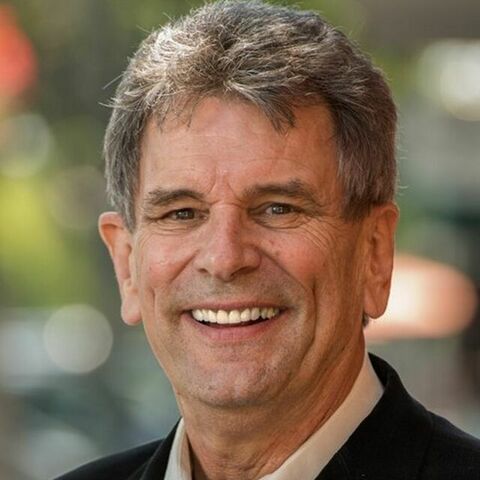
I'm Don Joseph Gohe and I'm here to talk to you about stress.
So to start with,
I want to invite you to reflect on the stress we see everywhere.
Look at the fear that drives it.
Look at the upsets it causes.
The inner and outer conflict it fuels.
The terrible drainage of energy.
The disease it generates.
It's epidemic,
Affecting people everywhere,
Rich and poor,
Men and women,
People of every race and persuasion.
Someone once called stress the equal opportunity destroyer.
Carl Jung said that first and foremost,
Stress is a spiritual crisis,
Defined by the absence of inner peace,
The absence of the happiness,
Confidence,
Optimism,
Creativity that makes life rich and meaningful.
Suppose there was a way of getting rid of all that stress.
Suppose there was a way to stop the suffering.
Well,
Happily,
There is.
And the first step is understanding the very nature of stress.
So let's do that.
Here is what stress means when it becomes chronic.
It means the stress response system is turned on nearly full time,
Dumping toxic stress hormones into your system.
And these stress hormones are what cause damage to your higher brain networks.
Chronic stress literally shrinks these networks,
At times lowering your IQ by as much as 40%.
Stress hormones also switch your emotional set point to negative,
Throwing you into survival mode,
Causing you to see a threatening world when no real threat exists at the moment.
Over the course of time,
Our brain can become wired for stress.
It becomes our default system,
Our autopilot,
That locks the brain into knee-jerk stress reactions,
Producing a repetitive pattern of dysfunction that trap us in problems,
Blocking the creative insight that could offer a solution.
The greater the stress,
The greater the likelihood of problems at home,
Problems in the marriage,
Family dysfunction.
The stress that parents take home can actually affect a child's brain development.
And of course,
Stress has a detrimental impact on our health,
Damaging the cardiovascular system,
Disabling chromosomes,
Resulting in cancer cells and premature aging,
And it impairs the immune system.
That defines suffering at every level.
There's no getting around it.
Stress is serious.
It's life-threatening serious.
It's not something you should someday do something about.
And yet,
The American Psychological Association found that 83% of Americans are doing nothing about it.
So here is another thing to understand about stress.
Stress is fear.
Neurologically,
It is some form,
Some sense of threat that triggers a stress reaction.
And the vast majority of what sets off a stress reaction is psychological fear.
That's the way we human beings generate all sorts of stress events purely in our heads,
Producing upsetting emotions that imagine a threat,
Sending mind and body into an uproar.
Psychological fear is the mind making up emergencies that the brain believes are real.
The brain's fear center cannot tell the difference between a real and present danger and a crisis that you made up in your head.
And so,
It sets off a stress reaction when either are present,
Flooding your system with stress hormones.
The 16th century philosopher,
Michel de Montaigne,
Described this issue aptly when he wrote,
My life has been full of terrible misfortunes,
A few of which actually happened.
Science has actually studied how many of our misfortunes actually happen.
In one study,
Subjects were asked to write down their worries over a two-week period and then identify which ones actually did not happen.
The researchers found that 85% of what people worried about did not happen.
With the 15% that did happen,
Researchers found that 79% handled the matter better than they expected.
That means that 97% of the time,
There was nothing to worry about.
What all this points to is that stress is happening in us,
Far more than to us.
So let's look at that a moment.
What most of us think of as stress differs from how science defines it.
Science divides stress into two components.
First is a stressor,
And second is a stress.
A stressor is any kind of demand or change that life imposes that we perceive as a threat to whatever degree we see it as threatening.
A stressor can range from a traffic jam,
Or an unpleasant person,
Or another task added to our to-do list,
To losing our job,
Or our home going into foreclosure,
Or receiving a medical diagnosis.
Stress is your appraisal that you have to deal with the stressor,
Followed by your perception that the stressor overwhelms your resources to manage it.
While most people relate to resources in external worldly terms,
Such as time,
Money,
Tools,
The support of other people,
Etc.
,
These all represent outside resources that are sometimes available and sometimes not,
Meaning you don't have complete control over them.
If the one resource you control completely in every situation is the power to choose your inner experience,
Then stress can be defined as you losing touch with the power of attitude.
Attitude is just too powerful a resource to ever disregard,
And yet we often do.
Research has found that attitude has the capacity to rewire a brain wired for stress.
This capacity is called neuroplasticity,
Which refers to brain changes that occur in response to changes in our experience.
So the operative question for neuroplasticity is what changes our experience?
Well it's our attitude.
Our attitude and our experience of life are intertwined.
Attitude literally shapes our experience.
For example,
If you feel conflict with another person,
And you are judging them critically,
And you learn something about that person's situation or their past that changes your attitude from judgmental to compassionate,
From defensive to open,
You will suddenly experience that person in a completely different way.
If a problem arises,
And your attitude about resolving it is pessimistic,
And something encouraging changes your attitude to optimistic,
You will experience that problem differently.
It becomes a challenge you're excited to meet.
It changes your attitude from worry and doubt to faith and trust,
And you experience life differently.
The heart of each of these attitudinal shifts is a shift from stress to peace,
Which is the same as saying from fear to peace,
Given that stress is always fear-based.
So the next operative question here is how do you cultivate a shift from fear to peace So it becomes your brain's autopilot instead of stress being your autopilot,
And the answer here is awareness.
Actively becoming more and more aware of fearful,
Stressful thinking and reactions as they occur within you,
Literally sends a signal from the higher brain to the lower brain to create synapses that extinguish a conditioned fear response.
Practicing a simple mindful process of awareness collapses the fear-based thinking that is behind most of the stress people experience.
Here's how you do it.
Step 1.
Throughout the day,
Be aware of stressful,
Anxiety-provoking,
Pessimistic thoughts your brain generates about people or events.
Allow yourself to feel the negative emotions these stressful thoughts carry,
And sense the perception of threat they produce.
Don't suppress these feelings or try to change them or escape from them.
Be willing to get in touch with your negativity.
Observe it almost as if you are observing another person,
All the while experiencing the painful feeling state you are in.
For example,
It might be the fear of failing,
Or the fear of rejection,
Or uncertainty about the future,
Or anger with someone,
Or a loss of control over a situation.
Whatever the upsetting emotion,
Be willing to accept it exactly as it is.
It's a curious paradox of spirituality that the more you accept yourself exactly as you are,
The more you change.
Step 2.
Don't identify with a negative feeling.
Don't say,
I am afraid.
That's a subtle form of identifying with a passing emotion.
The essence of your being is far greater than any emotion.
Instead say,
Fear is there at the moment.
Overwhelm is there.
Anger is there.
And so on and so forth.
Step 3.
Understand that the feeling is in you,
Not in reality.
Take a moment and see the truth in this.
Let it sink in.
Step 4.
Remind yourself that the upset will pass,
As everything does,
Especially emotions.
When it passes,
Be still in the space that opens up.
You are now at choice,
Able to shape your experience by choosing your attitude.
Do this every day throughout the day,
And the more you do it,
The freer you will become.