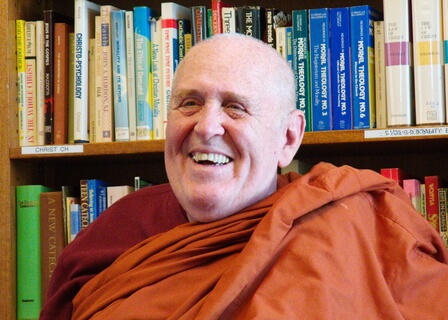
Yesterday we spoke about the four jhanas,
The rupa jhanas.
Today we will speak about the arupa jhanas.
So,
Conversationally they're called arupa jhanas because they are outside of the scope of form.
They are happening at the level of mentality,
At the level of mind.
The technical term for the arupa jhanas are ayatanas.
Ayatana means dimension or space.
So,
There are four of those that are within the scope of the fourth jhana.
So,
Just as a recap,
We understand that the first jhana arises when all hindrances cease and the mind gets collected around an object through thinking and examining thought.
That is the verbalizing and using imagery to bring up the loving kindness and in staying with it as a result of which joy will arise,
Comfort will arise and the mind will experience a certain level of collectedness.
Then you let go of the verbalizing,
You let go of the imagery and then the mind experiences the second jhana which is the joy and happiness born of collectedness and there is self-confidence and unification of mind in that which means that the attention becomes further undivided.
The attention is undispersed or non-dispersed.
It remains on its object for a longer period of time.
What ceases there is the verbalizing and the imagery and what increases is the joy and happiness,
The joy and comfort.
Then when you get into the third jhana,
There is now tranquility and contentment.
Tranquility due to mental unconcern.
The mind will experience or I should say the body will feel like it's lighter or denser,
Doesn't matter what it is,
But basically now the mind's attention has become further collected and the joy ceases and there is just utter comfort in the body,
Total steadiness in the mind and body.
And then the happiness ceases and there is the fourth jhana which is the mindfulness due to equanimity.
The purity of mindfulness due to equanimity where the mind is so tranquil,
Is so equanimous that everything seems okay.
The mind remains unaffected by this or that.
So if you ask a person how is your meditation going,
They'll just be very flat and say everything is fine.
Do you feel any joy?
Yeah,
I feel joy.
There's no excitement in the mind.
The mind is very tranquil.
Now at this level of the fourth jhana,
The contact with the body starts to diminish.
You may feel contact when a fly lands on your skin.
You can still hear sounds but they will be more distant.
And as the mind becomes further collected in this fourth jhana,
With this as the base,
The mind then experiences the four arupa jhanas,
The ayatanas.
When you get to the fourth jhana,
At that point the loving kindness feels like it has moved up to the head.
And not only that,
You have greater degrees of collectedness which means your attention on the object of meditation is unwavering for a much longer time.
So it's understood through another sutra called the Metta Sahagata Sutra that the limits of loving kindness is the beautiful.
And the Buddha calls the fourth jhana the beautiful.
And the reason he calls it the beautiful is because there the mind is utterly pure.
It's completely unvanquished.
It's imperturbable,
As it can be translated,
Unshakable.
And now when the mind is here,
Then I will change your meditation a little bit.
Then you will get into the six directions.
And so what are the six directions?
Forwards,
Backwards,
Right,
Left,
Below you and above you.
And the idea here is,
As per the sutras,
As per the words of the Buddha,
He pervades one quarter with loving kindness,
Another quarter,
And another quarter,
And the fourth quarter,
And above and below so as to himself.
He pervades the entire world with loving kindness without ill will or hostility for the world.
So this is what you do.
You then change your meditation and now you are sending out loving kindness.
Now a lot of people have challenges with that because what they do is they feel like they have to send it out from their heart or they feel like they have to send it out from their head.
You don't send it out from either because when you do that you are still connected to the body.
Now you are coming to a point where you are outside of the scope of materiality.
Now you are purely in a mental realm.
The arupa states are purely mental experiences.
So what do you do?
You can visualize or imagine that there is loving kindness pervaded around you.
It permeates your entire body and it is like an aura around you.
And you can imagine that aura extending out in front of you,
Behind you,
To your right,
To your left,
Below you,
Above you.
And then that that aura starts to expand in all directions at the same time.
As you do this you are parading loving kindness towards infinite space which is what takes you to the dimension of infinite space.
This is the first arupajana,
The first ayatana,
Infinite space.
As you send out this loving kindness,
That loving kindness starts to become more diffuse.
There's a certain energy and a certain vibration to loving kindness,
To metta.
But as you start to send it out,
It changes.
It starts to become more cottony.
It becomes wispy.
It becomes more disparate.
And so that feeling changes from loving kindness to karuna,
To compassion.
So what is compassion?
Compassion is the recognition of another being suffering in them and in yourself.
In other words,
You realize that others are suffering just like you.
That is why it is understood that loving kindness is a remedy,
An antidote to aversion,
To ill will.
Because loving kindness is wishing benefits to all beings,
Wishing the good for all beings.
Whereas compassion is wishing that all beings be free of suffering.
And compassion is an antidote to ahimsa or avihimsa,
Which is cruelty,
Which is usually translated as cruelty.
Why?
What is cruelty?
Cruelty is understanding another being's suffering and adding to their suffering,
Despite knowing that that being is suffering.
What is an example of this?
You find yourself in an argument with a person and that person starts to throw all kinds of words at you.
What is your first reaction to that?
How dare they say that to me?
So what do you do?
You respond in kind.
So you know the other person is angry.
You know the other person is suffering.
And you also feel angry.
And therefore you also are suffering.
But what do you do instead of alleviating that suffering?
You add to that suffering.
You add more fuel to the fire of suffering.
This is cruelty.
This is avihimsa.
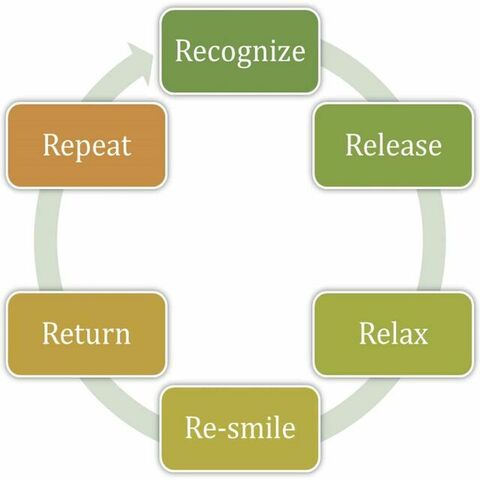
But the moment you recognize in yourself that suffering and you let go using the six R's,
Now you realize that that person is suffering.
Why should I add to their suffering?
May they be free of suffering.
So what do you do instead?
You try to alleviate the situation in whatever way is possible,
In whatever way is applicable to that situation.
So this is compassion.
Compassion is not about taking on the other person's suffering.
Compassion is being there for them so that they can come out of the suffering on their own.
You are a support system.
You guide them out of the suffering.
But they must walk out of the suffering.
Any teacher,
Any guide who shows you the path,
Just that.
They're only saying here is the path.
They can't make you walk it.
They can't walk it for you.
You have to do it.
In the same way,
Somebody who has compassion allows themselves to be there,
Allows the other person suffering their space to be in their suffering.
And then giving some advice and some causes and conditions that allow them to see that there is a way out of that suffering.
So when you have loving kindness and you send it to all beings,
You're basically saying may all beings be happy.
May all beings have loving kindness.
And then you recognize that there are beings that are suffering.
And so you say may all beings be free of suffering.
That attitude,
That intention is rooted in compassion.
And it is tied to the experience of infinite space.
So when you start sending out this feeling of loving kindness,
It will change compassion.
You don't need to change it.
You don't need to make any changes to the meditation.
You don't need to force anything to happen.
It will happen as a gradual,
Natural progression through the practice.
Your job is to essentially observe.
And 6R.
Observe.
Okay.
Now there's a feeling of spaciousness.
Cool.
Now I'm going to send out whatever feeling arises.
Okay.
Oh,
There's a distraction here.
Recognize it.
Release it.
Relax.
Come back.
Smile and come back.
As you progress through this experience of infinite space,
What will happen is there will be a certain limit that you experience.
One second.
When you experience this limit,
Some people will see something in their mental field of vision.
It's like that infinite space has a certain limit and they start to see the breaking down of lights in their field of vision.
And it's like a ring of light that starts to break down at the borders.
Or some people see a lot of flickering behind their eyelids.
Some people experience clicks in their ears.
Some people experience like spiders crawling up on their skin.
Some people experience phantom smells.
Sometimes the sounds that are there start to become slower.
It's like as if somebody has sped or slowed down the speed of the sound by a quarter or by half or whatever it might be.
And this experience is called infinite consciousness.
The reason is because when you start to experience this greater degree of infinite space,
Your mind becomes more and more attentive.
And it can experience space as being conscious.
It can experience space as being that awareness.
And to that extent,
There is the knowledge that awareness or consciousness is infinite.
But it goes even deeper than that,
Where the mind starts to see the breaking down of an iota of awareness,
An iota of consciousness arising and passing away.
And it arises and passes away dependent upon sense bases.
The eyes,
The ears,
The nose,
The tongue,
The body.
Some people even have phantom tastes or electricity through their tongues.
So this infinite consciousness,
What is it showing you?
It's showing you actually contact,
The point of contact in the mind as it experiences this process of consciousness.
So there's contact,
Contact,
Contact,
Contact going on.
And as you're experiencing this,
You start to realize,
Oh,
This arising and passing away is essentially just impermanent.
It's conditioned and therefore impermanent.
It's this consciousness that I'm experiencing.
This consciousness that I'm seeing is actually a multitude of atoms of consciousness that come and go,
That arise and pass away.
And as you start to see this,
It starts to become tiresome.
It starts to become boring.
And that is suffering.
That is dukkha.
And then you realize,
I'm not controlling this.
There is no controller here.
It's arising due to causes and conditions.
And what you are experiencing there is the impersonal nature of all conditioned experience.
And so you are seeing anatta.
You are seeing not-self,
That this is not me.
This is not mine.
This is not myself.
And so tied to this experience is what is known as empathetic joy,
Mudita.
So what is that experience of empathetic joy?
You think about the holidays,
Right?
During Christmas time or whatever holiday you celebrate.
Maybe Diwali or whatever it might be.
Any holiday where you're gifting someone something.
And how happy do you feel when you're giving that gift to someone else?
And they're like,
They're enjoying your gift.
And you're happy and enjoying in their happiness of opening up that gift and enjoying the pleasure of that gift.
This is the experience of that empathetic joy in life.
This is an antidote to jealousy and envy.
Anytime you feel jealous about someone else,
Anytime you feel insecure because of somebody else's success,
Recognize it.
Release your attention from it.
Relax any tightness and tension.
Come back to your smile and bring up joy.
Be genuinely happy for that person in their success.
This is how you cultivate empathetic joy.
Now qualitatively,
It's the same as joy.
So for simplicity's sake,
We will just call it joy tied to the base of infinite consciousness.
The compassion,
Which is a more diffused form of the loving kindness,
Starts to become even more spread out.
And there is this mellow feeling of joy that's there.
You just feel happy.
Why do you feel happy in that moment?
Because initially you wished for the freedom from suffering for all beings.
And in that experience,
You start to feel that.
And you're happy whenever beings are free of suffering.
This is the ultimate mudita,
The realization of the freedom from suffering for all beings and being happy in that experience for those beings.
A good meditation guide is somebody who celebrates the victories of their students.
When their student experiences metta for the first time,
They're there in that experience with them and say,
That is wonderful.
When they start to experience the fourth jhana,
They say,
Good work.
They're happy for them.
But when they start to experience the ayatanas,
They say,
Great,
Amazing,
Keep going.
If you cannot be invested in your student in that way as a teacher,
Then there is work to be done.
Because you have not developed mudita to the largest and greatest extent possible.
So this mudita that's tied to this infinite consciousness,
The arising and passing away of consciousness,
Starts to slow down as you have the perception of impermanence that leads to the perception of suffering,
That this is tiresome.
And because I can't control it,
Because there is no controller here,
It is not me.
It is not mine.
It is not myself.
So the perception of impermanence leads to the perception of suffering,
Which leads to the perception of not-self.
As a result of which,
The mind starts to experience equanimity.
So what is this equanimity?
This equanimity is tied to the experience of nothingness.
So as you start to see,
For example,
The flickering,
Which is the arising and passing away of I-consciousness,
And you start to notice the widening of gaps between one arising and another arising,
Between one passing away and the other passing away.
And it starts to slow down.
And as your mind starts to get deeper,
It starts to experience like a blankness.
Sometimes people will experience this as a white space or a certain kind of darkness.
Nothing is going on.
There is no thing happening in the mind's eye.
And so tied to this feeling or this experience of nothingness,
There is the experience of equanimity.
So when the feeling changes from metta to compassion,
You keep radiating it.
You keep letting it go out.
When that compassion changes to joy,
You keep sending it out.
When that joy is changing to equanimity,
You send out that equanimity.
How do you send out that equanimity?
What does that equanimity feel like?
That equanimity is a very calm,
Tranquil,
Serene,
Peaceful,
Collectedness.
Almost no vibration in there.
A very deep sense of equanimity.
It doesn't get agitated by one thing or the other.
So how do you send out that equanimity?
You wish calmness and equanimity to others.
May all beings feel calm and collected.
May all beings feel equanimity.
May all beings be at peace.
And the equanimity might not be as strong as the joy before it,
Or the compassion preceding the joy,
Or the loving kindness preceding the compassion.
But that equanimity is very,
Very stable.
So when you feel that equanimity,
It's like you drop a little pebble onto the surface of a very still,
Clear lake.
And as you drop that pebble,
What happens?
There are these ripples and waves that start to expand.
And that is the equanimity that you're sending out.
There's a small,
Slight intention of sending out that equanimity.
And you feel that equanimity just going out.
And for a little while,
It continues to go out.
You're just observing this process of it being radiated.
And after a while,
It slows down and it stops.
So what do you do?
You send it again.
You bring up that intention to send equanimity again.
And you do it again.
And it keeps going.
It keeps going.
And then it slows down and it stops.
There comes a point when you try to send that equanimity again,
But you experience tension there.
The mind doesn't want to do anything at that point.
The mind is content in itself.
And now you're going into the territory of quiet mind.
You start off with mind resting in itself.
It's almost inverted into itself.
Before,
It was externalized.
When you're radiating and sending out,
It starts sending it out.
That's externalized.
But when you get to that space of mind,
It starts to internalize,
Where the mind doesn't want to do anything at all.
The mind is very quiet.
Now,
There will be thoughts in the background.
There will be flickers of proto-thoughts,
Wisps of images here and there.
And it'll feel like the mind is awake but asleep at the same time.
It's like my mind is starting to shut down,
Starting to power down a little bit.
And it gets into this dreamscape of where there's different kinds of disconnected patterns and shapes and images and thoughts.
This is the territory of the fourth arupajana,
The fourth ayatana,
Which is neither perception nor non-perception.
What does that mean,
Neither perception nor non-perception?
What is perception?
Perception is the ability to recognize an experience that you're having.
You may have the experience,
But you might not fully comprehend what that experience is.
Hence,
Neither recognition nor non-recognition.
The mind is experiencing something,
Some wisps of proto-thoughts,
But it's not able to make out what exactly that is.
So this dreamlike state is within the territory of that,
Neither perception nor non-perception.
Now,
There comes a certain point where the mind becomes further collected within the eighth jhana,
Within this neither perception or non-perception.
And that is the experience of quiet mind.
Now,
The mind goes away from that.
It's like,
Here is the mind,
And it starts to sink into this cloud of neither recognition nor non-recognition,
Into this cloud of where it's asleep but awake at the same time,
And there's alertness,
But not a lot of sense being made.
And then that fog clears.
The fog is lifted.
That cloud is lifted.
And the mind sinks even deeper into quietness.
Here,
There is a greater degree of collectedness.
This is the beginnings of what is known in Pali as prabhasara citta,
The luminous mind,
The radiant mind.
And as you start to get into this quiet mind,
What you will notice is you might feel blips,
Micro sensations.
Here,
The mind will start to just notice nothing at all,
Nothing going on at all.
And it becomes even more still,
And it is what is called as still mind,
Where not even the tiniest vibration is there.
And because of that,
What happens?
When a person first comes into this state,
The mind feels bored.
Because of any lack of stimulation,
The mind says,
Something has to happen.
So what does it do?
It stimulates itself.
Out of that boredom,
It creates all kinds of restlessness,
All kinds of mental activity.
Or it checks itself out and goes into sloth and twerper and falls asleep.
And so this is where your task is to balance the mind.
When there is sloth and twerper,
What do you do?
Now you're going to microdose,
Not on acid or shrooms.
You're going to microdose on the enlightenment factors.
So what do I mean by microdose?
At this level of mind,
There is a greater degree of sensitivity.
So if you put too much effort in bringing up one of the factors,
It will bring things to the surface,
And you come out of neither perception or non-perception.
When there is sloth and twerper,
You bring a little bit of energy,
A little bit of interest in just watching the mind.
An inch by inch,
Millimeter by millimeter,
Just watch what's going on.
As you do this,
The sloth and twerper starts to just clear away,
Just like that fog of neither perception or non-perception.
And you bring a little bit more attention,
You bring a little bit more energy,
A little bit more focus,
A little bit more interest.
Now if the mind starts to stimulate itself towards restlessness,
Where there's all kinds of activity going on,
What do you do?
Pull your attention back a little bit.
Bring a little bit of tranquility,
A little bit of relaxation into the mind,
So that the mind starts to come back into balance.
So you're walking this tightrope where you're balancing.
And as soon as you're balanced,
Don't do anything.
Don't do anything.
That is the toughest thing you could do,
Is to not do anything.
Because as soon as I tell you don't do anything,
Then you'll ask,
Does that mean I have to rest?
Does that mean I have to relax?
Does that mean I have to watch?
Don't do anything.
As you continue to stay in that experience of quiet mind,
Of still mind,
Then you get to an even deeper level,
Where the mind becomes disenchanted.
Now at this point,
All kinds of things will be thrown at you in the form of proto thoughts.
And as long as you remain in this quiet mind as your home base,
As long as this sense of quiet mind is in the eye of the storm,
And everything else is around you and you don't go down a line of thinking,
You're okay.
As soon as you do that,
You just relax and return.
Relax and return.
Now it can happen that you feel some pain in the body.
And this pain could be meditation pain.
And the reason that meditation pain arises is because there's too much focus going on.
There's too much effort going on.
As soon as you move around,
That pain goes away,
Which means it was mental.
Yes,
There's also the physical pain that might be there.
But if the mind starts to get agitated by that physical pain,
Then it needs to have more equanimity.
So what do you do there?
If you notice that the mind is getting too distracted,
If you notice that the mind is experiencing this meditation pain and gets agitated by it,
Affected by it,
You cycle through again.
What does that mean?
You go back to the experience of equanimity and you start radiating it again.
You bring in the intention of radiating equanimity.
And you allow that radiating of equanimity to continue until it goes away.
And you bring up the equanimity again until it goes away.
And you keep doing that until the mind settles into itself again.
And this time it will go deeper.
And because it's been strengthened by that equanimity,
You will have stronger disenchantment.
What is that disenchantment?
That disenchantment is essentially where the mind has had enough of these distractions.
No longer interested in pursuing any lines of thought.
And no longer aversive towards them when they come.
You just don't care anymore.
It's almost like the mind ignores it.
It's almost like the mind just turns away from that distraction.
The mind says,
Talk to the hand.
I'm not listening.
And at that point,
You are getting deeper and deeper into still mind.
Now,
Very few vibrations will arise,
If at all.
And they might arise a little bit,
But as soon as you notice it,
You relax and you come back.
And then as you're going deeper and deeper,
It can happen that you experience what's known as the signless collectiveness of mind.
Signless because the mind starts to let go of mind as an object as well.
Now it's like there's just pure awareness.
An objectless awareness.
It's like when you shine the flashlight out into the sky and it keeps going out.
There's no comet,
No asteroid,
Nothing for that light to land upon.
It just keeps going.
In the same way,
Your awareness is just there,
But it's not landing on anything.
It's not taking anything outside of itself as an object.
It's not taking itself as an object.
It's not taking anything in itself as an object.
This is the signless collectiveness of mind.
And you might recognize it,
You might not.
That's okay.
It doesn't matter.
But when you are experiencing this,
At a certain point,
Because no attention is being given to any of the formation,
Any of the samskaras,
Any of the sankaras that arise in the form of proto-thoughts,
Eventually those sankaras subside.
Those proto-thoughts subside completely.
And just like as you are shining that flashlight out,
Eventually the batteries run out in that flashlight.
In the same way,
The fuel of your attention runs out and the mind drops into the cessation of perception,
Feeling,
And consciousness.
You might experience previews of this where the mind blips out and starts to experience like it went somewhere and there was a gap in your awareness and you come back out.
And when you come back out,
There's a certain luminosity that's there.
But here,
When the mind drops fully into the cessation of perception,
Feeling,
And consciousness,
It doesn't know that it's getting into it.
It doesn't know that it is in it while it's in it.
But when it comes out,
There's an aha moment where it's like something just happened.
And there is great joy and relief that's experienced when the mind comes out of this.
Because at that point,
It has experienced the super mundane nibbana.
In that moment,
The mind has made contact with the nibbana element and experienced great amounts of euphoria and relief.
Now,
This cessation of perception,
Feeling,
And consciousness can happen any time.
It can happen from the first jhana onwards.
It has happened where somebody is walking towards the dining hall and all of a sudden,
Their mind went blank and there was a gap in their awareness as if there was some missing footage in the film reel.
And then it's for a moment.
And when the mind comes back up,
It's like great amounts of euphoria comes up.
Great amounts of joy and relief come up.
And the senses become sharp.
And when you look around you,
You notice greater detailing in the greens of the grass and the greens of the leaves.
You hear the birds and you hear them distinctly.
Everything becomes hyper clear.
It's like full on ultra crystal high definition 8K.
And when you experience this,
This is because the mind has experienced relief.
It has dropped the fetters.
It has dropped some of the fetters.
And it experiences what's known as stream entry.
Now,
As I said,
This can happen while you're listening to a talk.
It can happen when you're reflecting on something while you're in deep meditation.
And all of a sudden,
Your mind drops,
It understands,
And it experiences Nibbana.
So this is the progression of the path that Sariputta took as per the Buddha in Majjhima Nikai 111,
Where he went through the four jhanas and then went through the ayatanas.
At a certain point,
The mind ceased.
And for a moment as that mind ceased,
It made contact with Nibbana,
As a result of which it experienced great degrees of joy and relief.
And at that point,
Your mind realizes that this indeed,
This practice indeed is the path to Nibbana.
It's a book,
The Path to Nibbana.
So it experiences greater conviction in the path.
It's let go of doubts in the Buddha,
Dhamma,
And Sangha.
There is a greater amount of faith,
But this faith is an experiential faith in the Buddha,
Dhamma,
And Sangha.
It starts to notice and see the impersonal nature of all experiences through dependent origination.
It actually experiences dependent origination when the mind ceases.
Right after it ceases,
The mind sees dependent origination and realizes that this whole process is impersonal.
There is no controller here.
And because it has walked the path,
It understands that this indeed is the way to Nibbana.
No rites and rituals would really take it to Nibbana.
So it lets go of any clinging to rites and rituals.
Does that mean you stop your ceremonies?
Does that mean you stop lighting the candle?
Does that mean you stop doing the rituals?
Does that mean you stop doing the prayers?
Does that mean you stop your ceremonies?
Does that mean you stop lighting the candle or whatever it is that you might do?
No,
It doesn't mean that.
But it just means you let go of the idea that that's what's going to take you to full awakening.
And as you progress on this path,
It's a process of rinse and repeat.
But now you know the territory.
And because you know the territory,
It's going to be harder.
Because now anticipation sets in.
Oh,
I know what's going on here.
I'm about to get into cessation.
That anticipation itself,
That's enchantment.
It's the wanting,
The wishing for,
The waiting for something to happen.
That is part of craving.
So when you notice that,
What do you So when you notice that,
What do you do?
You cycle through equanimity again,
Radiate equanimity.
Because through equanimity,
This enchantment arises.
Through this enchantment,
This passion,
Where the mind becomes like Teflon,
Anything that comes to the mind,
It just slips through.
It doesn't stick to the mind.
And you might have another experience and another experience subsequent to this retreat or whatever you do.
And as you do,
You start to notice what fetters are present and what fetters are not present.
You might notice,
Is there a lessening of craving?
Is there a lessening of aversion?
At a certain point,
You notice after you have another experience or at any other point,
There's no more aversion there.
There's no more craving there.
And as you keep going,
You start to notice,
Oh,
You have further and deeper experiences.
Now you're getting more clarity and insight through your own experience into the nature of existence and how mind works.
And as you do this,
You start to let go of conceit.
You start to let go of restlessness.
You start to let go of craving for existence,
Craving for non-existence.
And bit by bit,
Ignorance goes away.
And as you do this,
You start to get towards full awakening.
And when all ignorance is destroyed,
When all craving is destroyed,
When all conceit is destroyed,
Then the mind experiences full enlightenment,
Full awakening.
So,
This is how you do it.
Keep on practicing.
Whatever I've told you,
Ignore it and forget it.
And just keep practicing.
Don't allow what I've told you to become a signpost where you're looking out for it.
I'm only telling you all of this so that you know what direction you're heading in.
And you can recognize for yourself if you're heading towards Nibbana or you're heading away from Nibbana.
Any questions?
Well,
It can happen where the mind and the body is completely let go in cessation of perception,
Feeling,
And consciousness.
This is understood as nirodha.
And in nirodha,
There's absolutely no awareness of mind and body at all.
But there's no awareness of anything else at all either.
And that can only last for a few moments for somebody who actually kind of dips into that.
And after some period of training,
A person can actually go into this stage and stay there for up to seven days,
Where there's absolutely no ego there,
No identification there,
No mental processes going on at all.
So,
When you get to a point where you have equanimity and you're starting to radiate that,
At a certain point the mind stops radiating and it just rests in itself.
And as it rests in itself,
It starts to sink into a point where there's neither recognition nor non-recognition.
This is what I would call neither perception or non-perception,
Where the mind is asleep and awake at the same time.
And there are these disconnected thoughts that arise,
But the mind's not able to make sense of them.
Then from there,
It goes into quiet mind,
Where the mind gets even further collected.
And this is the beginning of disenchantment.
Then from there,
It goes into still mind,
Where there's absolutely no vibration at all.
And this is the beginning of dispassion.
And then there can come a point,
If the mind is attentive enough,
To notice where it's in this objectless awareness,
Where there's no object being taken outside of itself or within itself or itself.
And then when all formations cease,
All samskaras cease,
Then the mind drops into cessation.
So these are the stages that the mind can go through.
Not necessarily always in that sequence,
But it can skip through.
So it's mind,
Then neither perception or non-perception,
Then quiet mind,
Then still mind,
Then objectless awareness,
And cessation.
No,
It's more like you bring in more focus to the mind.
It's like you bring in more attention to the mind itself.
The moment you do that,
Then the energy starts to balance,
Then the energy starts to bring,
Is brought up.
Yeah?
So,
How do you bring in more focus to the mind?
You will probably stay there.
That's why I'm saying don't let go of all attachments to this experience.
Just watch it like a movie.
Just observe.
Okay,
Here's what's going on.
All right,
Cool.
That's awesome.
Interesting.
Keep going.
Anytime the mind starts to go like,
Oh,
That's interesting,
I want to hold on to that,
Cixar,
Just keep observing.
Yeah?
You mentioned meditation includes pain.
How do we integrate physical and non-practice?
You see,
The thing about pain is,
Whether it's mental or physical,
But generally physical,
Is that you understand that pain is there because of contact.
Generally,
When you're sitting for a long period of time,
Your seat starts to experience pain because it's like there's contact going on over and over and over.
But pain is pain.
I mean,
If you see that you have a cut on your hand,
You could take that and be really upset by that and say,
Oh,
This really hurts.
Or you can notice,
Oh,
There's a cut on my hand.
Let me treat it.
Let me let go of the mind getting upset by the pain and let me just treat that pain.
Same with meditation,
Where there's physical pain in meditation,
You notice,
Oh,
There's pain.
So what you're letting go there is not the pain itself.
You're letting go of your attachment or aversion to the pain.
You're letting go of your relationship to the pain,
Your identification with the pain.
So when you notice that the mind starts to get agitated around the pain,
What you're letting go is the mental suffering around that pain.
The pain will continue,
But it will no longer continue to affect you in a way that causes agitation.
And the way to do that is just to recognize the mind is getting irritated by it,
Or the mind doesn't want it,
Or the mind wants it to stop.
And then release your attention from that and relax.
The more you do that and bring up equanimity,
While the pain still stays there,
The mind will remain unaffected,
Unwavering.
Yeah.
So in this process,
How should it affect your relationship with your family and loved ones?
I mean,
As you start to progress through the stages of awakening,
You have deeper relationships with your family.
You have better connectivity with the people around you.
What goes away is your attachments to expectations of family and friends.
So in other words,
You let go of the idea that this person should be this way to me,
Or I'm happy only when this person is like this.
So you're able to be there for that family member,
Or for that friend,
Or whoever it is in your life,
Without any kind of baggage around that.
You're just present all the time.
So it actually helps you be better in your relationships,
Let's say.
Yeah.
So with Sotapanna,
That's called Sotapanna,
Which is dream enter,
What they've let go of are the first three fetters,
Where the mind has let go of any belief in any identification with a personal self on an intellectual level.
They've let go of any kind of doubt in the practice,
Because they've walked this path and seen it for themselves.
And they've let go of any kind of clinging to rites and rituals,
Because they understand that that's not what's going to take you there.
But they will still experience agitation.
They will still experience anger.
They will still experience sensual craving.
They'll still experience craving for existence.
The difference there will be that there will be greater degrees of mindfulness and better recovery periods.
So when a mind experiences greater anger,
It won't be as upset as it was before,
Prior to that experience.
In other words,
Instead of being upset with a person for days and days and just ruminating about,
Oh,
How could they say that to me?
Or why did they do that to me?
It's like,
Maybe after a couple of hours,
They're like,
I shouldn't be really getting this upset.
And the mind lets go of it.
When you get to the second stage,
There is a greater alleviation of sensual craving and aversion,
Which means there's a greater degree of mindfulness,
So that the mind is able to catch any seeds of craving or aversion arising.
And if there's even a slip up there,
As soon as they act out of craving or aversion,
They realize what happens and they let go of it.
But then when you get to the third stage,
Not even the seeds,
Not even the roots of sensual craving or aversion arise in the mind.
So this is a graduated process.
It happens step by step.
Is there a sense of them putting on a scene at some level that's not me or not really?
So in the case of the first three,
There is still identity going on.
So even though you've let go of the belief,
The intellectual understanding,
In other words,
You have let go of the intellectual attachment to a personal self,
There still can be conceit,
Which in Pali is mana.
And that means to measure,
To compare.
And so there's still a personality or sense of identity that this is me,
This is mine,
This is myself,
Because of the continuous ingrained idea of ego there.
At the fourth level,
That completely goes away.
So what that means is the mind is very fluid.
There's no identification going on,
But it can still transact with the world around,
Not because it's taking on an identity,
But because it's completely attentive to what is required in that moment and utilizing the speech that's required or the action that's required.
But none of that speech,
None of those thoughts,
None of those actions are ever seen as me,
Mine,
Or myself.
That's the way to see it.
Well,
The desire and craving arise because of that identification process.
There's still an identification at the third level,
Which is where the mind still has craving for existence,
Which is to say it still has craving to be someone,
Like I want to be a great meditator,
Or I want to have this kind of career,
Or it's very goal oriented,
Let's say.
Not necessarily sensual craving related to satisfying the pleasures of the eyes and the ears and the nose and the tongue and the body,
But there's more like,
I want to be the best meditator I can,
Or I want to be able to stay in the second jhana for 30 minutes,
And I want to just do it right now.
That kind of craving can arise.
But that craving is dependent upon that conceit,
Because there's still an I there.
At the fourth level,
That conceit goes away,
And as a result of which,
There's no craving for anything at all.
So how does that being,
So to speak,
Function?
That's the question.
How does that mind function?
It functions due to past karma,
Because that mind and body is still fueled by previous actions,
Or the effects of previous choices prior to full awakening.
And once that karma continues,
It continues,
But it continues to dissipate.
But while it's dissipated,
There's no new craving,
No new identification with that karma to renew it.
It's just,
It's weakening bit by bit by bit.
Yeah,
That's a good question,
Because that's a question that's always asked in the suttas.
Does the Tathagata exist after death?
Does the Tathagata not exist after death?
Does the Tathagata both exist and not exist?
And does he neither exist nor not exist?
What do you think the answer is?
Yeah,
None of the above.
None of the above.
So the idea here is that once you get to that fourth level,
Because there's no more identification with any of the five aggregates,
Which are usually how it's understood,
When we experience this reality,
We're experiencing it through the body,
Which is form.
We're experiencing it through all kinds of experiences of feeling,
And perception,
And formations,
And then awareness.
The moment there is this I,
Me,
Or mine in relation to any of these five aggregates,
There is craving,
And therefore there is new karma.
The moment that mind lets go of any identification,
Then it's like that being is no longer a being as such.
So to say whether they exist or not exist wouldn't apply.
There's no being there anymore.
Okay,
One more point.
Is that something that can be intellectualized before that point is reached?
Yes,
It could be intellectualized,
Which is a good stepping stone towards getting there experientially.
And that can happen by,
Okay,
I'm noticing identification happening.
I let go,
And I notice what's going on there.
There's total freedom in that.
You try to rest in that as much as you can.
Yeah.
So you relax.
What does it mean to relax?
To push away means I don't want this here anymore.
I'm trying to just let it go in that way.
But to relax means I'm okay with it being there,
And I'm going to let it dissolve.
You're just observing it dissolve.
That's it.
You're just letting it go.
If you have the intention of pushing it away,
You're relaxing to push it away,
Then there's aversion there.
But if you're just seeing it and not affected by it,
You're like,
Okay,
There is a hindrance.
It's fine.
You're there.
It's all good.
Go away.
It's okay.
Let go.
And you just observe how the hindrance goes away,
And then you come back to your smile.
No,
You have to consciously notice,
Are you smiling or not?
I will say when you get to these more refined stages,
Especially at nothingness with equanimity and in either perception or non-perception,
To come back to the physical smile feels a little tense.
So bring up a sense of upliftment,
A sense of mental smile,
And then return back to your object.
Any other questions?
Yeah.
Is Nirvana associated with Sahasrara opening?
I see Buddha and Sahasrara opening.
Yeah,
You see that.
And you see it in a lot of other statues as well.
And you see like all the Devas,
Everybody has a big halo around their face.
Some of them have all around the body.
When your chakras are like buttons,
That means you're just rooted in lust,
Greed,
Anger,
Whatever they're associated.
When they're expanded and they merge and they become a halo around you,
That's when you have completely dissolved all of those.
So you can look at Nirvana as where you have a temporary opening initially as you go through each stage.
And then when you get fully awakened,
Then it's open permanently,
So to speak.
And when you say like Rama enters a forest or some enlightened being enters a place,
Suddenly all the streams are like up and the mangoes come out of season.
Flowers suddenly bloom because of this,
Whatever they're radiating is so beautiful and so all-encompassing.
So that's really what you're saying,
Emitting out.
Yeah,
I mean at that point,
Such a mind would be essentially in loving-kindness all the time.
So what you're doing here is you're sending out loving-kindness as a practice.
But then practice makes perfect,
Which means that mind is always emanating loving-kindness or compassion.
Like the tap is always open.
So that radiance that we talk about is really that mind that has no hatred,
No greed,
No delusion,
And as a result of which it's always filled with equanimity,
Always filled with loving-kindness,
Always filled with compassion and wisdom.
All right,
Let's share some merit.
May suffering ones be suffering-free and the fear-struck fearless be.
May the grieving shed all grief and may all beings find relief.
May all beings share this merit that we have thus acquired for the acquisition of all kinds of happiness.
May beings inhabiting space and earth,
Devas and nagas of mighty power,
Share this merit of ours.
May they long protect the Buddha's dispensation.
Sadhu,
Sadhu,
Sadhu.