Okay,
The kind of instructions I'm going to give you is for loving-kindness meditation.
And the reason that I do that instead of the mindfulness of breathing is because just about everybody practices mindfulness of breathing and quite often people develop bad habits with that breathing.
And it's not following the directions that are given by the Buddha in the suttas.
So it's easier just to change your meditation to loving-kindness and it helps open up your heart.
When you practice loving-kindness meditation,
The first five minutes I want you to send loving and kind thoughts to yourself.
Remember a time when you were happy and when that happy feeling arises,
It's a warm,
Glowing feeling in the center of your chest.
Any kind of memory to make that feeling come up.
On a retreat there was one man that said,
I don't have any memories that I really felt that kind of feeling.
And I asked him if he ever held a little puppy.
And he said,
Yeah.
I said,
How did that make you feel?
And he said,
I felt really good and happy.
I said,
That's it.
That's the feeling you want.
When you get that feeling,
Then you let go of the memory and just keep that feeling going.
It's a happy feeling.
You make a wish for your own happiness.
It doesn't matter what wish it is that you make for yourself.
You want to feel the wish.
You know what it feels like to be peaceful and calm?
Then make a wish to feel peaceful and calm and feel that feeling and put that feeling in your heart and surround yourself with that feeling.
Or you know what it feels like to be happy.
You can take that happy feeling,
Put it in your heart,
Or joyful,
Or clear.
Whatever feeling you want to wish for yourself,
If you've had a very active,
Busy day,
A feeling of peaceful and calm will help your mind to calm down.
Now,
While you do this,
Your mind is going to wander.
You're going to have thoughts come.
It's all right.
Thoughts are not your enemy.
Allow the thought to be there.
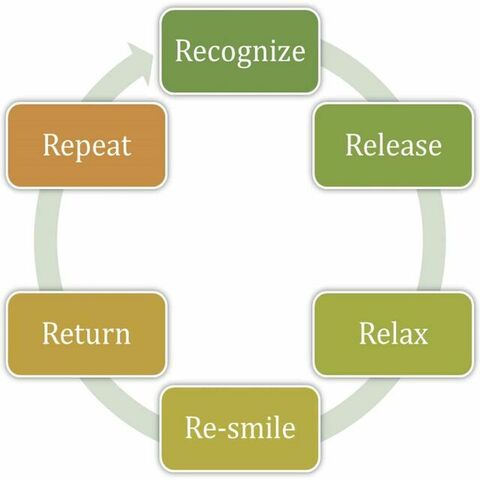
As soon as you recognize that your mind is distracted,
Simply let go of that distraction.
Let it be there by itself.
Don't keep your attention on it.
And then relax the tension and tightness caused by that distraction.
Tension and tightness occurs in your head,
In your brain,
Around your brain.
Your brain has two lobes like this,
And there's a membrane that goes around both of those lobes.
It's called the meninges.
Every time there's any kind of distraction,
That contracts a little bit.
It's tight.
And what you want to do is recognize that and let it go.
When you let it go,
You'll feel like there's a slight expansion that happens in your head.
Right after you relax that,
You'll notice that your mind is very peaceful.
Your mind is very alert and there's no thoughts.
At this time,
Your mind is pure.
Bring that pure mind back to your object of meditation.
The feeling of loving kindness,
That radiating happy feeling,
And then make another wish for your own happiness.
Put that feeling in your heart and radiate that feeling to yourself.
It doesn't matter how many times your mind pulls your attention away.
As soon as you recognize it,
Let it be.
Relax.
Smile a little bit and come back to your object of meditation.
Now,
This is a smiling meditation.
The reason that I want you to smile is because they found out that when the corners of your mouth go up,
So does your mental state.
When the corners of your mouth go down,
So does your mental state.
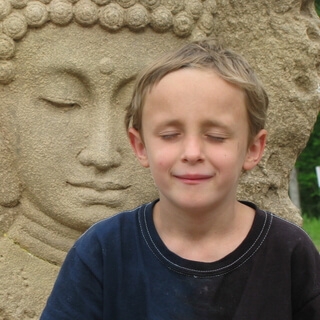
So put a little smile on your lips,
A smile in your eyes.
Even though your eyes are closed,
You'll find out that a lot of tension is released when you do that.
Smile in your mind,
Smile in your heart.
That's what smiling is.
It's not just a smile on the lips.
You want to feel that happy feeling.
If your mind wanders away 25 times in the sitting and 25 times you recognize it,
You let it be,
You relax,
You smile a little bit and come back to your object of meditation,
That is a good meditation.
It's not a quiet meditation.
It's an active meditation,
But it is a good meditation because every time you let go of a distracting thought and relax and come back to your object of meditation,
It's improving your mindfulness.
It's improving your observation power of how mind's attention becomes distracted.
When you're sitting in meditation,
Please do not move your body.
Don't wiggle your toes,
Don't wiggle your fingers,
Don't scratch,
Don't rub,
Don't rock back and forth,
Don't change your posture.
You can move as much as he does.
Okay.
So you sit very still and when your attention goes to some kind of sensation,
It can be a sensation of itching,
A sensation of wanting to cough,
A little tickle in your throat,
The sensation of it can be burning,
It can be painful,
It can be any kind of sensation like that.
As soon as your mind goes to that sensation,
The first thing you do is notice that your mind is thinking about that sensation.
Why does it have to come now?
Why doesn't it just go away?
Why does it have to bother my meditation right now?
So what you want to do is first let go of your thinking about the feeling and relax slightly.
Next,
You'll notice there is a tight mental fist wrapped around that feeling.
You don't want it there.
You want it to go away and the more you don't want that sensation there,
The bigger and more intense it becomes.
Now,
The truth is when a sensation arises,
It's there and it's okay for it to be there.
Why?
Because that's the truth.
It's there,
It's there.
You have to be able to allow that sensation to be there by itself.
Now,
Relax the tension and tightness caused by that.
Smile and come back to your object of meditation.
Now,
The nature of these kind of sensations is that they don't go away right away.
So your mind will bounce back with it.
Fine.
Let go of the thoughts,
Relax,
Allow the feeling to be there,
Relax,
Smile and come back to your object of meditation.
As this happens over and over again,
You start to be more and more familiar with how that sensation arose.
Your mind was on your object of meditation,
All of a sudden it's on this itch or it's on this pain.
How did it get there?
It didn't get there and just jump there.
There is a process that happens and it's very,
It is recognizable once you get used to how your mind's attention moves from one thing to another.
So you want to try to see how the process works,
Not why does it have happen,
Not getting involved with trying to control it,
Just observe how this process works.
Relax into it,
Smile and come back to your object of meditation.
After about five minutes,
Then you send loving and kind thoughts to a spiritual friend.
A spiritual friend is a person of the same sex and they are alive.
A spiritual friend is someone that when you think of them and their good qualities,
You deeply respect them and you sincerely wish them well.
So you're radiating loving kindness to yourself at right at five minutes and then you think of your spiritual friend as I feel this happiness,
I wish this for you.
May you be happy.
They have to be alive and it needs to be a person of the same sex.
And then you continue on and try to see them in your mind's eye.
Don't put too much emphasis on being able to visualize that person.
Some people are very good at visualizing,
Seeing pictures when they close their eyes.
Other people are not.
The way they visualize is with words.
Either way is fine.
So what you want to do is continue on with your meditation.
Stay with your spiritual friend.
Every time there's a distraction,
Let go of the distraction,
Come back to your spiritual friend and smiling.
When you picture your spiritual friend,
See them smiling and happy.
That can help remind you to be smiling and happy too.
Okay,
So the first five minutes send loving and kind thoughts to yourself.
Excuse me,
In the next 10 minutes send it to your spiritual friend.
Same spiritual friend the whole time.