Hello and welcome to the second part of this three-part short lecture series on the three trainings of Buddhism,
Which in a certain sense provide the framework for the entire path as a whole.
As I did not want to make this a two- or three-hour-long lecture on the three of them,
I have tried my best to keep it short and to the point,
As well as split it into three separate parts.
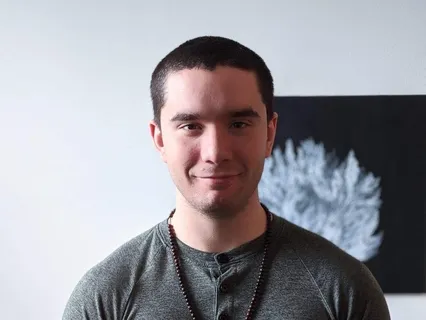
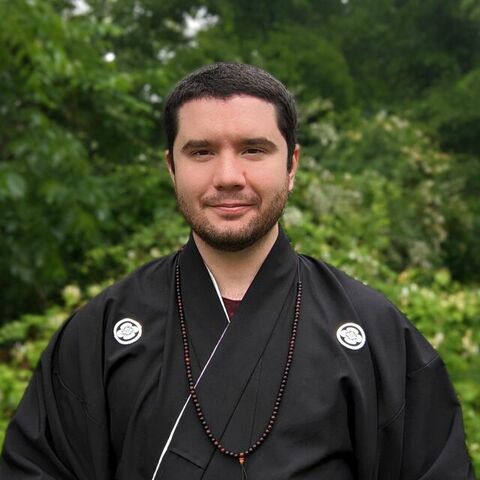
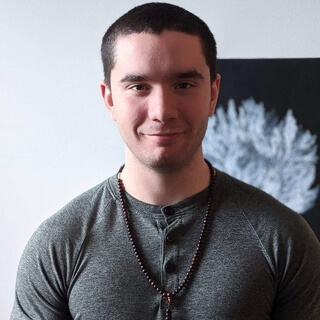
I'm Silas Day,
And thank you for joining me on part two of this three-part series.
The second of these three trainings is concentration,
But concentration goes by a plethora of names,
Which we will get to shortly.
Regardless of what we call it right now,
Though,
Training in concentration has to do with honing your ability and skill to steady,
Center,
And focus the mind for great-ish lengths of time on whatever we wish to cast it toward,
And in that concentration be able to enter into what,
According to most people not interested in this material,
Would call quite unusual,
Arcane,
And profound states of consciousness.
Some who are entirely unconnected from this area of study or meditation may even think of them as imaginary,
Just as one with no background in science might think that quarks are electrons are,
But nonetheless they are as real as the world you now experience.
Concentration,
As well as the third training of wisdom,
Are involved almost entirely with formal meditation practice.
It was mentioned in the first lesson on Silas,
But I think it is wise to reiterate this point because while you may be focused or concentrated when doing some task,
Unless you have the explicit goal of honing your concentration as the focus and not merely as a secondary action,
Then you are not training in concentration.
Concentration is single-minded.
It is one-pointed and direct.
Yet,
If you do have a meditative ability in concentration or take the time to hone this faculty,
You will find,
I think,
That those things that are not involved with meditation may come easier.
This is an aspect of how these three trainings work together to try and get us really spinning.
It is also good to note here that,
Especially if you have done a decent amount of concentration work,
The peculiar states can arise spontaneously during other activities.
One of the oddest instances of this for me is that I entered into one out of the blue while pumping gas for my car,
Which I am thankful that I wasn't driving because I think it would have been too much and I might have had to pull over.
Now,
To the somewhat prickly part of concentration,
Its vocabulary.
The second training is also called samadhi,
Samatha or shamatha.
The prickliness of this comes from the fact that these words can mean a variety of things depending on who the speaker or author of them are.
For example,
While someone from the Tibetan tradition may say shamatha to mean concentration meditation,
When they say samadhi,
They are referring to the odd experiences that happen as a result of the practice.
The Vedantic Indian traditions may use the word samadhi to describe incredibly high states of realization,
And the Mahayana sects may use samadhi to mean deep states of realization or the effects of concentration practice.
All of this while in traditions like the Theravada,
They almost use samadhi,
Shamatha and concentration as mere equivalents,
Only recognizing the minute differences in this vocabulary when they feel it appropriate for the individual meditator.
My advice,
If you find yourself in this kind of discussion or conversation,
Is to use the word concentration,
And from there try and feel out the waters of the people you are talking to.
If they come from a tradition that uses a different word and wish to engage them in some practice banter,
Then try your best to have them clarify it to your understanding before continuing on into the discussion.
Now compared to the everyday,
Somewhat casual practice of morality,
Or the hard and slow growth of wisdom and insight,
At least in my case,
Concentration practice involves working at a level and pace which might be off-putting to some,
And considered quite out of the ordinary compared to our everyday level of focus.
While I think even my very orthodox Christian grandmother,
If I set her down and explained sila to her in certain terms,
Would be able to relate to it,
I do not believe that she would ever quite get why such an extensive training in concentration and single-pointed focus is necessary for meditation or for going up the path of meditation.
This is where I think some familiarity with the concept of liberation of the mind from suffering plays into the practice of concentration.
Buddhism frames all of its practices,
Trainings,
Teachings,
Sutras,
Etc.
,
Etc.
,
In the terms of the reduction of suffering and the eventual complete and total liberation of the mind.
While I think people anywhere can understand that would be a wonderful thing,
I do not think the classical idea of liberation would hold much weight to the average person as more than a fanciful myth.
Training in concentration is only easy to relate to if you have attained to unusual states of consciousness,
Or at least have the faith that they can be attained.
While faith may be a peculiar choice of words there,
It is just like having the faith that after a little while of lifting weights and eating right you will be able to lift more.
A great analogy that I once heard was that concentration is like light.
Most of the time our concentration is like a flashlight,
Wide and shows a great degree of things to us in a somewhat fuzzy way,
While someone who has attained incredibly high states of practice with concentration is like a laser.
It is still light,
But it can do things and function in ways that the flashlight could never,
Without taking the time to condense itself down into that single pointed beam.
The actual training of concentration itself has been going on for thousands of years.
It was going on before the Buddha even.
In fact,
The masters which the Buddha studied under are masters of concentration states of practice,
But alas,
They are temporary and only hold a certain use instead of being a lasting release from suffering,
Or so the Buddha discovered.
Concentration training has had thousands of pages and texts from across multiple traditions dedicated to it,
And there are probably tens of thousands of concentration exercises that can be done in certain ways that aim to best help whoever is reading or doing them to show their necessity.
Some of the objects used to train concentration of the mind are the breath,
Which seems to be a favorite object both in insight and concentration training for the Buddhists,
Your body,
A mantra or a hymn,
A koan,
A phrase in Zen,
Or for Pure Land practitioners maybe a hymning kind of koan,
A colored disc like in the Tibetan traditions,
Incense,
A spot on the floor,
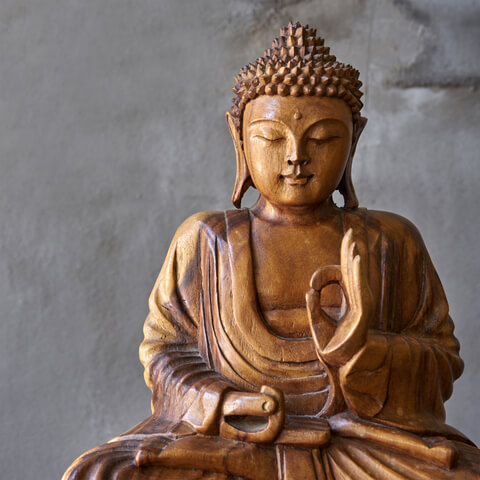
The image of a Buddha,
A candle flame,
And other objects which range from the most simple thing to the most complex thing.
You can train the concentration on feelings such as joy,
Compassion,
Forgiveness,
Acceptance,
And even the experience of concentration itself,
Or simply the space of awareness around you.
The most important thing for training the concentration on a meditative object is to choose something which you would find interesting,
Helpful,
And that you would be glad to steady your mind on for hours on end eventually.
For me personally,
My favorite concentration technique is of the experience of concentration itself,
Or the equal examination of reality around you,
Where you level all phenomena and try your best not to discern one thing from another,
But have one taste,
One touch,
One breath,
One experience of this everyday living now.
But no matter which technique,
Object,
Or path you choose in concentration training,
The place where they are all trying to lead you is to the ability to steady the mind and be simply present in the present.
It's ridiculous how simple it is,
Really,
That that is all there is to it,
That the goal is quite simple,
It is just a matter of actually doing the practice enough or with enough skill to get to that point again and again,
Sharpening and refining,
Collapsing back into that single pointedness of the mind.
There is generally a radical shift in people when they make the effort to actually and properly do their concentration practice.
It can be noticed not only in their own practice,
Where you will notice that it is much easier to do things,
But within the way they view and discuss the practice.
I was lucky enough to start in a tradition that I think emphasizes concentration without explicitly saying so.
It was Soto Zen for those who are curious.
Yet I have come across people who are trying very hard to do their dry insight,
Which is a form of insight practice which is done without any practice in concentration,
And they aren't making great progress.
This isn't to say that no progress can be made without concentration practice,
But that at some point,
Without it,
The mind can get very burnt out or stuck behind what can be perceived as a skill wall almost.
If and when you decide to engage seriously with concentration practice,
Stay on the chosen object until you have enough stability and skill such that the mind can rest on it effortlessly.
By this I mean you should be able to attain somewhat distinct stability after a short period of meditation,
Be it 20 minutes or an hour,
However long it takes you depending on how long you've been doing it.
Let me say here that there are various types of concentration,
With the relevant distinction being continuous concentration versus moment-to-moment concentration.
Both of these types develop concentration,
But they feel different.
For this concentration and second training,
I am talking about continuous concentration,
Which feels steady,
Smooth,
And analog,
Rather than the concentration required to investigate individual sensations moment-by-moment,
Which can feel rather frantic at times and is more focused on the third training.
That form of meditation,
Training,
And concentration will be addressed when we discuss the third training in insight and wisdom.
The first stage of concentration practice,
Which is the place of relative stability and continuous concentration without becoming entirely drawn away by distractions,
Is called access concentration.
Attaining to this allows you to get your foot in the door to the high states of concentration and allows one the necessary stability of mind to begin the path of insight,
In a relatively easy way.
Most of the time when people are just beginning to meditate and they are trying to practice vipassana,
Metta,
Or any form of insight meditation,
They are actually practicing concentration.
This is because their mind isn't honed enough to be able to investigate on the level necessary for insight practice.
You will know when you attain access concentration by testing it in several different ways.
You must be pragmatic about this and not sectarian so as to have the best understanding of whether or not you have attained to access concentration.
The first is this.
Can you keep your attention on your object of meditation,
Second after second,
Minute after minute,
Or for whatever time you set out for without letting it go,
But before any out of the ordinary states of consciousness begin to come about?
If you are able to do this and you suddenly start to become entirely blissful or some sort of unusual persistent alteration in perception begins to happen,
Likely it is you have entered into the start of the jñānas,
But be cautious in claiming anything without checking various sources,
Conferring with other practitioners,
With your teacher,
And going over it again and again within your own practice.
Just a word of warning from someone with little experience in claiming things.
So,
When in the mind,
When the mind is quite steady and centered but nothing peculiar is coming up,
That is what I will call access concentration.
But know that there is a whole range and variety of viewpoint here as well.
Some people think access concentration is a much lower vibration and range of concentration training and some think it is incredibly high,
Such as being able to maintain total and complete focus on the object for three hours at a time.
Who is correct,
You may ask?
Who has the answer?
More than any one tradition,
Teacher,
Or person having the correct answer,
I think it is a problem of vocabulary,
But on this point,
I digress.
Just know that in the training of concentration,
What some may consider access concentration,
Others will think otherwise,
So be careful and double check yourself when you think you've gotten there.
I could go on and on here,
But I'm thinking about making a course concerning concentration and its entire path up and through the eighth jhana,
So I think I'll stop before I get too deep into the weeds of its formal practice.
Yet,
I feel as though I need to bring up one more thing.
It must be said that concentration practice,
Like all practices I believe,
Has within it a darkness and shadow which we must be watchful of.
I have met many concentration addicts,
Or dark yogis as I have heard them called sometimes,
Who have become obsessed,
Confused or addicted to the states that can be attained in concentration.
Becoming consumed by the concentration states can cause the real world to seem too much like walking on sharp gravel.
It can make everyday ordinary existence seem harsh in comparison to the mountains of bliss and emptiness one can dwell on.
This,
Much like a drug,
Would cause us to be tempted to reject the world,
Withdraw and disassociate into the world of concentration states.
All this does is bring about more suffering.
All this is is you willfully putting on your own meditative shackles,
Which once on can be rather hard to break out of.
Perhaps the most important limitation of concentration practices is that they do not lead directly to insights and irreversible realizations that come from training in wisdom and insight,
As much as we might like them to.
So,
In this,
Be warned.
This is the second training of concentration.
Next,
We will discuss the third training of insight and wisdom.
Again,
I am Silas Day,
And thank you for listening to my little talk.
If you would be interested in a course on the path of concentration,
Let me know,
And I'll get one started.
If you have any questions from this talk,
Please leave a review with the question included,
And I'll be happy to answer.
If you would be interested in listening to more of my talks or going through one of my courses,
You can find them on Insight Timer or my website,
Where you can find everything I produce.
And if you wanted to sign up for my email list,
If you want updates when I release new stuff,
There you go.
Regardless of any of that,
Though,
I hope you enjoyed today's little talk on the second training of concentration,
And I hope you have a great day.
I'm looking forward to discussing the third training of insight and wisdom with you,
And looking forward to your questions and thoughts.