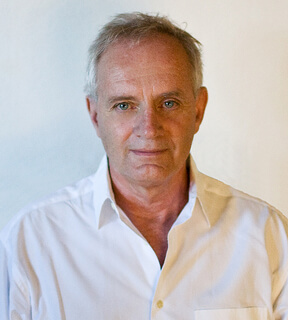
Get to know each other a little better.
I will talk about the awakened mind,
And I will try to leave some time at the end for questions and answers.
Traditionally in Buddhism there are thought to be three qualities of the awakened mind.
The awakened mind being where we are all headed and hearted.
These qualities are clarity,
Compassion and spaciousness.
I have a rather young child and I was thinking particularly during the Christmas holiday about Christ saying that unless you become like a little child you shall not enter into the kingdom of heaven.
My sense of the kingdom of heaven is the awakened mind.
What is it that Buddha and Christ are saying here?
When I look at small children,
When I play with small children,
When I be with small children,
It is very clear they have a deep sense of compassion.
When my son would see a suffering animal or a homeless person he would start weeping when he was three,
Four years old,
Five years old.
Clarity is the ability to see clearly what is going on,
To be in the moment,
To be able to play,
To be able to be present,
To not be distracted,
To not be cynical,
To be guileless.
Spaciousness is the quality of not clinging tightly to the notion of having a separate self,
A separate I structure.
Once again I think it is rather clear that small children aren't busy thinking I'm me.
Maybe at a certain point they start becoming socialized but certainly very young children have that quality.
Let's talk about these three qualities of clarity,
Compassion and spaciousness.
As we explore them,
Keep in mind that this suggests a practice.
So that if you are going about your day and you are feeling not compassionate,
Not clear and not so spacious,
Then there are very direct and immediate things you can do to come back to being present,
To be resting in the awakened mind.
First of all compassion.
Compassion literally means with passion.
Compassion as Stephen Levine,
My old friend so poetically puts it is the ability to keep your heart open and held.
If you are at the beach and you are with someone you love and it's a perfect day and you are looking forward to a perfect meal,
Maybe not so hard to keep your heart open.
But if you go to the doctor and he or she says I have very bad news for you or your parent calls up and says I just found out I have cancer or your bank account unexpectedly takes a precipitous turn toward zero,
At that moment is it possible to keep the heart open?
Nisargadatta who wrote I am that says the mind creates the abyss the heart crosses it.
The mind creates the abyss the heart crosses it.
And in Vipassana practice we really are working with this quality of clarity of learning to be really present in the moment.
But eventually as we become present enough,
If I become present to the way I am suffering or the way you are suffering then I begin to feel compassion for that.
Maybe not immediately,
Maybe it takes a day or two.
I got kind of angry at somebody a couple of days ago who jumped between me and my son in a way that I thought was really inappropriate and I said no don't do that.
It took me a while to realize that possibly this person was acting that way because of her own suffering.
So traditionally compassion is taught as compassion for the other,
The poor homeless person,
The poor dying person.
In the West what we really need many of us is compassion for ourselves.
These traditional Eastern practices that are so wonderful were mostly designed by and for Asian people thousands of years ago who were grounded,
Centered,
Un-neurotic and loved their mommy and daddy.
And my suggestion is that that is not too many people in this room.
So that there is the assumption that we can just begin this big project of disidentifying with ego structure,
Becoming compassionate for the places that we are stuck and everything will be okay.
His Holiness the Dalai Lama on his third visit to America said now I am beginning to understand that it makes me very sad.
You Americans don't like yourselves.
It's assumed in these practices that we like ourselves.
In fact I was studying once with a Tibetan Lama he said we are going to do a practice now and everybody begin by imagining your mother and he said wait a minute we can't do that this is America.
You might not like your mother.
Think about that for a second.
So that in his tradition the practice is think about somebody that as soon as you think about them your heart opens.
The qualities of compassion of being able to keep your heart open in response to suffering,
The qualities of compassion are a warm heart,
A connected heart and a spacious heart.
Rumi says grief is the garden of compassion.
Grief is the garden of compassion.
What could that possibly mean?
A garden is the place where something wonderful and useful grows.
Grief is any negative emotion arising in response to a feeling of separation.
Your mother is dying,
Your relationship ended,
One of your identities is falling away and we stereotypically think of grief as I am sad because I am losing something.
But think about it if you are angry,
If you are frightened,
If you are arrogant,
Any negative emotion like that is really a grief response.
Somebody cuts you off in traffic.
Oh no no anger.
Why is he doing that?
Can he see that this is my chunk of road right now?
But that person,
Me or you is angry because we are feeling separate from that other human being.
The Dalai Lama once again says that before he begins to teach a group of people in a big huge auditorium,
He imagines that Amitabha Buddha shows up and is so big that the whole auditorium is inside the heart of Amitabha Buddha.
So that right now,
I did my own little visualization,
I didn't use Amitabha Buddha but another friend of mine,
We are all sitting inside the heart of God.
When we feel that,
Then grief becomes transmuted into compassion.
If you and I really feel connected or if you feel connected to yourself or if you feel connected to God,
If I can use that word in these hallowed Buddhist grounds,
When we feel connected then compassion arises naturally.
Compassion also has this quality of warmth.
I think that's rather self-evident.
But finally,
Compassion has the quality of a spacious heart,
A boundless heart.
Our hearts are in fact truly boundless.
Each one of our hearts,
And in fact our hearts together because in truth there is only one heart,
But each of our hearts is large enough,
As I implied during the meditation a little earlier,
To include all the suffering in the world.
And that is because the heart is truly boundless,
The heart is truly spacious.
And it's spacious because there are really two kinds of compassion.
The first kind of compassion is,
I'm feeling compassion,
I'm going to generate compassion,
I'm going to feel compassion for you because I can see that you are suffering.
But the second kind of compassion is compassion spelled with a capital C.
And that is our true nature,
As I was implying.
Compassion is one of the qualities of the awakened mind.
That we are compassion,
We are that spacious heart.
As I mentioned about myself during the introduction,
I work with dying people,
Or people who are approaching death and maybe they make a U-turn and don't die right away.
But,
Is it possible to know that you're going to die,
To have that understanding that this identification with body and personality is something that's eventually going to fall away and that that truth continues to inspire us to open our hearts more and more and more.
Let me read one of my favorite quotes here from Pema Chodron.
She talks about bodhicitta,
Which is the Tibetan Buddhist word for the open heart,
The awakened heart,
The heart of generosity,
Of compassion,
Of loving kindness.
Just as nurturing our ability to love is a way of awakening bodhicitta,
So also is nurturing our ability to feel compassion.
Compassion however is more emotionally challenging than loving kindness because it involves the willingness to feel pain.
It definitely requires the training of a warrior.
When we practice generating compassion,
We can expect to experience our fear of pain.
Compassion practice is daring.
It involves learning to relax and allow ourselves to move gently toward what scares us.
The trick to doing this is to stay with emotional distress without tightening into aversion,
To let fear soften us rather than harden into resistance.
And that really in a way is the beginning and middle of the spiritual path all in one paragraph.
Can we use our difficulties as inspirations to open our hearts more deeply rather than having them unconsciously tighten our hearts into aversion?
And there is a point on the spiritual path,
A really remarkable point in which we begin to accept our challenges as gifts.
I heard that for decades and I thought that is really a bad idea.
I mean I know it's kind of true in my intellectual mind but it is not something that I want to work with right now.
What makes you,
What doesn't kill you makes you stronger,
There's all these kinds of sayings.
But that point does come where if you want truth more than you want to feel good in the moment,
If your motivation,
We talked about those four mind-turning truths,
If what you want is the truth of your existence,
If what you want is freedom and awakening,
Then that which you're tightening around is exactly the gift that shows you here is the place to heal,
Here is the place to embrace,
Here is the place where you can touch a part of yourself,
Love a part of yourself that you've been rejecting.
The Dalai Lama says,
If you want others to be happy,
Practice compassion.
If you want to be happy,
Practice compassion.
Think of how simple your life would be if your motivation for your actions were compassion.
Not do they like me,
Am I getting enough,
Is this going to work?
But simply the motivation was is this the compassionate thing to do?
Is this the action that will bring love into this place of contractiveness in the world,
In me,
In the people around me,
In the political structure that seems so broken and in the planet that is hurting right now in so many different ways?
And it may actually be that this work with dying,
Rather than being something that I do with just one individual and another individual,
If we talk about the community,
The community that needs compassion,
The planet that needs compassion,
That only the fact that we're dying as a planet,
Only the fact that we see that as the baby boom generation that so many people we know are dying,
That that is what will awaken people to that mind-turning truth that you're going to die but you don't know when.
I was in India long ago when the Dalai Lama was relatively unknown and I had the great good fortune to be in an audience with him with three of my friends.
This was in Bodh Gaya,
The place where the Buddha was enlightened.
And in Bodh Gaya there were 20 or 30 or so wild dogs.
Bodh Gaya is a very,
Very poor community and these dogs,
These wild dogs had open sores on their body.
They were so thin that you could see their ribs.
They were basically slowly starving to death.
And the people in Bodh Gaya would say,
Please don't feed the dogs.
It just prolongs their misery.
It would be better if you let them starve to death.
And being a relatively softy kind of guy,
I would buy the old bread and go around to the back of the buildings and feed the dogs.
There we were with His Holiness the Dalai Lama,
Who is,
According to the Tibetans,
The incarnation of Chin Rezi,
The God of Compassion.
He is supposedly the incarnation of Compassion on this plane of existence.
We were talking to him about compassion and he said,
Well,
Which do you think is greater?
I'm the Dalai Lama,
I'm the head of the Tibetan Church and the Tibetan state at that time,
Or these 20 or 30 starving dogs in Bodh Gaya.
And my friend,
Who was a very good straight man,
Said,
Well,
You're the Dalai Lama.
You're obviously greater than those starving dogs.
And he said,
No,
I am one and they are many.
They are greater than I.
And at first I thought he was saying that as some kind of teaching device that he was trying to get us to understand something.
But as those words resonated in my heart,
I realized that he lived that,
That he lived the fact that he was equal to one starving dog in Bodh Gaya.
And in fact he went on to say that one of the defining qualities of compassion is the ability to equalize and switch yourself with somebody else.
So if I go to the bedside of somebody who is dying and I think I'm Dr.
Dale and I'm the director of the Living Dying Project and you're the patient and I'm the expert,
In that moment compassion becomes impossible.
Or if on the other hand I go to some wonderful spiritual teacher and think that she is greater than I because she's up on the throne and I'm down on the floor or whatever it is,
In that moment compassion becomes impossible.
In this moment right now,
I'm doing the talking,
You're doing the listening at least for the time being.
How equal,
How connected can we feel?
And to take it even a step further then,
Can we feel equal to ourselves?
Is there some part of ourselves that we feel better than,
That we judge?
More than likely if there were some crazy device that projected all of your thoughts about how you feel about yourself out into the world,
You couldn't go out in public.
And if there were somebody who said the things to you that you feel about yourself,
You probably wouldn't want to have them as a friend.
So can we begin to have compassion for that place that we judge ourselves?
Just as an example,
When I was a young kid,
Very small,
I got two severe electrical shocks,
I almost died.
I put a fork in a toaster when my mom first let me make my own toast,
I felt so cool I could make my own toast.
And when I was even younger,
I put a hairpin in an electrical outlet.
I was crawling around on the floor and I found this thing that had these two prongs that were exactly the same distance apart of these two holes in the wall.
I thought,
Well isn't that neat?
Those two things go in those two things.
And that's my earliest memory of being knocked across the room by the shock.
So I grew up having this feeling that the world isn't a safe place.
And that beyond that,
By following my curiosity,
My ability to make my own toast and put things where they fit,
That I might get dead.
So that when I started doing Vipassana meditation,
And I was a real committed meditator for some decades,
Many long retreats,
A lot of distracted thoughts about planning,
Planning how not to get shocked,
Planning how to approach my life so that that next shock didn't happen.
And I,
In my practice,
Could finally get quiet and go into very deep states of concentration,
And the retreat would be over and I'd go out into the big dangerous world,
And my neurosis would reappear.
And it was very frustrating for me because again and again and again I would put everything I had into these retreats,
And yet that place where I didn't feel safe was not really being touched by my practice.
In fact,
It was directing my practice to a certain extent.
And only then,
After certain kinds of bodywork and coming to Marin and doing all those things that people do here,
People are cheering.
But one of my teachers said that he thought it was impossible to get enlightened in California because it's too easy here.
The weather is too good to get enlightened,
Okay?
That we need more of a challenge,
We need something to rub up against.
But only when I began to feel that quality of fear in me,
That fear of being shocked in some general way,
And then began to do compassion practice for that place in myself,
Did all those planning thoughts begin to subside.
So for decades I'd been missing the forest for the trees,
If you will.
I had been watching that distracted thought and that distracted thought and the next one and the next one for days at a time.
And they would eventually subside.
But I was never bringing my awareness and then eventually my compassion to that tight place that was generating all that stuff.
So is it possible for each of us to be honest enough,
To have that clarity quality and see where is the place where your practice is stuck?
Why are you practicing in the first place?
What are you trying to run away from?
What place in your psyche,
In your body,
In your very body is so caught that you can't really touch it?
You pull away from it rather than leaning into it as that quote by Payment Children suggested.
Here's another Rumi poem.
This being human is a guest house.
Every morning is a new arrival.
A joy,
A depression,
A meanness.
Some momentary awareness comes as an unexpected visitor.
Welcome and entertain them all.
Treat each guest honorably.
The dark thought,
The shame,
The malice.
Meet them at the door laughing and invite them in.
Be grateful for whoever comes because each has been sent as a guide from beyond.
Now for the longest time I felt compassion was something I'm going to do.
I see somebody who's suffering and I breathe into my heart and I do.
There's wonderful practices,
Compassion and abiding and taking and sending or tonglen.
We really don't have time to go into all these things in detail.
They're described on my website,
Livingdying.
Org and Payment Children and Joan Halifax and a lot of people talk about these practices.
But for the longest time I felt compassion was something I should do.
And I began to finally understand that it isn't so much a doing as a state of being.
It's a state of allowing my heart to be spacious.
I was counseling somebody today on the telephone,
Actually on Skype from the East Coast,
Who's having a very complicated financial relationship with a sibling who's trying to steal $170,
000 essentially.
And she was having a hard time feeling compassion for this sibling of hers.
And as we talked about it and I described that would it be possible to not like your sister's behavior,
Not approve of it,
Not even want to be around her again,
But can you think about your sister and allow your heart to remain open?
Allow your heart to be still spacious?
Rather than jumping into there's this I who is upset by what you are doing and there is this real place of being lost in duality where the spacious quality of the awakened mind has completely disappeared.
And she thought that that might actually be possible.
When I go to the bedside of somebody who's dying,
Any place that I'm still afraid is going to be resonated.
All fear is fear of death and fear of death is exactly equal to lack of enlightenment.
All fear is fear of death because all fear is based on a feeling of separation.
And that's the place you're going to be afraid to die.
And the place you're feeling separate is the place you're not enlightened,
The place where your mind is not awakened.
Let me tell you another brief story about ways I have a hard time being compassionate.
Once again,
This happened a long time ago.
I was in Banaras,
The place where people come to die in India.
I just got my PhD in mathematics from Stanford.
I don't know if you can imagine what that had done to my mind,
But it was not a pretty sight.
And in Banaras,
There's a main bathing got where a lot of beggars line up,
A big long line almost as far as the eye can see.
To set the scene,
This particular part of Banaras at that time was supposedly the most crowded square mile on the face of the planet.
Wall to wall people,
115 degrees,
Very noisy,
Dusty,
Cobblestone street.
And I had changed some bills into a whole big pocketful of coins.
And I was going down this line of beggars,
Giving each one of them a coin until I came to a woman who stopped me.
She had leprosy.
She had no hands and no feet.
She had rusty tin cans shoved on her wrist stumps and strapped to her chest with filthy rags was a tiny,
Tiny baby.
As I saw this tableau in front of me,
My mind snapped.
And rather than give her a coin,
I reached in my other pocket and pulled out a relatively large bill and put it in her begging bowl.
She looked at the money.
She looked up at me.
Her expression began to change.
She looked back at the money.
She looked at me.
She was obviously getting angry.
She knocked the bowl over.
The money went flying.
She picked up her bowl,
Put it on her cart.
She was on a cart about maybe three or four inches off the ground on wheels.
And once again,
This place is incredibly bumpy,
Hot,
Crowded,
Dusty.
And she angrily propelled herself away without saying anything.
That's the end of the story.
She would not take my money.
She didn't say why.
Now,
I felt confused,
Humiliated,
Upset.
And the more I thought about it,
I realized that I had given her the money not with compassion but with pity,
Which in Buddhism is the near enemy of compassion.
The far enemy of compassion is indifference.
The near enemy is pity.
Pity looks externally a lot like compassion.
But there was no equalizing and switching.
I was up here.
I'm Mr.
PhD from Stanford and she's this poor leper from India.
And I could not give her money with any feeling of equality.
And she could,
I mean,
My guess is that she could not afford to receive money from somebody who felt that way about her.
And if you think about that other story I told about being shocked,
I realized that that baby frightened me.
That baby was in such an unsafe situation,
At least in my mind.
And that unsafeness I felt as an infant because of those shocks was resonated by that child.
So what was it that I needed to do in that moment?
What I needed to do in that moment was feel compassion for Dale,
For the place where I was frightened by what I was seeing.
So that I could be there with her and decide what to do.
Maybe giving her money,
Less money,
More money,
No money,
I don't know.
But I didn't know because I was not present.
I was lost in fear.
A poem by William Stafford,
The Way It Is,
A nice unpretentious title.
There's a thread you follow.
It goes among things that change.
But it doesn't change.
People wonder about what you are pursuing.
You have to explain about the thread.
But it is hard for others to see.
While you hold it,
You can't get lost.
Tragedies happen.
People get hurt or die.
And you suffer and get old.
Nothing you do can stop time's unfolding.
You don't ever let go of the thread.
Suzuki Roshi,
My first meditation teacher said,
The most important thing is finding the most important thing.
The most important thing is that thread.
The thing we don't let go of.
All the true contemplative traditions say that you and I are already enlightened.
There is absolutely nothing to accomplish,
Nothing to understand,
Nothing to accumulate.
But we are under the mistaken opinion that we have this separate self,
That we are in fact this ego structure from which we have to awaken.
I cannot awaken.
You cannot awaken.
But we can awaken from the notion that there is an I.
But as long as you think there is an I who is going to get enlightened,
Who needs to practice harder,
Who needs to understand more,
To take better notes,
Then you are pointed 180 degrees away from the truth.
So that much of practice,
The beginning and intermediate stages of practice is finding the courage and the trust to stabilize the heart-mind.
So that as that quote from Payment Children suggested,
We can lean into what's difficult.
As long as there are circumstances out there that are shocking,
Then our ego is going to keep thinking in a way to protect itself.
As you meditate,
You notice that the mind thinks,
The mind moves.
That's the nature of mind.
The mind thinks.
There is the thinking mind and the working mind.
We need a working mind.
We need to be able to decide what do I need to buy at the grocery store?
Is it time to change the oil in my car?
What is my schedule for today?
That's the working mind.
But the thinking mind that goes on almost always unconsciously,
The sole purpose of the thinking mind is to protect the ego structure,
To protect that place in you that is frightened and separate and is afraid of dying.
So that by sitting and watching your breath for a few decades,
If you're as stubborn as I am,
Or maybe for a short amount of time if you're not quite so stubborn,
And beginning to watch how the mind comes and the mind goes,
It thinks a lot and then it gets calm,
You begin to see that there's this quality of change.
Everything changes,
But there is a thread.
There's a thread that is unchanging,
And that is pure awareness,
Pure consciousness.
Where did the perfect quote go to?
If separation were real,
We would have to get rid of it.
However,
Separation is an illusion.
Attempting to get rid of an illusion only asserts its apparent reality,
Thereby strengthening it.
Experience is not inherently divided into one part that experiences and another that is experienced.
It is one indivisible,
Unnameable,
Intimate whole.
Love and beauty are the names that are given to experience when this intimacy is known and felt.
They are the natural condition of all experience,
Not the particular condition of some experience.
That's Rupert Spira,
This British teacher of non-dual theory that's been making the rounds here in the Bay Area lately.
In the beginning of practice,
We sit down,
We look,
We develop this quality of clarity.
We begin to see how the mind arises and passes away,
And eventually we begin to come to this quality of compassion,
Having compassion for the places where we suffer,
Where we get lost,
And as well see that happening in the people around us.
And eventually then this quality of spaciousness,
We begin to see that the quality of compassion is spaciousness,
That the quality of the awakened mind is spacious.
That right now I can think,
I'm Dale talking to a bunch of people and I hope they like me,
I hope they're getting something out of this,
Or I can just be embodied,
Be in my heart,
Let the words come out freely,
And offer the fruits of each word,
Each moment to the divine,
To the sacred.
We will each die,
But we don't know when.
Can that be the inspiration to look so clearly at who we are and who we think we aren't,
So that that which is difficult then becomes a gift,
A blessing,
That each moment is a blessing,
That that which arises,
Whatever it is,
We can love it.
We can love the fact that our body doesn't feel perfect.
If your body were perfect then it might be very difficult to awaken.
I've learned most of my lessons from my body.
My mind is too clever and too stubborn,
But the body tells the truth,
So that when you're sitting and there's pain in your body,
When you're walking around and there's disease or tightness or fear in your body,
Can you breathe clarity into that part of your body?
Can you breathe out spaciousness,
Breathe out compassion into that part of your body?
Let me stop now and ask if there are questions.
I can talk longer.
I like to talk,
But let me see if some of you would like to talk for a while.
If not,
I can talk more.
Sean,
Are we going to do a mic for the audience?
Any remarks or questions or complaints?
Hi.
Thank you so much for being here.
I have the great opportunity to work for or volunteer at the Zen Hospice Project and work with dying people as well.
It's a beautiful,
Beautiful gift.
I have been seeing compassion in myself that is just cracking me wide open in a beautiful way.
It's raw.
What I am challenged with in my own life,
So I go every Tuesday and that is my retreat and service.
My father-in-law is dying of prostate cancer.
My mother-in-law is trying to control his death.
I have a little insight into freedom around this,
But I can't interfere with their karmic path.
I am really challenged because in this practice,
Buddhists don't run around and tell people,
Oh,
We are not preachers.
We are just all experiencing this.
It's like,
Hey,
I try it.
It works.
I really am conscious that I don't want to preach the Dharma or the way to my father-in-law and my mother-in-law who are so suffering.
I am so clear that they are suffering.
I have compassion and I try to be aware of what is going on in my body while they are in this position.
They are coming up to visit in two weeks to see their grandson,
My child.
He is going to be coming off of chemo.
This is his first round of chemo in his prostate cancer.
You say he is dying of metastatic disease in his bones?
Yes,
It's in his bones now.
He is inquired.
I have sat with him in meditation.
He is inquired into the path.
I have only tried to lead by example.
This is who I am and this is what I found.
I am always using the first person.
It's very difficult for me to just say,
Okay,
This is your path and not say,
Wake up!
Wake up!
Don't you understand?
You can wake up right now.
I would love to hear how to approach this.
This is in two weeks.
A tool would be useful if you could give me one.
That's a great question.
Cancer doesn't cause suffering.
Resistance to cancer causes suffering.
My father died of metastatic prostate cancer.
I had prostate cancer surgery earlier this year.
My father was Danish Lutheran.
I don't know if that means anything to anybody,
But it means we didn't talk a lot about our feelings.
I remember once I was in a car with my father and my mother and a friend of mine.
I said,
Dad,
I am going to teach a workshop next weekend in Berkeley about dying.
You want to hear what I am going to talk about?
He said,
Isn't it a beautiful day today?
Apparently,
He didn't want to talk about it.
He was in the hospital and it was about a week before he was about to die.
I said to him,
What do you think is going on with you right now?
He could have said,
Isn't it a beautiful day today?
He said,
I don't know.
What do you think?
He invited me in.
I said,
I really hope I am wrong,
But from where I am sitting medically,
I think you are dying.
He said,
That's the way it feels to me too.
We had the first completely real conversation that man and I had ever had.
He said,
Go home and tell your mother I am dying.
I want to talk to her about it.
I came home and said,
Mom,
Dad wants to talk to you about the fact that he is dying.
She said,
No,
He doesn't.
I said,
Yes,
He does.
I brought her to the hospital and they talked and they cried and she climbed in bed with them and they held each other.
Trungpa Rinpoche was an incarnated Lama,
Which meant that from a very early age he was trained in meditation and philosophy and language and art and everything.
He said,
In fact,
Between the ages of 6 and 8,
He was with a dead or dying person every day.
He said,
Until you come in intimate contact with death,
All spiritual practice has the quality of being a dilettante.
He encouraged people to do what you are doing at Zen Hospice.
I think the work they are doing there is really wonderful.
In fact,
Those workshops I am teaching are actually training people to be guides for dying within the Living Dying Project or in their lives.
The one tool I can offer you is to ask a provocative question.
Your father-in-law or your mother-in-law might be useful to work with both of them,
Can say,
I don't want to talk about this,
Or they can say,
I do.
It might very well be that they need not to talk about it and that your work is with you,
Not with them.
I don't really say this to my clients,
But suffering is only suffering.
Suffering is just resistance.
It's a very useful quality if you want to awaken.
Most people want to awaken and have their cake and eat it too.
Most people don't want to awaken at the expense of dying or going through anything too difficult,
But here it is.
Your father-in-law has metastatic cancer.
As you're doing,
And I really encourage you to continue what you're doing,
To be this living example.
Can you be around him and be living those three qualities of the awakened mind?
Can you be spacious,
Not getting caught up in,
I need to fix him,
I need to do something about this,
I'm feeling helpless now because he's not changing,
He's not getting it,
She's pushing me away.
But here's what's going on and here's suffering here and maybe here's suffering here,
And you just keep surrendering into spaciousness.
Having compassion for the place that he's suffering,
She's suffering,
And the place that you get caught up in feeling it should be any different than exactly the way it is.
If you can do that,
Then you are this living model that he can possibly do that too.
Maybe he can't,
Maybe his karma is not to do that.
But by asking this provocative question or even beyond that,
Sitting there and doing compassion practice like feeding the demon,
Taking in his suffering.
There's a practice called Tong Lin,
It's a wonderful practice,
Taking and sending,
Giving and receiving.
It has various names,
T-O-N-G,
L-E-N in Tibetan,
Where you can do it for part of yourself,
You can do it for somebody at a distance,
Or you can do it when you're in the room with somebody.
But let's just assume that your father-in-law is right here in front of you and he's suffering,
He's afraid.
Or maybe your mother-in-law is busy pushing away the whole thing.
You begin to feel what's going on in them,
You're aware of how they're suffering and you let this feeling deepen until you feel compassion.
You really feel an open-hearted,
Spacious response to what is going on.
And you let this feeling deepen to the point that you become willing to take their suffering into you.
You're not taking the cancer,
You're taking the suffering in response to the cancer.
So if you like to visualize,
I'm not particularly a visualizer,
More of a feeling person,
You can do this with the visualization or without,
But you let the feeling deepen enough that you become willing to take his suffering into you.
And as you breathe in,
You visualize his suffering congealing as hot,
Dark smoke,
And it comes out of his body into every pore of your body.
And as you breathe out,
You send this cool white moonlight,
Loving kindness,
The antidote to the suffering.
The main part of the practice is not the visualization,
That's just to keep the mind busy,
But the main part of the practice is to feel deep compassion as you're taking the suffering,
And deep loving kindness as you're sending the antidote.
Taking with compassion,
Sending with loving kindness,
Taking with compassion,
Sending with loving kindness.
I learned this practice from Kalo Rinpoche,
And somebody asked him,
I have a friend who has cancer,
And I'm afraid that if I do this practice for my friend,
I'll get the cancer.
And he said,
If you get the cancer,
You'll know that it worked.
And he started laughing.
He was kind of kidding.
So that you're not really breathing in the cancer,
You're breathing in the suffering.
It's a wonderful practice,
And it's a really wonderful practice to do for the part of yourself that you might identify in the way that I was talking about 10 minutes ago or so before,
But you notice that place that's directing your practice,
But is not open to being made aware of and have compassion for.
And if you'd like to call me up and talk further,
I'd be glad to do that.
Does somebody in the back have their hand up there?
Yeah,
Am I good?
Can you hear me?
There's something of a paradox here that might be able to shed light on the whole notion of death.
I think for most of us,
Yeah,
As you say,
We're always in the thrall,
Which translates as a kind of angst or the anxiety of no longer being here,
Because we don't know what our own death is.
We cannot really experience it since it's going to expire.
So the fear is always one of,
I'm not going to be here anymore.
That is to say,
My being is not going to happen.
I will no longer be here.
But do you really know that?
Well,
That's our fear.
I'm saying that's what we tend to be afraid of.
I won't be here anymore,
You know,
Because once you're dead,
Presumably we can't really experience much beyond that.
But in a sense,
If you lived forever,
You would never be threatened by the loss of your life.
And in that sense,
It's value,
I'm trying to say,
And the paradox is the value we place on life comes from the fact that we are going to lose it one day.
That's how we're able to see,
Even the most miserable person doesn't want to die,
Even though they may say that.
So somehow,
Almost inherently,
We value this thing called life,
And we value it because very early on we go,
Oh,
I see,
We only get it for a certain number of years.
Whoa.
I think maybe I hopefully I'll shed some light on that.
But I can't see any way out around that problem of the value we place on life.
And we have to at the same time place the value on death because you can't simply have one without the other.
And I think that's where you can maybe take a heroic or a graceful position towards the end.
You just can't have one without the other.
Okay.
Well,
If I might briefly respond here,
We only have a few more minutes.
Steven Levine wrote a wonderful book called Who Dies?
And who dies?
Very interesting question.
And certainly I agree with everything you say.
But I would suggest that it does boil down then eventually to what is the important thing?
What is the thread?
What do you want?
And if you want to have an awakened mind,
If you want to be free,
Rather than just to have a good life,
I was walking down the street yesterday and the t-shirt,
The guy in front of me on the back said,
Life is good.
And I thought about that.
Anyway,
Let's not go down that road.
The place in you or I that is afraid of dying,
That is grasping life,
Is a place that is in a way squeezing the life out of,
The vitality out of each moment.
And when we let go of that fear of death,
Then there is a very different relationship with life.
And I would suggest that each one of us is living in the awakened mind many,
Many moments during the day.
You look at the sky and you're not saying,
I'm seeing the sky and I like the sky.
You're just looking at the sky.
There is this intimacy between experiencer and experience.
They become one.
It's not a separation.
There's not an I who is doing that.
You look at somebody you love.
You hear a piece of music.
You're driving the car and all you're doing is driving.
You're not thinking about the traffic or what's going to happen next.
I will admit that when you walk down the sidewalk,
If you look at the people going the other way,
Most people are not there.
They're coming from somewhere or they're going somewhere.
Almost nobody's on the sidewalk.
So that in that moment they're afraid to die.
But one of the points of spiritual practice,
One of the points of loving another human being or loving God,
Is finding in fact that you and I,
Who we truly are,
Cannot die.
Because we aren't this temporary changeable body and personality.
We experience the body and the personality.
It's a vehicle.
But I would ask you to examine very carefully,
Are you the awareness that is receiving experience or are you the content of experience?
Raman Maharshi,
A great Hindu saint when he was a teenager,
Had this spontaneous experience in his uncle's library where he felt he was dying although he wasn't ill at all and there was no reason to think he was dying.
But he asked himself,
As I'm dying now,
Am I these thoughts?
No,
I'm not these thoughts.
Am I this body?
No,
I'm not this body.
Am I these emotions?
And he kept looking at all these things that he identified with and he realized he wasn't any of these things.
So who dies?
What is it that keeps you from loving me completely right now?
What is it that keeps us from being one being in this room right now?
And if we can answer that question,
Then I think it answers the question about fear of death.
And somebody else had a question over here and I'd like to give you a chance because you seem really anxious to ask it.
Here comes Sean with Mike.
So I'm just curious how you went from a PhD in mathematics to the Living Dying Project.
Well,
There's many answers.
Some of them have to do with drugs,
Some don't.
No,
I mean I was a product of the 1960s,
The consciousness explosion,
And I had the wonderful and strange karma that I got to know Ramdas as a graduate student at Stanford.
We became drinking buddies.
And after I got my PhD,
I really didn't want to be a scientist.
I really knew that,
Particularly still with these electrical shocks kind of bouncing around inside of me.
And I had the feeling that there was something I needed that Stanford didn't know about,
Something very,
Very important.
And I went to India.
I met Maharaj,
Ramdas's guru.
And I came back to America and was the executive director of Ramdas's Hanuman Foundation.
And in the late 1970s,
Ramdas taught a workshop in Rhode Island at which Elizabeth Kubler-Ross came as a student,
At which Steven Levine was the Buddhist meditation teacher.
And Elizabeth invited Steven to be her apprentice until she got involved in violent psychodrama,
A war on negativity things,
Which didn't dovetail too well with Steven's Buddhist meditation.
So he started teaching on his own and invited me to be the Buddhist meditation teacher at his dying retreats.
And you really can't go to those retreats and just be the Buddhist meditation teacher because there are human beings who are grieving and dying and having all kinds of real life experiences.
So it just was my good karma to fall into that through Maharaj,
Ramdas,
Steven.
And I actually,
As we were driving here,
Marie and I was remembering the first summer at Naropa Institute in Boulder when Jack Kornfield and Joseph Goldstein did their first teaching after coming back from Asia.
And the two of them and me were the Buddhist meditation teachers at Ramdas's Yogas of Devotion class at Naropa Institute.
So that's the short answer.
Thank you.
Thank you.
So I'm having a really good time,
But I think some of you probably have to go somewhere.
Thank you so much for your very kind attention.
Thank you all very much.
Please keep these teachings,
This precious Dharma in your heart.
And I wish you all the best.